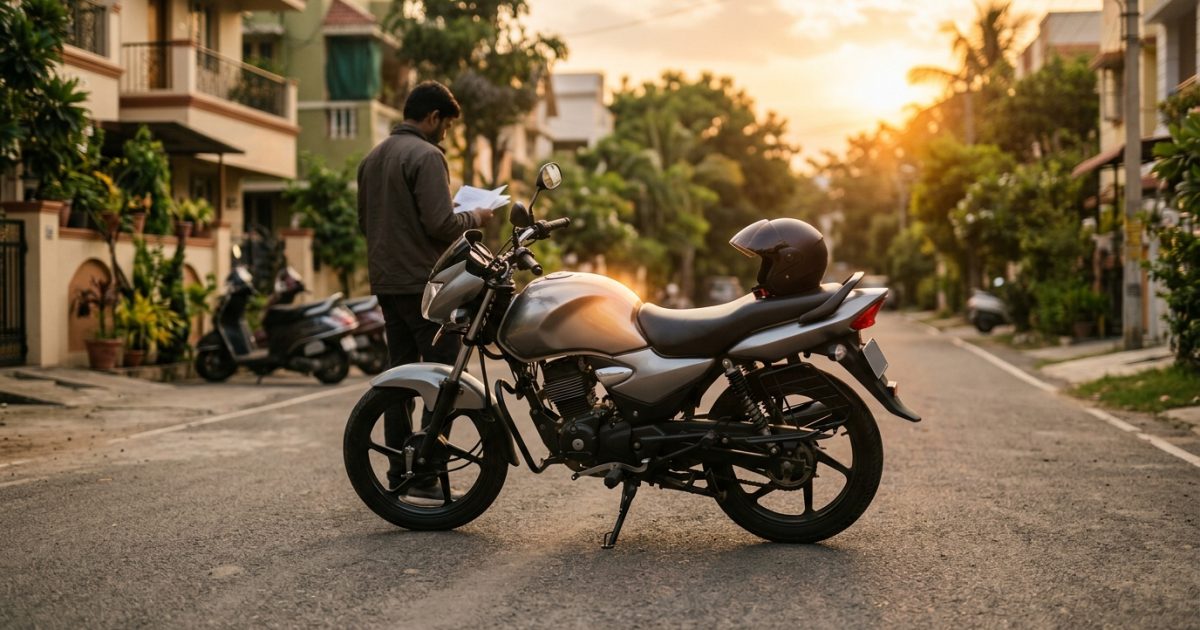
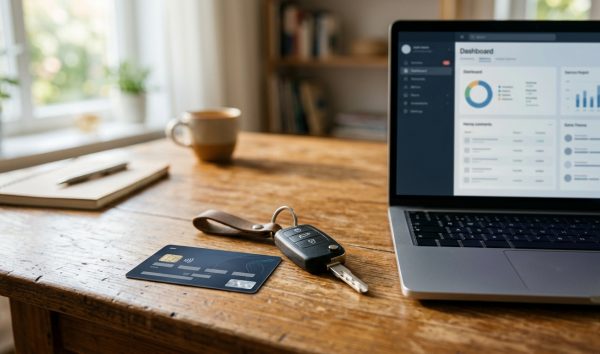
You can buy bike insurance online in just five minutes by entering your registration number, comparing insurer quotes, completing paperless e-KYC, and paying through UPI. Instant digital policies are issued immediately without physical inspection for active or third-party plans. Before you begin, check your current policy status using the VahanX RC search tool to confirm your exact expiry date.
Key Takeaways
- Under Section 146 of the Motor Vehicles Act, 1988, third-party bike insurance is legally compulsory across India.
- Riding an uninsured bike attracts a ₹2,000 fine for a first offence and ₹4,000 for subsequent offences under Section 196.
- Standard Third-Party (TP) rates are fixed uniformly by IRDAI and range from ₹538 to ₹2,804 depending on engine capacity (plus 18% GST).
- Accrued No Claim Bonus (NCB) discounts between 20% and 50% are retained if renewed within 90 days of policy expiry.
- Digital policy schedules are generated instantly upon online payment and are valid under Rule 9A of the Information Technology Rules, 2016.
| Metric | Third-Party (TP) Cover | Comprehensive Cover | Standalone Own Damage (SAOD) |
|---|
| Mandatory by Law | Yes (Section 146 MV Act) | No (Recommended) | No (Optional extension) |
| Physical Inspection | Never required | Only if expired >90 days | Only if lapsed |
| Issuance Time | Instant (2 to 5 minutes) | Instant / 24 hr self-audit | Instant (2 to 5 minutes) |
| Coverage Scope | Third-party injury, death, property | Own damage, theft, fire + TP | Own damage, theft, fire only |
| Document Delivery | Immediate PDF, WhatsApp, Email | Immediate PDF, WhatsApp, Email | Immediate PDF, WhatsApp, Email |
Legal Mandate and Penalties for Driving Uninsured
Under Section 146 of the Motor Vehicles Act, 1988, every motor vehicle operating on Indian roads must carry a valid Third-Party liability insurance policy. Operating a motorcycle or scooter without this minimum legal coverage is a punishable offence under Section 196 of the Motor Vehicles Act.
As of October 2026, the statutory fine for driving an uninsured two-wheeler is ₹2,000 or imprisonment for up to 3 months, or both, for a first-time violation. A subsequent offence carries a penalty of ₹4,000, imprisonment for up to 3 months, or both. Automated enforcement is executed across cities and national highways through ANPR (Automatic Number Plate Recognition) cameras, e-Challan systems, and handheld police terminals connected to the national VAHAN database.
Warning: Uninsured two-wheelers detected by highway ANPR cameras receive automated e-challans directly on the owner’s mobile number. You can verify whether your vehicle has active fines via the VahanX challan search portal.
Statutory enforcement updates and penalty notices are regularly detailed by the Ministry of Road Transport and Highways (MoRTH) and outlined on the official e-Challan portal.
IRDAI Third-Party Premium Rates for Two-Wheelers
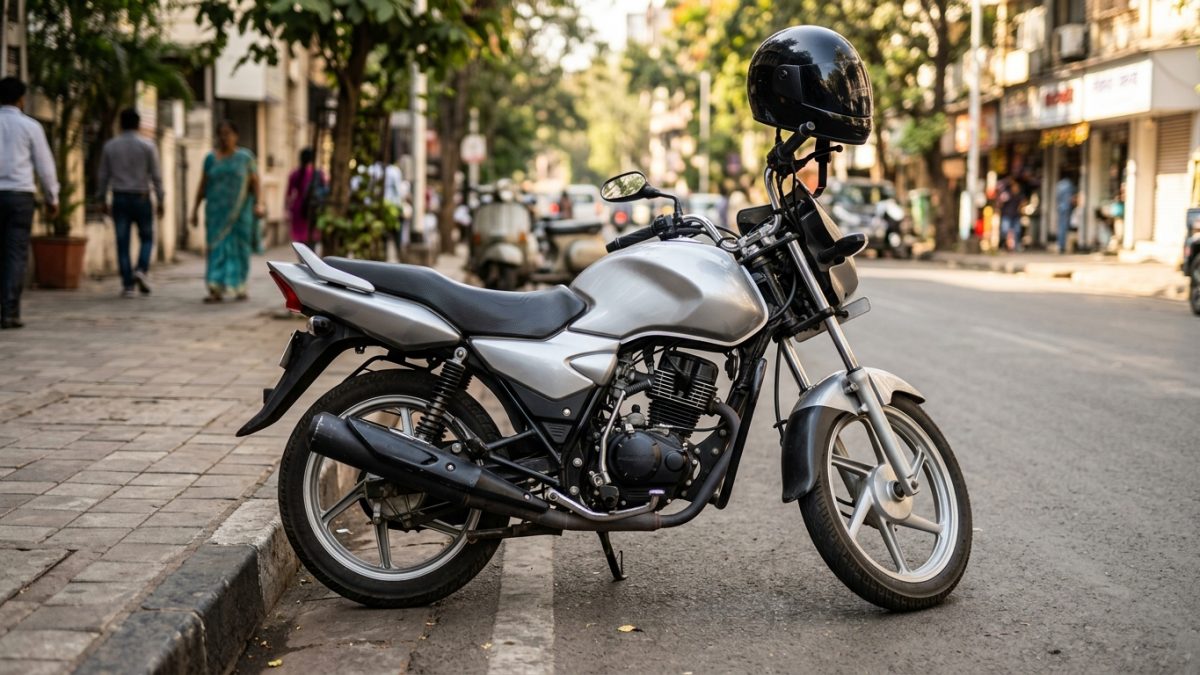
The Insurance Regulatory and Development Authority of India (IRDAI) fixes baseline Third-Party (TP) insurance rates uniformly across all general insurance companies. When seeking the cheapest bike insurance online india, note that no insurer can legally alter, discount, or inflate standard TP premiums. An 18% Goods and Services Tax (GST) applies additionally to all motor insurance premiums.
| Engine / Motor Capacity | Annual Base Premium (₹) | Applicable GST (18%) | Total Payable TP Cost (₹) |
|---|
| Up to 75 cc | ₹538 | ₹96.84 | ₹634.84 |
| 75 cc to 150 cc (Activa, Splendor, Pulsar 125) | ₹714 | ₹128.52 | ₹842.52 |
| 150 cc to 350 cc (Classic 350, MT-15) | ₹1,366 | ₹245.88 | ₹1,611.88 |
| Above 350 cc (KTM 390, RE 650 Twins) | ₹2,804 | ₹504.72 | ₹3,308.72 |
| Electric Two-Wheeler (Up to 3 kW) | ₹457 | ₹82.26 | ₹539.26 |
| Electric Two-Wheeler (3 kW to 7 kW) | ₹714 | ₹128.52 | ₹842.52 |
| Electric Two-Wheeler (7 kW to 16 kW) | ₹1,161 | ₹208.98 | ₹1,369.98 |
| Electric Two-Wheeler (Exceeding 16 kW) | ₹2,383 | ₹428.94 | ₹2,811.94 |
Compulsory Personal Accident (CPA) Cover
Along with baseline third-party liability, every individual bike owner must hold Compulsory Personal Accident (CPA) cover providing ₹15 Lakh sum insured for accidental death or permanent total disability. This cover costs between ₹275 and ₹350 per year (plus 18% GST).
You are legally exempt from buying this add-on if you already possess a standalone personal accident insurance policy of at least ₹15 Lakh, or if you have already purchased CPA cover on another registered vehicle you own. If eligible for exemption, you must uncheck the CPA box during checkout to avoid paying the premium twice.
Choosing Between Third-Party, Comprehensive, and Standalone OD Plans
Selecting the right policy structure depends on the age of your vehicle, current active coverages, and your individual risk tolerance.
Third-Party Liability Only (TP)
A Third-Party policy covers statutory legal liabilities arising from third-party bodily injury, death (unlimited payout), and property damage (capped at ₹7.5 Lakh). It offers zero financial protection for accidental damages to your own motorcycle or in the event of theft.
Standalone Own Damage (SAOD)
Since 2018, all brand-new two-wheelers sold in India require a mandatory 5-year third-party liability policy. If your bike has an active long-term TP cover, you only need to renew your damage protection annually through a Standalone Own Damage policy. Review the full guidelines in our standalone own damage bike insurance rules guide.
Comprehensive Bike Insurance
A comprehensive policy bundles Own Damage (OD) protection and Third-Party (TP) liability into a unified plan. It covers accidental collisions, fires, natural disasters, vandalism, and vehicle theft alongside mandatory third-party liability.
Understanding IDV and Selecting Crucial Add-On Covers
When you generate online two wheeler insurance quotes, your Own Damage premium is calculated primarily on the Insured Declared Value (IDV) of your motorcycle.
How IDV Works
IDV represents the maximum financial sum payable by your insurer if your bike is stolen or incurs repair costs exceeding 75% of its value (constructive total loss). It is calculated from the manufacturer’s ex-showroom price minus depreciation based on age, scaling from 5% for bikes under 6 months to 50% for bikes aged 4 to 5 years.
Tip: Online portals allow you to adjust the IDV within a permitted range of ±10% to 20%. While setting a lower IDV reduces your immediate premium, it severely reduces the payout in total loss or theft claims.
Critical Add-Ons for Two-Wheelers
- Zero Depreciation (Bumper-to-Bumper): Removes standard depreciation deductions on plastic, rubber, and nylon parts (normally 50%) and fibreglass (30%). Highly recommended for bikes up to 5 years old.
- Roadside Assistance (RSA): Provides 24x7 emergency flat-tyre assistance, fuel delivery, on-site mechanical repairs, and breakdown towing within a 25 to 50 km radius.
- Return to Invoice (RTI): Bridges the gap between the depreciated IDV and the original on-road purchase invoice (including road tax and registration charges) in case of unrecovered theft.
- Engine and Gearbox Protector: Protects against financial losses caused by hydrostatic lock (water ingression during monsoons) and lubricant leakage.
- Consumables Cover: Covers costs of screws, bolts, engine oil, lubricants, and brake fluid during accidental repairs.
- Pillion Rider PA Cover: Extends accidental death and permanent disability financial protection to your passenger.
Steps to Buy and Compare Bike Insurance Online
Executing a two wheeler insurance online purchase eliminates physical broker commissions and provides immediate policy delivery. Follow this step-by-step process:
- Input Vehicle Details: Visit the official web portal of an IRDAI-registered insurer or insurance aggregator. Enter your bike registration number. The system fetches make, model, variant, registration year, and RTO details directly from the national Parivahan Sewa portal.
- Compare Bike Insurance Online: Review quotes from multiple insurers. Evaluate inclusions, network cashless garages, claim settlement ratios, and IDV ranges across different plans.
- Customise IDV and Add-Ons: Adjust your IDV within the recommended band and select necessary add-on covers like Zero Depreciation and RSA.
- Declare Previous Policy and NCB: Enter your previous policy number and declare whether any claims were made in the preceding policy term. Accurately transfer your accrued No Claim Bonus (NCB), which scales from 20% to 50%.
- Complete Mandatory e-KYC: Under IRDAI compliance norms, submit your PAN or complete paperless Aadhaar-based OTP verification. If available, you can also submit your 14-digit Central KYC (CKYC) identifier.
- Complete Bike Insurance Online Payment: Pay the net premium using UPI (Google Pay, PhonePe, Paytm), net banking, or debit/credit cards through an encrypted gateway.
- Instant Policy Generation: Download your digitally signed policy schedule directly from the confirmation screen. A copy is delivered concurrently to your registered email address and WhatsApp.
Mistake to Avoid: Never declare a false No Claim Bonus (NCB) to reduce your premium. If an insurer audits your previous insurer records and finds an undeclared claim, your Own Damage coverage will be voided for non-disclosure.
How to Renew an Expired Bike Policy and Avoid Inspection
Letting your bike insurance lapse leaves your vehicle uninsured on public roads and risks the loss of accumulated NCB benefits.
The 90-Day NCB Grace Rule
IRDAI regulations provide a 90-day grace window from the date of policy expiry to retain accrued No Claim Bonus discounts. If you renew your comprehensive policy on or before day 90, your NCB remains active. If renewed on day 91 or later, your NCB balance drops permanently to 0%.
This grace window applies exclusively to the retention of your NCB discount. It does not provide insurance coverage. Any accidental damage, injury, or theft occurring between your expiry date and the renewal timestamp is completely uninsurable.
| Renewal Scenario | Inspection Method | Waiting / Cooling Period | NCB Retention |
|---|
| Before Expiry Date | No inspection needed | Immediate coverage | 100% retained |
| Expired 1 to 90 Days (Comprehensive) | Self-inspection (Photos/Video) | 24 to 72 hours | 100% retained |
| Expired >90 Days (Comprehensive) | Physical surveyor inspection | 24 to 72 hours post approval | 0% (NCB resets) |
| Expired Any Duration (Third-Party Only) | No inspection needed | Immediate coverage | Not applicable |
Self-Inspection Protocol
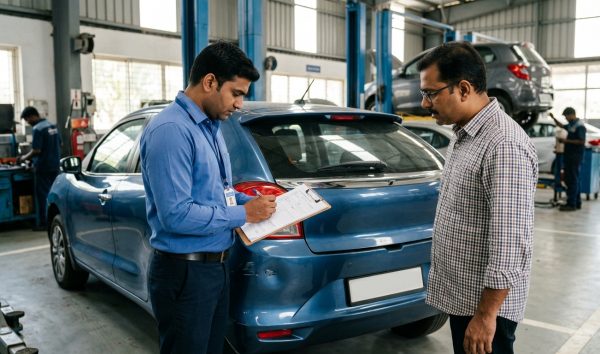
When buying instant bike insurance online for a recently expired policy, insurers avoid manual surveyor visits by using mobile self-inspection. The insurer sends a secure link via SMS or WhatsApp. Using your smartphone camera with active location services, you record a 360-degree video and upload clear photographs of your bike’s odometer, chassis plate, fuel tank, engine, and body panels. Once approved by the insurer’s verification engine, the policy is issued without an in-person physical inspection.
How to Complete Bike Insurance Policy Download Online
Once your bike insurance online payment clears, you can immediately retrieve and store your digitally signed certificate.
- Direct Portal Download: Click the "Download Policy Schedule" button on the payment receipt screen.
- Email and WhatsApp Dispatch: IRDAI-regulated insurers automatically transmit an encrypted PDF copy of your policy schedule and terms booklet to your registered email address and WhatsApp number within two minutes.
- Insurer Self-Service Dashboard: Access your profile on the insurer’s mobile app or website using your registered mobile number and OTP to view active documents under "My Policies".
Storing Policy Documents on DigiLocker and mParivahan
Under Rule 9A of the Information Technology (Preservation and Retention of Information by Intermediaries Providing Digital Locker Facilities) Rules, 2016, digital motor insurance documents stored in DigiLocker or mParivahan are legally equivalent to physical certificates. Traffic enforcement officers cannot insist on physical paper copies if you present valid digital records in these government applications.
- Open the official DigiLocker website or mobile app and sign in with your Aadhaar credentials.
- Search for your insurer under the "Banking & Insurance" directory or navigate to the "Ministry of Road Transport and Highways" section.
- Select "Two Wheeler Insurance Policy" and enter your vehicle registration number and policy number.
- Tap "Fetch Document" to pull the digitally signed policy directly into your issued document repository.
Common Online Buying Pitfalls to Avoid
Avoid these common operational pitfalls when you buy bike insurance online:
- VAHAN Database Synchronization Delays: When an online policy is issued, the insurer submits the policy data to the Insurance Information Bureau (IIB), which updates the Parivahan database. This synchronization can take 24 to 48 hours. Always keep a downloaded PDF copy on your smartphone to avoid improper automated challans during this transitional window.
- Mismatched Engine and Chassis Characters: Ensure that the chassis number and engine number fetched via the API match the physical stamped markings on your vehicle and the details on your physical RC card. Character errors can cause delays or claim repudiation.
- Unintentional CPA Overpayments: Verify whether you already hold personal accident coverage under existing vehicle or life policies before leaving the mandatory CPA fee checked on multiple vehicle transactions.
For more details on tracking policy timelines and keeping your vehicle compliant, read our guide on two wheeler insurance check and tracking, or confirm your official vehicle information directly via the VahanX RC verification service.
Conclusion
Securing your bike insurance online guarantees legal compliance, shields you from severe traffic fines under Section 196 of the Motor Vehicles Act, and safeguards your finances against unexpected road accidents. Use digital comparison tools to choose appropriate IDV figures, secure your accrued NCB within the 90-day window, and carry your downloaded policy in DigiLocker.
Always verify your current vehicle records, tax validity, and policy expiration dates through the VahanX RC search tool before completing your renewal.