Key Takeaways
- Under Section 146 of the Motor Vehicles Act, third-party insurance is legally mandatory for all two-wheelers.
- Riding without valid cover invites a ₹2,000 fine for a first offence and ₹4,000 for repeated violations under Section 196.
- You can run an instant two wheeler insurance check using only your registration number on the Parivahan Sewa portal.
- NextGen mParivahan and DigiLocker provide legally valid digital proof under Rule 139 of the Central Motor Vehicles Rules.
- Renewed policy details typically update on the VAHAN database within 24 to 72 hours via IRDAI server integration.
A two wheeler insurance check allows you to verify your bike’s policy status, insurer name, and coverage expiry date online in seconds. Using official government systems like the Parivahan portal or mParivahan app, you only need your vehicle registration number to confirm active cover. You can instantly check your bike insurance expiry date on VahanX alongside your RC details to avoid unexpected roadside penalties.
| Feature | Parivahan Sewa | NextGen mParivahan | DigiLocker |
|---|
| Search Requirement | Vehicle Registration No. | Vehicle Registration No. | Aadhaar & Policy No. |
| Information Shown | Insurer, Validity Date, Policy No. | Insurer, Expiry, Virtual RC | Full Digitally Signed Policy PDF |
| Access Fee | Free (₹0) | Free (₹0) | Free (₹0) |
| Legal Validity | Reference Status | Valid under CMVR Rule 139 | Valid under CMVR Rule 139 |
Why You Must Verify Bike Insurance Validity
Under Section 146 of the Motor Vehicles Act, 1988, no two-wheeler can operate on public roads in India without an active third-party liability policy. While Own Damage cover protects your own bike against accidental damage or theft, third-party cover is mandatory by law. Riding with an expired policy leaves you directly liable for financial damages and medical claims if an accident occurs.
A routine bike insurance validity check also protects you from severe statutory penalties. Traffic authorities enforce strict compliance across all states as of October 2026. Performing regular checks ensures you renew on time and avoid legal complications.
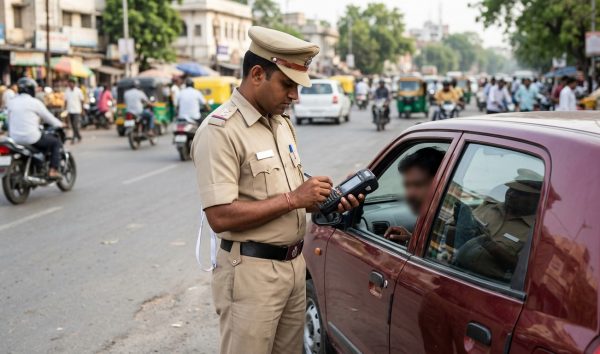
Traffic police can impound your two-wheeler under Section 207 of the Motor Vehicles Act if you fail to present valid insurance cover during roadside verification.
| Offence Type | Fine Amount (MV Act Sec 196) | Additional Legal Action |
|---|
| First Offence | ₹2,000 | Imprisonment up to 3 months or both; vehicle impoundment |
| Subsequent Offence | ₹4,000 | Imprisonment up to 3 months or both; vehicle impoundment |
Check Bike Insurance Status by Vehicle Number on Parivahan
The Ministry of Road Transport and Highways manages the national database through the Parivahan Sewa platform. You can check bike insurance status by vehicle number without paying any user fees. Citizen registration is mandatory to prevent unauthorized mass data scraping.
- Access the official portal: Open your web browser and navigate to the official Parivahan Sewa portal.
- Navigate to vehicle search: From the top menu, select Informational Services and click on Know Your Vehicle Details.
- Log in to your account: Enter your registered mobile number and verify your login using your password or OTP.
- Input vehicle details: Enter your bike registration number (such as DL01AB1234) and complete the visual CAPTCHA verification.
- Review the insurance record: Click on Search Vehicle to open your RC card status screen.
The status screen highlights the name of your insurance provider, the policy number, and the exact calendar date under the Insurance Valid Upto field. Always confirm that this date matches your renewal receipt.
Two Wheeler Insurance Check on NextGen mParivahan App
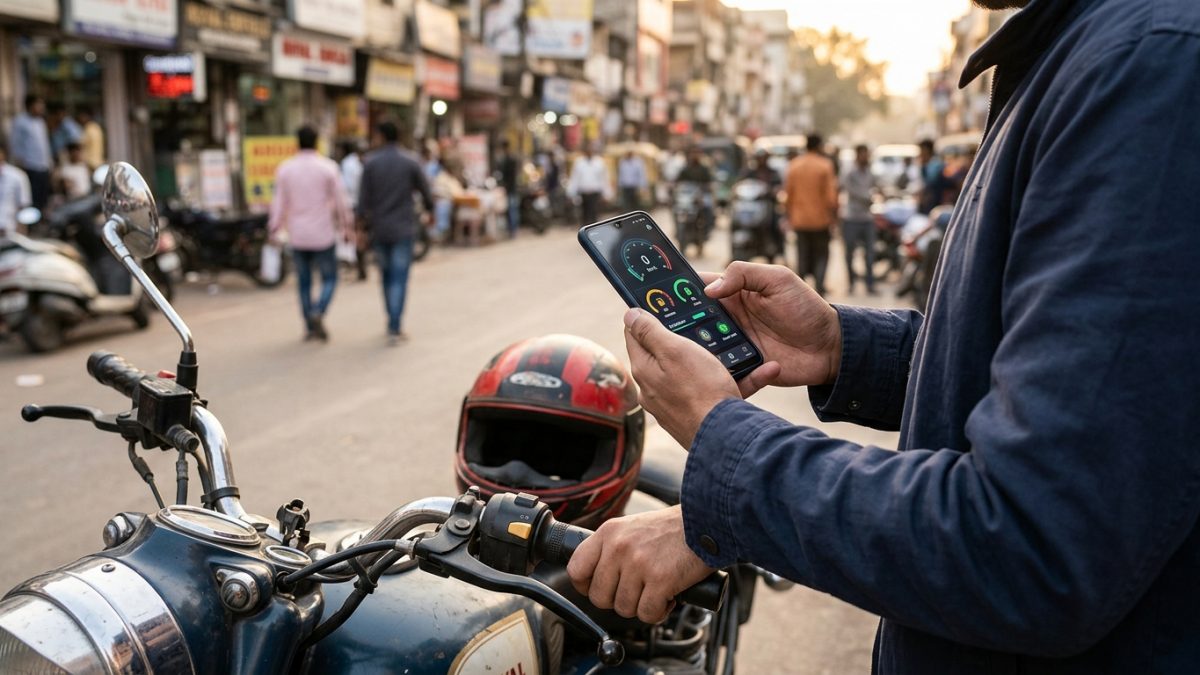
The NextGen mParivahan mobile application, built by the National Informatics Centre (NIC), provides a quick way to complete a two wheeler insurance check mparivahan search on Android or iOS. It synchronizes directly with the central VAHAN 4.0 database.
- Open mParivahan: Launch the NextGen mParivahan app and log in using your registered mobile number and MPIN.
- Perform vehicle search: Enter your two-wheeler registration number into the search bar under the Virtual RC Search section.
- Inspect insurance validity: Review the dashboard to view your insurer name, policy number, and coverage expiry date.
- Generate a Virtual RC: Enter the last 5 digits of your chassis number and engine number to save the vehicle to your dashboard.
Generating a Virtual RC embeds an encrypted QR code. Under Rule 139 of the Central Motor Vehicles Rules (CMVR), presenting this electronic document on your phone carries the same legal authority as carrying physical papers. Traffic personnel cannot insist on physical copies if you show this verified record.
Never rely on phone screenshots during roadside inspections. Only live app views on mParivahan or DigiLocker are legally recognized under CMVR Rule 139.
Besides Parivahan, you can track policy validity through regulatory and insurer-specific portals. If you are comparing future coverage or renewing an expired cover, you can explore bike insurance online options to ensure continuous road protection.
The IIB platform operates under the Insurance Regulatory and Development Authority of India (IRDAI). It maintains claim histories and policy records across all registered general insurance companies.
- Visit the website: Open the official portal at IIB.
- Access V-Seva: Open the V-Seva tab and choose the Accident Vehicle Information Retrieval System.
- Submit details: Input your bike registration number, owner name, mobile number, and the on-screen CAPTCHA.
While IIB is a reliable secondary check, public portal records can experience a sync lag of 1 to 2 months compared to VAHAN's live feeds. For instant checks, Parivahan remains the faster choice.
2. DigiLocker Document Repository
DigiLocker allows you to pull and store your original insurance certificate directly from your insurer's server. Unlike Parivahan, which only displays status dates, DigiLocker retrieves the full signed PDF policy schedule.
- Log in to DigiLocker: Sign in at DigiLocker using your Aadhaar credentials.
- Search for your insurer: Navigate to the Issued Documents section and select your general insurance provider.
- Link the document: Enter your policy number or registration number to download the digitally signed certificate.
3. Direct Insurer Self-Service Portals
If you remember your insurer, visit their official website or mobile app. Most companies offer a self-service page where entering your bike registration number and registered mobile number brings up your policy status immediately.
| Tracking Platform | Data Source | Update Speed | Provides Downloadable PDF |
|---|
| Parivahan / VAHAN | Direct MoRTH Database | 24 to 72 hours | No (Status only) |
| mParivahan App | Direct MoRTH Database | 24 to 72 hours | No (Virtual RC QR only) |
| IIB Portal | IRDAI Repository | 30 to 60 days | No (Verification only) |
| DigiLocker | Direct Insurer Integration | Instant once issued | Yes (Official signed PDF) |
Common Reasons Bike Insurance Fails to Update on VAHAN
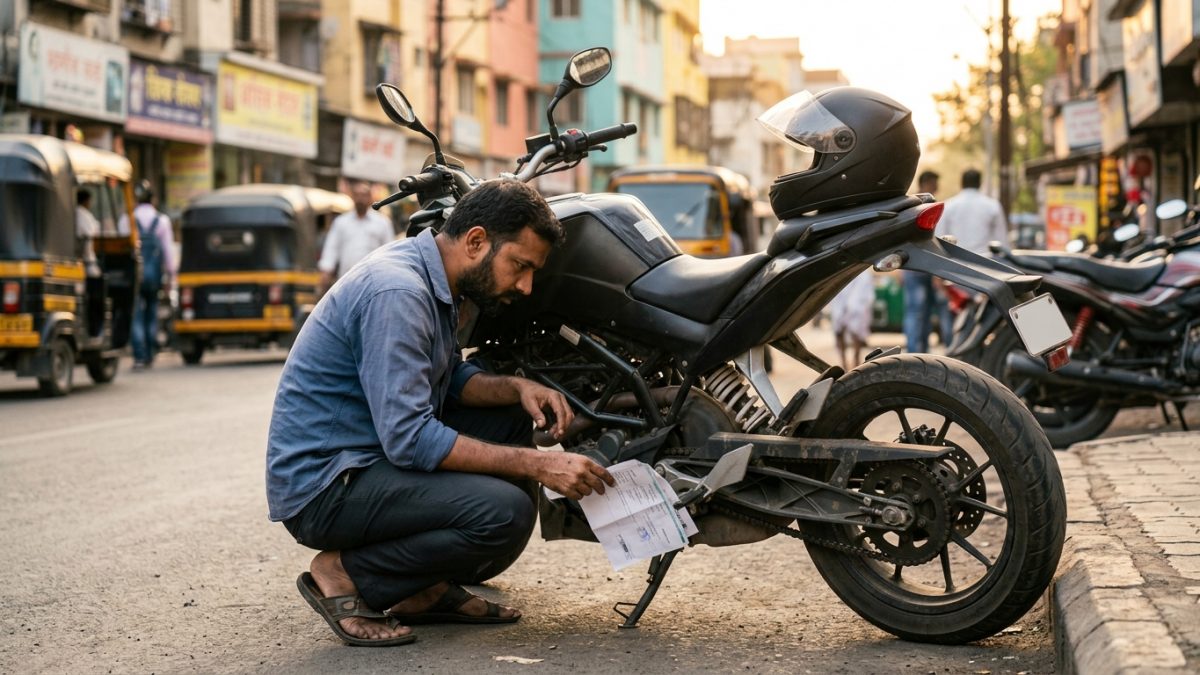
A frequent problem faced by bike owners after renewing coverage is finding outdated information on the VAHAN database. If you completed your renewal but the portal still shows your old policy, several technical factors could be responsible.
- Engine or Chassis Number Typo: A single wrong character in your engine or chassis number entered by the insurer prevents VAHAN's API from linking the policy to your RC.
- Batch Update Delays: While real-time API sync normally takes 24 to 72 hours, batch uploads during peak periods can delay updates by 7 to 15 working days.
- State Server Migration: Minor transmission lags can occur while older municipal records sync with the unified national VAHAN 4.0 architecture.
- Unmatched Vehicle Class: Registering a scooter under an incorrect vehicle classification code can block automated cross-verification between systems.
Your insurance takes legal effect from the date and time printed on your insurer-issued policy schedule, even if VAHAN takes a few days to update the public portal.
If the mismatch persists after two weeks, contact your insurance provider with your RC copy. Ask their technical team to re-push the policy data to the IIB and VAHAN portals with verified vehicle identifiers.
The NCB Grace Period Trap and Traffic ANPR Cameras
Many two-wheeler owners misunderstand policy renewal timelines, confusing regulatory incentives with legal driving permissions. If your bike policy expires, you must understand how both insurers and automated enforcement systems handle lapses.
The 90-Day NCB Grace Period Trap
Insurance regulations allow vehicle owners up to 90 days following policy expiration to retain their accumulated No Claim Bonus (NCB). However, this grace period applies exclusively to your discount eligibility. Your vehicle is completely uninsured the moment your policy reaches its expiration hour. Riding during this 90-day window is illegal, exposes you to Section 196 challans, and forces you to pay all accident liabilities from your own pocket.
Automated ANPR Camera Challans
Traffic enforcement across major urban centres such as Delhi, Bengaluru, Mumbai, Hyderabad, and throughout states like Kerala and Uttar Pradesh uses Automated Number Plate Recognition (ANPR) camera networks. These high-definition cameras capture your registration plate during routine movements or minor violations like riding without a helmet.
The central system cross-references captured plates against the VAHAN database in real time. If your insurance record is expired, the platform automatically issues a composite electronic challan for ₹2,000 under Section 196. You can monitor your vehicle for any active traffic fines using our online challan search tool before penalties escalate.
To maintain clean records and ensure uninterrupted legal cover, regularly check your bike insurance status on VahanX. Tracking your expiry date ahead of time ensures you never face sudden fines or impounded vehicles on the road.
Conclusion
Running a regular two wheeler insurance check ensures your bike stays legally covered under Section 146 of the Motor Vehicles Act while protecting you from steep ₹2,000 fines. Whether you use the official Parivahan Sewa portal, the NextGen mParivahan app, or DigiLocker, keeping digital proof on hand guarantees hassle-free travel across Indian roads.
Take a minute to verify your bike insurance validity today, note down your exact expiry date, and set a renewal reminder well before your coverage ends.