A 5 year bike insurance renewal is required when the mandatory 5-year third-party cover bought with your new two-wheeler expires. You do not need to buy another 5-year policy; you can renew with a standard 1-year comprehensive or third-party plan online. Before renewing, verify your active policy status and expiry date on the VahanX RC search tool to preserve your accumulated No Claim Bonus.
Key Takeaways
- You are not required to buy another 5-year insurance policy once the original showroom policy expires.
- Riders can choose between an annual comprehensive policy, a standalone third-party cover, or multi-year terms (2 to 3 years).
- Letting your policy lapse risks automated traffic fines of ₹2,000 for a first offence under Section 196 of the Motor Vehicles Act.
- No Claim Bonus (NCB) resets to zero if your Own Damage insurance remains expired for more than 90 consecutive days.
- Vehicles older than 5 years have their Insured Declared Value (IDV) calculated via mutual agreement based on market conditions.
| Feature | Details (Post-5-Year Milestone) |
|---|
| Mandatory Policy Duration | 1-Year Third-Party (or 1-Year Comprehensive) |
| Where to Renew | Online via IRDAI-regulated insurer portals & aggregators |
| Turnaround Time | Instant digital delivery (syncs to Vahan in 24–72 hours) |
| Mandatory Documents | Vehicle Registration Certificate (RC), previous policy copy |
| Zero Depreciation Eligibility | Generally capped at 5 years (select insurers permit up to 7 years) |
What Happens When Your 5-Year Bike Insurance Expires?
In August 2018, the Supreme Court of India mandated that all new two-wheelers sold on or after 1 September 2018 carry a mandatory 5-year Third-Party (TP) insurance cover. The Insurance Regulatory and Development Authority of India (IRDAI) implemented this through circular IRDAI/NL/CIR/MOT/137/08/2018. Most buyers purchased a bundled package containing 5 years of TP liability and 1 year of Own Damage (OD) protection.
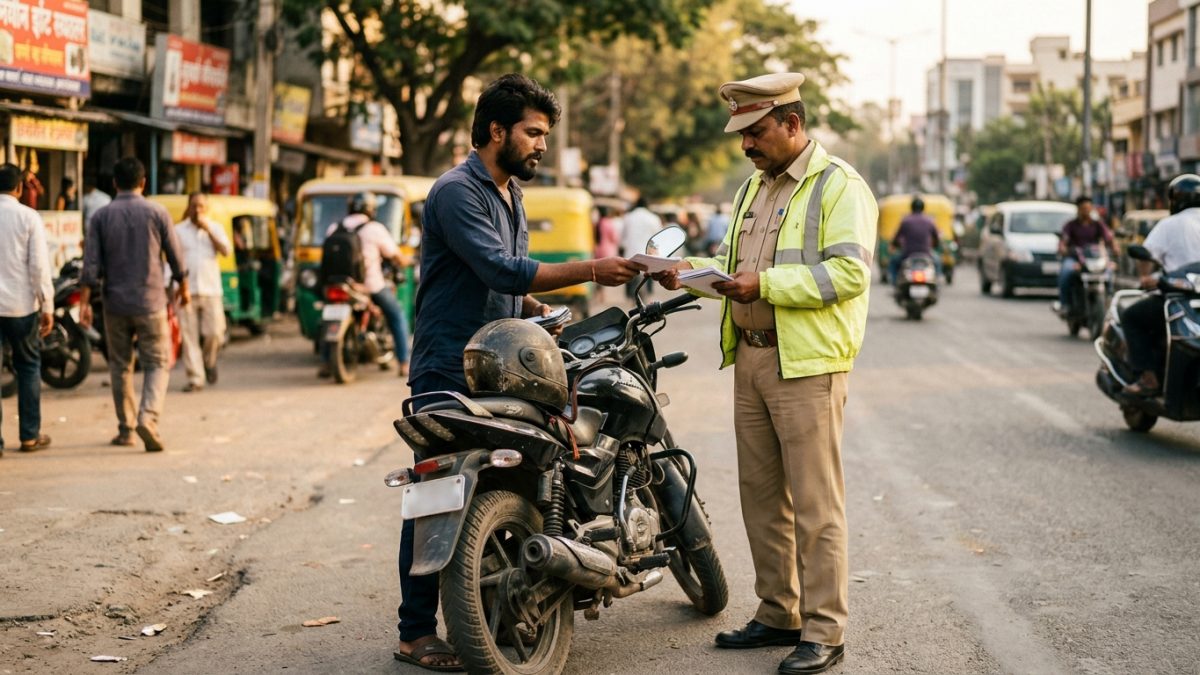
As of October 2026, two-wheelers registered between late 2018 and 2021 have reached the end of their base 5-year coverage period. Once this 5-year term lapses, your two-wheeler carries zero valid insurance on Indian roads. Riding without valid third-party liability cover is a serious legal violation under the Motor Vehicles Act.
Warning: Automated Number Plate Recognition (ANPR) cameras cross-reference passing bikes against the central Vahan and IIB databases, issuing digital challans even without a manual traffic stop.
Under Section 196 of the Motor Vehicles Act (amended in 2019), the penalties for driving an uninsured vehicle are strict across all Indian states:
- First Offence: A fine of ₹2,000 and/or imprisonment up to 3 months.
- Second and Subsequent Offences: A fine of ₹4,000 and/or imprisonment up to 3 months.
- Accident Liability: Full personal financial liability for any third-party death, bodily injury, or property damage awarded by the Motor Accident Claims Tribunal (MACT).
If you are unsure whether your vehicle has pending fines from an expired policy, verify your status on the VahanX challan search portal.
Is 5 Year Bike Insurance Mandatory for Old Bikes?
A frequent point of confusion among motorcycle and scooter owners is whether they must purchase another long-term 5-year policy. The answer is clear: no, a 5-year policy is not mandatory for an old bike.
The legal mandate for a 5-year long-term policy applies strictly to brand-new two-wheelers at the time of showroom purchase and initial registration at the Regional Transport Office (Parivahan Sewa). When completing a two wheeler insurance renewal after 5 years, you have complete flexibility to select the policy type and tenure that matches your budget.
Available Options for Bike Insurance Renewal After 5 Years
- 1-Year Annual Comprehensive Policy: Covers both third-party legal liabilities and accidental damages, theft, or fire to your own bike. This is the most recommended cover for daily riders.
- 1-Year Standalone Third-Party Policy: Satisfies the statutory minimum required by law. It protects against legal liabilities towards third parties but pays zero rupees if your bike is damaged or stolen. Learn more about third party bike insurance rates and rules.
- Standalone Own Damage (OD) Policy: Applicable only if you already hold an active, valid multi-year third-party policy. Read our guide on standalone own damage bike insurance rules.
- Multi-Year Renewal (2 or 3 Years): Offered by select private insurers. This option allows you to lock in third-party premium rates against future annual regulatory hikes.
Tip: You do not need to renew your policy with the same insurer that provided your original showroom policy. You can switch to any IRDAI-licensed insurer online without losing your accrued benefits.
Step-by-Step Guide: How to Renew Bike Insurance After 5 Years Online
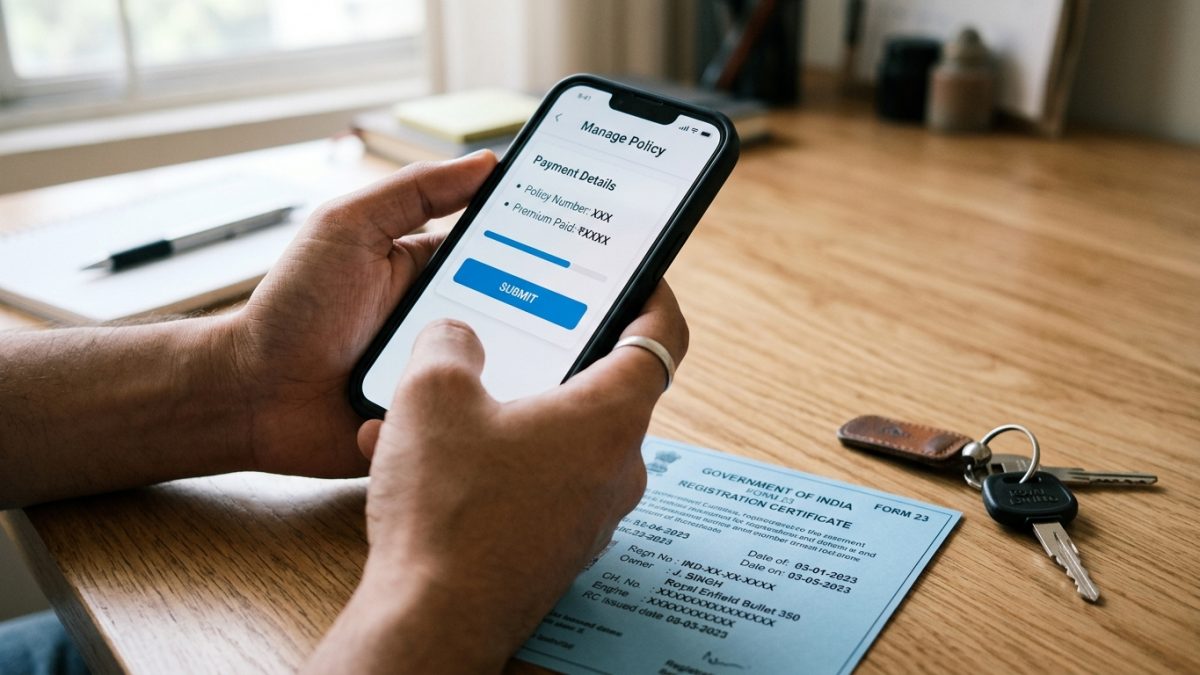
Executing your bike insurance renewal online takes under ten minutes if you have your vehicle details ready. Follow this step-by-step process to complete your renewal safely.
- Collect your vehicle documents: Retrieve your original bike Registration Certificate (RC) and your previous insurance policy schedule containing your previous policy number.
- Visit an authorised insurance portal: Navigate to an IRDAI-registered general insurance company website (such as ICICI Lombard, HDFC ERGO, Digit, or Acko) or an approved insurance web aggregator.
- Enter your registration details: Input your bike's registration number (e.g., DL-01-AB-1234). The portal automatically pulls your vehicle make, variant, registration date, and RTO code from the central Vahan registry.
- Select your coverage type: Choose between a Comprehensive Policy (Own Damage + Third Party) or a Standalone Third-Party cover. If your bike is parked in a secure area and rarely ridden, third-party cover may suffice, but comprehensive is safer.
- Adjust the Insured Declared Value (IDV): Use the online slider to adjust your bike's IDV. Keep the value close to prevailing market rates to ensure reasonable compensation in the event of theft or total loss.
- Declare your No Claim Bonus (NCB): Enter your accrued NCB percentage accurately from your previous policy papers. Incorrect declarations can lead to claim rejections later.
- Select relevant add-on covers: Choose optional add-ons if eligible, such as 24x7 Roadside Assistance (RSA), Pillion Rider Cover, or Consumables Cover.
- Review the Compulsory Personal Accident (CPA) cover: The law mandates a ₹15 lakh CPA cover for owner-drivers (costing ₹275 to ₹350 plus GST annually). If you already carry a standalone personal accident policy of ₹15 lakh or have CPA on another vehicle, uncheck this box to avoid paying twice.
- Complete KYC verification: Submit your PAN, Aadhaar number, or CKYC identifier as mandated by IRDAI regulations.
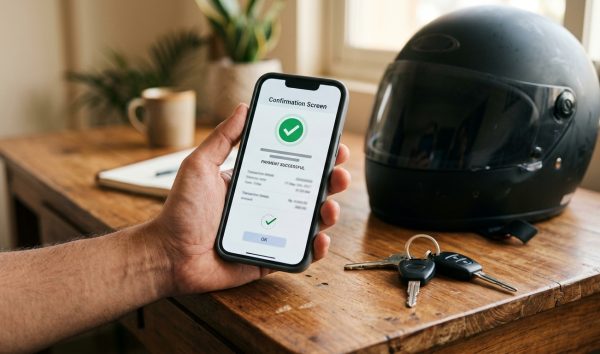
- Make payment and download the policy: Complete your payment via UPI, net banking, debit card, or credit card. Your renewed policy document will be delivered instantly to your email and WhatsApp.
Note: If your policy expired over 90 days ago, some insurers may require a quick self-inspection via a smartphone video link before issuing comprehensive coverage.
Mandatory Third-Party Bike Insurance Premium Rates
Third-party insurance premiums are strictly regulated and fixed by the IRDAI in consultation with the Ministry of Road Transport and Highways (MoRTH). Insurers cannot discount or increase these statutory rates. The table below outlines the annual third-party rates applicable for two-wheeler renewals as of October 2026 (exclusive of 18% GST).
| Engine Capacity (Petrol) | Annual TP Rate | Electric Motor Capacity | Annual TP Rate |
|---|
| Up to 75 cc | ₹538 | Up to 3 kW | ₹457 |
| 75 cc to 150 cc (e.g., Activa, Splendor, Pulsar 125) | ₹714 | 3 kW to 7 kW | ₹607 |
| 150 cc to 350 cc (e.g., Classic 350, MT-15, Hunter) | ₹1,366 | 7 kW to 16 kW | ₹1,161 |
| Above 350 cc (e.g., Himalayan 450, Interceptor 650) | ₹2,804 | Above 16 kW | ₹2,383 |
Third-party premiums for electric two-wheelers are discounted by approximately 15% compared to petrol vehicles of equivalent power output, incentivising green mobility across the country.
NCB After 5 Years Bike Insurance: Calculation and Rules
Your No Claim Bonus (NCB) represents a discount awarded on the Own Damage (OD) premium for every claim-free policy year. NCB never applies to the mandatory Third-Party component. How your ncb after 5 years bike insurance is handled depends entirely on how you managed your annual OD policy during the initial 5-year period.
Scenario A: You Renewed Your Own Damage Cover Annually
If you diligently purchased standalone Own Damage policies every year following Year 1 without filing a claim, your bonus accumulates according to the statutory IRDAI grid:
- After 1 claim-free year: 20% discount on OD premium
- After 2 consecutive claim-free years: 25% discount
- After 3 consecutive claim-free years: 35% discount
- After 4 consecutive claim-free years: 45% discount
- After 5 consecutive claim-free years: 50% discount (maximum statutory limit)
Reaching the 50% NCB threshold cuts your Own Damage premium in half, providing significant annual savings when renewing your comprehensive insurance plan.
Scenario B: You Allowed Your OD Cover to Lapse After Year 1
Many two-wheeler owners mistakenly assume their bundled showroom insurance covered everything for 5 full years. In reality, most showroom policies offered 5 years of TP cover and only 1 year of OD protection. If you never renewed the OD component after Year 1, your Own Damage coverage lapsed four years ago.
Because IRDAI guidelines mandate that an NCB is permanently forfeited if an OD policy is not renewed within 90 days of expiry, your accumulated bonus drops to 0%. When initiating your 5 year bike insurance renewal, you will not receive any discount on the OD component.
IDV Calculation After 5 Years Bike Insurance
The Insured Declared Value (IDV) is the maximum sum payable by an insurer in case of total loss, constructive total loss, or vehicle theft. For vehicles up to five years old, the IDV is fixed via a standard statutory depreciation scale defined by the General Insurance Tariff.
| Vehicle Age | Statutory Depreciation Rate |
|---|
| Up to 6 months | 5% |
| 6 months to 1 year | 15% |
| 1 year to 2 years | 20% |
| 2 years to 3 years | 30% |
| 3 years to 4 years | 40% |
| 4 years to 5 years | 50% |
How IDV is Calculated Beyond 5 Years
The standard IRDAI depreciation schedule ends at the 5-year mark (capped at 50%). For any vehicle older than 5 years, the rules change fundamentally: the IDV is determined by mutual agreement between the insurer and the policyholder.
When completing your renewal online, insurer algorithms estimate the IDV using the following parameters:
- The current second-hand resale value of your specific make and model in your local RTO jurisdiction.
- The physical condition of the two-wheeler and total odometer reading.
- Whether the manufacturer has discontinued the model or spare parts are scarce.
Online renewal calculators typically recommend an IDV benchmarked at 55% to 65% below the original ex-showroom price. Most portals provide an adjustable slider (typically ±10% to 15%). Avoid artificially sliding the IDV to the lowest possible amount just to shave ₹100 off your premium; if your motorcycle is stolen, the insurer will pay only the declared IDV.
Can You Get Zero Depreciation Cover After 5 Years?
A Zero Depreciation (Bumper-to-Bumper) add-on ensures that the insurer settles claims without deducting depreciation on replaced parts. Under standard claims without this cover, IRDAI rules apply steep depreciation deductions: 50% on rubber, nylon, and plastic components, 30% on fiberglass, and up to 50% on aged metal parts.
For bikes completing their 5-year lifecycle, obtaining Zero Depreciation cover becomes challenging:
- Standard Industry Cap: The majority of Indian general insurers cap Zero Depreciation covers strictly at 5 years from the date of initial registration. High operational wear makes older bikes financially unviable for standard bumper-to-bumper underwriting.
- Extended Underwriting Exceptions: A few select insurers (such as Tata AIG, HDFC ERGO, or Universal Sompo) permit Zero Dep add-ons for vehicles up to 7 years of age. However, this is subject to strict eligibility conditions: you must have had continuous Zero Dep cover on your previous policy without breaks, submit the bike for physical or video inspection, and accept a limit of 1 or 2 claims per year.
- Beyond 7 Years: No general insurer in the Indian market offers Zero Depreciation coverage for two-wheelers older than 7 years. All repair claims default to standard depreciation charts.
Common Pitfalls to Avoid During 5-Year Bike Insurance Renewal
Renewing a two-wheeler policy after 5 years involves several administrative nuances. Watch out for these widespread mistakes to prevent claim repudiation and unnecessary expenses.
1. Confusing 5-Year Bundled Coverage with Comprehensive Protection
Never assume that your bike was covered for accidental damages across the entire initial 5 years. Always check your original policy schedule. If your OD expired after the first 12 months, your bike has been operating on third-party coverage only.
2. Missing the 90-Day NCB Renewal Window
If you held an active OD cover that recently expired alongside your 5-year TP policy, renew it within 90 days. Exceeding 90 days completely nullifies your accrued NCB, resetting your discount from up to 50% back to zero.
3. Paying for Redundant Personal Accident (CPA) Cover
Insurers automatically bundle the ₹15 lakh Compulsory Personal Accident cover into the premium checkout screen. If you already own an active standalone personal accident policy or hold CPA cover under another insured car or bike, submit your declaration online to opt out and save up to ₹350 annually.
4. Delaying Renewal Until the Exact Expiry Date
While policy issuance is instantaneous online, updating policy records on the central Vahan database and Parivahan portal can take between 24 and 72 hours. Renew your policy 7 to 10 days before expiry to prevent automated ANPR camera challans during database synchronization. Always confirm your registration and insurance validity on the VahanX vehicle search before taking your bike on long highway rides.
Conclusion
Completing your 5 year bike insurance renewal on time ensures full legal compliance and protects you from steep penalties under Section 196 of the Motor Vehicles Act. You are not locked into buying another long-term 5-year plan; choosing an annual comprehensive policy provides the optimal balance between affordable premiums, appropriate IDV, and solid accidental protection.
Before you purchase a policy, verify your current insurance validity date, engine specifications, and RTO registration details on VahanX RC search to ensure error-free online renewal.