Third party bike insurance is a mandatory statutory cover under Indian law that protects motorcycle and scooter owners against financial liabilities arising from death, physical injury, or property damage caused to a third party. It does not cover accidental damages to or theft of your own two-wheeler.
Before taking your vehicle out on public roads, you can check your bike insurance expiry date to make sure your liability policy remains active and legally compliant.
Key Takeaways
- Under Section 146 of the Motor Vehicles Act, 1988, third-party liability cover is legally mandatory for all two-wheelers in India.
- Premium rates are fixed by MoRTH and IRDAI based on engine displacement (cc) or motor kilowatt rating.
- Third-party property damage is capped at ₹1,00,000, while bodily injury or death liability has no upper limit.
- Riding an uninsured two-wheeler attracts a fine of ₹2,000 for the first offence and ₹4,000 for repeat offences.
- Compulsory Personal Accident (CPA) cover provides ₹15,00,000 protection for the owner-driver unless validly waived.
| Feature | Statutory Specification |
|---|
| Governing Law | Section 146, Motor Vehicles Act, 1988 |
| Regulating Authorities | MoRTH & IRDAI |
| Mandatory Policy Duration (New Bikes) | 5-year upfront long-term cover |
| Annual Renewal Policy Duration | 1 year (or multi-year renewal options) |
| Fine for Riding Uninsured | ₹2,000 (1st offence), ₹4,000 (subsequent) |
| Bodily Injury Compensation Cap | No upper limit (awarded by MACT) |
| Property Damage Liability Limit | Up to ₹1,00,000 (or ₹6,000 restricted) |
Legal Rules and 5 Year Third Party Bike Insurance Rules
Operating any two-wheeler without active liability protection is illegal under Section 146 of the Motor Vehicles Act, 1988. The law stipulates that no motor vehicle can ply in a public area without a policy issued by an authorised insurer that covers third-party liabilities.
As per the landmark directive implemented on September 1, 2018, all brand-new two-wheelers purchased in India must carry a mandatory 5-year upfront cover. Under these 5 year third party bike insurance rules, dealerships cannot deliver a new motorcycle or scooter without enrolling it in a 5-year liability policy.
Once the initial 5-year long-term period lapses, two-wheeler owners can renew their cover on an annual basis or choose available multi-year terms. The third party bike insurance validity is recorded digitally in national databases to help enforcement agencies verify compliance.
Warning: Dealerships are legally prohibited from releasing a newly registered two-wheeler without issuing an active 5-year long-term liability insurance policy certificate.
IRDAI Third Party Bike Insurance Price by Engine CC
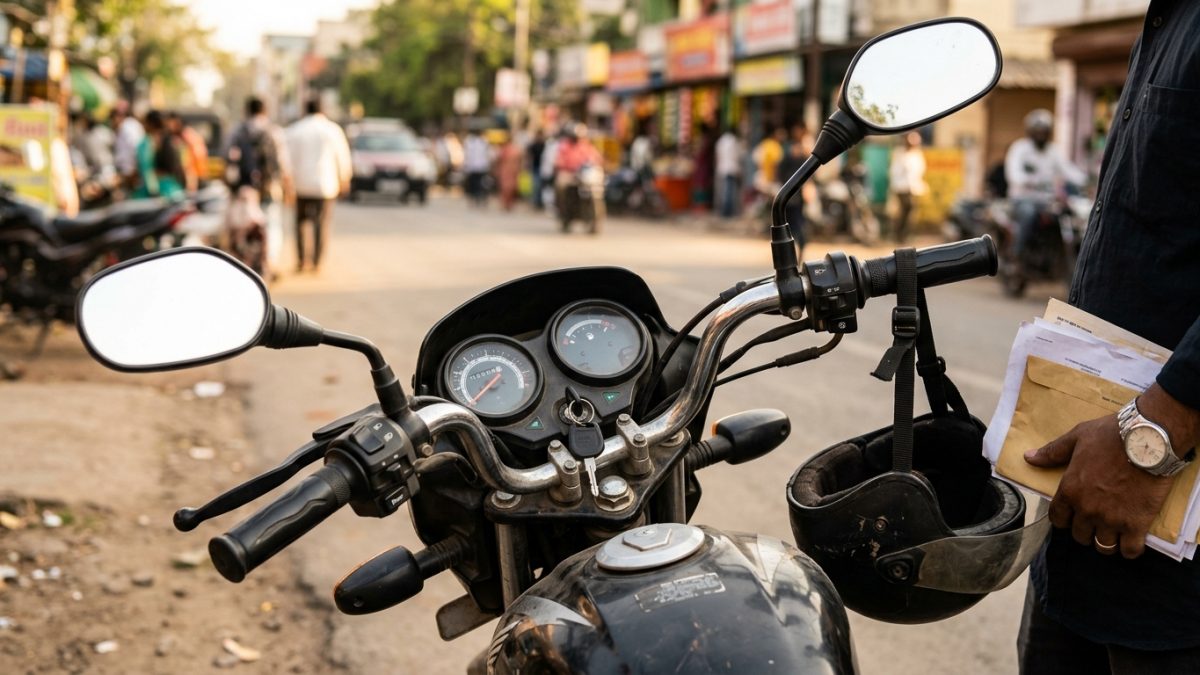
The premium for third party two wheeler insurance is not decided by individual insurance companies. The Insurance Regulatory and Development Authority of India (IRDAI) and the Ministry of Road Transport and Highways (MoRTH) jointly notify standard tariff rates that every licensed insurer must charge without markups or discounts.
Base premiums are strictly categorised by the engine displacement (cubic capacity) of petrol two-wheelers, or the motor output in kilowatts (kW) for electric two-wheelers. All statutory base rates attract an additional 18% Goods and Services Tax (GST).
Petrol Two-Wheeler Premium Slabs
The standard third party bike insurance price for internal combustion engine (ICE) two-wheelers depends on which cubic capacity slab the engine falls under.
| Engine Capacity (cc) | 1-Year Base Premium | 1-Year (Incl. 18% GST) | 5-Year Base Premium (New) | 5-Year (Incl. 18% GST) |
|---|
| Up to 75 cc | ₹538 | ~₹635 | ₹2,901 | ~₹3,423 |
| 75 cc to 150 cc | ₹714 | ~₹842 | ₹3,851 | ~₹4,544 |
| 150 cc to 350 cc | ₹1,366 | ~₹1,612 | ₹7,365 | ~₹8,691 |
| Exceeding 350 cc | ₹2,804 | ~₹3,309 | ₹15,117 | ~₹17,838 |
Commuter bikes and scooters such as the Hero Splendor, Honda Activa, Honda Shine, TVS Jupiter, and Bajaj Pulsar 125 fall under the 75 cc to 150 cc category. Premium motorcycles such as the Royal Enfield Classic 350 and Apache RTR series fall into the 150 cc to 350 cc bracket, which alters the bike insurance 3rd party price accordingly.
Electric Two-Wheeler Premium Slabs
Electric scooters and bikes benefit from an approximate 15% discount on the statutory premium compared to equivalent petrol slabs to promote cleaner urban mobility.
| Motor Output (kW) | 1-Year Base Premium | 1-Year (Incl. 18% GST) | 5-Year Base Premium (New) | 5-Year (Incl. 18% GST) |
|---|
| Not exceeding 3 kW | ₹457 | ~₹539 | ₹2,466 | ~₹2,910 |
| 3 kW to 7 kW | ₹607 | ~₹716 | ₹3,273 | ~₹3,862 |
| 7 kW to 16 kW | ₹1,161 | ~₹1,370 | ₹6,260 | ~₹7,387 |
| Exceeding 16 kW | ₹2,383 | ~₹2,812 | ₹12,849 | ~₹15,162 |
Popular electric two-wheelers like the Ather 450X, TVS iQube, Ola S1, and Bajaj Chetak generally fall into the 3 kW to 7 kW slab, keeping their two wheeler third party insurance premium relatively affordable.
Compulsory Personal Accident (CPA) Cover Rules
In addition to standard third-party liability, IRDAI mandates a Compulsory Personal Accident (CPA) cover for individual vehicle owners. This policy provides a fixed financial benefit of ₹15,00,000 to the owner-driver in the event of accidental death or permanent total disability while riding, mounting, or dismounting the bike.
The annual fee for CPA cover is standardised between ₹275 and ₹330 plus 18% GST per year. While insurers automatically add this charge during online checkout, you are legally permitted to opt out under specific conditions set out by IRDAI regulations.
When Can You Waive CPA Cover?
- You already possess an active standalone personal accident policy providing at least ₹15 lakh sum insured.
- You have already purchased an active CPA cover under another motor insurance policy for a vehicle registered in your name.
- The registered owner does not possess a valid driving licence (such as vehicles registered under business entities or minors).
Tip: If you own multiple two-wheelers or a car and a bike, you do not need to pay for CPA cover multiple times. One valid CPA policy protects you as a driver across all your vehicles.
Coverage Scope: What Third Party Two Wheeler Insurance Covers and Excludes
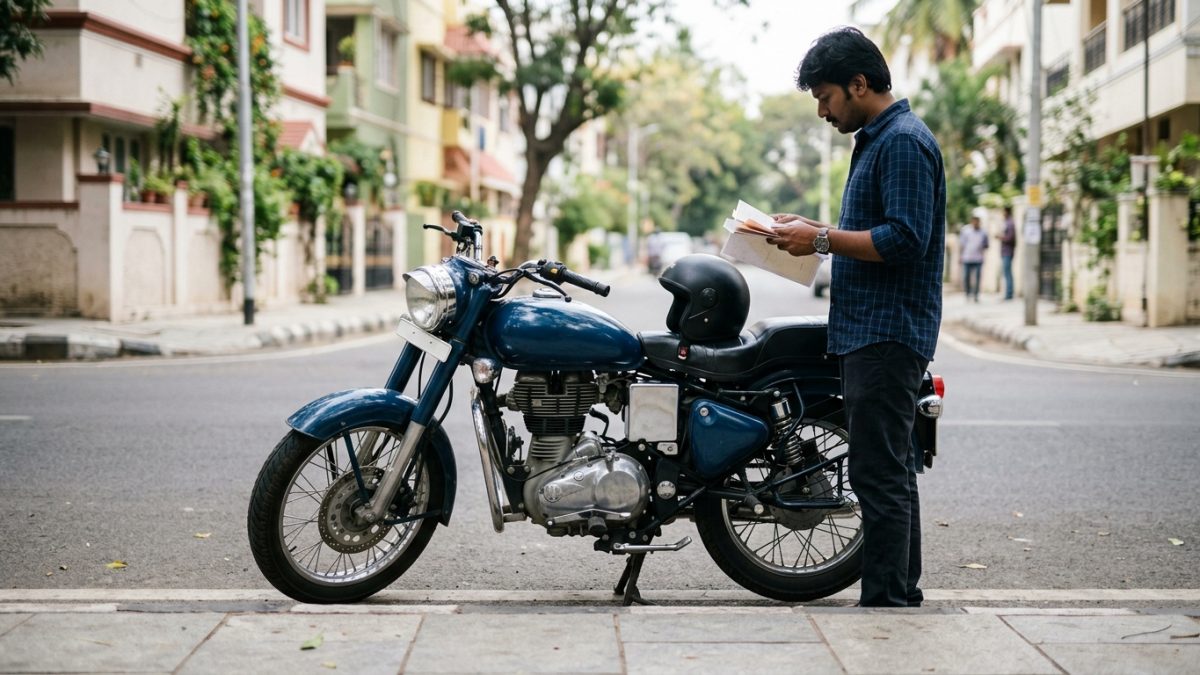
Understanding the exact legal boundaries of your policy prevents unexpected surprises during roadside mishaps. A liability-only policy protects your legal liability to others, not your wallet for personal property repair.
What Is Covered
- Bodily Injury and Death: Unlimited financial liability coverage for fatal harm or injury caused to a pedestrian, passenger in another vehicle, or fellow motorist. Compensation amounts are settled by the Motor Accident Claims Tribunal (MACT).
- Third-Party Property Damage (TPPD): Financial coverage up to ₹1,00,000 for damages caused to third-party assets, commercial vehicles, residential boundary walls, or public property.
- Legal Defence Costs: Professional legal representation and court costs incurred to defend claims filed against you in court, subject to insurance approval.
What Is Excluded
- Own Damage (OD): Repair costs, dent removal, painting, or spare part replacements for your own motorcycle are completely excluded.
- Theft and Total Loss: No financial recovery if your motorcycle is stolen, vandalised, or destroyed by natural calamities like floods and fires.
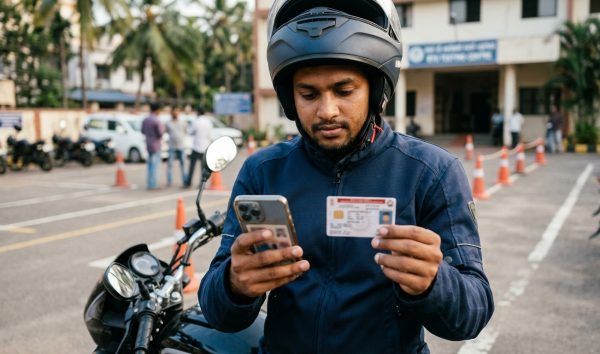
- Riding Without a Valid DL: Claims are denied if the rider did not hold a valid, active driving licence for that vehicle class. You can verify your licence credentials via a driving licence status check.
- Driving Under the Influence: Accidents that occur when the rider is impaired by alcohol, drugs, or illegal substances are repudiated immediately.
- Commercial Use: Using a private two-wheeler for non-approved commercial deliveries, paid passenger transit, or racing voids liability protection.
- Pillion Rider Injuries: Pillion passengers are not automatically protected under plain third-party policies unless a separate pillion PA add-on is included.
Important: Third-party insurance never pays a single rupee for damages to your own motorcycle. If you ride an expensive bike, consider a comprehensive or standalone own-damage cover.
Fine for Riding Bike Without Insurance under Motor Vehicles Act
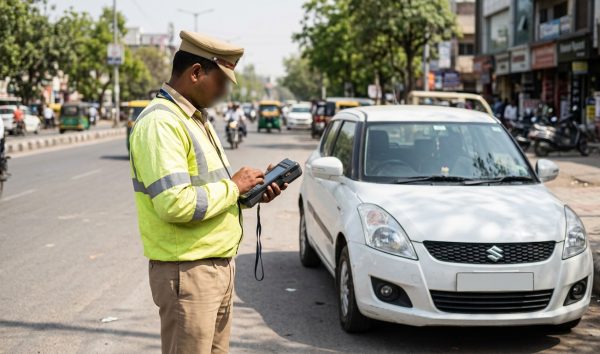
Riding a motorcycle or scooter without a valid insurance cover is a serious traffic violation under the amended Motor Vehicles Act. Enforcement agencies monitor compliance through automated traffic surveillance and roadside inspections.
Penalties Under Section 196
Under Section 196 of the Motor Vehicles Act, the fine for riding bike without insurance is structured as follows:
| Offence Level | Statutory Fine | Additional Penalties |
|---|
| First Offence | ₹2,000 | Imprisonment up to 3 months, or both |
| Subsequent Offence | ₹4,000 | Imprisonment up to 3 months, or both |
While some state authorities notify varying compounding charges for procedural paperwork lapses, municipal traffic divisions increasingly issue automated e-challans based on the central ITMS network. You can check for any active traffic penalties on your vehicle using our e-challan status search tool.
Operational and Personal Risks
Beyond the monetary fine, traffic police officers possess the statutory authority to seize and impound your two-wheeler on the spot until proof of active insurance is produced. Regional transport authorities may also suspend your driving licence for up to 3 months.
More critically, if an uninsured bike causes an accident resulting in death or life-altering disability, the owner remains personally liable. MACT claim awards routinely range from ₹10 lakh to more than ₹50 lakh. Without an insurer to absorb that financial liability, civil courts can order the attachment of your personal savings and real estate assets to satisfy the decree.
How to Buy Third Party Bike Insurance Online Step-by-Step
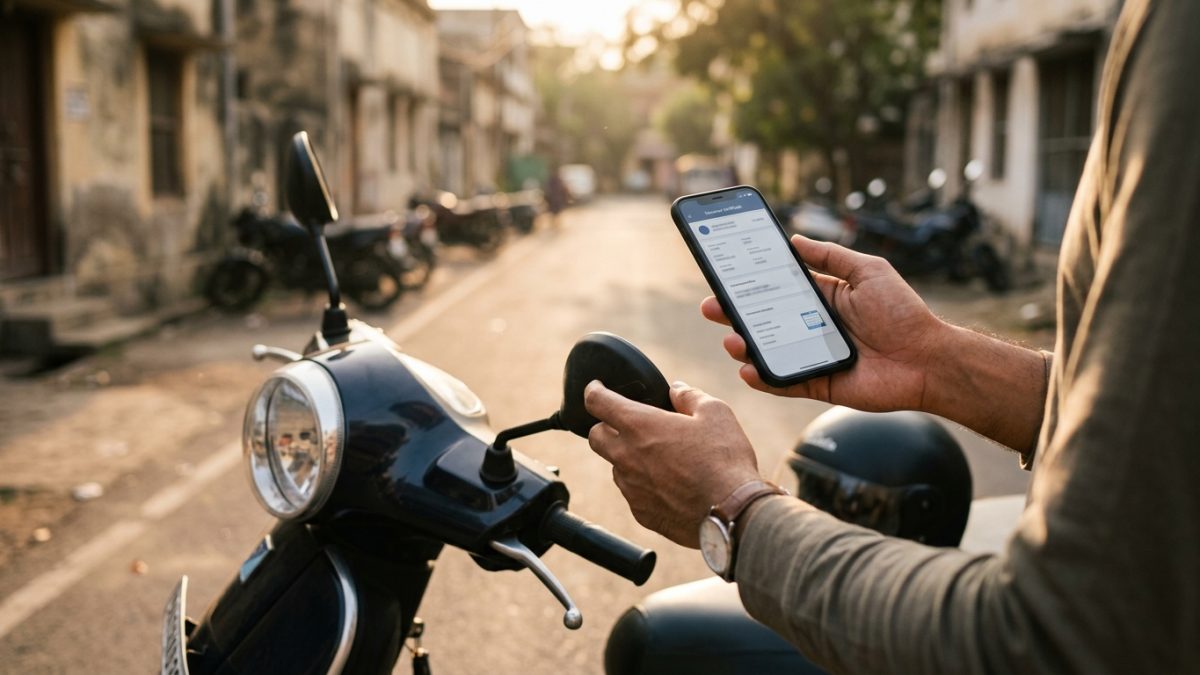
Purchasing third party bike insurance online takes only a few minutes when you have your registration and identity documents ready. Digital issuance eliminates agency commissions and provides immediate policy generation.
- Two-wheeler registration certificate (RC) number and registered RTO location.
- Vehicle chassis number and engine number (essential for new or long-lapsed bikes).
- Previous policy number and insurer details (for standard renewal).
- Aadhaar card or PAN card details for mandatory Central KYC (C-KYC) verification.
Step-by-Step Purchasing Process
- Access the Insurance Portal: Open the official portal of any IRDAI-registered general insurance provider or an approved web aggregator platform.
- Provide Vehicle Information: Enter your two-wheeler registration number. Select your bike's exact make, model variant, and year of manufacture.
- Select Coverage Type: Choose the "Liability Only" or "Third-Party Only" policy option from the quote options.
- Address the CPA Cover: Keep the owner-driver CPA cover selected if you do not have personal accident protection, or check the waiver declaration if you already have valid standalone PA coverage.
- Complete Mandatory C-KYC: Complete the identity verification step by entering your PAN details or submitting an Aadhaar OTP via the insurer's secure C-KYC interface.
- Make Payment: Settle the premium using UPI, net banking, or debit card. Download the generated policy schedule and insurance certificate immediately.
If your policy has expired, review our detailed guide on bike insurance renewal rules and grace periods to avoid vehicle inspection delays.
Common Mistakes, Vahan Sync Lag and Roadblocks
While buying third-party cover online is fast, vehicle owners frequently encounter preventable administrative issues.
1. The Vahan Database Synchronization Gap
After you buy a policy online, the insurance company transmits the policy record to the Insurance Information Bureau (IIB), which subsequently syncs with the central Parivahan Sewa database. This synchronization process generally takes between 24 and 72 hours.
If you are stopped by traffic authorities or automated ANPR cameras during this intermediate window, the national system may still show your vehicle as uninsured. Always keep a downloaded PDF copy or physical printout of your certificate under your bike seat for at least one week following policy purchase.
2. Unintended CPA Duplicate Payments
Many two-wheeler owners accidentally pay the ₹275 to ₹330 personal accident fee repeatedly across multiple bikes. When renewing online, uncheck the default CPA box and submit your existing PA policy number to avoid paying this charge more than once.
3. Falling for Fraudulent Discount Schemes
Because base statutory rates are strictly fixed by IRDAI regulations, no legitimate insurance platform or broker can offer arbitrary discounts on third-party liability premiums. Be cautious of unsolicited SMS links or unauthorised agents offering cut-rate policies, as fake certificates leave you legally unprotected and personally liable.
Whenever you purchase or renew a policy, make sure to verify your vehicle RC details to confirm that your chassis number, engine number, and registration credentials match the official government register.
Conclusion
Securing a valid third party bike insurance policy is both an absolute legal mandate under the Motor Vehicles Act and a crucial financial shield against catastrophic liability claims. It guarantees that accidental harm to other road users is compensated without draining your personal savings.
Check your policy documents today, confirm your coverage limits, and ensure your two-wheeler remains fully insured before you embark on your next ride.