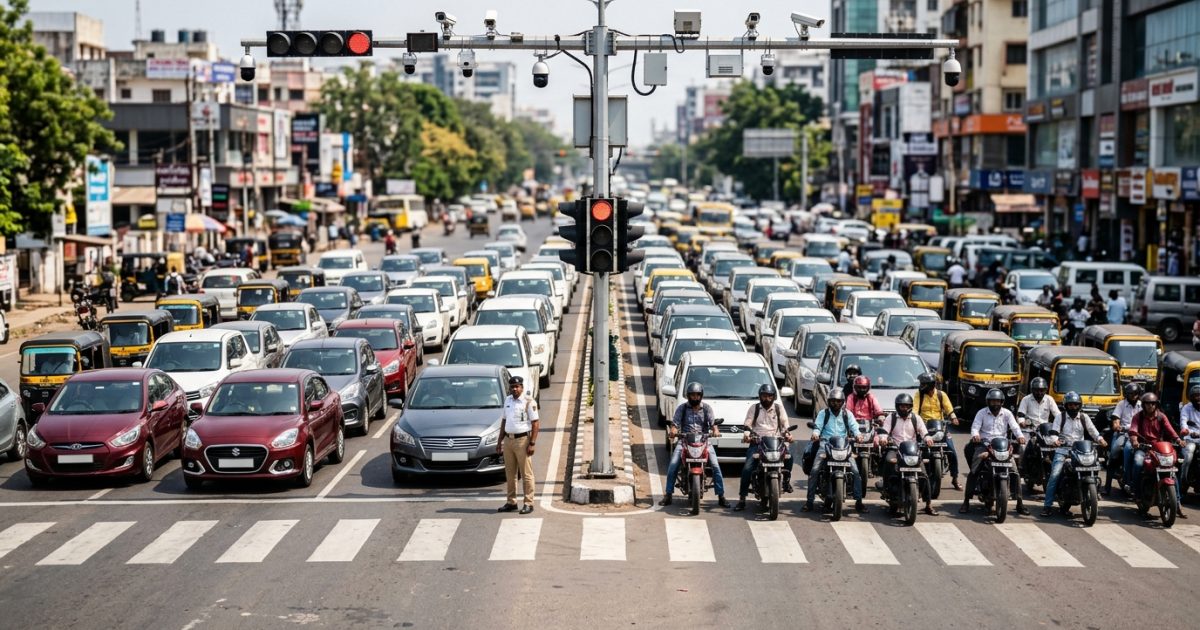
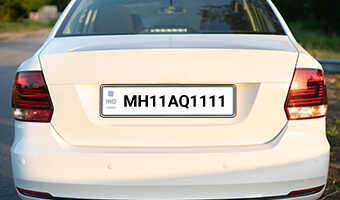
Under the new traffic rules notified by the Ministry of Road Transport and Highways (MoRTH), any motorist who accumulates five or more traffic violations within a single calendar year faces driving licence suspension. Introduced via the Central Motor Vehicles (Third Amendment) Rules, 2026, this statutory framework pairs automated camera enforcement with strict challan dispute deadlines. Motorists can track their record using an online challan check to clear notices before facing regional transport office penalties.
These updated motor vehicle act new rules shift Indian road enforcement from an isolated fine settlement model to comprehensive driver history tracking. Both major offences and automated camera detections count directly toward your driving record nationwide.
Key Takeaways
- Five traffic offences in one calendar year trigger licence suspension proceedings under Rule 21(25).
- Challans must be contested or settled within 45 days of issuance on the Parivahan portal.
- Unsettled challans after 75 days lead to automatic Not to be Transacted (NTBT) blacklisting.
- AI cameras actively detect seatbelt compliance, mobile phone usage, and stop-line violations.
- Digital documents on DigiLocker and mParivahan carry full legal validity under Rule 139.
The table below summarizes the key operational parameters introduced under the updated framework as of September 2026.
| Regulatory Measure | Legal Provision | Key Timeline / Threshold | Enforcement Impact |
|---|
| 5-Strike DL Suspension | Rule 21(25), CMVR | 5 violations in 1 calendar year | 3-month to 1-year licence suspension |
| Challan Dispute Window | Rule 167, CMVR | 45 days from issuance | Deemed acceptance if uncontested |
| Settlement Window | Rule 167, CMVR | 30 days post-acceptance | Total 75 days before penalties trigger |
| Vehicle Blacklisting | VAHAN / SARATHI Sync | Beyond 75 days unpaid | NTBT status blocks all RTO services |
| AI Camera Tracking | Section 136A, MV Act | Real-time optical sensors | Automated e-challan delivery within 3 days |
The 5-Strike Rule and Driving Licence Suspension Explained
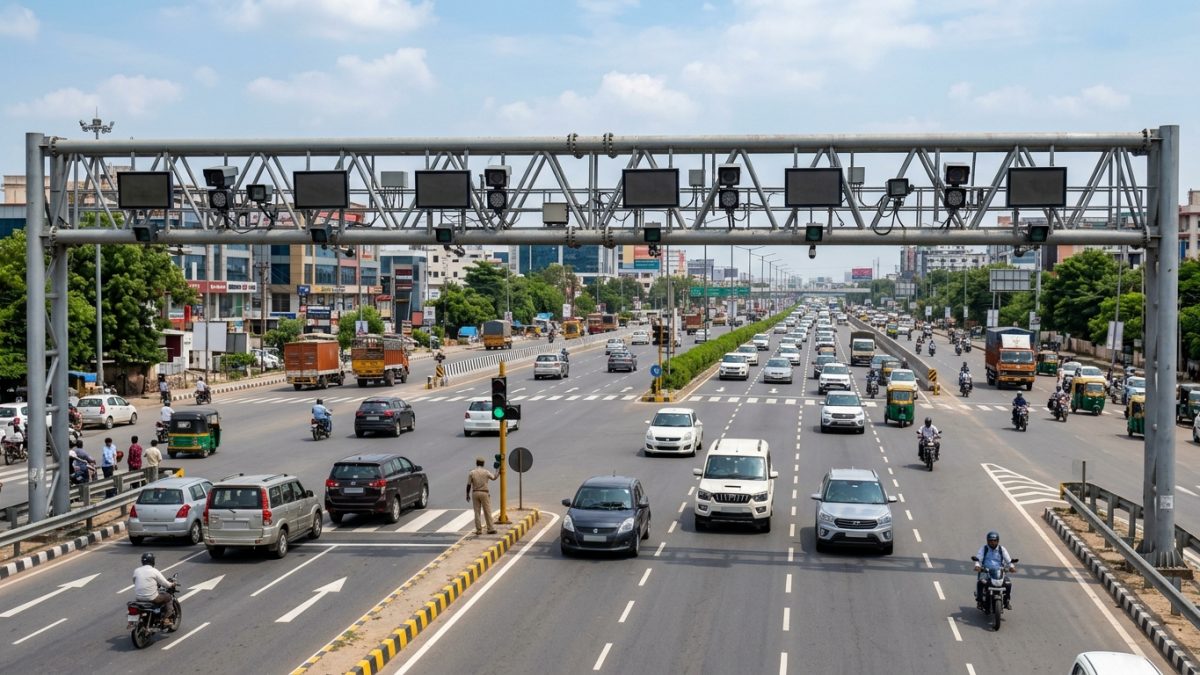
The core of the new traffic rules in India is the 5-strike policy established under Rule 21(25) of the Central Motor Vehicles Rules (CMVR), 1989. Introduced via Gazette Notification G.S.R. 48(E) on 21 January 2026 and enforced retrospectively from 1 January 2026, it empowers Regional Transport Offices (RTOs) and District Transport Offices (DTOs) to disqualify or suspend a driving licence if a driver commits five or more offences in a calendar year.
This framework is designed to curb habitual offenders by linking individual driving licences directly to national enforcement databases. You can verify your current permit status on our driving licence search tool.
How the 1-Year Calendar Window Works
Under the proviso to Rule 21(25), violations are calculated strictly within a single one-year period starting on 1 January and ending on 31 December. Violations accumulated in previous years do not carry forward into the next year; the strike counter resets every annual cycle.
Both minor compoundable digital challans (such as stop-line cuts or minor speeding) and major violations logged against the driver or linked vehicle contribute directly toward the 5-strike threshold.
Show-Cause Notices and Suspension Timelines
Reaching five strikes does not lead to instant, automatic cancellation without due process. The licensing authority must issue a formal show-cause notice, providing the motorist a statutory opportunity of being heard before passing any disqualification order.
Depending on the gravity of the combined infractions, the RTO typically suspends the driving licence for a duration ranging from 3 months to 1 year. For habitual offenders with aggravated violations, authorities hold discretionary power to order permanent revocation.
Warning: Five e-challans generated by automated highway cameras within a single calendar year empower the RTO to issue a show-cause notice for driving licence suspension.
Strict 45-Day Challan Resolution and NTBT Blacklisting
Alongside the 5-strike rule traffic violation framework, MoRTH substituted Rule 167 of the CMVR to establish rigid timelines for issuing, disputing, and settling traffic notices across all states.
Enforcement authorities must dispatch electronic challans via SMS, email, or Parivahan dashboards within 3 days of violation detection. Physical paper notices must be dispatched within 15 days.
The 45-Day Objection and Deemed Acceptance Window
Once an e-challan is issued, the vehicle owner has exactly 45 days to either settle the fine or lodge an online objection on the official Parivahan E-Challan portal. If no dispute is filed within this 45-day window, the violation is legally treated as deemed acceptance by the violator.
Following deemed acceptance or the formal rejection of a submitted grievance, the motorist receives an additional 30 days to pay the penalty. If you are handling an unresolved ticket, read our guide on traffic challan check online rules to prevent late penalties.
Not to be Transacted (NTBT) Status and Vehicle Freezes
If a fine remains unpaid after the combined 75-day statutory window, the central VAHAN and SARATHI platforms automatically flag the vehicle registration and driving licence as Not to be Transacted (NTBT).
When a vehicle is marked as NTBT, the RTO freezes all administrative services. You cannot transfer ownership, remove or add hypothecation, obtain a No Objection Certificate (NOC), renew fitness certificates, or renew a driving licence until every pending challan is settled. Only motor vehicle tax payments remain accessible during an NTBT freeze.
Deadline: An unpaid challan exceeding 75 days triggers an automatic NTBT freeze on VAHAN, locking vehicle ownership transfer, hypothecation removal, and fitness renewals.
AI-Based Surveillance Norms Under Section 136A
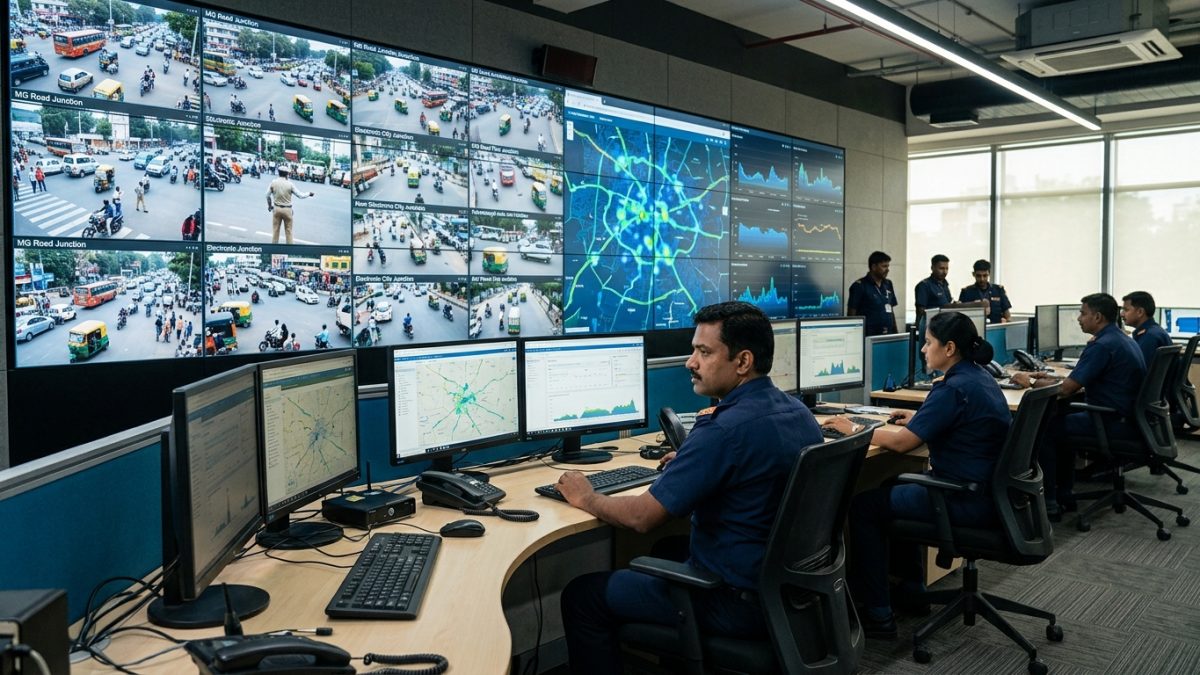
The electronic tracking backbone supporting new rto traffic rules operates under Section 136A of the Motor Vehicles Act, 1988. This statutory mandate empowers state governments to deploy high-resolution electronic surveillance for automated road safety enforcement.
Real-time automated networks cross-reference road events against the central registry maintained by MoRTH and the National Informatics Centre (NIC).
ANPR Cameras and In-Cabin Optical Detection
Highway networks and major urban junctions utilize three primary automated systems to detect non-compliance without requiring physical traffic police stops:
- Automatic Number Plate Recognition (ANPR): High-speed optical cameras photograph vehicle registration plates and instantly run verification checks on VAHAN for active insurance and registration status.
- Red Light Violation Detection (RLVD): Automated junction sensors trigger photographic captures the moment a vehicle crosses the stop line on a red signal.
- AI In-Cabin Optical Sensors: Advanced algorithms detect whether front and rear occupants are wearing seatbelts and spot handheld mobile phone use by drivers through windscreens.
Section 136A digital enforcement applies uniformly across all motor vehicle categories. To reinforce accountability, Section 210B of the Act mandates that any traffic enforcement official or authority who violates traffic provisions is liable to pay double the standard penalty prescribed for that offence.
Updated Traffic Fine List Under Motor Vehicle Act
Understanding the standard penalty structure under the Motor Vehicles Act is vital to avoiding severe compoundable fines and licence penalties. Review the fine schedule below as of September 2026.
| Offence Description | MV Act Section | Fine Amount | Additional Legal Consequence |
|---|
| Driving Without Valid DL | Section 181 | ₹5,000 | Vehicle impoundment possible |
| Overspeeding (LMV) | Section 183 | ₹1,000 – ₹2,000 | Counts toward 5-strike threshold |
| Overspeeding (Medium/Heavy) | Section 183 | ₹2,000 – ₹4,000 | Secondary commercial licence review |
| Dangerous / Rash Driving | Section 184 | ₹1,000 – ₹5,000 | Possible imprisonment |
| Mobile Phone Usage While Driving | Section 184 | ₹5,000 | Immediate strike on DL record |
| Drunk Driving (1st Offence) | Section 185 | ₹10,000 | Up to 6 months imprisonment |
| Drunk Driving (Repeat Offence) | Section 185 | ₹15,000 | Up to 2 years imprisonment |
| Riding Without Helmet | Section 194D | ₹1,000 | 3-month licence disqualification |
| Not Wearing Seat Belt (Front/Rear) | Section 194B | ₹1,000 | Applies to all seated occupants |
| Driving Without Valid Insurance | Section 196 | ₹2,000 (1st) / ₹4,000 (Repeat) | Court prosecution on repeat offence |
| Driving Without Valid PUCC | Section 190(2) | Up to ₹10,000 | Up to 3 months imprisonment |
| Blocking Emergency Vehicles | Section 194E | ₹10,000 | Mandatory compoundable penalty |
| Underage / Juvenile Driving | Section 199A | ₹25,000 (Parents/Guardians) | 3-year RC cancellation; DL barred to 25 |
Common Mistake: Relying on camera gallery screenshots of your driving licence or insurance is invalid; traffic police only recognise live digital documents pulled via DigiLocker or mParivahan.
State-Specific Enforcement Rules and Ground Realities
While the Central Motor Vehicles Rules establish the overarching statutory baseline, state transport departments enforce specific procedural requirements on the ground. Drivers crossing state borders must remain mindful of local differences.
The table below highlights critical regional procedures enforced across major state jurisdictions as of September 2026.
| State / Union Territory | Specific Rule / Order | Operational Requirement | Ground Reality |
|---|
| Delhi NCT | Amended Rule 167 Protocol | 50% upfront pre-deposit | Magistrate courts require 50% deposit to hear challan disputes |
| Kerala | MVD Circular No. 18/2026 | Mandatory IDTR training | Suspended licences unlocked only after accredited refresher course |
| Gujarat | VAHAN Batch Sync Drives | Periodic NTBT sweeps | Automated detention notices issued for vehicles with 5+ unpaid challans |
| Uttar Pradesh | Integrated Traffic Command | Inter-state VAHAN locking | Strict enforcement freezes NOCs for out-of-state vehicles with pending fines |
In Delhi NCT, motorists seeking to contest a rejected e-challan before a court magistrate must deposit 50% of the penalty amount upfront before the registry schedules a hearing. Motorists can review local enforcement details on the official Delhi Traffic Police portal or check our guide on virtual court challan payment.
In Kerala, paying the fine is not sufficient to reinstate a suspended permit. Drivers must complete a corrective driver refresher course at the Institute of Driver Training and Research (IDTR), and SARATHI unlocks the permit only after the training certificate is uploaded.
Step-by-Step Guide to Check, Pay, and Contest Challans Online
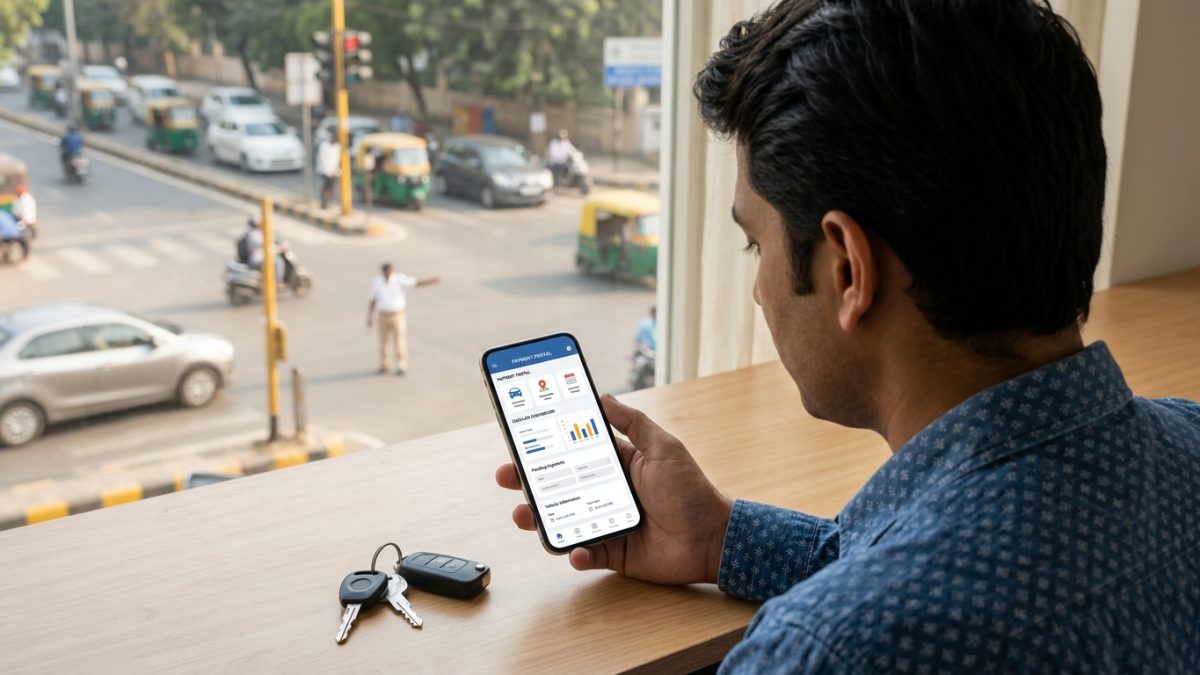
Motorists must manage their digital traffic records proactively to prevent driving licence suspension 5 violations triggers. The following steps outline how to inspect, settle, and contest e-challans on official national portals.
How to Check Pending Challan Status Online
- Visit the official portal: Open your web browser and navigate to the national E-Challan Parivahan portal.
- Locate status services: Click on the Check Online Services dropdown on the top navigation bar and select Check Challan Status.
- Enter identifying details: Input your Challan Number, Vehicle Registration Number (with the last 5 digits of your Chassis or Engine number), or Driving Licence Number.
- Verify captcha and search: Enter the verification code displayed on the screen and click on Get Detail to view photographic violation proof and pending penalties.
How to Pay Your E-Challan Online
- Initiate settlement: Click on the Pay Now button next to the specific pending challan row on the Parivahan dashboard.
- Authenticate mobile number: Enter the registered mobile number linked to the vehicle and submit the One-Time Password (OTP) received.
- Select payment gateway: Choose your preferred state payment gateway option, such as Bharatkosh, SBI ePay, or the state treasury portal.
- Complete digital payment: Finalise the transaction using UPI, net banking, or debit/credit card.
- Save official documentation: Download the digital payment receipt and clear transaction slip for your records.
How to Contest or Lodge Grievance for Wrong Challans
- Open grievance section: Within 45 days of challan issuance, select the Grievance / Dispute option on the Parivahan e-challan website.
- Provide violation details: Enter your Challan Number and state the grounds of dispute (such as cloned registration plate or incorrect vehicle type).
- Upload documentary evidence: Attach clear photographic evidence, dashcam footage, or vehicle sale receipts supporting your claim.
- Submit to grievance cell: Submit the ticket to the State Traffic Enforcement Grievance Cell for formal administrative review.
- Track adjudication outcome: Monitor the dispute status online; if rejected, you must settle the penalty within 30 days or elect to appear before a virtual court.
Common Mistakes Motorists Make Under New Traffic Rules
Thousands of motorists face vehicle blacklisting or licence penalties due to procedural oversights rather than intentional non-compliance. Being aware of these pitfalls protects your driving privileges.
1. Selling Vehicles on Open Delivery Notes
Handing over a car or two-wheeler without completing formal transfer paperwork (Form 29 and Form 30) is a major risk. Cameras continue issuing automated fines against the registered owner's record, rapidly accumulating strikes against your licence. Verify registration details using our RC details search.
2. Outdated Mobile Numbers on the VAHAN Database
If your current mobile number is not updated on the Parivahan database, you will miss the mandatory 3-day SMS notification. Unnoticed tickets lapse past the 45-day contest window, leading to deemed acceptance and unexpected NTBT blacklisting.
3. Multiple Drivers Using a Single Vehicle
Automated AI cameras log violations against the registered vehicle owner. If family members, commercial fleet operators, or hired chauffeurs commit five violations, the registered owner bears the legal responsibility to prove who was operating the vehicle or face licence suspension. Find your local transport center via our RTO office directory if you require manual corrections.
4. Ignoring Cloned or Counterfeit Plates
Criminals occasionally mount fake plates matching real vehicles. If you receive an out-of-state e-challan for a location your vehicle never visited, you must file a formal online dispute within 45 days. Ignoring the notice allows it to transition into deemed acceptance, locking your vehicle transactions nationwide.
Conclusion
Staying compliant with the new traffic rules requires continuous vigilance over your digital driving record. By monitoring automated camera notices, updating your contact details on the Parivahan portal, and promptly disputing erroneous tickets, you can protect your licence from suspension. Regularly check your vehicle record on the VahanX challan search to clear pending penalties before the 5-strike threshold takes effect.