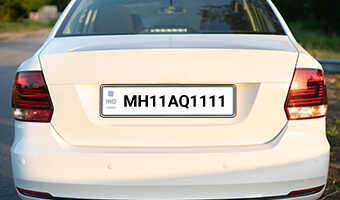
Conducting a regular traffic challan check online is now vital for every motorist in India. Under amended Rule 167 of the Central Motor Vehicles Rules enforced nationwide from September 2026, vehicle owners have exactly 45 days to pay or dispute an electronic fine before deemed acceptance, requiring a mandatory 50% penalty pre-deposit to appeal in court.
Ignoring digital traffic notices no longer means waiting for Lok Adalat discounts. Drivers can perform an instant e-challan status search by registration number to verify pending camera violations, check evidentiary photographs, and settle liabilities before automated portal penalties freeze vehicle services.
Key Takeaways
- Motorists have a strict 45-day window from challan issuance to either pay or file an administrative dispute.
- Failing to act within 45 days results in automatic deemed acceptance of the traffic violation.
- Appealing a rejected administrative grievance in court requires a mandatory 50% pre-deposit of the fine amount.
- Unpaid fines past 75 days trigger automated vehicle blacklisting on VAHAN, halting all statutory RTO transactions.
- Accumulating five or more challans within a 12-month period initiates driving licence suspension proceedings under Section 19.
| Regulatory Parameter | Previous Framework | September 2026 CMVR Framework |
|---|
| Action Window | Indefinite / Pending until Lok Adalat | Strict 45-Day Pay or Contest Limit |
| Challan Acceptance | Only upon physical admission or payment | Deemed Accepted after 45 days of inaction |
| Court Appeal Condition | Direct appearance with zero advance fee | Mandatory 50% penalty pre-deposit |
| Grievance Resolution | Unregulated municipal turnaround | Strict 30-day statutory disposal window |
| VAHAN Blacklisting | Manual request by traffic commissioner | Automated lock on Day 75 (Not to be Transacted) |
| Repeat Violator Rule | Ad-hoc physical license impounding | Automatic DL suspension review after 5 violations |
What Are the New Traffic Challan Rules 2026 Under CMVR Rule 167?
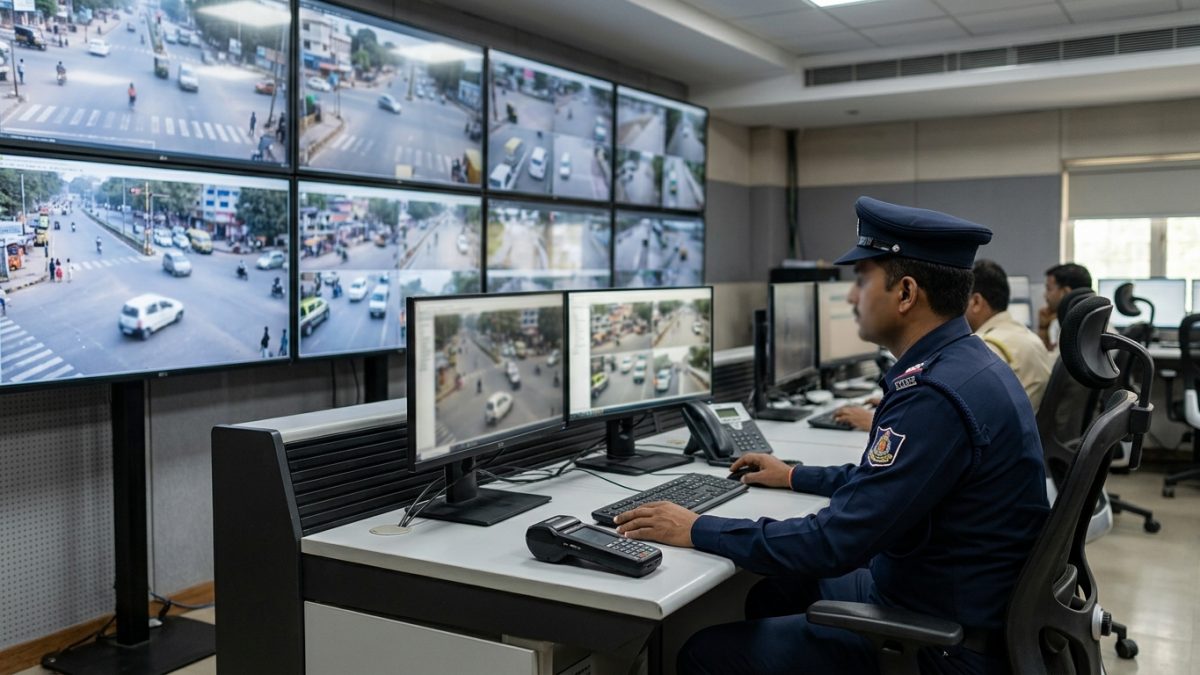
The Ministry of Road Transport and Highways (MoRTH) notified substantial modifications to Rule 167 of the Central Motor Vehicles Rules (CMVR), 1989, under the Central Motor Vehicles (Third Amendment) Rules, 2026. While published via the official gazette on January 20, 2026, full operational enforcement was rolled out nationwide in September 2026 as states integrated their administrative grievance setups.
This regulatory overhaul aims to tackle millions of unresolved digital fines clogging virtual magistrate courts. Automated enforcement technologies like Automatic Number Plate Recognition (ANPR) cameras, red-light speed traps, and mobile camera units generate lakhs of notices every month, which previously lingered unpaid for years.
The 45-Day Pay or Contest Window
Under Rule 167(5), a vehicle owner or driver has exactly 45 days from the timestamp of challan generation to address the citation electronically. During this window, you must choose between two distinct options on the national portal:
- Option A (Compounding): Accept the violation and pay the compounded penalty online using digital payment gateways.
- Option B (Dispute): Formally contest the citation before the designated grievance redressal officer by submitting evidentiary documents such as dashcam video, active permit slips, or proof of cloned plates.
Do not wait for a physical postal notice to arrive; the 45-day statutory timeline begins immediately once the electronic record is generated on the central server.
Automatic Deemed Acceptance and 30-Day Disposal
Rule 167(6) introduces a strict legal presumption known as deemed acceptance. If a driver neither pays nor disputes the ticket within 45 calendar days, the citation is permanently entered into the central database as admitted by the registered owner.
Once deemed accepted, the owner forfeits the right to regular administrative contestation. The system automatically grants a final 30-day grace period to clear the dues. If an owner does lodge a dispute within the initial 45 days, the designated grievance redressal officer must dispose of the matter within 30 days. If the authority fails to pass an order within this 30-day statutory window, the challan is quashed by default.
The 50 Percent Challan Pre-Deposit Mandate for Court Appeals
One of the most consequential amendments is Rule 167(9), establishing a 50 percent challan pre deposit requirement. Previously, motorists whose online complaints were dismissed could register their objections in virtual or physical traffic courts without paying any upfront amount.
Under the September 2026 enforcement framework, if a state grievance redressal authority rejects your dispute, you can only escalate the matter to a Judicial Magistrate or Virtual Traffic Court after pre-depositing at least 50% of the total fine amount with the state treasury.
Why the Upfront Fine Condition Was Introduced
Transport authorities introduced this requirement to halt frivolous litigation and eliminate opportunistic delay tactics. In prior years, thousands of vehicle owners ignored notices until annual National Lok Adalats convened, where backlogged fines were routinely settled at 50% to 80% discounts.
The pre-deposit mechanism ensures that only individuals with verifiable legal claims take matters to court. If the competent magistrate rules in your favour, the 50% deposit is refunded back to your bank account; if the ticket is upheld, the deposit is adjusted, and the remaining 50% balance becomes payable immediately.
Before taking a rejected dispute to court, confirm you have concrete evidence like geo-tagged photos or service logs, because failing your appeal forfeits the remaining 50% fine.
Protests and Legal Objections
The operational implementation of Rule 167 sparked immediate debate within legal circles. On September 21–22, 2026, the Coordination Committee of All District Court Bar Associations across all seven district courts in Delhi initiated an abstention from judicial work.
Legal advocates raised concerns that appointing executive administrative staff (such as Tehsildars, Sub-Divisional Magistrates, and Enforcement Officers) to adjudicate traffic disputes encroaches on judicial independence. They also argued that conditioning judicial appeals on an advance cash deposit restricts access to justice for economically vulnerable motorists.
How to Do a Traffic Challan Check Online on Parivahan
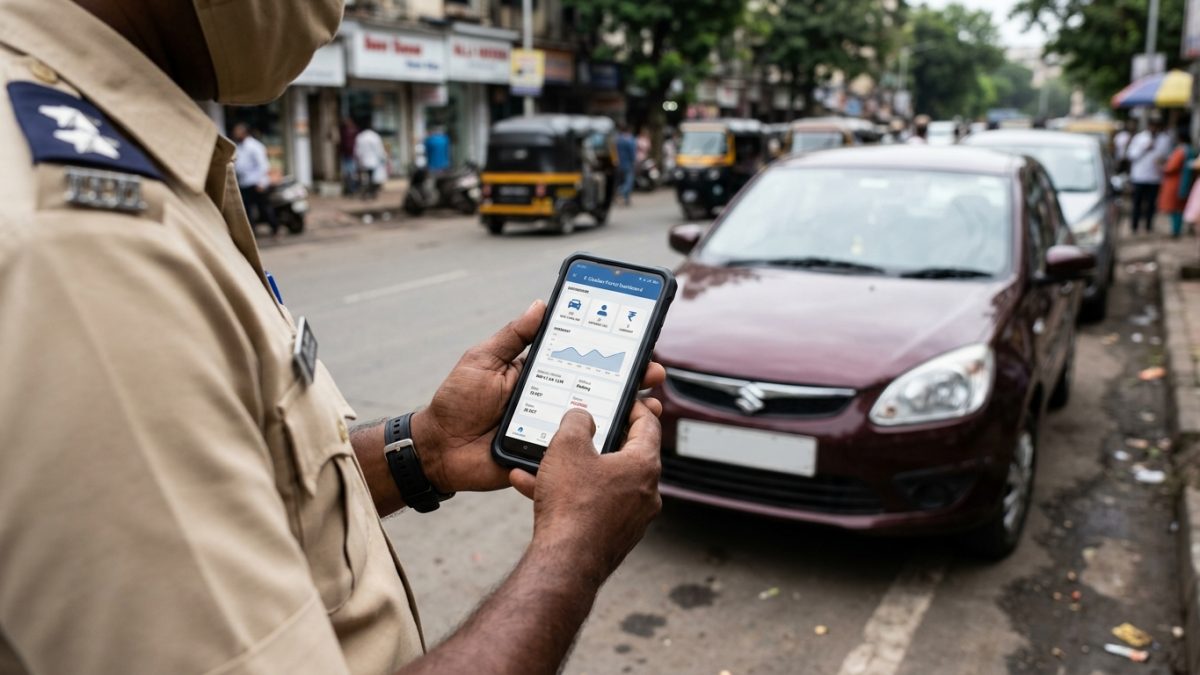
To keep your records compliant and prevent administrative penalties, vehicle operators should regularly verify the central traffic database. You can track your legal standing through the official Parivahan platform or by monitoring your vehicle registration data on the RC status check portal.
Step-by-Step Status Verification Process
- Open the official portal: Navigate to the central transport authority website at echallan.parivahan.gov.in or launch the NextGen mParivahan mobile application.
- Navigate to challan services: From the top navigation ribbon, select the Check Online Services dropdown and click on Check Challan Status.
- Input identification credentials: Choose your search query method by entering your Challan Number, Vehicle Registration Number, or Driving Licence Number.
- Authenticate vehicle identifiers: When querying via vehicle number, submit the last 5 alphanumeric digits of your chassis number or engine number for security verification.
- Solve the security captcha: Type the displayed alphanumeric characters and click the Get Detail button to populate active notices.
- Examine violations and evidence: Click the violation row to inspect high-resolution camera captures, exact GPS coordinates, date stamps, and applicable Motor Vehicles Act penalty sections.
Searching Challans by Driving Licence vs Vehicle Number
Automated camera systems issue fines against vehicle registration numbers, while on-road enforcement officers issue citations directly to your driving licence. Knowing how to query both identifiers guarantees complete visibility.
| Search Metric | Required Inputs | Violations Displayed | Best Used For |
|---|
| Vehicle Number | Registration No. + 5 digits of Chassis/Engine | Camera speed traps, red-light jumps, no-parking, ANPR hits | Vehicle owners, fleet managers, pre-sale inspection |
| Challan Number | Exact 15-digit alphanumeric challan code | Specific individual violation files and payment links | Direct clearance after receiving official SMS notice |
| Driving Licence | Valid DL Number + Portal Captcha | Handheld e-challan machine fines, physical stops, DUI | Drivers checking professional driving credentials |
Consequences of Ignoring Traffic Challans Beyond the 45-Day Limit
Ignoring modern electronic citations leads to automatic administrative sanctions across national transport databases. The revised regulatory framework synchronises local traffic enforcement databases with the nationwide VAHAN and SARATHI registries.
Automated VAHAN Blacklisting (75-Day Trigger)
When an electronic fine crosses the initial 45-day statutory contestation window, followed by the secondary 30-day post-acceptance notice period without full settlement (75 days total), the VAHAN central server automatically flags the registration as Not to Be Transacted.
This automated status prevents vehicle owners from accessing vital RTO functions. You cannot resolve these service freezes until every cleared payment reflects across state borders:
- Renewal of Registration Certificate (RC) for private vehicles past 15 years.
- Transfer of Vehicle Ownership when buying or selling in the pre-owned market.
- Issuance or mandatory renewal of Commercial Fitness Certificates (FC).
- Hypothecation termination, addition, or loan clearance updates.
- Issuance or interstate renewal of commercial transport route permits.
A vehicle flagged as Not to Be Transacted cannot legally change hands; buyers should check for unpaid fines before completing a transaction.
Driving Licence Suspension for Habitual Offenders
The revised enforcement guidelines establish concrete protocols for repeat violators. Under Rule 167 guidelines linked with Section 19 of the Motor Vehicles Act, 1988, any motorist who accumulates five or more traffic challans within a rolling 12-month period is formally classified as a serious or habitual offender.
Upon reaching this threshold, the regional transport authority initiates disqualification proceedings. Penalties include formal suspension of your driving licence for periods ranging from 3 months to 1 year. Furthermore, the Sarathi Parivahan system locks all pending licence services, barring online applications for duplicate licences, renewal requests, or International Driving Permits (IDP). You can inspect your credential status using our online DL verification tool.
How to Dispute a False or Incorrect e-Challan Online
Automated ANPR systems and optical cameras occasionally misread registration plates due to poor lighting, bent plates, or obscured fonts. If you receive an erroneous violation, submit a dispute within the 45-day statutory window.
Valid Grounds for Contesting a Ticket
State grievance redressal officers entertain disputes supported by unambiguous documentary evidence. Valid grounds include:
- Cloned or Counterfeit Plates: Photographic proof that your vehicle make, body type, or colour contradicts the camera capture.
- Mismatched Geographical Timestamps: Evidence establishing that your vehicle was elsewhere (e.g., toll plaza slips, garage job cards, or GPS tracking logs).
- Valid Documents in Effect: Producing valid Pollution Under Control (PUC) or motor insurance certificates active at the moment the camera logged a non-compliance hit.
- Emergency Public Duty: Registered vehicles transporting emergency medical patients or operating under designated essential service orders.
For detailed step-by-step guidance on submitting formal documentation and drafting tickets, review our dedicated guide to wrong challan dispute procedures.
Steps to Lodge an Administrative Grievance
- Access the Grievance Module: Navigate to the Grievance section on the central e-Challan portal.
- Select Dispute Violation: Locate the specific unpaid challan number within your verified vehicle dashboard.
- Upload Evidentiary Files: Attach relevant digital files, such as dashcam recordings, PUC certificates, or repair receipts in approved PDF or JPG formats.
- Submit and Track the Ticket: Note the unique Grievance Tracking ID to monitor the 30-day administrative review period.
- Court Escalation: If the grievance is formally rejected, you can escalate the matter to virtual courts through our virtual court settlement guide, keeping in mind the mandatory 50% deposit requirement.
State-Wise Implementation and Judicial Decisions
While the CMVR functions as central legislation, actual field execution, dispute officer appointments, and enforcement protocols depend on state transport departments and regional High Court directives.
| State / Union Territory | Grievance Review Authority | Local Court Rulings / Specific Directives |
|---|
| Delhi NCT | SDMs, Tehsildars, and Transport Enforcement Officers | Grievance system triggered district bar association work boycotts over 50% pre-deposits in late 2026. |
| Telangana | Integrated Police Redressal Cells & RTO Officers | High Court ruled traffic police cannot seize vehicle keys or coerce on-the-spot payments without due notice. |
| Jammu & Kashmir | Traffic Police Headquarters Grievance Officers | Srinagar Traffic Magistrate ruled uncalibrated personal mobile phone captures invalid under Rule 167A. |
| Maharashtra | State Traffic Management Centre Online Officers | Automated API integration with MahaTraffic mobile app for camera violations. |
Delhi Administrative Setup
The National Capital Territory of Delhi was among the first jurisdictions to gazette its grievance redressal officers under Rule 167. The Delhi Transport Department designated Food & Supplies Officers, Section Officers, Tehsildars, and Transport Enforcement Officers, supervised by Sub-Divisional Magistrates (SDMs), as adjudicating authorities. This executive arrangement continues to face legal scrutiny from local bar councils.
Telangana High Court Protections
In early 2026, the Telangana High Court issued key protections regarding the collection of automated fines. The bench affirmed that while central digital challan mechanisms remain legally valid, enforcement officers cannot arbitrarily seize vehicle keys, detain motorists along public roads, or demand on-the-spot compounding payments without proper advance notice.
Evidentiary Standards in Srinagar
In Jammu & Kashmir, the Srinagar Special Mobile Traffic Magistrate delivered a landmark ruling regarding evidence integrity. The court held that e-challans generated by enforcement personnel using personal mobile phones without authentic hardware calibration, certified timestamps, and statutory compliance under Rule 167A lack evidentiary value and cannot be enforced against motorists.
Common Roadblocks and Mistakes in Online Challan Clearance
Motorists often encounter procedural bottlenecks when verifying and paying pending traffic fines online. Being aware of these issues helps prevent unintended defaults.
Outdated Mobile Numbers on VAHAN and SARATHI
The entire e-challan framework relies on automated SMS notifications dispatched to your mobile number. If you changed your phone number without updating your Vahan vehicle record, digital notices will go unread.
As a result, the 45-day response window can lapse without your knowledge, transitioning the ticket into deemed acceptance. Update your contact credentials immediately on the central Parivahan portal to receive timely alerts.
Payment Deductions with Pending Status
A common digital issue occurs when money is deducted from your bank account via UPI, net banking, or debit card, but the portal continues to show your challan status as Pending. Do not initiate an immediate second payment.
Navigate to the Check Pending Transaction tab on the e-Challan portal, submit your challan number, and click Verify. The central server will ping the payment gateway aggregator to update the transaction status within 24 to 48 hours.
Phishing Scams and Counterfeit Links
Cybercriminals frequently distribute deceptive SMS and WhatsApp messages claiming your vehicle has an unpaid fine, accompanied by links mimicking official domains. Official traffic notices will only direct you to verified government addresses ending in .gov.in. Never input banking passwords or personal identification numbers on unofficial websites.
Always verify citations by going directly to the official government portal rather than clicking external links received in unsolicited text messages.
Conclusion
Staying proactive with your regular traffic challan check online is essential under the updated Central Motor Vehicles Rules. With the 45-day deemed acceptance deadline, the mandatory 50% appeal pre-deposit, and automated VAHAN blacklisting at 75 days, delaying fine resolution can disrupt your daily commute and restrict vital vehicle transactions.
Take control of your motoring compliance today by using our free VahanX vehicle challan search to review all pending violations, download receipts, and keep your driving licence secure.