A virtual court challan payment is the online settlement of a traffic violation fine that has transitioned from the police department to a digital magistrate portal at vcourts.gov.in. Under the eCourts project, motorists can inspect their violation, plead guilty, pay the compounded penalty digitally, and secure a judicial disposal order without stepping into a physical courtroom or hiring a legal representative. Before initiating payment, always check your active fine status via VahanX challan search to confirm whether your penalty rests with the state police or has moved to the judiciary.
Key Takeaways
- Virtual courts handle petty, compoundable traffic offences captured by automated cameras and e-challan devices.
- The official portal for disposal and settlement is vcourts.gov.in, managed by the Supreme Court eCommittee and NIC.
- Choosing to contest on the virtual portal transfers your case to a regular physical court complex.
- Parivahan database updates take 24 to 72 hours due to inter-departmental reconciliation between court servers and MoRTH.
- Never make a second payment if money is debited; verify pending transactions directly on Parivahan.
| Feature | Virtual Court (vcourts.gov.in) | Regular District Court |
|---|
| Applicable Offences | Petty, compoundable traffic violations | Serious, non-compoundable offences |
| Platform Operating Hours | 24 hours a day, 7 days a week | Standard court hours on working days |
| Physical Appearance | Not required; fully digital | Mandatory for violator or advocate |
| Payment Modes | UPI, Debit Card, Net Banking via ePay | Court cash counter or judicial stamp |
| Disposal Timeline | Instant upon payment confirmation | Subject to physical court dates |
Understanding Echallan Sent to Virtual Court Meaning and Legal Framework
When an online traffic ticket transitions from the transport department portal to the judiciary, many motorists panic. However, understanding the echallan sent to virtual court meaning eliminates unnecessary worry. A notice marked 'Sent to Virtual Court' merely indicates that the standard administrative compounding period managed by the local traffic police has elapsed. The case is now placed before a virtual magistrate for summary adjudication under statutory judicial powers.
The legal framework originates from the eCourts Mission Mode Project conceptualized by the eCommittee of the Supreme Court of India and engineered by the National Informatics Centre (NIC). Operationally, virtual courts are anchored in provisions for summary trials and special summons for petty offences. This procedure was traditionally established under Section 206 of the Code of Criminal Procedure, 1973, and corresponds to Section 231 of the Bharatiya Nagarik Suraksha Sanhita, 2023. These procedural codes operate alongside Section 208 of the Motor Vehicles Act, 1988, which governs the summary disposal of petty road infractions.
As of September 2026, virtual courts operate across more than 21 States and Union Territories, including Delhi, Maharashtra, Uttar Pradesh, Tamil Nadu, Karnataka, Kerala, Gujarat, Haryana, Assam, Odisha, Rajasthan, Madhya Pradesh, West Bengal, and Chhattisgarh. Managed by a virtual magistrate holding wide territorial jurisdiction across an entire state or special police department, the platform operates continuously. Millions of petty traffic files have been resolved through this digital pathway, eliminating judicial backlog and saving citizens countless hours.
A virtual court summons is not an arrest warrant; it is a digital opportunity to compound a minor infraction without the expense or stress of a physical trial.
Eligible vs Ineligible Offences: Virtual Court vs Regular Physical Court

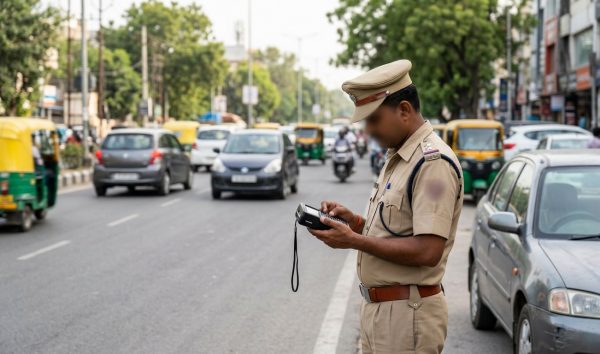
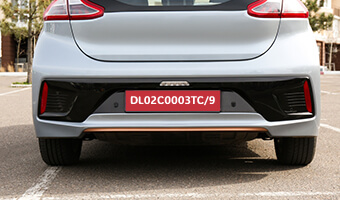
Not every traffic offence sent to the judiciary can be resolved on vcourts.gov.in. The virtual platform is strictly reserved for petty, compoundable violations. These offences are typically recorded through automated systems such as Speed Violation Detection Systems, Automated Number Plate Recognition (ANPR) cameras, closed-circuit television (CCTV), or handheld digital e-challan terminals operated by traffic constables.
Common violations eligible for a virtual court challan payment online include driving without an approved safety helmet, failing to wear a seatbelt, jumping red lights, overspeeding, basic lapses in pollution under control (PUC) certification, improper lane changing, and prohibited parking. In these scenarios, the virtual magistrate determines the statutory fine, issues a digital summons, and allows the offender to settle the matter immediately.
Conversely, severe or non-compoundable offences cannot be resolved on the digital portal. Such matters bypass virtual courts or are rejected by the sitting magistrate and forwarded directly to physical Chief Judicial Magistrate (CJM) or Metropolitan Magistrate courts. You cannot pay virtual court challan online for offences requiring vehicle impoundment, suspension of driving privileges, or personal physical surrender.
| Traffic Violation | Governing MV Act Section | Resolution Platform | Physical Appearance |
|---|
| Red Light Jumping / Stop Line Violation | Section 119 / 177 | Virtual Court (vcourts.gov.in) | No |
| Overspeeding (Light Motor Vehicle) | Section 112 / 183 | Virtual Court (vcourts.gov.in) | No |
| Driving Without Seatbelt / Helmet | Section 194B / 194D | Virtual Court (vcourts.gov.in) | No |
| Drunken Driving / Breath Analyser Test Failure | Section 185 | Regular Physical Court | Yes (Mandatory) |
| Dangerous / Rash Driving Involving Injury | Section 184 | Regular Physical Court | Yes (Mandatory) |
| Unauthorized Vehicle Structural Alteration | Section 52 / 182A | Regular Physical Court | Yes (Mandatory) |
If your vehicle was seized or impounded by the police during the challan issuance, you must appear physically before the jurisdictional regular court to seek vehicle release.
How to Pay Virtual Court Challan Online on vcourts.gov.in
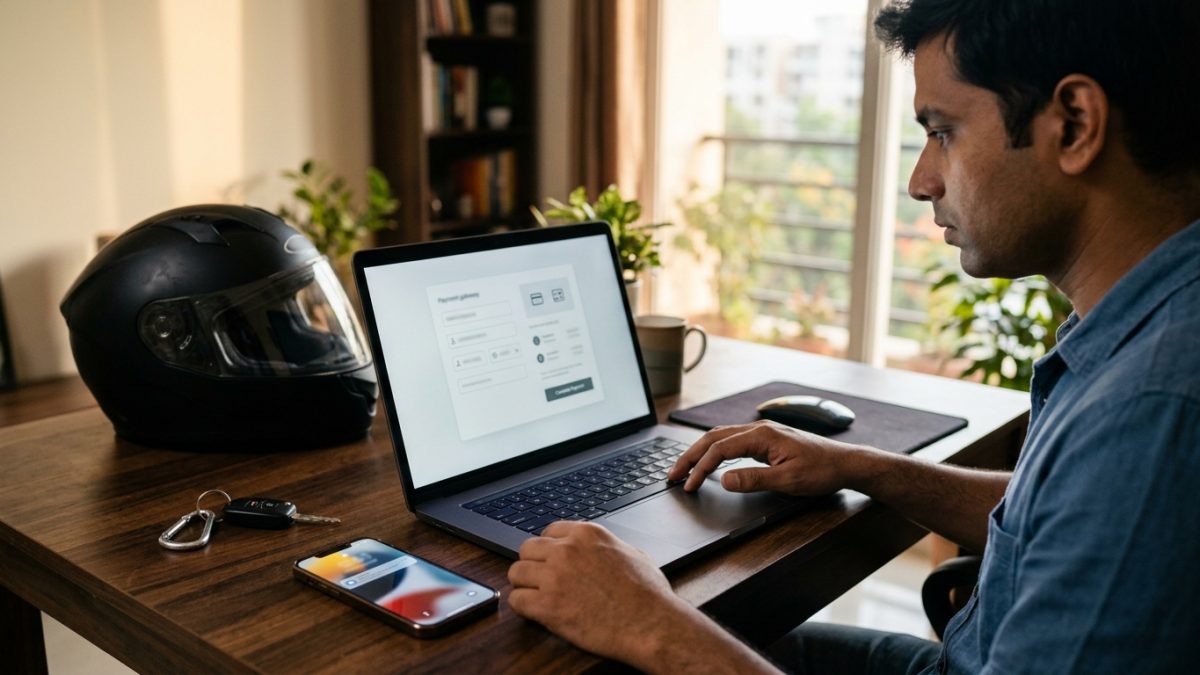
If your pending penalty has been forwarded to the digital bench, following the correct administrative steps ensures your record clears cleanly. Many drivers ask about challan sent to virtual court how to pay without making procedural errors. The process requires your Vehicle Registration Number, your registered mobile phone to receive one-time passwords (OTPs), and an active digital payment channel.
Follow this verified procedure to complete your traffic challan sent to court online payment:
- Access the official portal: Open your browser and navigate to the verified government portal at vcourts.gov.in. Avoid unverified third-party aggregators when dealing with court summons.
- Select your state and jurisdiction: Choose your respective state and court department from the dropdown list. For instance, motorists in the capital must choose between Delhi - Virtual Court (Notice Branch) or Delhi - Virtual Court (Traffic), while others might select Maharashtra - Virtual Court or UP Virtual Court.
- Search for your case: Choose your preferred search criterion. You can search by Challan Number, Vehicle Registration Number, Case Natural Record (CNR) Number, or Mobile Number. Enter your details alongside the security Captcha and click Submit.
- Inspect offence details and summons: Click on the View button adjacent to your record. Carefully examine the digital summons, which lists the date, exact time, photographic evidence of the infraction, assigned magistrate details, and the fine imposed.
- Select your legal plea: Review the two legal options presented on the summons screen. To resolve the fine immediately, select the radio button marked "I plead guilty to the offence and agree to pay the fine amount specified".
- Verify your identity via mobile OTP: Enter your active mobile phone number linked to the vehicle records. Submit the 6-digit OTP received via SMS to authenticate your plea.
- Execute payment via ePay gateway: Click on the Pay Fine button, which redirects you to the secure eCourts digital payment gateway (pay.ecourts.gov.in). Choose your preferred transaction method, including standard UPI (BHIM, Google Pay, PhonePe, Paytm), Debit Card, Credit Card, or Net Banking. Standard UPI payments carry zero gateway surcharge.
- Save your judicial disposal receipt: Once the payment clears, you will be redirected back to the portal. Immediately click to generate your virtual court fine payment receipt download and preserve the judicial disposal order PDF.
If you are exploring Hindi search guides on virtual court se challan kaise bhare, this exact eight-step sequence on the vcourts web interface is the only legally binding method to compound your case.
Pleading Guilty vs Contesting: Understanding Your Legal Choices
When accessing a summons on the virtual court portal, motorists must choose between two distinct legal avenues: pleading guilty or contesting the violation. Making an informed decision is vital, as this choice dictates how the judicial system handles your case going forward.
Pleading Guilty on the Virtual Portal
For standard petty traffic violations, selecting "I plead guilty" is the most practical route. When you accept the summons, you agree to pay the compounded penalty determined by the virtual magistrate. Crucially, pleading guilty to a minor traffic infraction under Section 208 of the Motor Vehicles Act does not create a criminal record or impact your civil standing. The moment your transaction succeeds, the digital magistrate registers a formal disposal order, and the legal status transitions immediately to Disposed.
The Reality of Contesting via vcourts.gov.in
A widespread misconception among vehicle owners is that choosing "Request to Contest" on the virtual court website opens an online dispute window where you can upload counter-evidence, type defense arguments, or chat via video conference with a judge. This is entirely incorrect. The virtual court interface possesses no feature for conducting online trials or evaluating evidentiary submissions.
Instead, clicking the contest option acts as an administrative uncoupling mechanism. It immediately strips the case from the virtual court roster and transfers the physical file to the regular jurisdictional District Court or Metropolitan Magistrate Court. The portal prints an acknowledgement notice showing your assigned physical court complex, court hall number, and scheduled appearance date. You or your appointed legal counsel must physically attend court on that date to present evidence—such as proving cloned number plates or incorrect optical camera recognition. If you believe your fine was issued due to clerical error before it reached court, review how to file a wrong challan dispute online to prevent needless courtroom visits.
Never click 'Request to Contest' on vcourts.gov.in simply because you are annoyed by the fine; do so only if you have solid evidence and are prepared to attend physical court hearings.
Resolving the 48-to-72-Hour Parivahan Database Syncing Lag
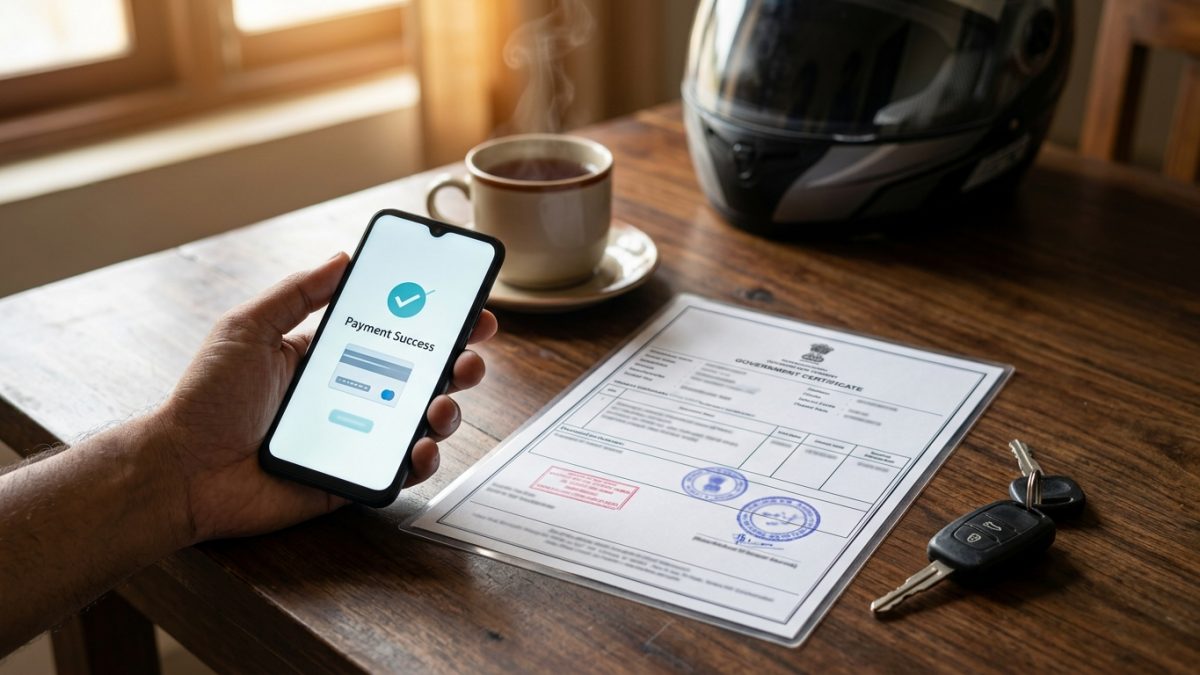
One of the most frequent frustrations vehicle owners experience after completing a vcourts gov in challan payment is checking the central transport portal, only to find the ticket still marked as pending or sent to court. Understanding the architectural divide between Indian government databases explains why this delay happens and how you can resolve it.
The Virtual Courts system functions on the judicial network managed by the National Informatics Centre under the guidance of the Supreme Court eCommittee. In contrast, the national e-challan system operates on the executive infrastructure managed by the Ministry of Road Transport and Highways (MoRTH) on the Parivahan Sewa and VAHAN platforms. When a fine is cleared in the virtual court, settlement files flow from the judiciary's ePay gateway through state treasury accounts before an automated application programming interface (API) updates the Parivahan database. This cross-departmental reconciliation routinely requires 24 to 72 hours, and delays can extend longer over public holidays and weekends.
| Stage | System Responsible | Typical Duration | Status Displayed |
|---|
| Fine Settlement | vcourts.gov.in / ePay Gateway | Instantaneous | Payment Successful / Case Disposed |
| Treasury Settlement | State Finance Treasury Server | 12 to 24 Hours | Settlement Batch Processing |
| Inter-Server Handshake | Judicial API to MoRTH API | 24 to 48 Hours | Disposal File Transmitted |
| Parivahan Status Refresh | Parivahan / VAHAN Database | 48 to 72 Hours | Paid / Disposed |
The golden rule during this window is: never pay twice. If your bank account or UPI wallet was debited and vcourts confirmed the transaction, paying a second time through the Parivahan portal will not expedite the update and leaves you facing a tedious judicial refund process.
How to Manually Force a Status Update on Parivahan
If your payment has not reflected after 48 hours, you can initiate a manual verification call to force the servers to synchronize:
- Visit the Parivahan portal: Go to the official website at echallan.parivahan.gov.in.
- Navigate to pending transactions: In the top navigation menu, locate the Check Online Services or Complaint tab and select Check Pending Transaction.
- Enter your identifiers: Enter your Challan Number or Vehicle Registration Number along with the on-screen Captcha text.
- Click verify: Locate your pending transaction reference. Click the Verify or Check button adjacent to the record. This action triggers a direct, real-time API query between Parivahan and the treasury gateway.
- Confirm disposal: In most instances, this action refreshes the status to Disposed or Paid immediately.
If the record remains unresolved after seven business days, open the Grievance tab on the Parivahan e-challan site, select Payment Related Issue, and upload your official virtual court disposal receipt. You may also email your local state traffic police helpline with the payment PDF attached.
State Differences, Transfer Timelines, and Lok Adalat Settlements
Traffic management frameworks vary across different Indian states, leading to varying timelines before an unpaid fine is submitted to the digital magistrate. In most states, motorists enjoy an initial administrative window of 60 to 90 days from the date of violation. During this compounding window, the fine can be settled directly on state police web portals or the central Parivahan platform. If the violator ignores the notice, the police server transfers the file into the virtual court system.
Certain jurisdictions enforce stricter transfer windows. The Delhi Traffic Police, for example, typically transfers unpaid camera-generated notices to the Virtual Court branch within roughly 45 days. In states or remote districts where virtual court integrations are not yet operational, unpaid challans bypass the online virtual system entirely and are transferred directly to physical Judicial Magistrate First Class (JMFC) courts, resulting in physical paper summons delivered to your registered residential address.
If your challan has been referred to court but you face multiple compound fines or financial constraints, National Lok Adalats offer an alternative resolution route. Organised quarterly across states such as Delhi, Maharashtra, Karnataka, and Uttar Pradesh, Lok Adalats allow vehicle owners to book online slots and have compoundable traffic fines substantially discounted, waived, or settled before a sitting judicial panel. If you plan to explore this avenue, read our comprehensive guide on Lok Adalat challan settlement to understand how token booking works.
Before purchasing or selling a pre-owned vehicle, always ensure every court challan is settled, as pending judicial summons block ownership transfers and hypothecation terminations on VAHAN.
How to Download and Preserve Your Virtual Court Payment Receipt
Securing a virtual court fine payment receipt download is the final, essential step in clearing your vehicle's legal record. This document serves as your judicial discharge slip and protects you against future harassment during routine road inspections or administrative RTO procedures.
If you closed your browser window prematurely after making your payment, you can retrieve your court disposal slip at any time by following these steps:
- Revisit the portal: Open vcourts.gov.in and select the original state and court department where your fine was registered.
- Search disposed cases: Search using your Vehicle Number or Challan Number. When your case details appear, the status will now reflect as Disposed.
- Open case history: Click the View link to open the comprehensive case summary.
- Print disposal slip: Scroll to the bottom of the page to locate the payment details section. Click on Print Receipt and Download Court Disposal Order.
Save this PDF securely on your smartphone and maintain a physical copy in your vehicle alongside your registration certificate. Whenever you need to verify your vehicle records, run a quick status check through the VahanX challan search tool to verify that both your police ledger and judicial files reflect zero pending liability.
Conclusion
Completing a virtual court challan payment online is a straightforward, lawful process that saves vehicle owners from unnecessary courtroom visits and unwarranted legal fees. By following the verified payment steps on vcourts.gov.in, understanding the implications of pleading guilty versus contesting, and utilizing the Parivahan verification tool to clear database lags, you can resolve your road violations smoothly. Check your pending traffic fines today on VahanX, clear your virtual court summons promptly, and keep your vehicle registration records clean and compliant.