Key Takeaways
- Major manufacturers like Ather, TVS, Suzuki, and Honda are launching family-oriented models during Festive 2026.
- Expected mass-market prices range between ₹1,00,000 and ₹1,35,000 (ex-showroom) to stay competitive.
- The central PM E-DRIVE scheme offers up to ₹5,000 incentive alongside a uniform 5% GST rate.
- Real-world city ranges for incoming models settle primarily between 75 km and 115 km per charge.
- Road tax benefits vary significantly by state, ranging from full exemptions in Delhi to tiered rates in Karnataka.
| Model | Expected Price | Claimed / Real Range | Expected Launch |
|---|
| Ather Project EL01 | ₹1,05,000 – ₹1,15,000 | 140 km IDC / 105–115 km True | Festive 2026 |
| Suzuki Burgman Electric | ₹1,05,000 – ₹1,20,000 | 95–105 km IDC / 70–80 km Real | Nov–Dec 2026 |
| TVS Jupiter Electric | ₹1,10,000 – ₹1,30,000 | 95–115 km Real-World | Q4 2026 (Festive) |
| Honda Activa e: | ₹1,17,000 – ₹1,52,464 | 102 km IDC / 75–85 km Real | Festive 2026 Expansion |
| VinFast Viper | ₹1,00,000 – ₹1,35,000 | 140–150 km IDC | Late 2026 |
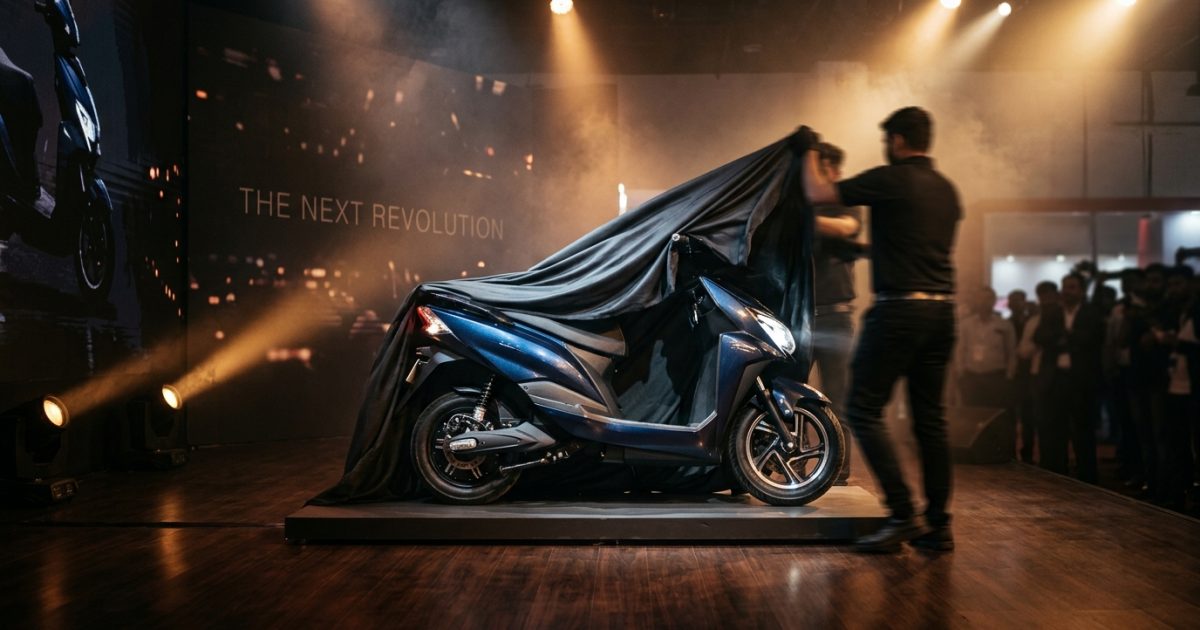
Multiple high-profile upcoming electric scooters in india are hitting showrooms during the 2026 festive season between September and November. Major legacy brands and EV pioneers are releasing family-oriented models priced between ₹1,00,000 and ₹1,35,000, delivering real-world ranges between 75 km and 115 km on a single charge.
As of September 2026, the Indian two-wheeler market is witnessing a distinct transition. Experimental startup models are taking a backseat as established OEMs introduce robust platforms engineered for Indian families, daily office commutes, and regional road conditions. Buyers considering an upcoming bikes in india update or a practical scooty will find that these models focus on luggage room, battery longevity, and Advanced Electronic Braking Systems.
Upcoming Electric Scooters in India: Festive 2026 Lineup
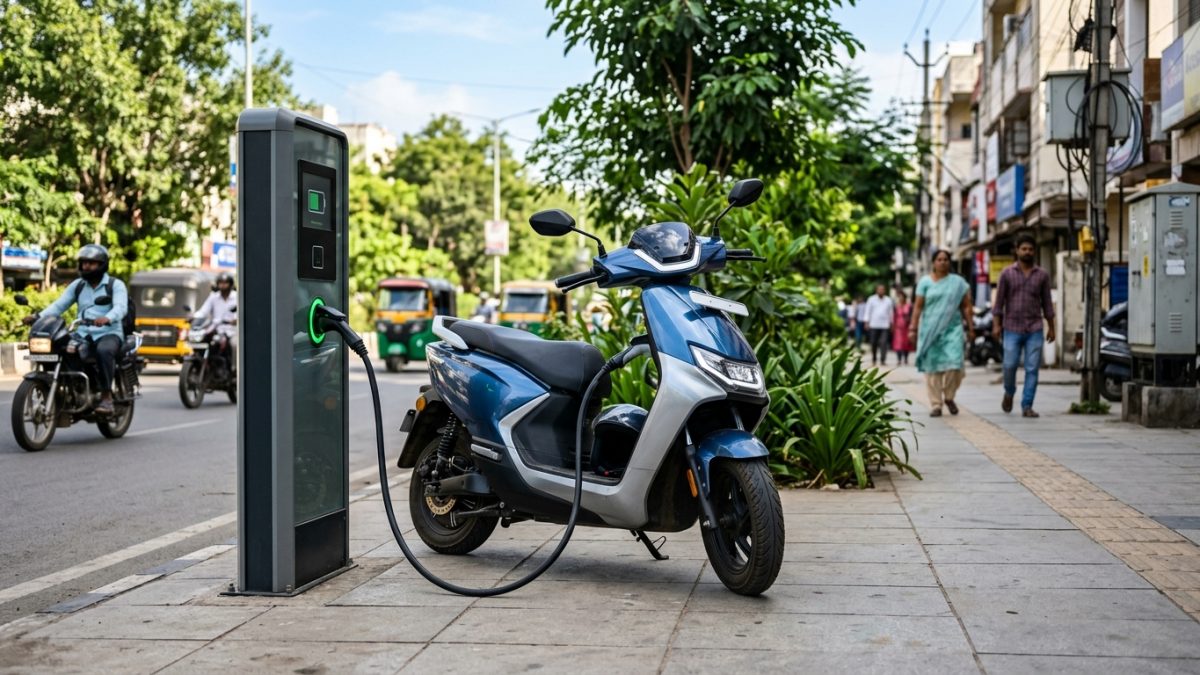
The festive window between Navratri and Diwali represents the largest retail spike for automotive dealerships in India. Here is a detailed look at the prominent upcoming electric scooters entering the market this festive cycle.
1. Ather Mass-Market Model (Project EL01)
Ather Energy is expanding its portfolio beyond premium performance with its new EL platform. This Ather upcoming electric scooter, known internally as Project EL01, targets practical budget-conscious families looking for dependable engineering.
The scooter carries an expected ex-showroom price of ₹1,05,000 to ₹1,15,000. It features a battery capacity between 2.9 kWh and 3.4 kWh paired with a swingarm-mounted motor and Ather Charge Drive Controller. On Indian Driving Conditions (IDC), it claims 140 to 150 km, translating to an authentic TrueRange of 105 to 115 km.
Key hardware includes 14-inch front and 12-inch rear alloy wheels, a spacious floorboard, an Advanced Electronic Braking System (AEBS), and fast-charging support on the Ather Grid network. It directly competes with the Ola S1 Air and TVS iQube.
2. Suzuki Burgman Electric (e-Burgman)
The maxi-styled Suzuki Burgman Electric launch date is tentatively scheduled for November to December 2026. Suzuki has calibrated the battery safety and thermal cooling extensively to handle high ambient temperatures across northern and central India.
Expected to cost between ₹1,05,000 and ₹1,20,000 ex-showroom, the e-Burgman features a 4.0 kW peak output motor. It offers an expected real-world range of 70 to 80 km per charge (95 to 105 km IDC), making it an urban commuter rather than a highway cruiser.
Riders receive full maxi-scooter ergonomics, an elevated front wind deflector, spacious footpegs, a Combined Braking System (CBS), and the Suzuki Ride Connect Bluetooth digital console with turn-by-turn navigation.
3. TVS Jupiter Electric
Leveraging India’s trusted commuter brand, the TVS Jupiter Electric is arriving as a direct festive competitor to the Ather Rizta and Bajaj Chetak. Commercial rollouts are slated for Q4 2026 across major metro markets.
With an expected ex-showroom pricing of ₹1,10,000 to ₹1,30,000, it features a 3.0 kWh to 3.4 kWh battery pack capable of delivering 95 to 115 km of real-world range. TVS has preserved the practical DNA of the Jupiter badge, outfitting it with class-leading under-seat boot space and an apron-mounted charging port flap.
Tech integration includes the TVS SmartXonnect cluster, reverse assist, side-stand motor cut-off, and regenerative braking.
4. Honda Activa e: and QC1 (Phase-2 Network Expansion)
Honda is executing a broader retail rollout for its Activa e: and QC1 variants across Tier-1 and Tier-2 dealerships during Festive 2026. This expansion introduces home-charging solutions alongside Honda’s proprietary battery-swapping ecosystem.
The Activa e: Standard retails around ₹1,17,000 to ₹1,20,133, while the RoadSync Duo variant reaches ₹1,52,464 ex-showroom. The ultra-budget Honda QC1 is priced near ₹90,000. The Activa e: utilizes dual 1.5 kWh Honda Mobile Power Pack e: modules (3.0 kWh total) and a 6 kW swingarm motor reaching an 80 km/h top speed.
It claims 102 km IDC range (75 to 85 km real-world). Riders can swap depleted batteries in under one minute at official e:Swap stations or charge via optional home dock adapters.
5. VinFast Viper and Vero X
Vietnamese manufacturer VinFast is marking its Indian two-wheeler debut following local patent filings. The Viper and Vero X models are slated for an unveiling in late 2026.
Expected to fall in the ₹1,00,000 to ₹1,35,000 range, these scooters will offer battery capacities from 3.5 kWh to 4.8 kWh. They feature modern angular styling, 5-spoke alloy wheels, smart telematics, and an IDC claimed range reaching up to 140 to 150 km.
Always verify whether battery warranty terms cover degradation below 70% capacity over 3 to 5 years, as battery replacement remains the largest long-term maintenance expense.
Upcoming Electric Scooter Price List and Launch Schedule
Here is how the upcoming ev scooters 2026 price list and launch windows compare across mainstream and premium variants as of September 2026.
| Scooter Model | Expected Price (Ex-Showroom) | Battery Capacity | Estimated Launch Window |
|---|
| Honda QC1 | ₹90,000 | Compact Fixed Pack | Festive 2026 |
| Ather EL01 (Project EL) | ₹1,05,000 – ₹1,15,000 | 2.9 – 3.4 kWh | September – October 2026 |
| Suzuki Burgman Electric | ₹1,05,000 – ₹1,20,000 | 3.0 kWh Equivalent | November – December 2026 |
| TVS Jupiter Electric | ₹1,10,000 – ₹1,30,000 | 3.0 – 3.4 kWh | October – November 2026 |
| Honda Activa e: (Standard) | ₹1,17,000 – ₹1,20,133 | 3.0 kWh (Dual Swappable) | Festive 2026 (Wider Rollout) |
| VinFast Viper | ₹1,00,000 – ₹1,35,000 | 3.5 – 4.8 kWh | Late 2026 Showcase |
| Honda Activa e: (RoadSync Duo) | ₹1,52,464 | 3.0 kWh (Dual Swappable) | Available / Expanding |
Buyers looking for an upcoming electric scooty in india should note that the ex-showroom price excludes mandatory accessories, registration handling charges, and comprehensive insurance coverage.
Upcoming Long Range Electric Scooters: Range Expectations
Range anxiety remains the top concern among Indian buyers transitioning from petrol two-wheelers. While manufacturer brochures advertise Indian Driving Conditions (IDC) numbers, real-world highway and city commuting yields different results.
Among upcoming long range electric scooters entering showrooms, battery sizes average between 3.0 kWh and 3.5 kWh. This provides an effective city commuting perimeter of 80 km to 110 km with standard throttle usage.
| Model | Claimed Range (IDC) | Estimated Real-World Range | Top Speed |
|---|
| VinFast Viper (Higher Spec) | 140–150 km | 110–120 km | 80 km/h |
| Ather Project EL01 | 140–150 km | 105–115 km (TrueRange) | 85 km/h |
| TVS Jupiter Electric | 120–130 km | 95–115 km | 78 km/h |
| Honda Activa e: | 102 km | 75–85 km | 80 km/h |
| Suzuki Burgman Electric | 95–105 km | 70–80 km | 75 km/h |
Riders demanding ranges above 140 km on a single charge must look toward existing heavy-battery flagship options like the Simple One (212 km IDC) or the Ola S1 Pro 4 kWh. For general household chores and daily office runs of 25 to 40 km, incoming models from Ather, TVS, and Honda supply ample reserve margins.
Real-world EV range decreases by 10% to 15% when riding two-up or navigating sustained steep inclines in elevated urban zones.
Government Subsidies and PM E-DRIVE Scheme in 2026
Financial incentives for electric two-wheelers in India are governed centrally by the Ministry of Heavy Industries. The PM E-DRIVE Scheme (replacing FAME-II and EMPS) rationalized consumer subsidies for electric two-wheelers to ₹2,500 per kWh of battery capacity.
The central subsidy is capped at a maximum of ₹5,000 per scooter and cannot exceed 15% of the vehicle’s ex-factory cost. Furthermore, only vehicles with an ex-factory price under ₹1,50,000 qualify for this financial support. Every individual citizen is legally limited to claiming the PM E-DRIVE subsidy on exactly one electric two-wheeler linked to their Aadhaar card.
Beyond direct purchase discounts, all electric two-wheelers benefit from a uniform 5% GST rate, compared to the 28% basic GST plus state cess applicable to petrol scooters.
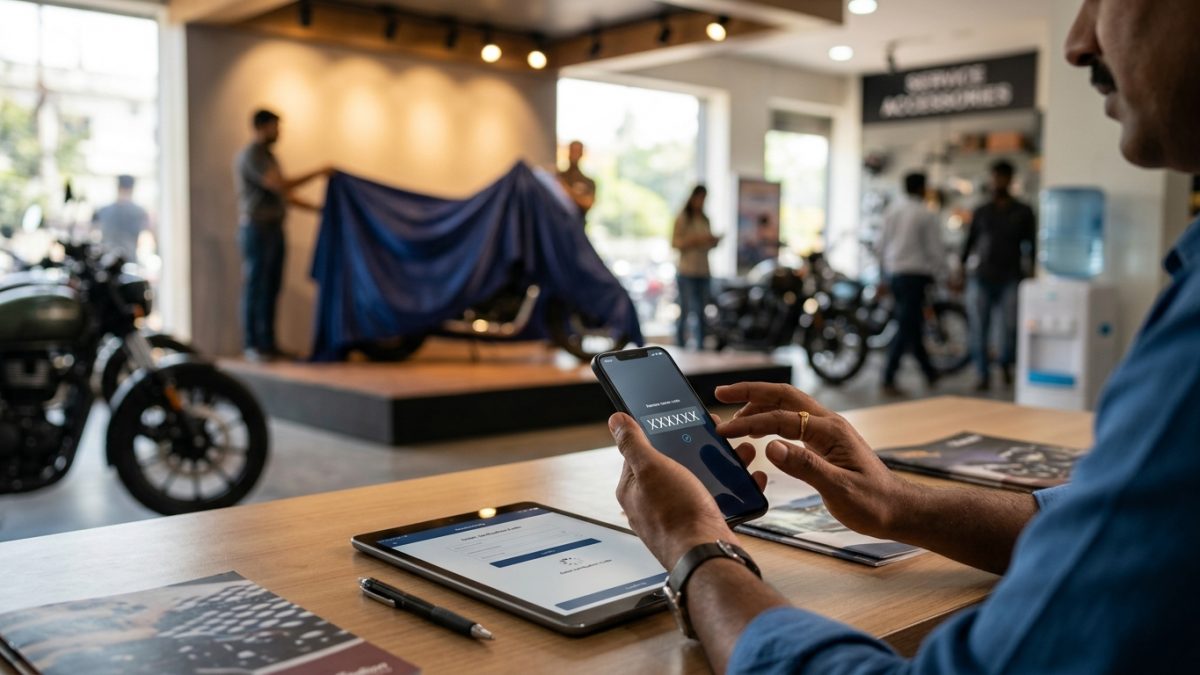
How to Generate the PM E-DRIVE Aadhaar E-Voucher
The central subsidy is deducted upfront on the dealer sales invoice through a transparent digital voucher process. You do not wait months for direct bank transfers.
- Select an eligible vehicle: Choose an approved electric scooter model registered on the official PM E-DRIVE portal (PM E-DRIVE Portal).
- Perform dealer e-KYC: Present your Aadhaar number to the dealer executive, who initiates an Aadhaar Face Authentication or mobile OTP verification on the portal.
- Receive digital e-voucher: Once authenticated, the Ministry portal generates an electronic voucher sent directly via SMS to your Aadhaar-linked mobile phone.
- Sign and apply discount: Sign the electronic voucher acknowledgement at the dealership; the ₹5,000 subsidy amount is instantly discounted from your purchase invoice.
- Dealer claim submission: The dealership submits the signed e-voucher and Vahan registration details to the Ministry of Heavy Industries (MHI Portal) for dealer reimbursement.
Mandatory Documents for Purchase and Registration
- Aadhaar Card (must be linked to an active mobile phone number for OTP generation).
- PAN Card (required for vehicle invoicing, tax documentation, and dealer KYC).
- Proof of Local Address (utility bill or rental agreement if your Aadhaar address differs from the city of registration).
- Passport-size photographs (for regional transport office Form 20 and Form 21 submissions).
Before completing delivery, ensure your vehicle is assigned a high-security registration plate. You can trace regional documentation rules through your nearest RTO office details or check status on Parivahan Sewa.
State-Wise Road Tax and EV Registration Policies
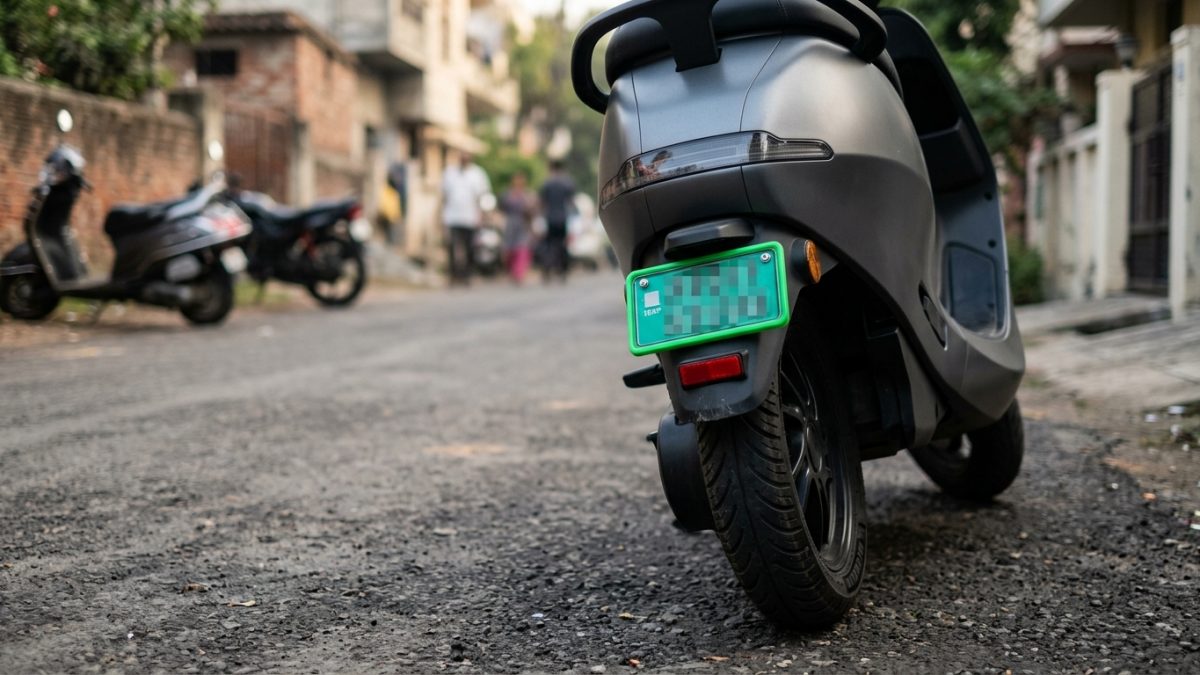
While central tax and subsidy guidelines apply pan-India, state road tax and regional transport registration fees differ widely. State EV policies dictate whether you pay zero road tax or an additional registration levy.
| State / UT | Road Tax Exemption | Registration Fee Status | Local Policy Terms |
|---|
| Delhi | 100% Waived | 100% Waived | Full tax waiver under active state EV policy framework. |
| Maharashtra | 100% Waived | Waived | Complete exemption on Motor Vehicle Road Tax for EVs. |
| Tamil Nadu | 100% Waived | 100% Waived | Zero road tax and waived registration fees on all battery EVs. |
| Karnataka | No Exemption | Standard Applicable | Rolled back full waiver; charges tiered 5% to 10% road tax. |
| Uttar Pradesh | Conditional | Standard Levies | 100% waiver primarily applies to EVs manufactured inside UP. |
| Madhya Pradesh | Standard Tax | Standard Levies | Historic EV road tax exemption expired in early 2026. |
Confirm the final on-road price break-up with your local dealer, as municipal road taxes and green cess can alter your final out-of-pocket expenses.
Common Challenges Buyers Face at Delivery
Buying an electric scooter in 2026 involves digital validation channels that can cause registration delays if not planned carefully.
- Aadhaar-Phone Desynchronization: If your mobile number registered with UIDAI is inactive, the PM E-DRIVE voucher authentication cannot proceed, delaying billing.
- PAN and Aadhaar Name Spelling Discrepancy: Minor differences in initials or spelling between your identity cards can prevent automated Vahan portal registration.
- Swappable Station Proximity: If you purchase a swappable model like the Honda Activa e:, ensure you live within 3 to 5 km of an operational swapping station before taking delivery.
Once your new scooter is registered, you can track its official RC details and road-worthiness via an online RC search to confirm your registration data is updated accurately on the central database.
Buyer Decision Guide: Should You Buy Now or Wait?
With aggressive festive promotions launching alongside new hardware, deciding whether to purchase an existing model or wait for upcoming models requires evaluating your daily transit demands.
| Buyer Requirement | Recommended Action | Primary Reason |
|---|
| Immediate daily commute needs | Buy existing models (Ather 450X, TVS iQube, Bajaj Chetak) | Established service networks, readily available spare parts, and high festive discounts. |
| Waiting for maxi-scooter comfort | Wait for Suzuki Burgman Electric | Unique ergonomics and wind protection, provided late 2026 launch timelines hold. |
| Interested in battery-swapping convenience | Wait if outside metro zones | Honda e:Swap infrastructure is expanding from metro centers to Tier-2 cities gradually. |
| Seeking long battery warranty and family boot space | Wait for TVS Jupiter Electric or Ather EL01 | Modern dedicated chassis designed specifically for multi-rider family utility. |
Checking policy protections such as two wheeler insurance check online tools ensures you understand third-party and battery coverage liabilities before making a final commitment.
Conclusion
Choosing among the upcoming electric scooters in india requires balancing your daily commuting range, regional charging infrastructure, and available festive savings. With dependable legacy manufacturers introducing practical family platforms like the TVS Jupiter Electric and Ather EL01, electric mobility has evolved into a reliable, mainstream choice for Indian households.
Before locking in your festive booking, test ride competing models, review state-level road tax exemptions on the official Parivahan portal, and verify local dealer service support to guarantee a worry-free ownership experience.