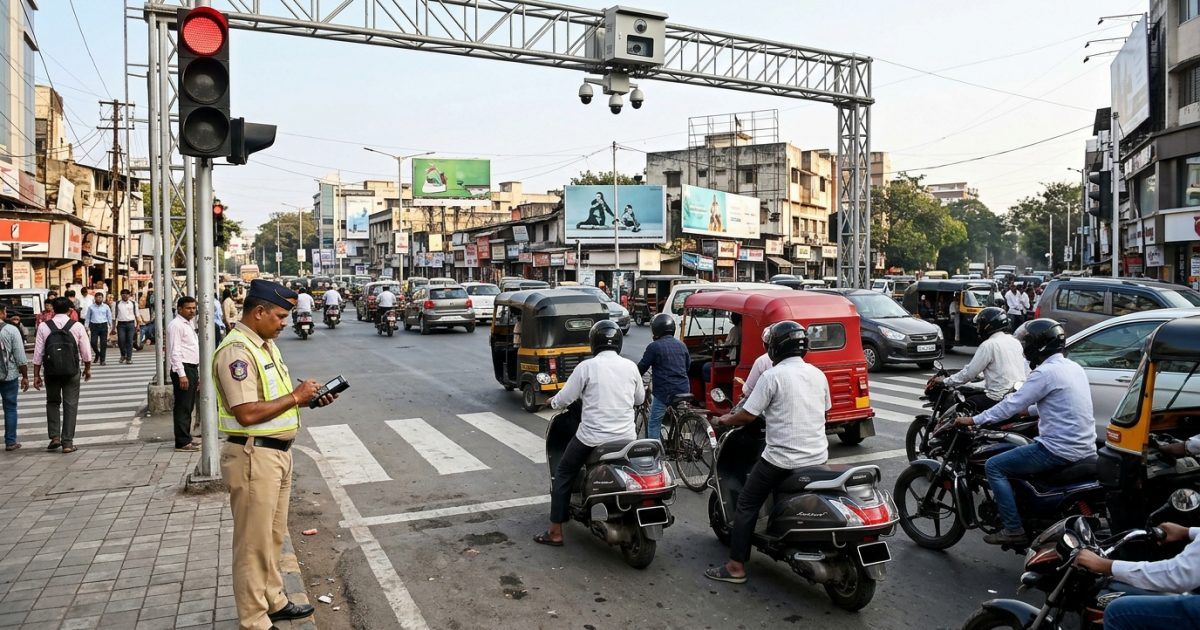
Motor vehicle act fines in India are statutory financial penalties and legal sanctions prescribed under the Motor Vehicles Act, 1988, heavily amended by the Motor Vehicles (Amendment) Act, 2019. These rules enforce penalties ranging from ₹500 for minor traffic non-compliance to ₹25,000 and jail terms for offences like juvenile driving. You can easily check challan status by vehicle number to see if your car or bike has any pending dues recorded by electronic traffic enforcement cameras.
Key Takeaways
- Standard driving without a licence attracts a mandatory fine of ₹5,000 under Section 181.
- Missing or expired PUC certificates carry a penalty of ₹10,000 plus a 3-month driving licence disqualification.
- Non-compoundable violations like drunk driving cannot be settled on the spot and require court adjudication.
- Fines do not double generically for repeat infractions; specific sections define distinct repeat penalties.
- Digital documents presented via DigiLocker or mParivahan hold full statutory equivalence to physical originals.
| Violation Type | MV Act Section | Statutory Fine | Compoundable Spot Fine? |
|---|
| Driving Without Licence | Section 181 | ₹5,000 | Yes (Section 200) |
| No Valid PUCC | Section 190(2) | ₹10,000 + 3-mo DL suspension | Yes (in notified states) |
| Drunk Driving (First Offence) | Section 185 | Up to ₹10,000 and/or 6 mo jail | No (Court trial only) |
| Blocking Emergency Vehicle | Section 194E | ₹10,000 and/or 6 mo jail | Yes / Court referral |
| Riding Without Helmet | Section 194D | ₹1,000 + 3-mo DL suspension | Yes |
| Juvenile / Minor Driving | Section 199A | ₹25,000 to guardian + 3 yr jail | No (Court trial only) |
Section-Wise Motor Vehicle Act Fines: Complete Traffic Penalty List
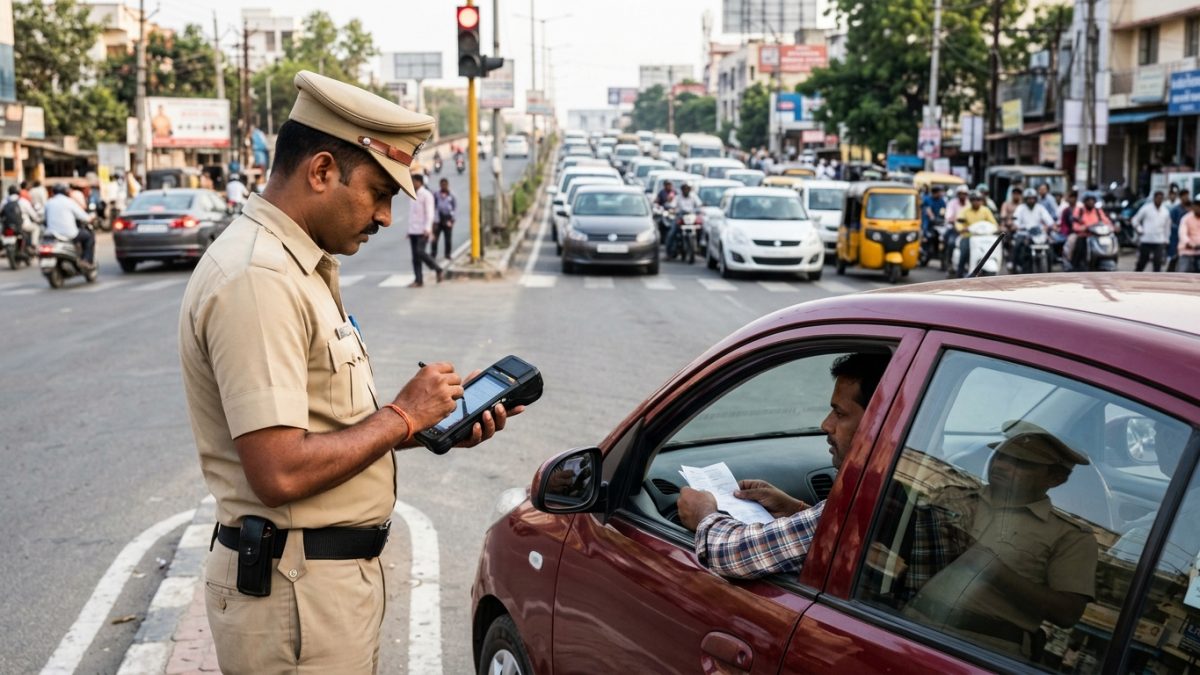
The revised motor vehicle act penalty list reflects substantial financial deterrence across all major categories of vehicular movement. The nationwide implementation followed Gazette Notification S.O. 3110(E) under the provisions of the amended central legislation.
Understanding these specific sections helps motorists recognise their legal obligations and avoid costly spot or digital challans across Indian national and state highways.
1. Licensing and Authorization Penalties
Operating a motor vehicle without legitimate credentials triggers immediate punitive action under the statutory framework:
- Driving without a valid Driving Licence (Section 181): Attracts a flat fine of ₹5,000 and/or imprisonment up to 3 months. Verify your credentials using a driving licence status search before taking the wheel.
- Allowing unauthorized persons to drive (Section 180): The vehicle owner is penalized ₹5,000 and/or imprisonment up to 3 months for letting someone without a valid licence drive.
- Driving despite disqualification (Section 182(1)): Driving while your licence is suspended or revoked results in a fine up to ₹10,000 and/or imprisonment up to 3 months.
2. Vehicle Documentation and Pollution Fines
Every vehicle on Indian public roads must maintain active documentation registered on the central VAHAN repository:
- Driving without valid PUC Certificate (Section 190(2)): Carries a strict penalty of ₹10,000 and/or imprisonment up to 3 months. In addition, the licensing authority enforces a mandatory 3-month licence disqualification. Pure electric vehicles (EVs) are exempt.
- Driving an unregistered vehicle or without valid RC (Section 192): First offences incur fines between ₹2,000 and ₹5,000. Second or subsequent offences trigger fines between ₹5,000 and ₹10,000, along with imprisonment for up to 1 year. You can run an online RC check to review your registration and fitness dates.
- Driving without Third-Party Motor Insurance (Section 196): First-time offenders face a ₹2,000 fine and/or up to 3 months imprisonment. Repeat offences draw a doubled fine of ₹4,000 and/or up to 3 months imprisonment.
Legal Rule: Under Rule 139 of the Central Motor Vehicles Rules (CMVR), 1989, digital credentials displayed through DigiLocker or mParivahan are legally equivalent to physical documents. Traffic police cannot demand physical hard copies unless your document is being impounded under Section 206.
3. Bike Traffic Fine List: Helmets and Passenger Rules
Two-wheeler riders are among the most vulnerable road users, leading enforcement authorities to penalize basic safety equipment omissions strictly:
- Riding without a protective helmet (Section 194D): ₹1,000 fine along with a 3-month disqualification of the driving licence. This rule applies equally to the rider and any pillion passenger over four years old. Helmets must conform to Bureau of Indian Standards (BIS) specifications and remain strapped securely.
- Triple riding or overloading a two-wheeler (Section 194C): ₹1,000 fine plus a mandatory 3-month driving licence disqualification.
4. Car Traffic Violation Fines: Seatbelts and Child Safety
Car drivers and passengers must adhere to strict internal cabin safety protocols under updated road transport directives:
- Failure to wear a seatbelt (Section 194B(1)): Imposes a ₹1,000 fine on the driver or any front and rear passenger seated where seatbelts are factory-installed.
- Absence of Child Restraint System (Section 194B(2)): Failing to secure a child under 14 years of age with an approved child safety restraint system or seatbelt attracts a direct ₹1,000 fine.
Dangerous Driving, Speeding, and Operational Offences Rate Chart
Moving violations involve dynamic hazards that threaten public safety. The traffic violation fine list 2026 maintains strict deterrents for reckless driving and speed limit breaches.
Automated speed detection networks and Automated Number Plate Recognition (ANPR) systems capture these offences instantly across expressways and urban arterial networks.
| Operational Offence | MV Act Section | First Offence Penalty | Subsequent Offence Penalty |
|---|
| Over-speeding (Light Motor Vehicles) | Section 183(1) | ₹1,000 to ₹2,000 | Licence seizure under Sec 206(4) |
| Over-speeding (Medium/Heavy Vehicles) | Section 183(2) | ₹2,000 to ₹4,000 | Licence impounded |
| Dangerous / Reckless Driving | Section 184 | ₹1,000 to ₹5,000 and/or 6-12 mo jail | Up to ₹10,000 and/or up to 2 yr jail |
| Drunken Driving (BAC > 30mg/100ml) | Section 185 | Up to ₹10,000 and/or 6 mo jail | ₹15,000 and/or up to 2 yr jail |
| Illegal Street Racing / Speed Trials | Section 189 | ₹5,000 and/or 3 mo jail | Up to ₹10,000 and/or 1 yr jail |
| Blocking Emergency Vehicles | Section 194E | ₹10,000 and/or 6 mo jail | Repeated court prosecution |
| Juvenile Driving Offence | Section 199A | ₹25,000 fine + 3 yr jail (Guardian) | 12-mo RC cancellation; DL ban till 25 |
Understanding Dangerous Driving and Phone Usage (Section 184)
Section 184 covers aggressive lane cutting, jumping red traffic lights, and erratic manoeuvring. Handheld mobile phone use while driving is explicitly categorized as dangerous driving under this section. Using your handheld smartphone for texting, calling, or media browsing while behind the wheel incurs fines up to ₹5,000 for a first offence, although hands-free navigation setups remain permissible under strict conditions.
Emergency Vehicles and Juvenile Driving
Section 194E penalizes any motorist who fails to yield the right of way to an approaching ambulance, fire service vehicle, or designated disaster management unit with a steep ₹10,000 fine and up to 6 months imprisonment.
Under Section 199A, when a minor operates a vehicle, the law holds the legal guardian or vehicle owner directly culpable. The guardian faces a ₹25,000 fine and up to 3 years imprisonment. The vehicle registration certificate is suspended for 12 months, and the juvenile is barred from applying for a learner’s licence or driving licence until reaching 25 years of age.
Warning: Refusing to let an active emergency vehicle pass is monitored through rear-mounted cameras on ambulances in major metropolitan cities, triggering automatic ₹10,000 challans directly to the registered vehicle owner.
Compoundable Spot Fines vs Non-Compoundable Court Challans
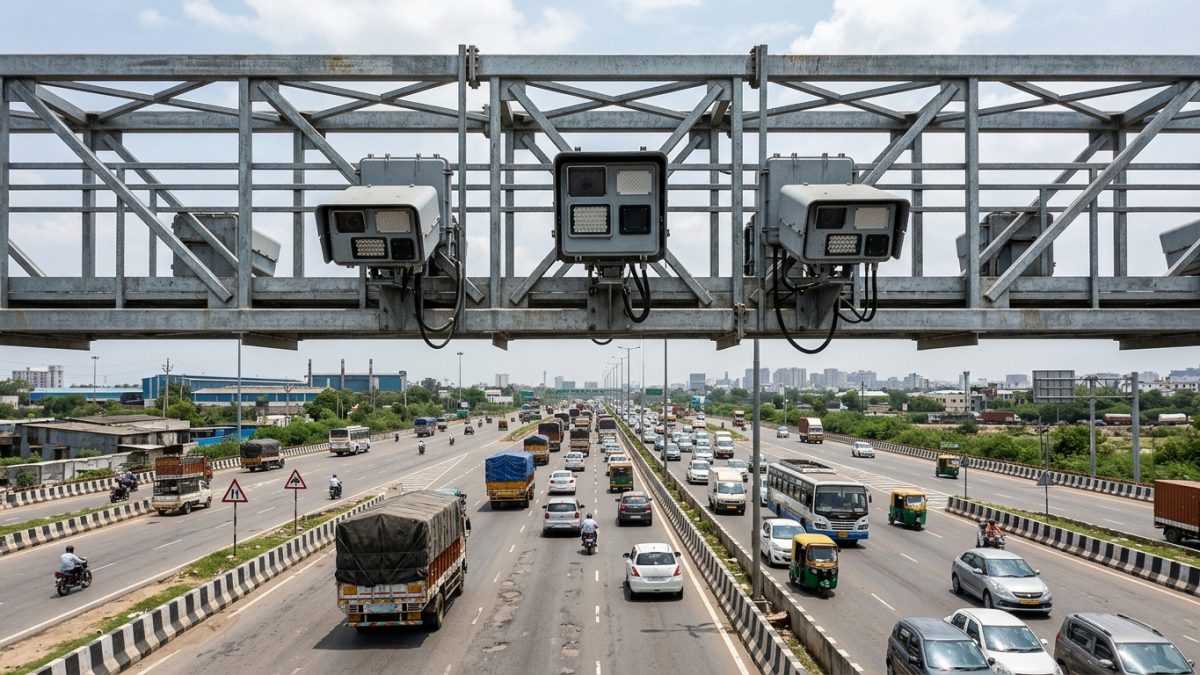
Not every traffic challan can be cleared on the spot or resolved through basic online payment links. Indian road safety legislation divides traffic penalties into compoundable and non-compoundable infractions.
Knowing the distinction saves vehicle owners from unexpected summons and unannounced visits to local judicial magistrates.
| Parameter | Compoundable Offences | Non-Compoundable Offences |
|---|
| Statutory Authority | Explicitly listed under Section 200(1) | Excluded from Section 200(1) schedule |
| Settlement Channel | Handheld traffic PoS machines or Parivahan portal | Regular Judicial Magistrate Court or Virtual Court |
| Legal Consequence | Discharges offender from further prosecution (Sec 200(2)) | Judge decides fine amount, community service, or prison |
| Common Examples | Helmets (194D), Seatbelts (194B), Over-speeding (183) | Drunk Driving (185), Juvenile Driving (199A), Fake Plates |
| Police Authority | Authorized officer collects notified settlement fee | Officer forwards challan directly to court register |
Section 200 of the Motor Vehicles Act permits designated traffic police and transport enforcement officers to settle compoundable offences on the spot or through verified payment gateways. Once you pay the compounding fee, Section 200(2) legally shields you from further criminal prosecution for that specific infraction.
Non-compoundable offences include serious safety threats such as drunken driving, driving under the influence of drugs, causing injury via reckless driving, or unauthorized structural chassis modifications. These challans cannot be settled roadside. You must appear before a magistrate or submit your response via the virtual court system.
Do Traffic Fines Double for Repeat Offences in India?
A common misconception among drivers is that every traffic fine automatically doubles for every repeat offence. The amended Motor Vehicles Act does not employ a generic blanket-doubling rule across all violations.
Instead, the statute applies structured escalations tailored to specific sections, as outlined below:
- Statutory Doubling: Driving without insurance under Section 196 doubles from ₹2,000 to ₹4,000 on subsequent violations. Illegal street racing under Section 189 rises from ₹5,000 to ₹10,000.
- Tripled Penalties: The general residual provision under Section 177 (covering non-specified minor infractions like parking faults) increases from ₹500 for a first offence to ₹1,500 for subsequent offences.
- Graduated Escalations: Drunk driving under Section 185 steps up from ₹10,000 to ₹15,000, while the associated maximum prison sentence jumps from 6 months to 2 years. Dangerous driving under Section 184 increases from a ₹1,000–₹5,000 range to a maximum of ₹10,000.
- Double Penalties for Enforcement Authorities (Section 210B): Any police or transport department official empowered to enforce the Act who commits an offence under the law must pay twice the standard fine applicable to ordinary motorists.
- Annual Statutory 10% Revision (Section 199B): Section 199B permits the central government to notify an annual increase of up to 10% on statutory fines starting on April 1st of each financial year. However, this does not apply automatically; it requires an official gazette notification to take effect.
State-Specific Differences Under Section 200 Discretion
While the Motor Vehicles Act provides a unified central legal baseline, road transport remains on the Concurrent List of the Constitution of India. Consequently, state governments hold significant discretionary powers under Section 200 to adjust compounding rates within their boundaries.
This division creates notable geographic variations across the country:
- Gujarat: Soon after the 2019 central amendments were passed, Gujarat issued state notifications reducing compounding rates for select offences, including first-instance helmet violations and licence non-possession, below the central ceiling.
- Maharashtra and Karnataka: These states adapted the central structure with custom compounding schedules, establishing tiered penalty amounts that distinguish first-time violations from repeat infractions.
- Delhi: The National Capital Territory enforces the central ceilings strictly. Expired PUCC violations lead to immediate ₹10,000 challans, and the traffic administration routes unsettled digital citations directly to virtual courts within 45 to 60 days.
- Universal Non-Compoundable Nature: No state possesses the authority under Section 200 to lower fines or dismiss court referrals for non-compoundable offences like Section 185 drunk driving or Section 199A juvenile driving. Those sections remain uniformly enforced across India.
How to Pay Motor Vehicle Act Fines Online: eChallan and Virtual Courts
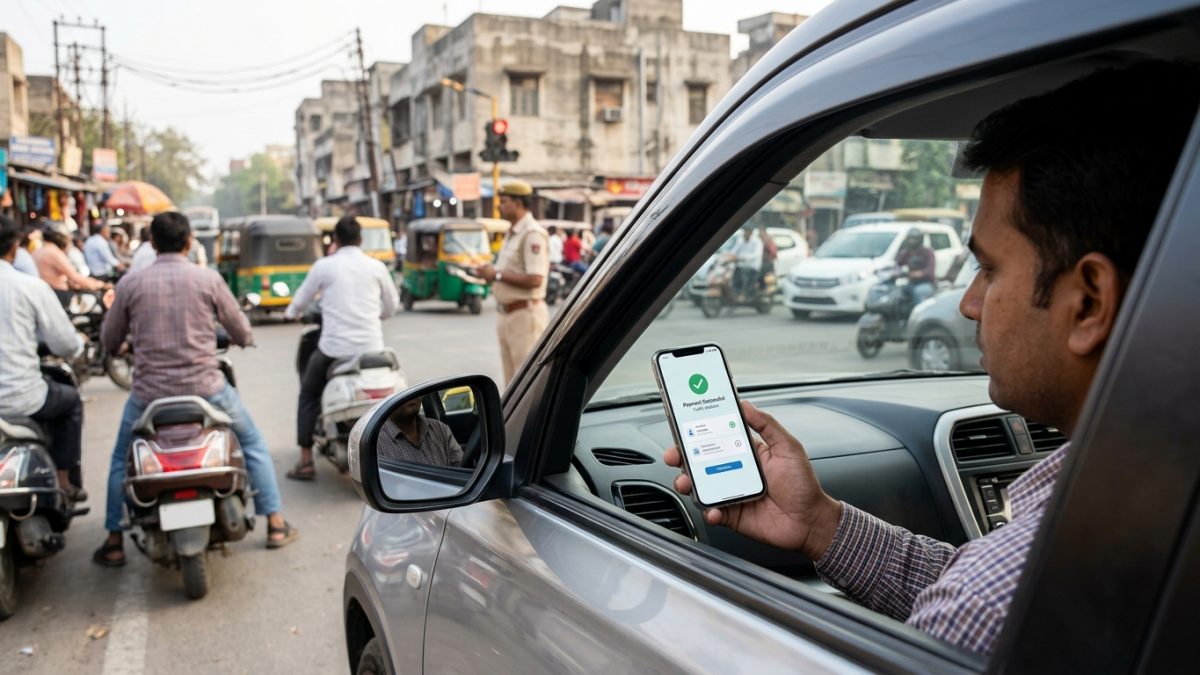
Paying traffic penalties has transitioned to automated digital infrastructure managed through the Ministry of Road Transport and Highways (MoRTH) and the Supreme Court’s e-Courts initiative. Depending on whether your challan is compoundable or referred to court, you must follow the appropriate payment workflow below.
Process A: Settling Compoundable Citations on Parivahan eChallan
- Access the official portal: Open your browser and navigate to the official eChallan Parivahan portal.
- Enter your tracking credentials: Search using your Challan Number, Vehicle Registration Number (with the last 5 digits of your Chassis or Engine number), or Driving Licence Number.
- Verify the violation details: Complete the security captcha, click Get Detail, and examine the captured photographic evidence, time, location, and the specific section applied.
- Initiate online settlement: Click on Pay Now and complete mobile OTP verification. Learn more about the overall workflow in our detailed guide to pay challan online and download receipts.
- Complete the gateway transaction: Choose your preferred payment option, such as UPI, debit card, credit card, or net banking, through Bharatkosh or state treasury payment gateways.
- Download your payment receipt: Save the digital transaction receipt containing the Challan Reference ID. The portal updates the VAHAN database immediately to mark the citation as cleared.
Process B: Resolving Challans Sent to Virtual Courts
- Visit the Virtual Courts portal: When an unpaid challan moves to the judiciary, navigate to the official Virtual Courts web portal.
- Select your state and court: Choose your state and pick the corresponding Virtual Traffic Court from the dropdown menu.
- Search your case: Locate your matter using the Challan Number, CNR Number, Vehicle Registration Number, or registered mobile number.
- Plead guilty and pay the fine: Review the judicial fine amount and choose I Agree / Plead Guilty. Authenticate via OTP sent to your registered mobile number, pay the judicial fine, and the case status updates to Disposed. If you wish to challenge the fine, see our complete guide on virtual court challan check and contest steps.
Deadlines, Licence Suspension, and VAHAN Blacklisting
Ignoring pending traffic citations leads to administrative and operational issues with the transport department. Most states offer a 60-day window from the date of issuance to settle standard compoundable e-challans.
Once that window lapses without resolution, the enforcement server transfers the citation to the jurisdictional virtual court or Chief Judicial Magistrate, removing the option to pay via normal roadside or portal compounding channels.
Warning: Multiple unpaid challans cause your vehicle record to be blacklisted on VAHAN. This blocks transport services like issuing a No Objection Certificate (NOC), ownership transfers during vehicle sales, hypothecation removals, and fitness renewals.
Statutory Licence Suspension Under Section 206(4)
Section 206(4) of the Motor Vehicles Act authorizes police and enforcement officers to seize and forward your physical or digital driving licence directly to the licensing authority for a mandatory minimum 3-month suspension for any of the following infractions:
- Driving without an approved protective helmet (Section 194D).
- Carrying more than one pillion rider on a two-wheeler (Section 194C).
- Exceeding lawful speed limits or reckless driving (Section 183 and Section 184).
- Driving under the influence of alcohol or narcotic substances (Section 185).
Always verify the enforcement records of any car or two-wheeler before completing a private purchase. You can easily check your challan status using your vehicle registration number on VahanX to ensure your legal profile remains clean and compliant across all Indian roads.
Conclusion
Staying informed about the full schedule of motor vehicle act fines ensures you remain legally compliant and financially protected on Indian roads. While basic moving violations like minor speeding or missed documentation can often be resolved through simple compounding fees, severe non-compoundable infractions trigger court proceedings, heavy fines, and licence suspensions.
Make it a routine habit to audit your vehicle registration and pending traffic penalties regularly so that minor oversights never escalate into court summons or VAHAN portal blacklisting.