Executing a vehicle sale requires verifying essential used car documents to transfer title and eliminate future liabilities. As mandated by the Motor Vehicles Act, 1988, transferring ownership requires RTO Form 29, Form 30, the original Registration Certificate (RC), valid insurance, a computerized PUC, and a signed delivery receipt. Before exchanging funds, verify ownership records through an online vehicle RC search to confirm legal registration and hypothecation status.
Key Takeaways
- Form 29 and Form 30 are mandatory statutory forms for any pre-owned car ownership transfer.
- The registered owner remains strictly liable for accidents until RTO records are officially updated.
- A signed delivery note with the exact time and date shields the seller from immediate liabilities.
- Clearing all pending traffic fines and loan hypothecations (Form 35) is mandatory before transfer.
- Insurance must be transferred within 14 days of RC transfer under Section 157 of the Motor Vehicles Act.
| Document / Requirement | Governing Authority / Form | Statutory Deadline | Standard Government Fee |
|---|
| Notice of Transfer | RTO Form 29 (in duplicate) | Within 14 days of sale | Included in transfer fee |
| Application for Transfer | RTO Form 30 (in duplicate) | Within 30 days of sale | ₹300 (LMV baseline) |
| Loan Termination | RTO Form 35 + Bank NOC | Before ownership transfer | ₹0 to ₹100 (state-dependent) |
| Inter-State Clearance | RTO Form 28 (in triplicate) | Prior to out-of-state transfer | Varies by state |
| Smart Card RC Issue | State Transport Department | Dispatched upon approval | ₹200 |
Mandatory RTO Documents for Used Car Sale and Transfer
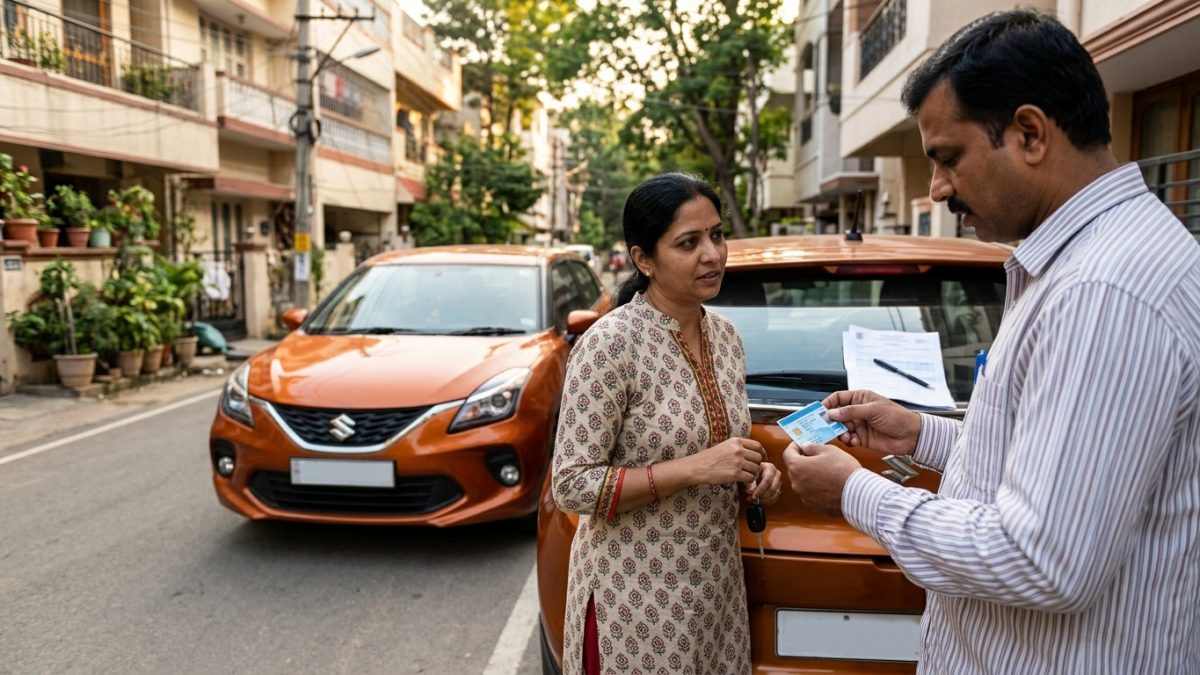
Transferring vehicular title is strictly governed by the Motor Vehicles Act, 1988, and the Central Motor Vehicles Rules (CMVR), 1989. To complete the legal handover, the regional transport office requires specific standardized forms depending on the transaction type.
When the buyer and seller reside within the same state, two core statutory forms establish the transaction record:
- Form 29 (Notice of Transfer of Ownership): Executed in duplicate, this form serves as official notice from the seller (transferor) to the Registering Authority stating that the vehicle has been transferred to the buyer.
- Form 30 (Application for Intimation and Transfer of Ownership): Submitted in duplicate, this document contains two parts. Part I is endorsed by the seller, while Part II contains the buyer’s (transferee’s) declaration accepting ownership and liabilities.
Both forms must be signed identically to the signatures on the original registration records. You can download these directly from the Parivahan official forms portal.
If the vehicle was bought through financing, the RTO registration records will show a hypothecation mark. This requires specific loan settlement documentation:
- Form 35: Executed in duplicate, this represents the notice of termination of an agreement of hire-purchase, lease, or hypothecation. It requires signatures from both the registered owner and the lending financial institution.
- Financier NOC: An original No Objection Certificate and loan closure letter issued by the lending bank or NBFC confirming that the loan has zero outstanding balance.
- Form 34: Utilized only if the incoming buyer takes out a fresh loan to finance the pre-owned purchase, adding a new hypothecation endorsement to the updated RC.
Relocating a vehicle across state borders triggers additional compliance under Sections 47 and 50 of the Motor Vehicles Act, 1988:
- Form 28: The application for and grant of a No Objection Certificate (NOC). This must be submitted in triplicate to the originating RTO where the car is currently registered. It certifies that the vehicle has no pending criminal cases, unpaid road taxes, or active stolen vehicle alerts.
- Form 27: The formal application submitted by the buyer to the destination RTO for the assignment of a new registration mark if the car remains in the new state beyond the statutory 12-month limit.
Warning: Under Section 50 of the Motor Vehicles Act, 1988, selling a car across state lines without obtaining Form 28 from the parent RTO prevents the destination transport department from ever issuing a new registration card.
Complete Used Car Documents Checklist for Buyers
Buying a pre-owned vehicle without careful documentation exposes you to financial and legal problems. Using a comprehensive used car documents checklist protects your investment before you transfer any payment.
Primary Vehicle Documentation
The buyer must review and physically secure the following vehicular records from the seller:
- Original Registration Certificate (RC): Inspect the physical RC card or paper booklet. Verify that the chassis number and engine number stamped on the vehicle metal match the RC exactly. Confirm the owner name matches the seller’s photo ID.
- Valid Vehicle Insurance Certificate: Verify whether the policy is active, its expiry date, and whether it provides comprehensive or standalone third-party cover.
- Pollution Under Control Certificate (PUCC): Ensure the vehicle holds a valid computerized PUCC containing an online-generated QR code linked directly to the national VAHAN register.
- Car Purchase Invoice & Duplicate Keys: The original showroom invoice proves clear provenance, while retaining two sets of keys ensures no unverified access remains.
- Service History & Warranty Booklet: Authorized workshop logbooks confirm genuine odometer readings and prevent purchasing flood-damaged or poorly maintained stock.
Documents to Check Before Buying Second Hand Car
Before releasing payments, conduct basic background checks across government databases:
- Check for Unpaid Challans: Verify that the registration mark carries no unpaid traffic tickets by performing an online inquiry on the e-challan status portal. Unsettled court challans will halt the RTO transfer.
- Verify Blacklist Status: Check that the car has not been flagged or blacklisted by law enforcement agencies, commercial courts, or regional transport authorities.
- Validate Hypothecation Status: Confirm that the vehicle RC does not carry an uncleared bank hypothecation stamp unless accompanied by Form 35 and bank NOC letters.
Tip: If the car has pending automated traffic fines, demand that the seller clear them via the Parivahan e-Challan portal prior to signing the sale deed.
Documents Needed to Sell Used Car in India: Seller Checklist
Selling your car involves handing over possession while protecting yourself against future operational liabilities. As a seller, prepare the following documents needed to sell used car in india:
- Original Registration Certificate (RC): Provided to the buyer for physical RTO surrender or smart card update.
- Signed Form 29 & Form 30: Prepared in duplicate with your signature matching the RTO database signature.
- Valid PUCC & Insurance Copy: The RTO portal strictly blocks transfers if either certificate is expired.
- Chassis & Engine Pencil Imprints: Three clear pencil rubbings of the chassis number taken on blank white paper strips. These are required for physical documentation files at regional transport counters.
- Tax Clearance Certificate: Mandatory if the vehicle was previously used under commercial permits, transport conversions, or when applying for an inter-state NOC.
- Self-Attested KYC Copies: A copy of your PAN card (or Form 60) alongside address and identification documents such as Aadhaar, Voter ID, or Passport.
Buyer KYC Requirements for RTO Filing
The seller must collect verified identity records from the buyer before surrendering the keys:
- Proof of Identity: Self-attested copy of Aadhaar Card, Passport, or Voter ID.
- Proof of Address: Document matching the buyer’s residential RTO jurisdiction (Aadhaar, utility bills, registered rent agreement).
- PAN Card / Form 60: Mandatory under tax compliance frameworks for high-value vehicle purchases.
- Passport Photographs: Two to four recent passport-sized color photographs for physical RTO records.
- Aadhaar-Linked Mobile Number: Required for OTP verification on states offering faceless online RTO services.
Why a Delivery Note for Used Car Purchase Is Legally Critical
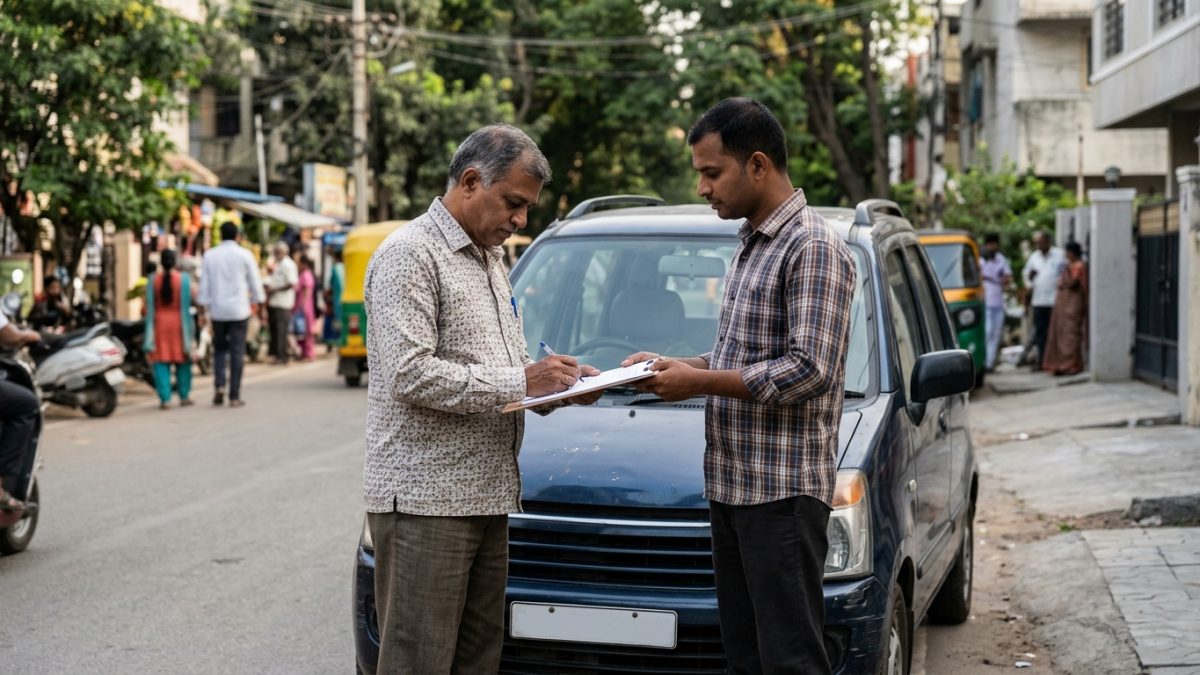
Standard RTO forms like Form 29 and Form 30 notify the government of an ownership transfer, but they do not record the exact minute possession changes hands. This leaves a significant legal gap during private used car sales.
The Supreme Court Precedent on Owner Liability
In the benchmark ruling Naveen Kumar v. Vijay Kumar (2018), the Supreme Court of India established that for the purposes of the Motor Vehicles Act, the person whose name is recorded in the official RTO database remains the legal "owner."
Even if you receive full payment, hand over the keys, and obtain signed transfer papers, you remain strictly liable for third-party accident compensation, criminal offenses, and automated traffic penalties until the VAHAN database is updated. If the buyer causes a fatal hit-and-run immediately after driving away, the registered seller faces legal liability unless clear documentation proves transfer of possession.
Essential Clauses in a Delivery Note & Sale Agreement
A structured delivery note for used car purchase serves as practical evidence of physical custody. Ensure the agreement contains:
- Exact Timestamp: The precise calendar date, hour, and minute when the physical handover occurred.
- Odometer Reading: The exact kilometer reading displayed at the moment of vehicle delivery.
- Indemnity & Liability Clause: An explicit statement whereby the buyer indemnifies the seller against all legal proceedings, motor accident claims, traffic violations, and criminal liabilities arising after the timestamp.
- Financial Consideration: Explicit payment records showing transaction reference numbers (NEFT, RTGS, or cheque numbers) rather than untraceable cash.
- Transfer Commitment: A formal undertaking by the buyer to finalize the official RC transfer within 14 to 30 days.
Step-by-Step Online RC Transfer Process on Parivahan
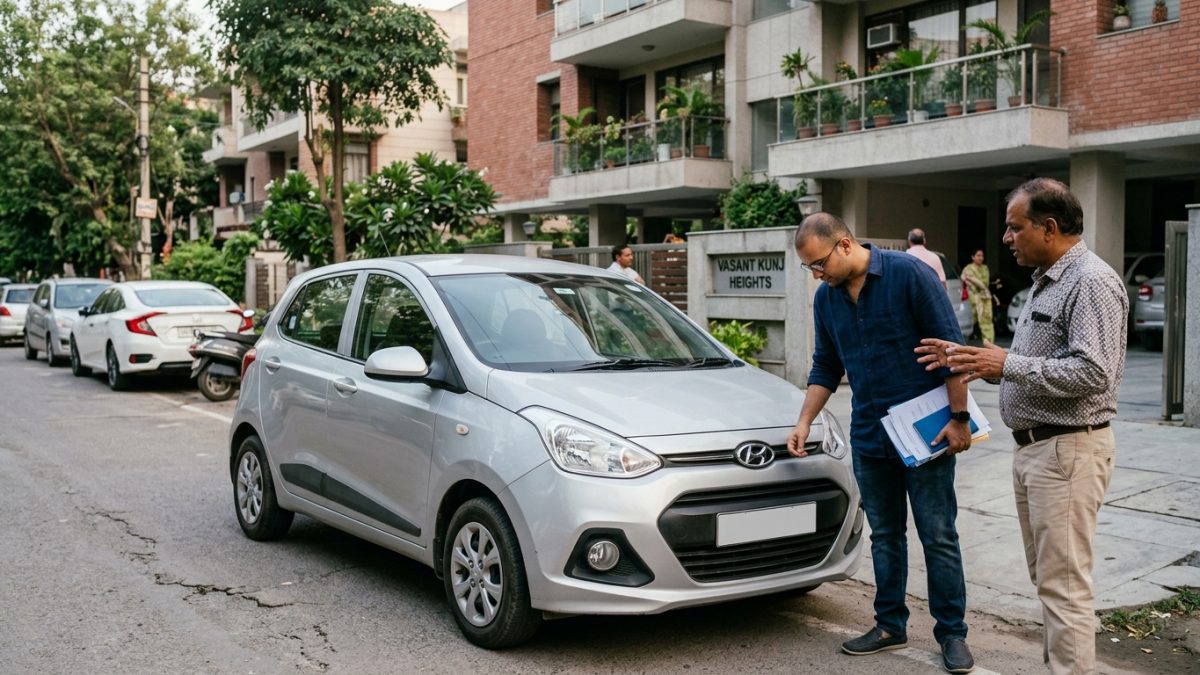
The Ministry of Road Transport and Highways (MoRTH) operates an online system for ownership transfers through the VAHAN citizen interface. Here is how to complete the process:
- Verify Pre-requisites Online: Clear all outstanding traffic challans on the national e-challan system and confirm that the PUCC and insurance records show as active in the VAHAN registry.
- Access the Vahan Citizen Portal: Navigate to the official Parivahan portal, select "Vehicle Related Services," and choose your state and jurisdictional RTO.
- Enter Registration Details: Input the vehicle registration number alongside the last five characters of the chassis number, authenticating the session with an OTP sent to your registered mobile number.
- Select Transfer Services: Choose "Transfer of Ownership (TO)." If an existing vehicle loan has ended, simultaneously select "Hypothecation Termination (HPT)."
- Fill Buyer and Sale Details: Enter the buyer's full name, permanent residential address, PAN number, mobile contact details, and the agreed sale price.
- Pay the Statutory RTO Fees: Pay the standard transfer fee, smart card fee, and postal charges via the integrated government payment gateway.
- Print Statutory Receipts: Download and print the computer-generated Form 29, Form 30, and the official fee receipt.
- Complete Document Submission: In Aadhaar-enabled contactless states, execute digital e-sign verifications via OTP and upload the scanned paperwork. In non-faceless states, submit the physical folder (Forms 29, 30, original RC, insurance, PUC, pencil prints, and buyer KYC) directly at the destination RTO counter.
- Track Dispatch: Track the application status using the generated reference number. Once approved, the RTO dispatches the updated smart card RC to the buyer's registered address via Speed Post.
Note: Need to submit forms in person? Check your local RTO office address and code to confirm physical filing hours and counter details.
Statutory Timelines, RTO Fees, and Penalties
The Central Motor Vehicles Rules (CMVR), 1989, establish specific timelines and fee schedules for pre-owned vehicle transactions. Falling behind these statutory deadlines triggers mandatory penalty fees.
| Transfer Type / Service | Statutory Deadline | RTO Statutory Fee | Belated Penalty |
|---|
| Seller Notice (Same State) | Within 14 days of transfer | Nil | Varies by jurisdiction |
| Buyer Filing (Same State) | Within 30 days of transfer | ₹300 (LMV) + ₹200 (Smart Card) | ₹500 per month of delay |
| Inter-State Transfer Filing | Within 45 days of transfer | ₹300 + State Taxes + ₹200 | ₹500 per month of delay |
| Insurance Transfer | Within 14 days of RC update | Nominal policy fee (~₹50–₹100) | Loss of Own Damage cover |
| Hypothecation Removal | No fixed statutory limit | ₹0 to ₹100 | None |
As established under Rule 81 of the Central Motor Vehicles Rules, baseline transfer costs for light motor vehicles stand at ₹300, supplemented by a ₹200 smart card fee and ₹50 to ₹100 postal charges. Total online portal fees typically range between ₹550 and ₹850. Late applications trigger recurring fines of ₹500 for every month of delay for light motor cars. Make sure to confirm exact state-level fees on your local transport portal, as regional road safety cesses vary across jurisdictions as of October 2026.
Special Scenarios: Inter-State Transfers, Dealers, and Regulations
Pre-owned car transactions often involve specialized situations that require extra documentation and compliance steps.
1. Inter-State Relocation and Pro-Rata Road Tax
When moving a vehicle permanently from one state to another, obtaining Form 28 from the parent RTO is just the first step. Upon arrival in the new state, the buyer must pay pro-rata Life Time Road Tax (LTT) under local state laws, which generally ranges from 6% to 14% based on the vehicle’s original invoice, age, fuel type, and engine capacity.
Once the car is registered under its new local registration number, the previous owner or buyer can apply for a partial road tax refund from the original state under Section 47 of the Motor Vehicles Act. However, processing this refund requires significant paperwork and follow-up.
2. The Registered Dealer Ecosystem (Rules 55A–55E)
To eliminate legal ambiguities when individuals sell cars to pre-owned dealerships, the Ministry of Road Transport and Highways enacted CMVR Rules 55A through 55E. Registered pre-owned car dealers must hold a valid Authorisation Certificate issued in Form 29B.
When an individual hands over a car to an authorized dealer, an electronic intimation is filed in Form 29C. Filing Form 29C legally transfers "deemed ownership" to the dealership. This protects the original seller from liability for traffic violations, toll fees, or accidents that occur while the vehicle is in dealer inventory. If the transaction falls through and the owner takes the car back unsold, the dealer files Form 29D.
3. Age Restrictions in Delhi-NCR
Under National Green Tribunal (NGT) directives and Supreme Court orders, diesel vehicles older than 10 years and petrol vehicles older than 15 years cannot operate or be registered in the National Capital Region (Delhi-NCR). RTOs in Delhi-NCR will not issue a transfer or grant an NOC (Form 28) for vehicles that have exceeded these operational age limits.
Conclusion
Executing your vehicle sale with a thorough used car documents checklist prevents financial loss, administrative delays, and long-term legal exposure. From securing RTO Forms 29 and 30 to obtaining signed delivery receipts and verifying hypothecation clearances, orderly paperwork ensures a smooth transfer of ownership.
Before signing agreements or handing over payments, confirm the vehicle's background by checking its registration, hypothecation, and insurance records via an online RC check. Once ownership is transferred, make sure to update the insurance policy within 14 days to keep your coverage active.