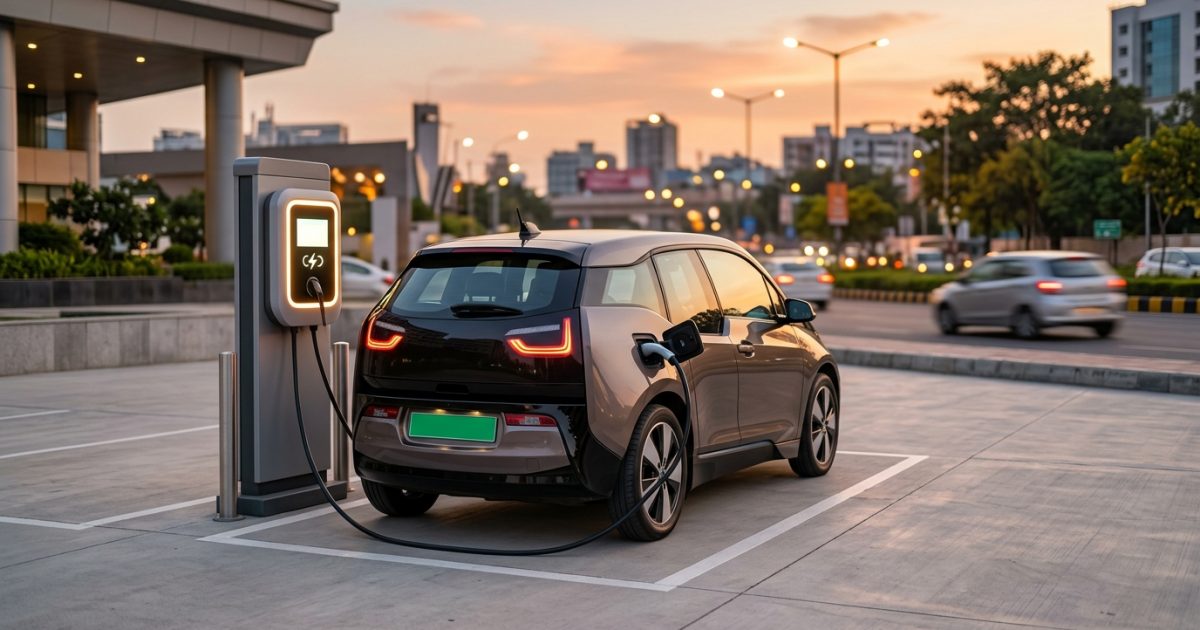
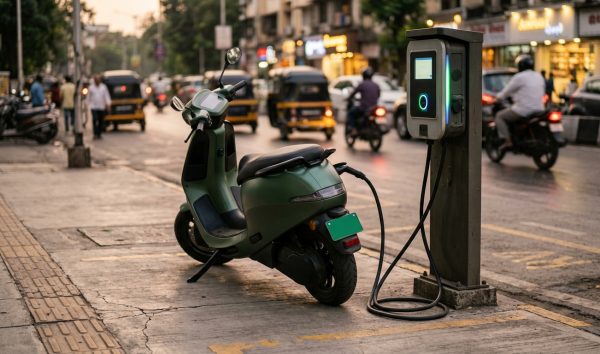
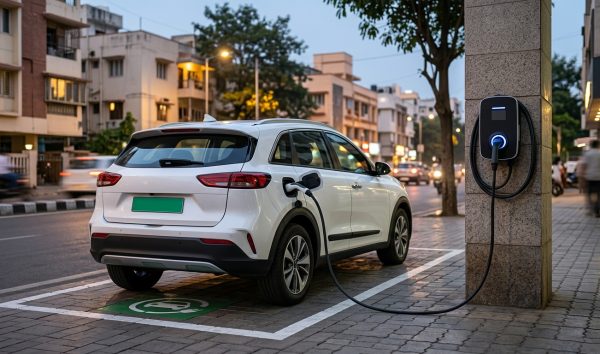
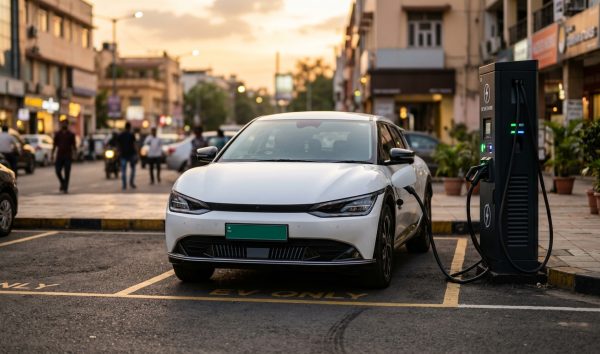
Setting up an ev charging station in India costs between ₹2,000 for a basic 16A home socket and ₹75,000 for a 7.2 kW smart wallbox, while public DC fast charging costs ₹16 to ₹26 per unit. Home charging rates range from ₹4.50 to ₹9.00 per kWh depending on your state electricity board. Vehicle owners can verify technical registration details and unladen vehicle specs on VahanX RC search before finalizing electrical wiring upgrades.
Key Takeaways
- Home charging costs ₹1.00 to ₹1.40 per km, while commercial DC fast charging costs ₹3.00 to ₹4.50 per km.
- Setting up a 7.2 kW home wallbox requires an 8 kW to 10 kW 3-phase sanctioned electrical load.
- Housing societies cannot legally reject an EV charger NOC for an allotted private parking slot.
- Operating an EV charging point is completely de-licensed under the Ministry of Power guidelines.
- Dedicated EV meters in states like Delhi and Karnataka offer concessional tariffs of ₹4.50 per unit.
| Charging Point Type | Power Capacity | Setup / Hardware Cost | Avg. Tariff per Unit |
|---|
| 15A/16A Socket | 3.3 kW (Single Phase) | ₹2,000 – ₹6,000 | ₹4.50 – ₹9.00 (Domestic) |
| AC Wallbox | 7.2 kW – 11 kW | ₹40,000 – ₹75,000 | ₹4.50 – ₹8.50 (EV/Domestic) |
| Public AC Destination | 7.2 kW – 22 kW | ₹1.5 Lakh – ₹3 Lakh | ₹9.00 – ₹15.00 + GST |
| Public DC Fast Charger | 30 kW – 60 kW CCS2 | ₹9 Lakh – ₹18 Lakh | ₹16.00 – ₹26.00 + GST |
EV Charger Types and Charging Speeds in India
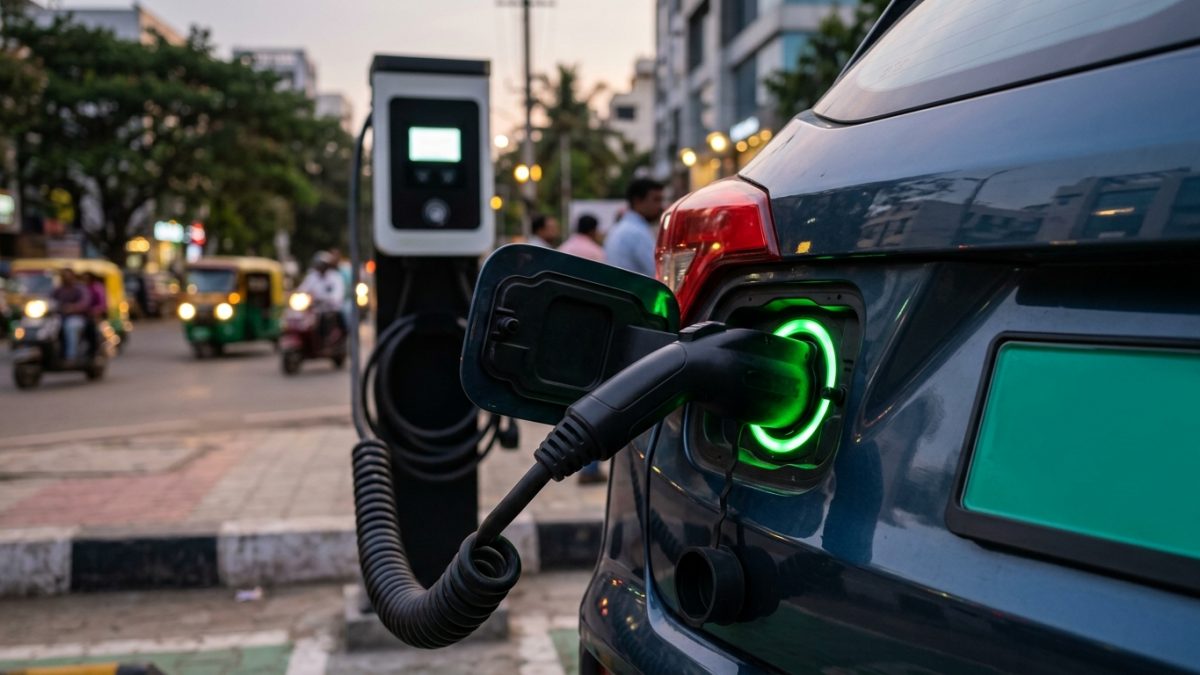
Understanding the hardware levels is essential before installing an ev charging station at your residential premises or business property. Modern electric cars sold in India adhere to global connector standards governed by the Bureau of Indian Standards (BIS). Choosing the wrong output capacity leads to extended idle times or repeated circuit trips.
Level 1 AC chargers use a regular 16A 3-pin industrial power point paired with a portable EVSE cable. Level 2 AC wallbox chargers operate between 7.2 kW and 22 kW using a standardized Type 2 connector. Level 3 DC fast chargers bypass the vehicle on-board converter to supply high-voltage direct current directly to the battery pack through a CCS2 connector.
| Charger Category | Connector Type | Power & Voltage | Typical 0–80% Time |
|---|
| Level 1 (Slow AC) | 16A 3-Pin / Portable | 3.3 kW, 230V 1-Phase | 12 to 16 Hours (40 kWh) |
| Level 2 (Fast AC) | Type 2 (IEC 62196) | 7.2 kW, 230V / 11 kW, 415V | 5 to 7 Hours (7.2 kW) |
| Level 3 (DC Fast) | CCS2 Gun | 30 kW to 60 kW DC | 45 to 60 Minutes |
| Level 4 (Ultra DC) | CCS2 Liquid-Cooled | 120 kW to 240 kW DC | 18 to 30 Minutes |
To assess vehicle compatibility across budget tiers, check our guide on electric car price in India before purchasing home charging accessories. For small commuter batteries, a standard 3.3 kW line is often sufficient for overnight recovery.
Warning: Always ensure your Level 1 portable charger uses an uninterrupted 3-pin industrial grade socket. Never run high-load EV charging through thin extension strips or standard 5A domestic plugs.
EV Charging Cost per Unit in India: Home vs Public Stations
The operational economy of an electric vehicle depends heavily on where you plug in. Charging at home on standard domestic slabs remains the cheapest way to run an electric car or best electric scooter. In contrast, commercial charging points charge for retail real estate, demand charges, software management, and commercial power lines.
At home, domestic power tariffs follow telescopic slabs between ₹4.50 and ₹9.50 per unit as of October 2026. For a 40 kWh battery pack, a full top-up costs approximately ₹180 to ₹350. This translates to an exceptional running expense of ₹1.00 to ₹1.40 per kilometer.
The public ev charging station price combines energy charges, operator margins, and 18% GST. AC public chargers cost between ₹9 and ₹15 per unit, whereas 60 kW DC fast chargers charge ₹16 to ₹26 per unit. On major expressways, dynamic peak pricing can elevate rates to ₹28 per unit, yielding a running cost of ₹3.00 to ₹4.50 per kilometer.
| State / DISCOM | Domestic Slab Rate | Dedicated EV LT Tariff | Public DC Fast Rate |
|---|
| Delhi (BSES / TPDDL) | ₹4.50 – ₹8.00 / unit | ₹4.50 flat / unit | ₹16.00 – ₹21.00 / unit |
| Karnataka (BESCOM) | ₹4.75 – ₹7.00 / unit | ₹4.50 – ₹5.50 (LT-6c) | ₹18.00 – ₹24.00 / unit |
| Maharashtra (MSEDCL) | ₹5.50 – ₹11.50 / unit | ₹7.50 – ₹8.50 effective | ₹19.00 – ₹26.00 / unit |
| Tamil Nadu (TANGEDCO) | ₹4.50 – ₹9.00 / unit | ₹6.00 – ₹8.00 (ToD) | ₹18.00 – ₹24.00 / unit |
To inspect state-specific promotional rates and regional charging infrastructure, visit the NITI Aayog e-AMRIT National EV Portal. State electricity regulatory commissions update these dedicated tariffs annually.
How to Set Up EV Charging Station at Home
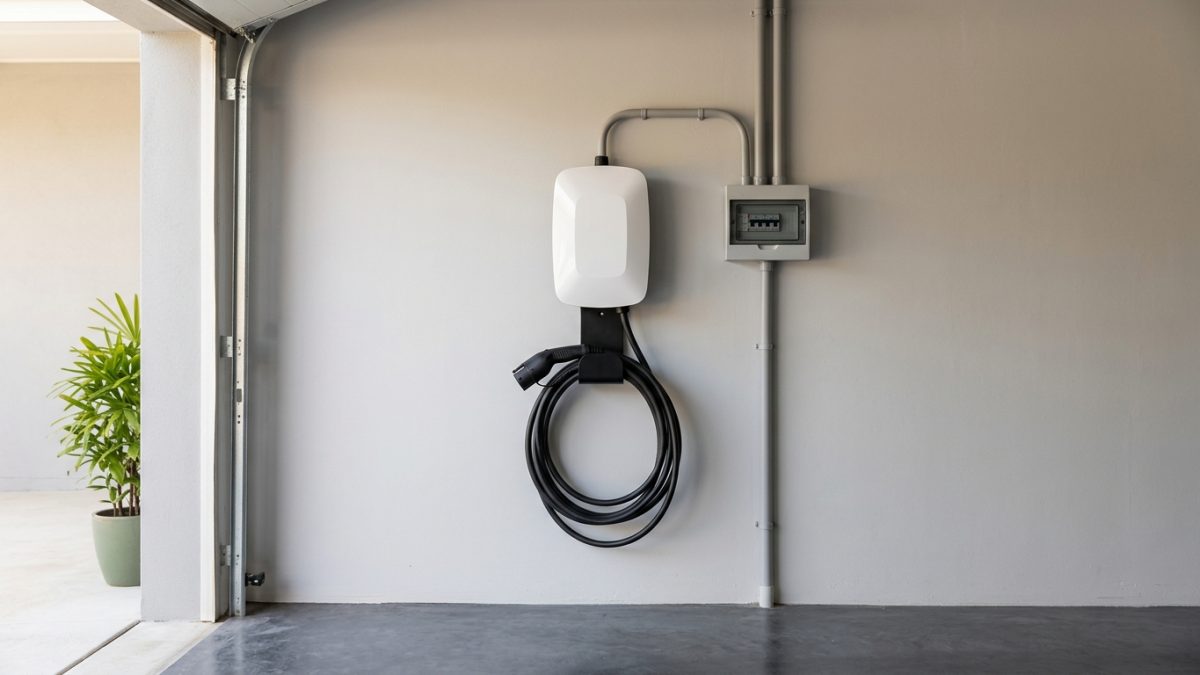
Setting up an ev charging station setup cost profile for a private house is straightforward when planned systematically. An independent bungalow or villa provides direct control over the service line and main distribution board. Follow this structured roadmap to execute an electrical installation safely.
- Perform a connected load audit: Check your latest electricity bill to inspect your existing sanctioned load. If your household currently operates on 3 kW or 5 kW, adding a 7.2 kW wallbox will trigger immediate overload trips when home air conditioners or geysers switch on.
- Submit a load enhancement request: Apply through your DISCOM customer web portal to upgrade your connection to 8 kW or 10 kW. In almost all states, exceeding 5 kW or 7 kW necessitates a meter conversion from single-phase 230V to three-phase 415V supply.
- Lay dedicated unbroken cabling: Run a continuous heavy-duty copper cable directly from the main meter board to the parking bay. Use at least 6 sq mm 3-core copper wire for single-phase 32A chargers, or 4 sq mm 5-core wire for 11 kW three-phase wall units.
- Mount dedicated switchgear: Install a separate miniature distribution box alongside the charger location. Secure the line with a 32A or 40A double-pole MCB and a sensitive 30mA Type-A RCBO to guard against residual current leakage.
- Validate earthing resistance: Commission a dedicated chemical earth electrode if the existing domestic earth resistance exceeds 5 Ohms. Modern EV onboard software continuously measures loop impedance and halts current delivery if it detects floating ground lines.
Tip: If you are moving houses or evaluating long-term expenses, check our detailed breakdown on EV charging station at home setup cost and rules for detailed wiring estimates.
EV Charger Installation in Apartment Society NOC and RWA Rules
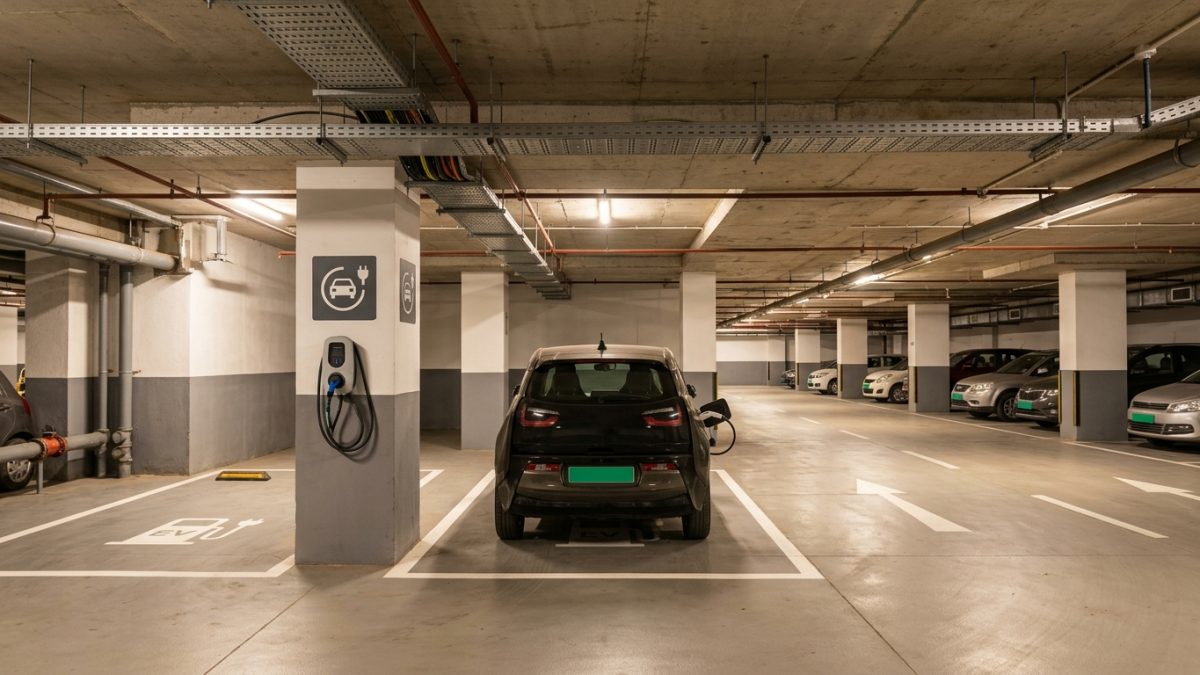
Securing an ev charger installation in apartment society noc is a common challenge for EV owners living in high-rise complexes. Resident Welfare Associations (RWAs) often raise objections citing transformer capacity, fire risks, or parking demarcation. However, the legal framework clearly favors the vehicle owner.
Under the revised guidelines issued by the Ministry of Power, establishing EV charging infrastructure in allotted parking areas is an authorized activity. Furthermore, amendments to the Model Building Bye-Laws by the Ministry of Housing and Urban Affairs mandate that at least 20% of residential parking bays must be equipped with EV charging conduits.
The Bombay High Court and various consumer forums have established that housing societies cannot issue arbitrary blanket bans against EV chargers. In states like Maharashtra, cooperative housing society directives require managing committees to process and decide on compliant NOC requests within 7 working days. RWAs can only refuse permission if a resident demands installation in shared visitor parking or employs uncertified wiring contractors.
- Procure parking allotment documentation: Obtain your registered allotment letter verifying that the parking bay is your exclusive designated space.
- Draft a formal intimation letter: Submit a detailed technical file to the society management containing the charger brochure, BIS compliance sheet, and the licensed contractor credentials.
- Propose standard conduit routing: Commit to using fire-retardant low-smoke (FR-LSH) conduits or galvanized iron cable trays routed through designated basement service shafts.
- Confirm billing autonomy: Assure the committee that the charger connects strictly behind your individual flat meter or a separate DISCOM EV sub-meter, ensuring zero common electricity expense for the RWA.
Important Note: For shared basement parkings where apartments sit multiple floors above, explore community charging. Partnering with a third-party Charge Point Operator (CPO) allows societies to install shared AC chargers with automated RFID or mobile application billing.
Connecting a high-power ev charging station without formal DISCOM sanction violates statutory supply codes. Modern digital smart meters record 15-minute Maximum Demand (MD) registers. If your simultaneous household load and charging draw exceed sanctioned limits, automatic demand penalty surcharges will appear on your monthly bill.
Understanding your electricity board rules protects you from unexpected administrative fines. Indian utilities enforce clear thresholds based on charger capacity ratings:
- For 3.3 kW AC Slow Charging: Maintain a minimum sanctioned load of 5 kW to 6 kW (Single Phase).
- For 7.2 kW AC Fast Charging: Upgrade to an 8 kW to 10 kW sanctioned capacity (Three Phase connection required).
- For 11 kW / 22 kW AC Fast Charging: Upgrade to 14 kW to 25 kW sanctioned capacity (Three Phase connection required).
The Electricity (Rights of Consumers) Rules mandate swift service timelines for sanctioned load upgrades: within 3 days in metropolitan areas, 7 days in other municipal limits, and 15 days across rural jurisdictions.
- Access your regional portal: Log into your electricity distribution portal, such as BSES Delhi, BESCOM EV Mitra, or MSEDCL Maharashtra.
- Select load enhancement service: Choose the option for residential load increase or apply for a dedicated new EV charging category connection.
- Upload regulatory documentation: Submit your Aadhaar card, recent property ownership deed or tax receipt, latest electricity bill receipt, and a wiring completion certificate (Form A) issued by a licensed electrical contractor.
- Facilitate site inspection: Coordinate with the DISCOM junior engineer who visits to verify distribution transformer headroom and service cable thickness.
- Pay the demand note: Complete payment for service line enhancement charges, new three-phase meter installation fees, and the additional security deposit.
Mistake to Avoid: Do not rely on local electricians who claim load upgrades are unnecessary. If a smart meter detects a sustained 32A draw on a 3 kW sanctioned connection, your account faces immediate category violation penalties.
Common Technical Pitfalls for Indian EV Owners
Operating a residential ev charging station involves daily electrical management. Several installation and maintenance mistakes frequently impact first-time EV buyers across Indian cities.
Earthing degradation is the most common reason home chargers unexpectedly fail. Modern EV on-board systems constantly verify the Neutral-to-Earth voltage potential. If the difference rises above 3 to 5 Volts due to dried soil around earthing pits during summer months, the charger displays a Protective Earth (PE) fault and locks out.
Extremely long cable runs in multi-level basements represent another severe issue. When drawing a dedicated wire from a ground-floor meter room down to a basement parking slot 80 meters away, voltage drop occurs. Using undersized copper conductors causes severe heat accumulation and drops the voltage below the vehicle operating threshold.
Unbalanced three-phase loads also pose severe fire risks. Drawing a heavy 32A single-phase charge on one phase while running high-tonnage domestic air conditioners on the same line causes severe neutral line overheating. Always verify that your electrical contractor distributes domestic appliances evenly across all three phases.
Public EV Charging Station Business Cost in India
Setting up an ev charging station business cost in india profile requires understanding commercial infrastructure metrics. Under guidelines established by the Ministry of Power pursuant to the Electricity Act 2003, setting up and operating an EV charging station is an explicitly de-licensed commercial activity. Any individual, enterprise, or startup can build and operate charging infrastructure without needing an electricity distribution license.
To establish a compliant public charging facility, operators must follow technical regulations set by the Central Electricity Authority (CEA). High-voltage installations must obtain statutory safety clearances from the Chief Electrical Inspector to Government (CEIG).
| Investment Component | Slow AC Commercial Hub | DC Fast Charging Station |
|---|
| Sanctioned Load & Transformer | ₹1.5 Lakh – ₹3 Lakh (50 kVA) | ₹6 Lakh – ₹12 Lakh (150+ kVA) |
| Hardware & Dispensers | ₹1 Lakh – ₹2.5 Lakh (Dual Type 2) | ₹9 Lakh – ₹16 Lakh (60 kW CCS2) |
| Civil Works & Cabling | ₹50,000 – ₹1.2 Lakh | ₹2 Lakh – ₹4.5 Lakh |
| Software / CMS Integration | ₹15,000 – ₹30,000 / year | ₹40,000 – ₹80,000 / year |
| Total Initial Outlay | ₹3.15 Lakh – ₹7 Lakh | ₹17.4 Lakh – ₹33.3 Lakh |
Entrepreneurs can also leverage commercial subsidies and charging rollouts supported under government frameworks. Learn about eligibility rules in our comprehensive guide on the EV subsidy in India PM E-DRIVE rules. Always run an exhaustive check on vehicle registration metrics and commercial fleet compliance using VahanX RC details check before finalizing long-term infrastructure contracts.
Conclusion
Installing an ev charging station transforms the ownership experience of an electric vehicle by ensuring dependable daily mobility at a fraction of petrol or diesel expenses. By calculating your household electrical load, securing the necessary DISCOM three-phase enhancement, and deploying BIS-compliant switchgear, you ensure that your residential charging setup remains completely safe and legally protected.
Whether you choose an economical 16A socket or a high-speed 7.2 kW wallbox, verify that your housing society paperwork and earthing installations align strictly with Central Electricity Authority standards. Keep track of your vehicle registration particulars, insurance validity, and compliance updates seamlessly using our automotive portal before planning your next zero-emission journey.