Key Takeaways
- Third party car insurance is legally mandatory under Section 146 of the Motor Vehicles Act, 1988.
- Base premiums are fixed by MoRTH and IRDAI based on your car's engine capacity (cc) or electric motor output (kW).
- Covers unlimited financial liability for third-party death or injury, and up to ₹7.5 Lakhs for property damage.
- Driving without active insurance attracts a fine of ₹2,000 for the first offence and ₹4,000 for repeat offences.
- Never covers damage to your own vehicle; you require standalone own damage or comprehensive insurance for vehicle repairs.
Third party car insurance is a statutory policy that covers your legal and financial liabilities if your vehicle causes bodily injury, death, or property damage to an outside person or vehicle. It protects you against court-mandated payouts awarded by the Motor Accidents Claims Tribunal (MACT), ensuring external victims receive timely compensation while shielding your personal assets.
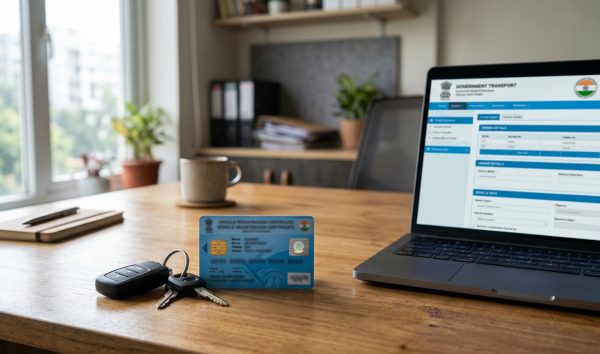
Before taking your vehicle onto public roads, always confirm your policy status. You can verify your policy validity instantly by running an online RC search to check car insurance expiry against central transport databases.
| Feature | Statutory Requirement |
|---|
| Legal Authority | Section 146, Motor Vehicles Act, 1988 |
| Tariff Authority | MoRTH in consultation with IRDAI |
| Annual Base Premium (Up to 1,000 cc) | ₹2,094 + 18% GST (Total: ₹2,470.92) |
| Annual Base Premium (1,001 cc to 1,500 cc) | ₹3,416 + 18% GST (Total: ₹4,030.88) |
| Annual Base Premium (Above 1,500 cc) | ₹7,897 + 18% GST (Total: ₹9,318.46) |
| Third-Party Property Damage Limit | ₹7,50,000 (₹7.5 Lakhs) |
| Bodily Injury / Death Limit | Unlimited (as decreed by MACT) |
| Penalty for Driving Without Cover | ₹2,000 fine / 3 months jail (1st offence) |
Third Party Car Insurance Rates IRDAI & MoRTH Price List

Base premiums for third-party cover are fixed nationwide. Under Section 147(2) of the Motor Vehicles Act, rates are formally notified by the Ministry of Road Transport and Highways (MoRTH) in consultation with the Insurance Regulatory and Development Authority of India (IRDAI). Insurers are legally prohibited from discounting, hiking, or loading these baseline rates.
The prevailing rates for private passenger cars originate from notification G.S.R. 394(E), which took effect on 1 June 2022 and remains the active benchmark as of October 2026. A flat Goods and Services Tax (GST) of 18% applies on top of the base rates.
| Engine Capacity Slab | Base Annual Rate (₹) | GST @ 18% (₹) | Total Payable (₹) |
|---|
| Up to 1,000 cc (e.g., Alto, Kwid, S-Presso) | ₹2,094 | ₹376.92 | ₹2,470.92 |
| 1,001 cc to 1,500 cc (e.g., Swift, Baleno, Creta 1.5, City) | ₹3,416 | ₹614.88 | ₹4,030.88 |
| Exceeding 1,500 cc (e.g., XUV700, Harrier, Fortuner) | ₹7,897 | ₹1,421.46 | ₹9,318.46 |
All newly registered private passenger cars purchased after 1 September 2018 must mandatorily take an upfront 3-year third-party liability cover at the showroom counter.
Mandatory 3-Year Single Premium for New Cars
If you purchase a brand-new showroom car, the Supreme Court of India mandates an upfront 3-year policy. After three years, you transition to standard annual renewals.
| Engine Capacity Slab | 3-Year Base Rate (₹) | GST @ 18% (₹) | Total 3-Year Payable (₹) |
|---|
| Up to 1,000 cc | ₹6,521 | ₹1,173.78 | ₹7,694.78 |
| 1,001 cc to 1,500 cc | ₹10,640 | ₹1,915.20 | ₹12,555.20 |
| Exceeding 1,500 cc | ₹24,596 | ₹4,427.28 | ₹29,023.28 |
Electric Car Premium Slabs
Electric private passenger cars receive preferential pricing based on the kilowatt (kW) capacity of their electric motor:
- Up to 30 kW: Annual base rate of ₹1,780 (₹2,100.40 with GST). The mandatory 3-year single premium for new cars is ₹5,543 (₹6,540.74 with GST).
- 30 kW to 65 kW: Annual base rate of ₹2,904 (₹3,426.72 with GST). The 3-year rate for new cars is ₹9,044 (₹10,671.92 with GST).
- Exceeding 65 kW: Annual base rate of ₹6,712 (₹7,920.16 with GST). The 3-year rate for new cars is ₹20,907 (₹24,670.26 with GST).
Statutory Discounts and Compulsory Personal Accident Cover
The tariff rules provide statutory concessions for specific categories of private vehicles:
- Hybrid Electric Vehicles (HEV): Receive a flat 7.5% discount on the base third-party premium.
- Registered Vintage Cars: Receive a 50% discount on the base third-party premium.
- Compulsory Personal Accident (CPA) Cover: Provides ₹15 Lakhs capital cover for owner-drivers against accidental death or permanent total disability for a fixed annual premium of ₹275 + GST (₹324.50). You can legally opt out only if you already hold an active standalone personal accident cover of at least ₹15 Lakhs or hold CPA cover on another vehicle you own.
Third Party Car Insurance Coverage: Inclusions vs Exclusions
Understanding your third party car insurance coverage prevents unpleasant surprises during roadside disputes. This policy exists entirely to safeguard third parties and satisfy legal liabilities arising from a crash.
What is Covered
- Death or Bodily Injury to Third Parties: Complete financial liability arising from fatal accidents or bodily harm caused to pedestrians, passengers in other vehicles, or cyclists.
- Third-Party Property Damage: Compensation for damage caused by your car to other vehicles, commercial shops, private boundary walls, utility poles, or street fixtures up to the statutory cap.
- Legal Representation and Litigation Costs: All reasonable legal costs and court defence fees incurred while defending liability claims before the Motor Accidents Claims Tribunal (MACT).
- Unlimited Bodily Injury Indemnity: Unlike property claims, Indian law does not cap payouts for third-party bodily injury or fatality; insurers must disburse whatever award the court directs.
Never agree to restrict your Third-Party Property Damage cover to ₹6,000 to save minor premium amounts; if you hit an expensive vehicle, you become personally liable for all damages beyond that limit.
What is Excluded
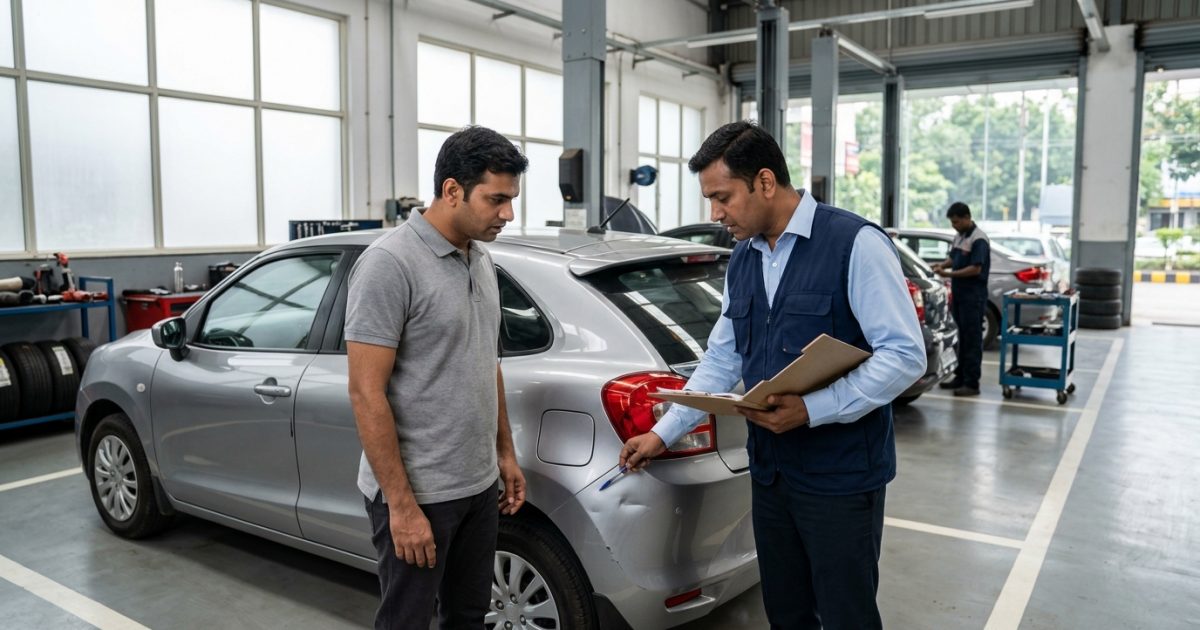
- Own Damage (OD): Any dent, glass breakage, chassis bend, or engine damage to your own vehicle receives zero payout under a third-party policy.
- Theft and Fire: Total car loss due to vehicular theft, arson, or spontaneous engine fires is not covered.
- Unlicensed Drivers: Claims are repudiated if the person operating your car lacked a valid driving licence at the time of the collision.
- Driving Under the Influence: Accidents that take place while the driver is impaired by alcohol, drugs, or narcotics void legal indemnity.
- Commercial Use of Private Vehicles: Using a private registration (white-plate) car as a commercial taxi violates vehicle usage clauses and cancels insurance protection.
- Geographical Limits: Incidents outside the territory of India are excluded unless a special geographic endorsement was added for neighbouring countries.
Third Party vs Comprehensive Car Insurance: Key Differences
Deciding between standalone third party vs comprehensive car insurance depends on your risk tolerance, vehicle valuation, and monthly driving conditions. While third-party cover is mandatory by statute, a comprehensive policy packages third-party liability with Own Damage protection.
| Parameter | Third Party Insurance | Comprehensive Insurance |
|---|
| Legal Mandate | Mandatory under Section 146 | Optional, but highly recommended |
| Damage to Your Car | Not covered | Covered (accidents, natural hazards, fire) |
| Vehicle Theft | No payout | Full payout equal to Insured Declared Value (IDV) |
| Premium Setting | Strictly fixed by MoRTH/IRDAI | Variable; determined by insurer and car IDV |
| Add-on Covers Available | No add-ons applicable | Zero depreciation, engine protect, roadside assistance |
| Ideal Vehicle Age | Very old cars with low resale value | New, financed, or premium daily-use cars |
If you recently let an active comprehensive plan lapse, you can learn how to resolve it through our guide on car insurance renewal for expired policies.
Car Insurance Third Party Property Damage Limit & MACT Claims
The car insurance third party property damage limit is capped by law at ₹7,50,000 (₹7.5 Lakhs). If your vehicle causes physical damage to another car, a storefront, or public infrastructure, your insurance provider settles verified damage invoices up to this statutory boundary.
However, bodily injury and fatal accident claims operate under an entirely different legal standard. When an accident results in bodily harm, permanent disability, or death, victims or their legal heirs file an application before the local Motor Accidents Claims Tribunal (MACT). The tribunal determines compensation using a structured formula that factors in:
- The deceased or injured person's documented monthly income.
- Their age, professional trajectory, and economic dependents.
- Medical, rehabilitation, and long-term care hospital expenses.
Because the MACT awards unlimited compensation, settlements regularly run into tens of lakhs or several crores of rupees. Under your policy, the insurance company pays this full tribunal decree. If you ply an uninsured car, that entire liability falls on your shoulders, and civil courts can attach your bank accounts, salary, and immovable real estate to recover the award.
Fine for Driving Without Third Party Insurance in India
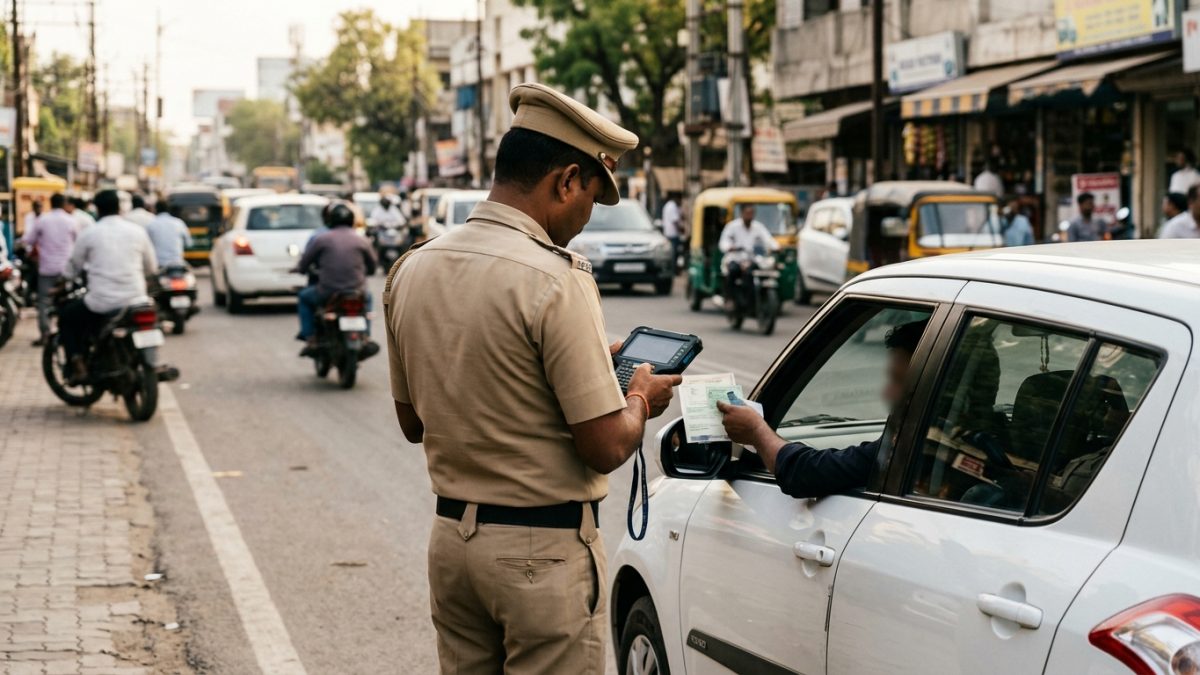
Operating a motor vehicle without active liability insurance is a non-compoundable offence under Section 196 of the Motor Vehicles Act, 1988 (amended in 2019). The statutory penalties are severe and enforce strict compliance nationwide.
| Offence Level | Statutory Fine | Imprisonment Risk | Administrative Actions |
|---|
| First Offence | ₹2,000 | Up to 3 months | Vehicle impounding under Section 207 |
| Second / Repeat Offence | ₹4,000 | Up to 3 months | DL suspension up to 3 months |
Automated traffic enforcement systems make evading insurance requirements nearly impossible in Indian cities. Intelligent Traffic Management Systems (ITMS) utilise Automated Number Plate Recognition (ANPR) cameras mounted at highway toll plazas and urban junctions. These cameras scan your registration plate, cross-reference records with the central VAHAN portal, and dispatch an automated e-challan to your mobile phone within minutes.
If you suspect an automated camera flagged your vehicle, you can quickly verify pending traffic violations by checking your e-challan status online before court summons are issued.
In addition to financial penalties, traffic enforcement officers have statutory authority under Section 207 of the Motor Vehicles Act to impound the vehicle on the spot. Your car will remain locked at the police station or local RTO until you produce a valid insurance policy and clear all compounding fees.
How to Buy Third Party Car Insurance Online

Buying third party car insurance online takes less than ten minutes because it requires no physical vehicle inspection, prior claim histories, or surveyor reports. Follow this step-by-step renewal workflow:
- Gather your vehicle documents: Keep your Registration Certificate (RC), existing policy copy, and your PAN or Aadhaar card ready.
- Access an authorised insurance portal: Navigate to your preferred IRDAI-registered general insurance company or an approved digital insurance aggregator.
- Enter registration particulars: Input your car's registration number, vehicle make, variant, year of manufacture, and engine capacity slab.
- Select third-party coverage: Choose standalone 'Third-Party Liability' cover on the product dashboard.
- Declare CPA cover status: Confirm whether you require the Compulsory Personal Accident cover of ₹275 or provide proof of an existing standalone personal accident policy to opt out.
- Complete KYC authentication: Verify your identity via Aadhaar OTP, C-KYC reference number, or PAN validation.
- Execute payment: Pay the premium using UPI, net banking, or debit/credit card, and instantly download the digitally signed policy document.
How to Verify Third Party Insurance Status Online
After purchasing your policy, the underwriting insurer transmits the certificate details to the Insurance Information Bureau (IIB), which synchronises with the national VAHAN database. You can independently confirm your vehicle's insurance validity through official government channels.
- Visit the Parivahan portal: Go to the official Parivahan Sewa portal and navigate to 'Informational Services' followed by 'Know Your Vehicle Details'.
- Log in to your citizen account: Enter your registered mobile number and security captcha to access the public search console.
- Submit vehicle registration: Type your vehicle registration number accurately without spaces or hyphens.
- Check the validity fields: Examine the 'Insurance Upto' field and verify that your insurer's name and policy expiration date are up to date.
Alternatively, open the official mParivahan mobile application, enter your registration number along with the last five digits of your car's chassis and engine numbers, and download your virtual RC card. If you are inspecting a pre-owned vehicle prior to purchase, cross-examine the official validity records via our dedicated online RC check to ensure the previous owner has not allowed the mandatory policy to lapse.
Third Party Car Insurance Claim Process
Handling accidents smoothly requires strict adherence to legal protocol. The third party car insurance claim process differs fundamentally from an Own Damage claim because it involves police reporting and tribunal scrutiny.
- Secure the accident scene: Note the registration number, make, and colour of any other vehicle involved. Photograph the vehicle damage, surrounding road marks, and physical injuries without escalating roadside disputes.
- Lodge a police FIR: Visit the local police station having jurisdictional authority over the accident spot and register a First Information Report (FIR). An FIR or detailed police accident report is an absolute legal prerequisite for processing third-party claims.
- Notify the insurance company: Inform your insurer immediately about the accident, citing your policy number, vehicle details, date, time, and the police station where the FIR was lodged.
- File a claim at the MACT: The injured victim or the owner of the damaged property files a compensation petition before the Motor Accidents Claims Tribunal in whose jurisdiction the accident occurred or where the claimant resides.
- Court summons and legal defence: The tribunal sends legal summons to the vehicle owner and the underwriting insurer. The insurance company's panel advocates handle court proceedings and present evidence.
- Settlement and disbursement: Upon examining evidence, witness testimonies, and surveyor evaluations, the MACT passes an award. The insurance company directly transfers the decreed compensation amount to the claimant's bank account.
Conclusion
Securing an active third party car insurance policy is not merely a legal checkbox to avoid traffic fines; it is your ultimate financial shield against crippling third-party accident liabilities. Given that court-mandated death and disability awards are unlimited, carrying valid cover protects your hard-earned assets from court attachment.
Check your policy paperwork today, track your coverage validity regularly, and renew on time through approved digital portals to ensure seamless legal protection on Indian roads.