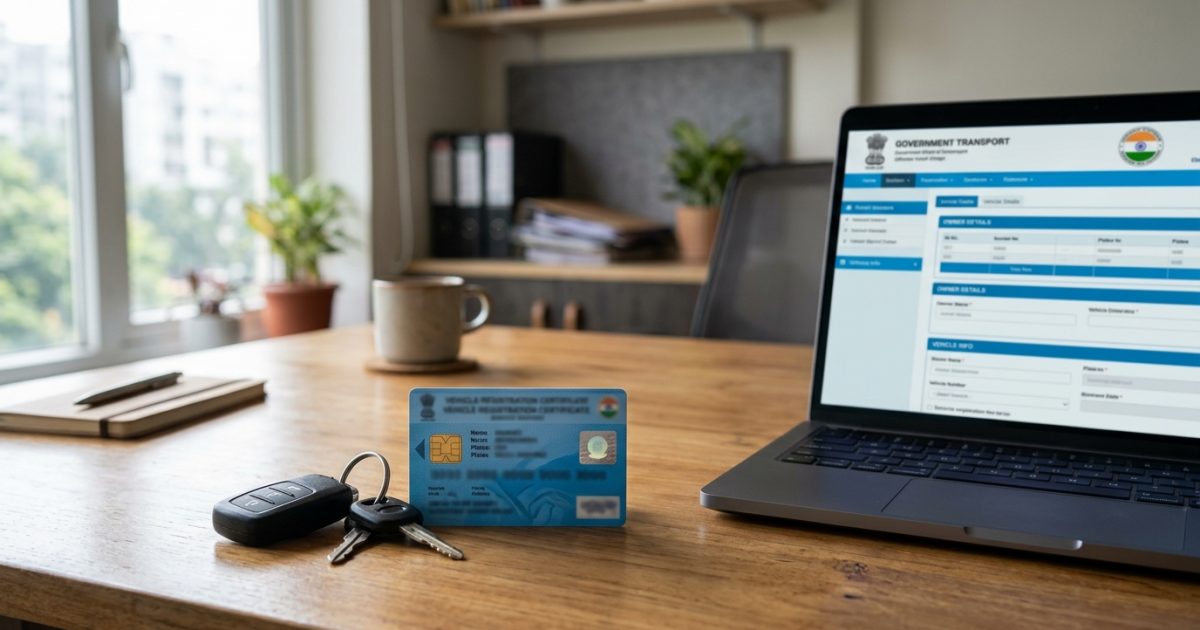
An rc transfer to another state is the statutory legal procedure required when moving your motor vehicle to a different Indian state or Union Territory for more than 12 months. The process involves securing a Form 28 No Objection Certificate (NOC) from your parent RTO, getting the vehicle inspected at your destination RTO, and paying new state lifetime road taxes.
Before you begin the application, it is best to check RC and vehicle owner details to confirm that your registration certificate status, active hypothecation status, and emission validity are up to date on the central database.
Key Takeaways
- Section 47 of the Motor Vehicles Act mandates re-registration if staying over 12 months.
- Form 28 NOC is mandatory from the source RTO before moving the vehicle permanently.
- New lifetime road tax must be paid at the destination state based on depreciated value.
- You can claim a pro-rata road tax refund from the origin RTO after re-registration.
- Standard Form 28 NOC remains valid across state RTOs for 6 months from issue.
| Service Parameter | Bike (Two-Wheeler) | Car (LMV Non-Transport) |
|---|
| NOC Application Fee (Rule 81) | ₹50 – ₹100 | ₹100 – ₹300 |
| Re-Registration Fee | ₹300 | ₹600 |
| Smart Card RC Fee (Form 23A) | ₹200 | ₹200 |
| Delay Penalty (CMVR Rule 81) | ₹300 per month | ₹500 per month |
| Road Tax in New State | Depreciated lifetime tax (6%–15%) | Depreciated lifetime tax (6%–15%+) |
| NOC Validity Window | 6 months | 6 months |
Legal Rules Governing Interstate RC Transfer
Interstate vehicle movement in India is regulated under national transport statutes. You do not need to alter your registration if you are taking your vehicle on a temporary holiday, business tour, or short-term assignment lasting under 11 months.
However, when your stay exceeds the legal threshold, continuing to drive on old number plates becomes an offence. Understanding these legal provisions ensures you remain compliant on public roads.
Section 47 of the Motor Vehicles Act, 1988
Under Section 47 of the Motor Vehicles Act, 1988, when a motor vehicle registered in one state is kept in another state for a period exceeding 12 months, the vehicle owner must apply to the registering authority of that new state for the assignment of a new registration mark. Failure to do so attracts statutory fines under central motor vehicle rules.
Section 48 of the Act governs the grant or refusal of an RTO No Objection Certificate (NOC). The Central Motor Vehicles Rules (CMVR), 1989 prescribe specific forms for this process:
- Form 28: Application and grant of No Objection Certificate from the parent RTO.
- Form 27: Application for assignment of a new registration mark in the destination state.
- Form 20: Application for physical inspection and registration of a motor vehicle.
- Forms 29 & 30: Mandatory if the interstate rc transfer involves selling the vehicle to a new buyer. Under Section 50 of the MV Act, ownership transfer notice must be reported within 45 days.
Note: Vehicles registered under the BH (Bharat) series are completely exempt from interstate transfer procedures, local NOC filings, and re-registration requirements when relocating across state borders.
Documents Required for Interstate Vehicle Transfer Process

Executing an interstate vehicle transfer process requires two distinct document sets: one for the origin RTO to release the vehicle, and one for the destination RTO to enter it into their registry.
Before lodging paperwork, verify there are no outstanding traffic enforcement penalties by running an online check challan status by vehicle number to avoid police clearance rejections.
| Document Name | Source RTO (Form 28 NOC) | Destination RTO (Re-Registration) |
|---|
| Form 28 Application | Yes (3–4 copies with chassis tracing) | Original endorsed copy required |
| Form 27 & Form 20 | Not applicable | Yes (Mandatory for new number) |
| Original RC | Yes (For endorsement/verification) | Yes (Surrendered for new Smart Card) |
| Valid Motor Insurance | Yes (Active third-party or comprehensive) | Yes (Active policy) |
| PUC Certificate | Yes (Valid emission certificate) | Yes (Valid emission certificate) |
| Local Address Proof | Proof of parent address | Proof of new residence in destination state |
| Financier NOC | Yes (If under active loan hypothecation) | Yes (If loan continues) |
| Crime Clearance / NCRB | Obtained internally or via traffic police | Covered by the Form 28 clearance |
How to Apply for Vehicle NOC Online on Parivahan

MoRTH has digitised the initial stages of getting an RTO NOC through the centralized Parivahan portal. Learning how to transfer vehicle rc to another state starts with obtaining this statutory clearance online.
If your car or bike has an outstanding loan, you must complete your hypothecation removal online or secure a formal No Objection Certificate from your lending bank before proceeding.
- Access Portal: Visit the official MoRTH portal at parivahan.gov.in, navigate to Online Services, and select Vehicle Related Services.
- Select State & RTO: Choose your current state and the specific RTO where the vehicle is registered.
- Initiate NOC Request: Click on Application for No Objection Certificate (NOC). Enter the vehicle registration number and the last 5 digits of your chassis number, then authenticate using the OTP sent to your registered mobile number.
- Enter Transfer Details: Specify the reason for NOC (Relocation or Sale). Select the destination state and the exact destination RTO code. The NOC is strictly valid only for the single target RTO you nominate.
- Make Payment: Pay the statutory NOC application fee via the integrated payment gateway and save the fee receipt.
- Physical Tracing & Submission: Print generated copies of Form 28. Take a pencil print impression of your chassis number in the allocated boxes on all copies. Submit the bundle with your original RC, insurance, and PUC at your local RTO counter, or book an appointment slot where mandated.
- Download Endorsement: After the RTO receives clearance from local police and NCRB databases confirming no theft or criminal record, your Form 28 NOC is approved and issued.
Warning: The chassis pencil imprint must be clearly legible on all physical copies of Form 28. Smudged or incomplete tracings will cause RTO inspectors to reject your submission immediately.
Re-Registration and New Number Assignment at Destination RTO
Once you arrive in your new home state with your vehicle and the endorsed Form 28, you must apply to the destination transport office. You can quickly find your RTO office address and code using your local pin code before visiting.
As per Section 47 of the Motor Vehicles Act, you have up to 12 months to complete re-registration. However, destination RTOs expect your application within the 6-month validity window of your NOC to avoid recurring monthly fines.
Step-by-Step Destination RTO Workflow
- File Application: Prepare Form 20 and Form 27 along with your original Form 28 NOC, original parent state RC, valid insurance, valid PUC, and new local residential address proof (such as registered rent agreement, electricity bill, or Aadhaar).
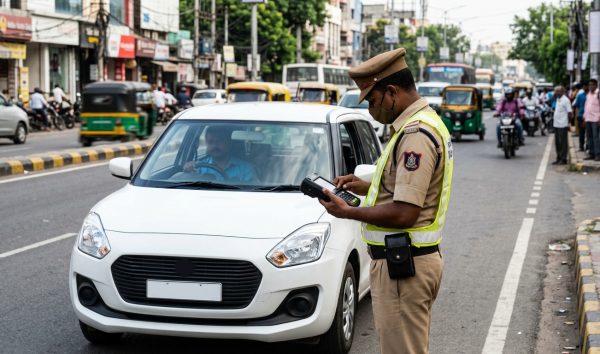
- Physical Vehicle Inspection: Bring your vehicle to the destination RTO test track. A Motor Vehicle Inspector (MVI) will physically verify the engine number and chassis number against your paperwork.
- Assessment of Road Tax: The RTO accounts section evaluates the vehicle's original invoice value and depreciates it based on age to determine the lifetime road tax payable in the new state.
- Fee and Tax Payment: Pay the re-registration fee, the Smart Card issuance fee under CMVR Rule 81, and the assessed road tax at the cash counter or state transport portal.
- Number Assignment: The RTO assigns a new state-specific registration number, orders your High Security Registration Plate (HSRP), and prints your new Smart Card RC.
- CRTM Intimation: The destination RTO dispatches a Certificate of Registration Transfer Mark (CRTM) intimation back to your origin RTO to notify them of the change.
Important Deadline: If you fail to submit your NOC for re-registration promptly, CMVR Rule 81 levies a continuing late delay fine of ₹300 per month for two-wheelers and ₹500 per month for cars until the file is accepted.
Bike RC Transfer to Another State vs Car RC Transfer
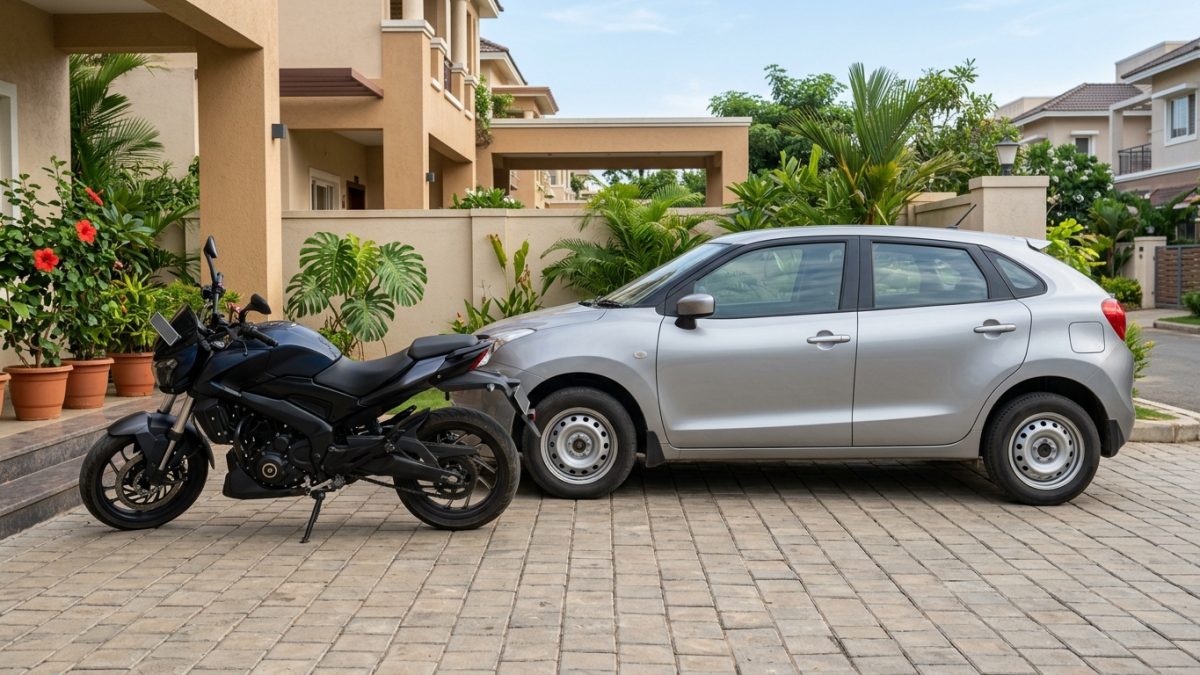
While the administrative steps remain broadly identical under CMVR guidelines, practical aspects differ noticeably between two-wheelers and passenger cars.
Executing a bike rc transfer to another state involves lower statutory fees and minimal inspection complexity. Two-wheeler road tax amounts are generally affordable, making the transfer cost-effective even for mid-range commuter motorcycles.
Conversely, a car rc transfer from one state to another involves substantial financial stakes. Because car road tax is assessed as a percentage of the ex-showroom value, paying new lifetime tax can cost tens of thousands of rupees. In addition, cars face stricter regional entry restrictions, especially in the National Capital Region (Delhi-NCR).
| Attribute | Two-Wheeler / Bike Transfer | Four-Wheeler / Car Transfer |
|---|
| Re-Registration Fee (CMVR 81) | ₹300 | ₹600 |
| Physical Verification Effort | Single inspector check; easy chassis access | Chassis bay check; engine bay verification |
| Typical Destination Road Tax | ₹2,000 – ₹10,000 | ₹40,000 – ₹1,50,000+ |
| Interstate Transport Logistics | Easily crated via railway cargo or movers | Specialised car carriers or driven via road |
| Delhi-NCR Age Rules | Petrol >15 years barred | Diesel >10 years and Petrol >15 years barred |
Interstate RC Transfer Fees and Road Tax Calculation
The total cost of an interstate rc transfer is made up of two distinct components: fixed central statutory application fees and variable state road taxes. The fixed central fee schedule is codified under CMVR 1989 Rule 81.
The primary financial expense is always the destination state road tax. Indian states charge road tax as a lifetime tax (LTT) for 15 years. When re-registering an older vehicle, RTOs use a depreciation scale that reduces the taxable vehicle value based on its age from the original invoice date.
- Vehicle Age Up to 1 Year: Assessed at approximately 90% to 95% of original tax rate.
- Vehicle Age 2 to 3 Years: Assessed at approximately 75% to 80% of original tax rate.
- Vehicle Age 5 to 6 Years: Assessed at approximately 55% to 60% of original tax rate.
- Vehicle Age 10 Years or Older: Assessed at approximately 25% to 35% of original tax rate.
Electric vehicles (Battery Operated Vehicles) receive special relief under CMVR Rule 81, as MoRTH has exempted them from assignment and registration fees, though local road tax policies vary by state.
How to Claim an RTO Road Tax Refund After Vehicle Transfer
Because you pay a lifetime road tax of 15 years upon first registering a vehicle, you are legally entitled to an rto road tax refund after vehicle transfer for the unused balance. The refund is calculated on a pro-rata quarterly basis.
However, you cannot claim this refund before completing the destination re-registration. The origin RTO requires proof that the vehicle is now legally on the books of another transport authority.
- Complete Re-Registration: Ensure your vehicle has its new registration number, and obtain the new Smart Card RC alongside the destination tax payment receipt.
- Gather CRTM Proof: Procure a copy of the CRTM (Certificate of Registration Transfer Mark) intimation notice sent by the destination RTO to your origin RTO.
- Assemble Refund File: Complete your state-specific road tax refund form (such as Form DT or local tax refund format). Attach a self-attested copy of your new RC, destination tax receipt, copy of your original Form 28 NOC, the original road tax payment challan from initial purchase, and a cancelled bank cheque.
- Submit to Source RTO: Submit the completed tax refund application directly to the original parent RTO where the vehicle was first registered. Most states process tax refunds offline through physical counters.
- Treasury Disbursement: The origin RTO verifies the records against internal tax ledgers and routes the claim to the state treasury. The remaining balance for the unused quarters is transferred directly via Direct Benefit Transfer (DBT) to your bank account.
Heads Up: Processing a road tax refund through state government treasuries is notoriously slow. Expect the disbursement timeline to take anywhere from 6 to 12 months, requiring regular tracking with the origin RTO accounts branch.
Regional Exceptions, Faceless RTOs and Common Bottlenecks
The exact administrative experience for an interstate vehicle transfer process can vary depending on state infrastructure and environmental regulations.
A growing number of RTOs in Delhi, Maharashtra, and Gujarat offer faceless, Aadhaar-authenticated NOC workflows where you do not need to visit a counter in person. In contrast, states like Karnataka, Tamil Nadu, and Uttar Pradesh still require physical submission of Form 28 with pencil tracings.
The Delhi-NCR End-of-Life Vehicle Restriction
Under National Green Tribunal (NGT) mandates, diesel vehicles older than 10 years and petrol vehicles older than 15 years cannot operate or be re-registered within the Delhi-NCR perimeter. If you are relocating out of Delhi with an aged vehicle, the Delhi transport department will issue an NOC only for specific non-NCR districts that have officially agreed to accept older BS-III or BS-IV vehicles.
The NOC Cancellation Problem (Non-Utilization Certificate)
If your plans change after obtaining a Form 28 NOC and you decide not to move, your vehicle becomes trapped in administrative limbo. The origin RTO freezes your file under an "NOC Issued" state, preventing future renewal, road tax payment, or ownership changes.
To fix this, you must apply to the destination RTO for a Non-Utilization Certificate (NUC), certifying that the vehicle was never registered in their jurisdiction. You must then submit this NUC alongside the original unused Form 28 copies to the source RTO to officially cancel the NOC.
Before you begin any relocation paperwork, always verify your current vehicle record online through a trusted check RC and vehicle owner details search to confirm that your chassis number, engine number, and active permits match your physical documents perfectly.
Conclusion
Completing an rc transfer to another state requires careful planning, timely paperwork on the Parivahan portal, and strict adherence to statutory deadlines. By securing your Form 28 NOC early, scheduling inspection at your destination RTO within 6 months, and collecting your new registration certificate, you can drive anywhere in India without legal friction.
Once your new registration mark is assigned, file your pro-rata road tax refund paperwork at your parent RTO to recover your unused tax balance.