Key Takeaways
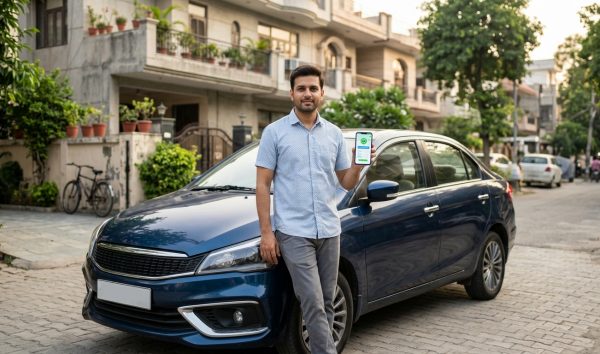
- Buying bike insurance online takes under 5 minutes with zero paperwork and instant policy issuance.
- Third-party liability cover is legally mandatory under Section 146 of the Motor Vehicles Act.
- Comprehensive bike insurance online protects against own damage, road accidents, fire, theft, and natural disasters.
- You can save up to 50% on own damage premiums by carrying forward your No Claim Bonus (NCB).
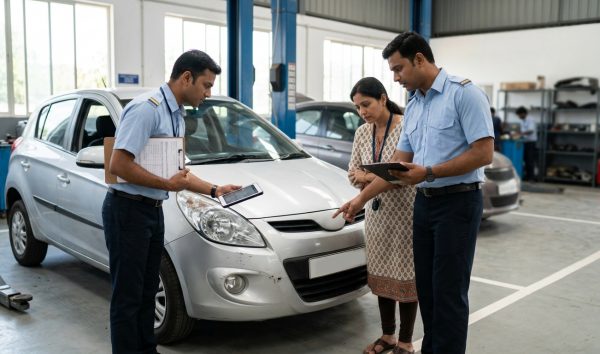
- Policies renewed before expiry do not require vehicle inspection, while lapsed policies use digital self-inspection.
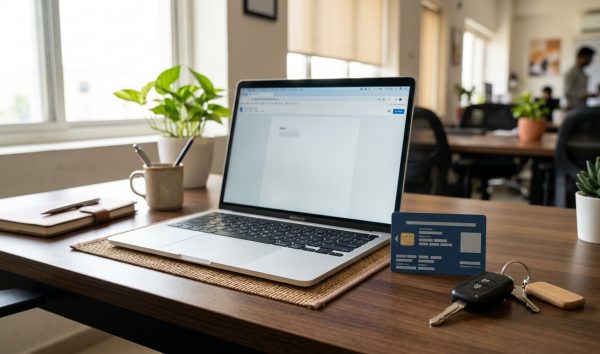
Purchasing bike insurance online allows you to compare quotes, customise coverage, and secure your two-wheeler instantly in under five minutes. You only need your vehicle registration number and previous policy details to generate digital cover with immediate mParivahan integration. Before renewing, you can check RC and vehicle owner details to verify your policy expiry and avoid lapsed coverage fines.
| Feature | Third-Party Cover | Comprehensive Cover | Standalone OD Cover |
|---|
| Mandatory by Law | Yes (Section 146 MV Act) | No (Voluntary but recommended) | No (Requires existing TP policy) |
| Own Damage Cover | No | Yes (Accidents, fire, theft) | Yes (Accidents, fire, theft) |
| Third-Party Protection | Yes (Injury and property) | Yes (Injury and property) | No (Handled by base TP) |
| Personal Accident Cover | Optional add-on / CPA | Included / CPA selection | Separately managed |
| Online Issuance Time | Instant (2–5 minutes) | Instant (2–5 minutes) | Instant (2–5 minutes) |
Why Bike Insurance Online Is Mandatory Under Indian Law
Operating an uninsured motorcycle or scooter on public roads is a punishable offence across India. Section 146 of the Motor Vehicles Act, 1988 mandates that every motor vehicle must carry an active Third-Party (TP) liability insurance policy.
Driving without valid insurance attracts heavy fines under Section 196 of the Motor Vehicles (Amendment) Act. A first offence incurs a penalty of ₹2,000, imprisonment of up to 3 months, or both. Subsequent offences carry a ₹4,000 fine, imprisonment up to 3 months, or both.
Traffic police departments use automated ANPR cameras and handheld devices linked with the central Parivahan and IIB databases. If an uninsured vehicle is detected, an automated challan is issued, and enforcement officers have the authority to impound the vehicle immediately.
Traffic enforcement uses real-time mParivahan data. Check your pending traffic fines using the VahanX challan search tool to clear outstanding violations before renewing your cover.
Since 1 September 2018, the Supreme Court of India and IRDAI mandate that every new two-wheeler sold must feature a compulsory 5-year Third-Party insurance policy. Buyers can choose between a 5-year TP plus 1-year Own Damage (OD) bundled policy or a full 5-year comprehensive policy at the showroom.
In addition, General Regulation 36 of the India Motor Tariff mandates Compulsory Personal Accident (CPA) cover of ₹15,00,000 for the registered owner-driver. This cover costs between ₹275 and ₹350 per year (plus 18% GST) and covers accidental death or permanent total disability.
Compare Bike Insurance Plans: Third-Party vs Comprehensive vs Standalone OD
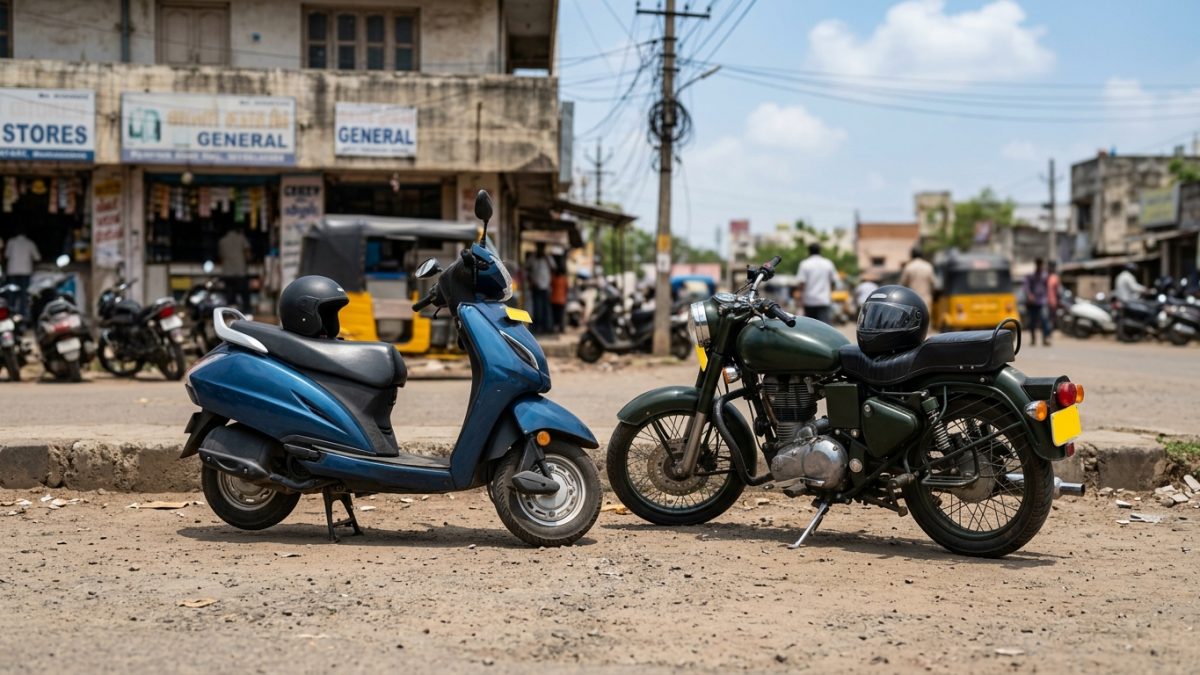
Selecting the right policy type requires balancing legal compliance against the financial risk of accidental damage. When you compare bike insurance plans, you will encounter three core products on digital portals.
Third-Party (TP) Only Policy
A Third-Party liability policy is the minimum statutory cover needed to drive legally. It covers financial liabilities arising from death, bodily injury, or property damage caused to a third person by your two-wheeler. Bodily injury compensation is decided without an upper limit by the Motor Accident Claims Tribunal (MACT), while third-party property damage (TPPD) is capped at ₹1,00,000.
This policy offers zero protection for your own motorcycle. If your bike is stolen, destroyed by floods, or damaged in a collision, the insurer pays nothing. For details on statutory limits, read our guide on third-party bike insurance rates and rules.
Comprehensive Bike Insurance Online
A comprehensive bike insurance online policy bundles Third-Party liability with Own Damage (OD) coverage and CPA cover. It pays for repair costs arising from accidents, overturning, self-ignition, fire, lightning, strikes, theft, and natural calamities such as floods and earthquakes.
Comprehensive cover is ideal for vehicles under 8 to 10 years old, high-value motorcycles, and financed vehicles where lenders require full protection. You can expand a comprehensive policy with riders like zero depreciation and roadside assistance.
Standalone Own Damage (OD) Policy
IRDAI introduced unbundled standalone Own Damage insurance to give policyholders pricing freedom. If you purchased a brand-new bike with a mandatory 5-year TP cover, you do not need to buy third-party coverage again every year.
Instead, you purchase a standalone OD policy annually to cover accident repairs, fire, and theft. You can freely switch insurers for your OD portion to find better premiums without altering your active multi-year TP policy.
| Coverage Parameter | Third-Party Liability | Standalone Own Damage | Comprehensive Package |
|---|
| Third-Party Injury/Death | Unlimited (Tribunal decided) | Not Covered | Unlimited (Tribunal decided) |
| Third-Party Property Damage | Up to ₹1,00,000 | Not Covered | Up to ₹1,00,000 |
| Accidental Damage to Bike | Not Covered | Covered up to IDV | Covered up to IDV |
| Theft of Vehicle | Not Covered | Covered (Pays full IDV) | Covered (Pays full IDV) |
| Floods, Storms & Fire | Not Covered | Covered up to IDV | Covered up to IDV |
| Add-on Rider Support | No | Yes (Zero Dep, RSA, RTI) | Yes (Zero Dep, RSA, RTI) |
IRDAI Two-Wheeler Insurance Rates and Premium Slabs
Third-party premiums are statutory rates determined by the Ministry of Road Transport and Highways (MoRTH) in consultation with IRDAI. Insurers cannot alter, discount, or raise these base slabs. Premium amounts depend entirely on engine cubic capacity (cc) or electric motor wattage.
| Two-Wheeler Segment | Engine / Motor Capacity | 1-Year TP Rate (Excl. GST) | 5-Year TP Rate for New Bikes |
|---|
| Entry Commuter (ICE) | Below 75 cc | ₹538 | ₹2,901 |
| Standard Commuter (ICE) | 75 cc to 150 cc | ₹714 | ₹3,851 |
| Performance / Cruiser (ICE) | 150 cc to 350 cc | ₹1,366 | ₹7,365 |
| Premium Sports (ICE) | Above 350 cc | ₹2,804 | ₹15,117 |
| Electric Two-Wheeler (EV) | Up to 3 kW | ₹457 | Not Applicable (Annual slab) |
| Electric Two-Wheeler (EV) | 3 kW to 7 kW | ₹607 | Not Applicable (Annual slab) |
| Electric Two-Wheeler (EV) | 7 kW to 16 kW | ₹1,161 | Not Applicable (Annual slab) |
| Electric Two-Wheeler (EV) | Above 16 kW | ₹2,383 | Not Applicable (Annual slab) |
All two-wheeler motor insurance premiums, including base TP, Own Damage, and optional riders, attract an 18% Goods and Services Tax (GST) as of September 2026. Electric two-wheelers receive an approximate 15% discount on third-party rates compared to petrol counterparts.
Third-party property damage coverage comes standard at ₹1,00,000. Insurers allow you to lower this liability limit to ₹6,000 for a nominal premium discount, but keeping the standard ₹1,00,000 limit is strongly recommended.
Insured Declared Value (IDV) and Essential Add-Ons
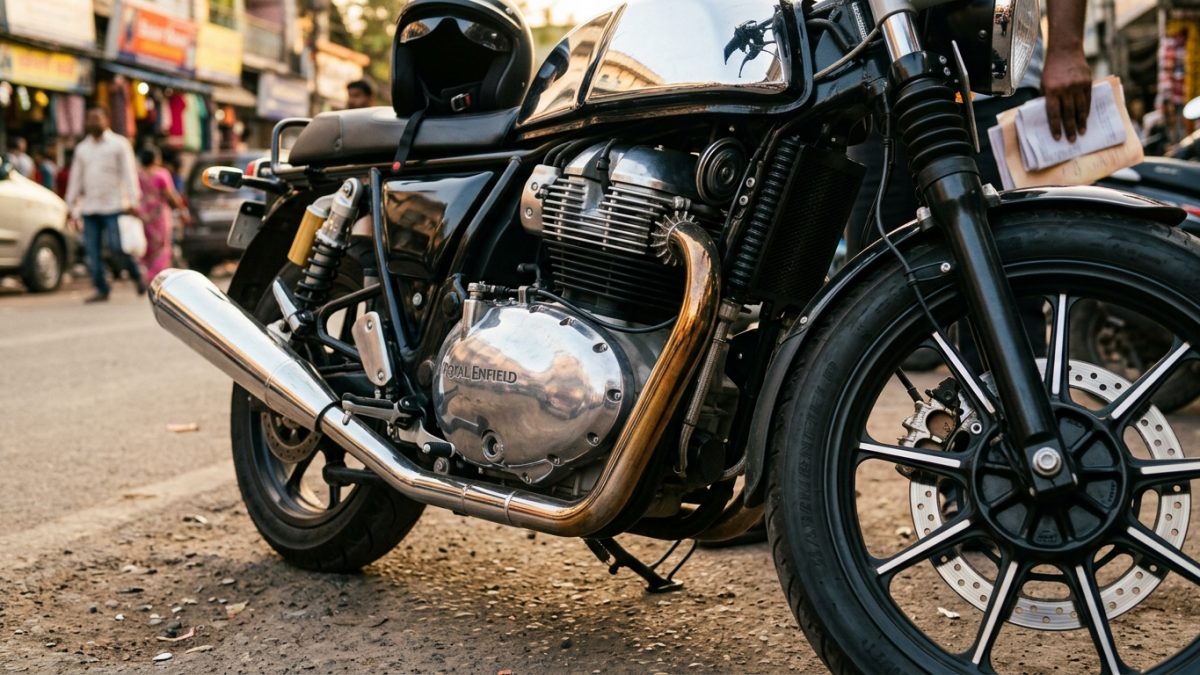
When you complete a two wheeler insurance online purchase, your Own Damage premium is calculated using your vehicle's Insured Declared Value (IDV). The IDV represents the maximum financial settlement paid by the insurer in case of bike theft or constructive total loss (where repair expenses exceed 75% of IDV).
IDV is calculated as: (Manufacturer Listed Ex-Showroom Price - Depreciation) + (Fitted Accessories - Depreciation). The standard depreciation schedule mandated by IRDAI applies as follows:
- Up to 6 months: 5% depreciation
- 6 months to 1 year: 15% depreciation
- 1 year to 2 years: 20% depreciation
- 2 years to 3 years: 30% depreciation
- 3 years to 4 years: 40% depreciation
- 4 years to 5 years: 50% depreciation
For vehicles older than 5 years, the IDV is mutually agreed upon between the insurer and bike owner based on roadworthiness and mechanical condition. Avoid reducing the IDV too much simply to save on premiums, as this reduces your payout if your bike is stolen.
Selecting the Best Two Wheeler Insurance Policy Add-Ons
Standard OD policies apply heavy depreciation deductions during accident claims: 50% on nylon, rubber, and plastic components, 30% on fiberglass, and up to 50% on metal parts based on age. Add-on covers eliminate these out-of-pocket costs.
- Zero Depreciation (Nil Dep): A zero depreciation bike insurance online policy waives all material depreciation during accident repairs. Insurers settle the entire cost of replacement parts except for mandatory deductibles. This add-on is critical for bikes up to 5 years old.
- Return to Invoice (RTI): If your bike is stolen or completely totaled, RTI pays the full original invoice value, including road tax and registration charges. Recommended for bikes up to 3 years old.
- Roadside Assistance (RSA): Provides 24/7 emergency support, on-spot puncture assistance, battery jump-starts, fuel delivery, and towing to the nearest network garage.
- NCB Protect: Preserves your accumulated No Claim Bonus percentage even if you lodge one claim during the policy tenure.
- Engine and Gearbox Protection: Covers mechanical and electrical engine failures caused by water ingestion (hydrostatic lock) during floods, which are excluded under base policies.
- Consumables Cover: Pays for the cost of engine oil, brake fluids, grease, lubricants, washers, and nuts replaced during crash repairs.
Step-by-Step Guide: How to Buy Bike Insurance Online
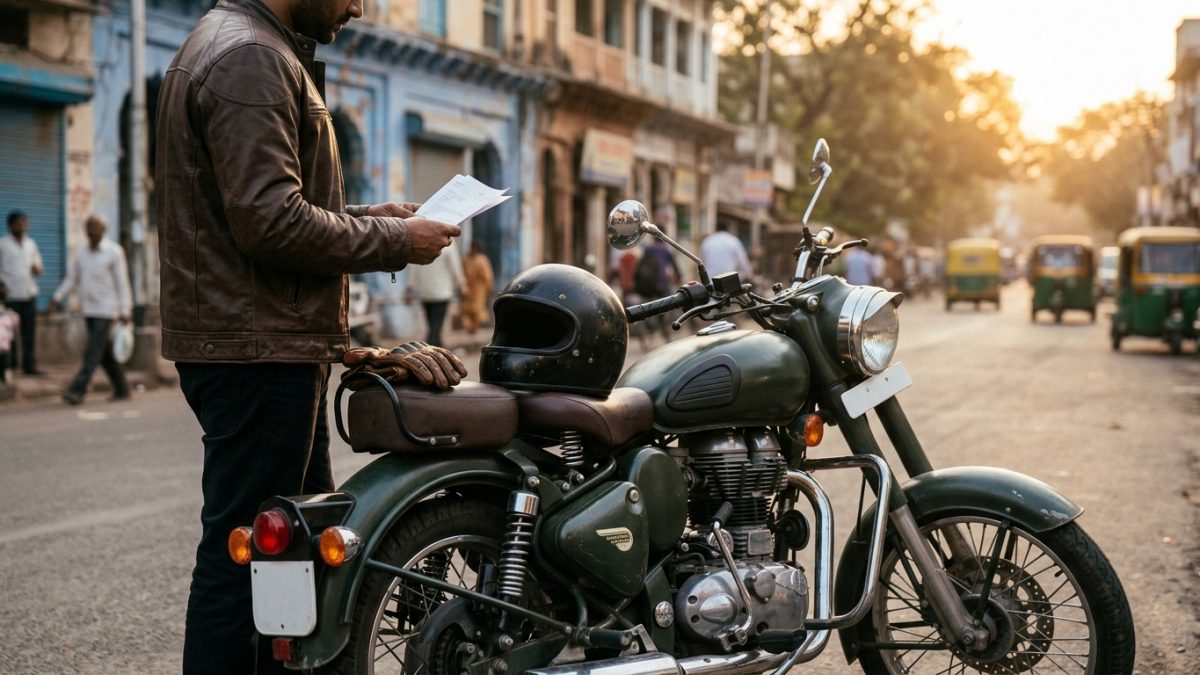
Buying or renewing your policy digitally eliminates middleman commissions, prevents paperwork delays, and generates an authentic, tamper-proof policy document. Follow this numbered process to complete your purchase:
- Enter your vehicle details: Visit an IRDAI-approved insurance website or aggregator portal. Enter your motorcycle registration number (e.g., DL-01-AB-1234). The portal pulls the make, model, variant, and registration date directly from the central database.
- Choose your policy structure: Select whether you require Comprehensive Package Cover, Standalone Own Damage (if you already have multi-year TP), or Third-Party Liability Only.
- Adjust IDV and select add-on covers: Use the on-screen slider to set your Insured Declared Value accurately according to age depreciation. Check the boxes for necessary riders like Zero Depreciation, RSA, and Consumables.
- Submit previous policy and NCB declarations: Enter your previous policy number, previous insurer name, and expiry date. Accurately declare whether you made a claim in the preceding tenure to calculate your eligible No Claim Bonus.
- Complete Compulsory Personal Accident (CPA) selection: Choose the ₹15 lakh CPA cover. If you already hold a standalone personal accident policy of at least ₹15 lakh, or if you hold active CPA cover under another vehicle, uncheck the box and submit an online waiver declaration.
- Verify digital e-KYC: Complete mandatory IRDAI e-KYC using Aadhaar OTP verification via DigiLocker or by uploading your PAN card details.
- Make the payment: Pay the premium securely using UPI, NetBanking, Debit/Credit Card, or mobile wallets.
- Perform instant bike insurance policy download: Your digital policy PDF is generated immediately and sent to your email and WhatsApp. Insurers push policy records directly to the Insurance Information Bureau (IIB), automatically updating your DigiLocker and mParivahan apps within 24 to 48 hours.
Ensure your engine and chassis numbers match your physical bike plate and RC book exactly. A single typo in the policy document can cause claim rejection following an accident.
Smart Ways to Save Money Using an Online Bike Insurance Calculator
Using an online bike insurance calculator lets you see how different factors affect your premium before paying. Here is how you can lower your renewal costs without compromising vital protections.
Leverage Your No Claim Bonus (NCB)
The No Claim Bonus is a substantial discount rewarded to vehicle owners for maintaining an accident-free policy year. The discount applies exclusively to the Own Damage premium component and accumulates as follows:
- After 1 claim-free year: 20% discount
- After 2 claim-free years: 25% discount
- After 3 claim-free years: 35% discount
- After 4 claim-free years: 45% discount
- After 5 claim-free years: 50% discount (maximum cap)
Remember that NCB belongs to the owner, not the motorcycle. If you sell your two-wheeler, ask your insurer for an NCB Retention Certificate. You can transfer that 20% to 50% discount to your newly purchased motorcycle, lowering its first-year insurance premium.
Keep the 90-day break-in deadline in mind. If your comprehensive policy expires and you do not renew within 90 days, your entire accumulated NCB resets to zero.
Unbundle the Compulsory Personal Accident Cover
Under General Regulation 36, you do not need to buy CPA cover multiple times. If you already own an active personal accident cover with a ₹15 lakh sum insured, or if you hold CPA on another car or bike registered in your name, submit an exemption declaration online. This saves you ₹275 to ₹350 plus GST on every policy renewal.
Avoid Claiming for Minor Scratches
Filing a claim for broken indicator lenses or small cosmetic dents worth ₹800 to ₹1,200 resets your accumulated NCB back to 0%. Paying minor repair bills out-of-pocket protects your 35% to 50% discount, saving far more money across subsequent renewal cycles.
Install ARAI-Approved Security Devices
Installing an anti-theft alarm or GPS tracking device certified by the Automotive Research Association of India (ARAI) grants a 2.5% discount on your Own Damage premium, capped at ₹500. Ensure the device carries an authentic ARAI conformity certificate to claim the discount during checkout.
Common Mistakes to Avoid During Two Wheeler Insurance Online Purchase
Buying insurance online is convenient, but data discrepancies can delay claims or invalidate your policy. Watch out for these common issues:
Failing to Transfer Insurance on Second-Hand Bikes
When buying a used two-wheeler, Section 157 of the Motor Vehicles Act requires you to formally transfer the insurance policy to your name within 14 days of the RC ownership transfer. If an accident occurs and the RC is in your name while the insurance remains under the previous owner's name, insurers will reject the claim.
Misrepresenting Your No Claim Bonus
Never falsify your NCB percentage to get cheaper quotes. During claims processing, the insurer checks claim records against the central IIB database. If you claimed an NCB discount despite filing a claim in the previous year, the insurer will deny coverage for own damage.
Letting Comprehensive Cover Lapse Beyond Grace Periods
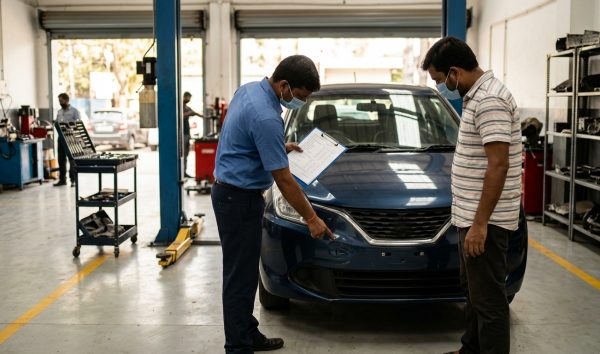
Third-party insurance can be renewed at any time without vehicle inspection. However, if your comprehensive policy lapses for more than a few days, insurers require a vehicle inspection before reinstating Own Damage coverage.
Today, this inspection is conducted digitally through an AI-powered self-inspection link sent to your mobile phone. You simply record a continuous 360-degree video and take clear photographs of the motorcycle, odometer, and chassis number to document pre-existing damages.
Stay proactive and verify your insurance status on the official Parivahan Sewa Portal or check our guide on two wheeler insurance check online to confirm your policy is active.
Conclusion
Buying bike insurance online is the fastest and most cost-effective way to secure your ride, meet statutory compliance, and protect your finances. By comparing policies digitally, selecting practical add-ons like Zero Depreciation, and safeguarding your No Claim Bonus, you ensure high coverage at an affordable rate.
Avoid driving with an expired policy to escape fines of up to ₹4,000 under Section 196 of the Motor Vehicles Act. Take two minutes today to check your RC details and insurance expiry date to renew your policy on time and enjoy uninterrupted peace of mind on the road.