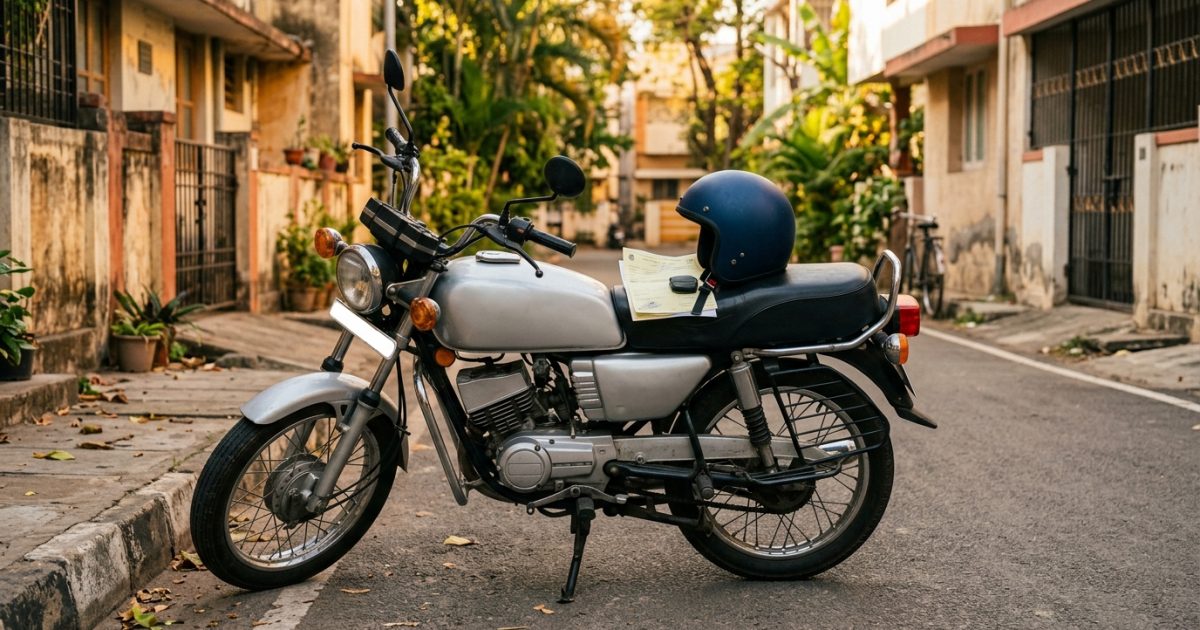
First party bike insurance, formally known as Own Damage (OD) insurance, pays for the financial loss or physical damage caused to your own motorcycle or scooter due to road accidents, fire, theft, natural disasters, or vandalism. Unlike basic third-party cover, it protects your asset directly. You can check your bike insurance expiry date instantly via the VahanX RC search tool.
Key Takeaways
- First-party insurance covers accidental damage, theft, fire, floods, and transit damage to your own bike.
- It is optional by law, whereas third-party liability cover remains strictly mandatory under Section 146 of the Motor Vehicles Act.
- You can renew standalone own damage bike insurance annually from any licensed insurer without disturbing your active 5-year third-party policy.
- No Claim Bonus (NCB) provides up to a 50% discount on the OD premium and lapses if not renewed within 90 days.
- Zero depreciation, engine protect, and roadside assistance add-ons can be attached to provide complete repair cost coverage.
| Feature | First-Party (Own Damage) | Third-Party Liability |
|---|
| Legal Mandate | Optional under Motor Vehicles Act | Mandatory under Section 146, MVA |
| Loss to Own Vehicle | Covered up to net Insured Declared Value | Zero coverage (Nil) |
| Third-Party Injury / Death | Not covered (requires separate TP cover) | Unlimited liability (MACT decided) |
| Policy Term Available | 1 Year (Annual renewal) | 1 Year (Renewals) or 5 Years (New bikes) |
| NCB Discount Eligibility | Yes (20% to 50% discount on premium) | Not applicable |
What is First Party Bike Insurance and How Does It Work?
Understanding what is first party bike insurance requires looking at motor insurance structure in India. In legal terms, the "first party" is the vehicle owner, the "second party" is the insurance company, and the "third party" is any other road user or property harmed by your vehicle. First-party insurance reimburses repair bills or pays replacement value for damage to your own two-wheeler.
Historically, two-wheeler buyers bought integrated comprehensive policies covering both own damage and third-party liabilities in a single document. Following a landmark Supreme Court directive in Praveen Kakkar vs. Union of India (2018), the Insurance Regulatory and Development Authority of India (IRDAI) made 5-year third-party policies compulsory for all new two-wheelers sold on or after September 1, 2018.
To prevent riders from being locked into expensive multi-year plans, IRDAI issued circular IRDAI/NL/CIR/MOTOD/095/06/2019 on September 1, 2019, introducing standalone own damage bike insurance. This regulatory unbundling allows riders to maintain an active 5-year TP policy while buying or renewing their first-party OD cover on an annual basis from any insurer offering competitive rates.
Note: Standalone OD coverage cannot be issued without an active third-party policy. You must provide your active TP policy number and validity dates during purchase.
First Party vs Third Party Bike Insurance: Key Differences
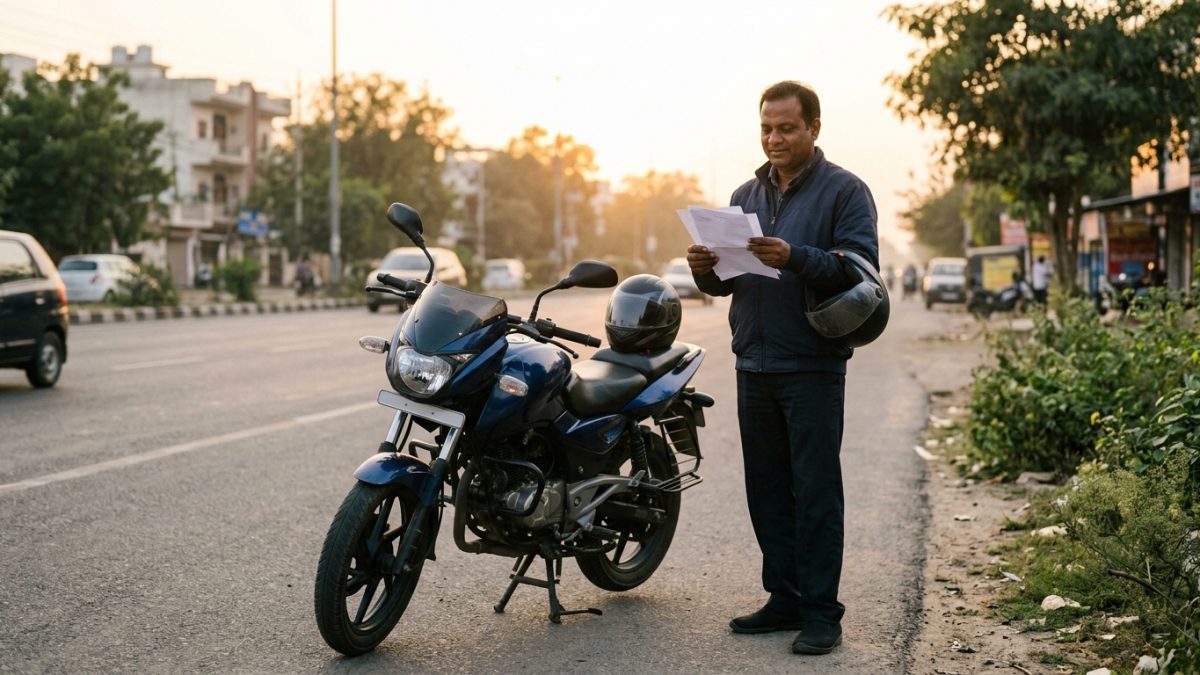
Choosing between first party vs third party bike insurance depends on whether you want protection for your own vehicle repair bills or merely legal compliance on public roads. Riding without third-party cover violates Section 146 of the Motor Vehicles Act, 1988, penalised under Section 196 with a ₹2,000 fine for a first offence and ₹4,000 for subsequent offences.
However, third-party insurance provides zero compensation if your bike skids, collides with a stray animal, is stolen, or catches fire. For detailed premium structures of mandatory covers, see our detailed guide on third party bike insurance rates and rules.
| Coverage Dimension | Third-Party (Act Only) | Standalone Own Damage (SAOD) | Comprehensive Package |
|---|
| Legal Status | Compulsory by law | Optional | TP part mandatory; OD optional |
| Accidental Bike Damage | Zero coverage | Covered up to IDV | Covered up to IDV |
| Theft & Total Destruction | Not covered | Covered up to full IDV | Covered up to full IDV |
| Third-Party Property Damage | Capped at ₹1,00,000 | Not covered | Capped at ₹1,00,000 |
| Add-on Availability | No add-ons available | Zero Dep, Engine Protect, RSA | Zero Dep, Engine Protect, RSA |
| Pre-requisite Condition | None | Must have active TP policy | Integrated package |
What Does First Party Two Wheeler Insurance Cover and Exclude?
A standard first-party two-wheeler insurance policy safeguards against unforeseen losses caused by road accidents, atmospheric events, or crime. Knowing specific exclusions prevents unexpected out-of-pocket expenses during claim settlements.
Inclusions: What Is Covered
- Accidental Damage: Collision damage, overturning, rollover, or skidding caused by road hazards or potholes.
- Theft and Burglary: Complete loss due to bike theft, housebreaking, or criminal misappropriation, backed by an FIR and final police report.
- Fire and Explosions: Damage resulting from self-ignition, electrical short-circuits, lightning, external fires, or accidental explosion.
- Natural Perils (Act of God): Floods, typhoons, cyclones, earthquakes, landslides, rockslides, and hailstorms.
- Man-Made Incidents: Riots, malicious acts, strikes, vandalism, and acts of terrorism.
- Transit Damage: Accidental damage sustained while the two-wheeler is transported by road, rail, air, or elevator.
Exclusions: What Is Not Covered
- Mechanical or Electrical Breakdown: Internal machinery failures, electrical cut-outs, or general wear and tear from daily riding.
- Unlicensed Riding: Any accident that occurs while the rider does not hold a valid driving licence or is violating learner licence restrictions.
- Intoxication: Claims resulting from riding under the influence of alcohol, narcotic drugs, or psychotropic substances.
- Hydrostatic Lock & Consequential Loss: Water entering the engine when restarting a stalled bike in flooded streets, unless covered by an Engine Protect add-on.
- Geographical Limitations: Losses occurring outside the territorial borders of India, unless extended by special paid endorsement.
- Commercial Use: Using a privately registered two-wheeler for commercial delivery or racing trials.
Warning: In coastal and flood-prone states, starting an engine submerged in floodwaters leads to hydrostatic lock. Insurers classify this as consequential damage and reject standard OD claims without an Engine Protect add-on.
First Party Bike Insurance Price Breakdown & IDV Calculation
Your first party bike insurance price is not a random number. Insurers determine it using a tariff formula mandated under general insurance guidelines: Net OD Premium = [(IDV × OD Tariff Rate) - (NCB + Other Discounts)] + Add-on Costs + 18% GST.
1. Insured Declared Value (IDV)
The IDV is the maximum sum paid by the insurer if your bike is stolen or damaged beyond repair (constructive total loss where repairs exceed 75% of IDV). IDV is calculated based on the manufacturer ex-showroom price minus statutory depreciation fixed by the General Insurance Council.
| Age of the Two-Wheeler | Statutory Depreciation Rate |
|---|
| Up to 6 months | 5% |
| 6 months to 1 year | 15% |
| 1 year to 2 years | 20% |
| 2 years to 3 years | 30% |
| 3 years to 4 years | 40% |
| 4 years to 5 years | 50% |
| Exceeding 5 years | Mutually agreed between owner and insurer |
2. City Tariff Zones
IRDAI categorises India into two tariff zones for Own Damage calculations. Zone A covers high-density metropolitan areas (Ahmedabad, Bengaluru, Chennai, Delhi-NCR, Hyderabad, Kolkata, Mumbai, and Pune), where claim frequencies are higher, resulting in slightly higher OD tariffs. Zone B covers the rest of India, where base OD tariff percentages are lower.
3. Optional Add-on Costs
- Zero Depreciation (Bumper-to-Bumper): Eliminates standard 30% to 50% deductions on plastic, nylon, and rubber parts during claims. Adds roughly 15% to 25% to base OD cost.
- Return to Invoice (RTI): Bridges the gap between the depreciated IDV and the original on-road purchase invoice (including road tax and registration charges) in case of theft.
- 24x7 Roadside Assistance (RSA): Provides flat-tyre support, towing, emergency fuel delivery, and minor mechanical fixes for ₹100 to ₹250 annually.
- Consumables Cover: Reimburses the cost of engine oil, lubricants, nuts, bolts, bearings, and washers replaced during accidental repairs.
Mandatory Third-Party Base Rates Reference
When reviewing total two-wheeler insurance costs, keep in mind that the Ministry of Road Transport and Highways (MoRTH) and IRDAI notify fixed third-party rates. As of September 2026, standard TP base rates across India remain as follows:
| Engine / Motor Capacity | 1-Year TP Renewal Rate | 5-Year Upfront New Bike Rate |
|---|
| Petrol < 75 cc | ₹538 | ₹2,901 |
| Petrol 75 cc to 150 cc | ₹714 | ₹3,851 |
| Petrol 150 cc to 350 cc | ₹1,366 | ₹7,365 |
| Petrol > 350 cc | ₹2,804 | ₹15,117 |
| Electric < 3 kW | ₹457 | ₹2,466 |
| Electric 3 kW to 7 kW | ₹607 | ₹3,273 |
| Electric 7 kW to 16 kW | ₹1,161 | ₹6,260 |
| Electric > 16 kW | ₹2,383 | ₹12,849 |
How to Complete First Party Bike Insurance Renewal with a 5-Year TP Policy
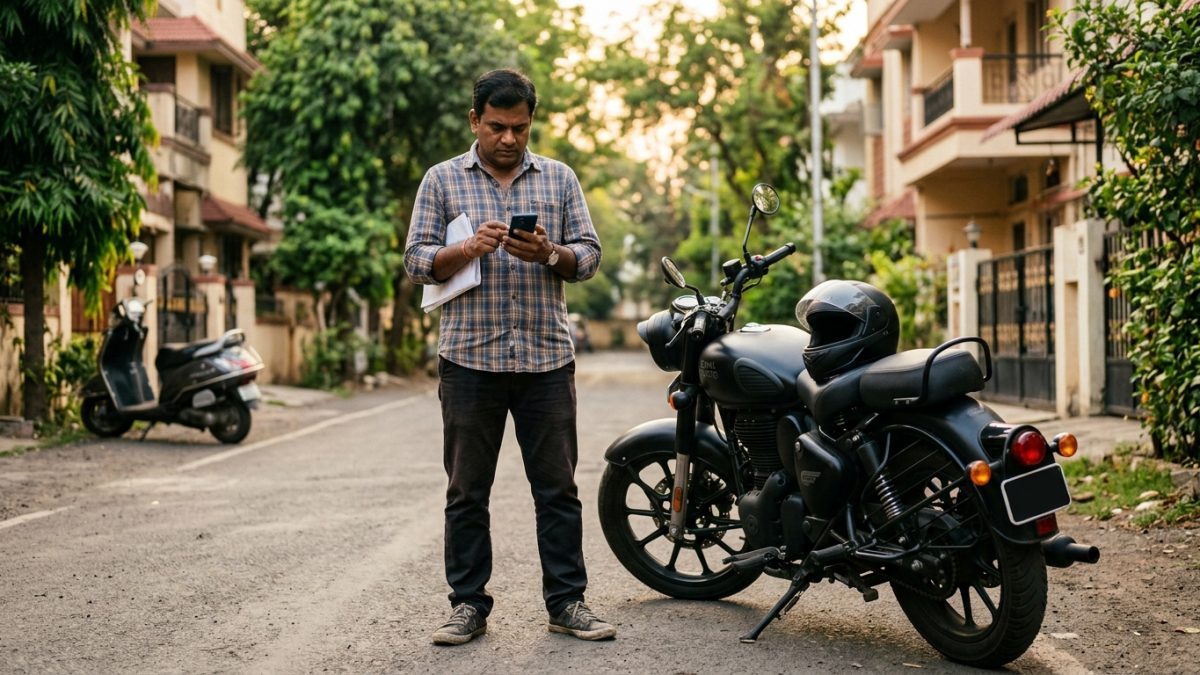
Most two-wheeler owners face the "1 + 4" policy scenario: when you buy a new motorcycle, dealers bundle 1 year of Own Damage with 5 years of mandatory Third-Party cover. At the end of year one, the OD portion expires while the TP remains valid for four more years.
Completing a first party bike insurance renewal does not require buying a new 5-year TP policy, nor does it require renewing through your motorcycle dealership. You are legally entitled to purchase an annual standalone policy from any registered insurer. Review our checklist on bike insurance renewal online for seamless processing.
Documents and Details Required
- Vehicle Registration Certificate (RC) details: Registration number, engine number, chassis number.
- Active 5-Year TP Policy details: Policy number, insurer name, validity dates.
- Expiring OD Policy details: Previous insurer name, policy number, and claim history.
- Owner KYC details: Aadhaar, PAN, or Central KYC (CKYC) identification number.
Step-by-Step Standalone OD Renewal Guide
- Select Standalone OD: Visit an insurer or aggregator portal and select "Standalone Own Damage (SAOD)" or "Renew Existing OD".
- Enter Registration Details: Enter your motorcycle registration number. The system retrieves your vehicle make, variant, and RTO details through the central database hosted on Parivahan Sewa.
- Furnish Active 5-Year TP Data: Input your existing 5-year TP policy number, insurer name, and valid expiry date. This validates eligibility for standalone OD.
- Declare Previous Claims & NCB: Confirm whether any claim was filed in the previous policy year. If no claim was made, the platform applies your earned NCB discount slab.
- Adjust IDV and Select Add-ons: Select your preferred IDV within the permitted regulatory range (±10% to 15%) and toggle add-ons like Zero Dep or RSA.
- Complete Inspection (If Expired): If the policy has lapsed, upload self-inspection photos or a short video via the insurer's mobile app. Pre-expiry renewals bypass inspection.
- Verify KYC and Pay: Complete CKYC verification, make the payment via UPI, net banking, or debit card, and download your digitally-signed policy document.
Tip: Always initiate your standalone OD renewal 7 to 10 days before policy expiry. Renewing early prevents policy break-in, avoiding mandatory self-inspection and the risk of pre-existing scratch exclusions.
No Claim Bonus (NCB) Rules, Slabs and the 90-Day Grace Period
The No Claim Bonus (NCB) is a cumulative reward given to vehicle owners for riding safely and making zero claims during a policy year. NCB applies solely to the first-party OD premium—it never applies to third-party liability premiums or Compulsory Personal Accident (CPA) covers.
| Claim-Free Policy Years | Applicable NCB Discount on OD Premium |
|---|
| After 1 claim-free year | 20% |
| After 2 consecutive claim-free years | 25% |
| After 3 consecutive claim-free years | 35% |
| After 4 consecutive claim-free years | 45% |
| After 5 consecutive claim-free years | 50% (Maximum cap) |
The 90-Day Grace Period Rule
If your first-party OD policy expires, IRDAI regulations grant a strict 90-day grace period from the date of expiry to renew and protect your accumulated NCB. If you renew your OD cover on day 91 or later, your accumulated NCB permanently resets to 0%.
However, the grace period protects only your NCB discount percentage. It does not provide insurance coverage while the policy is lapsed. Any road accident, flood damage, or theft occurring during an un-insured gap is entirely non-payable.
NCB Belongs to You, Not Your Motorcycle
NCB is tied to the vehicle owner, not the motorcycle. If you sell your bike, you can retain your NCB by requesting an NCB Retention Certificate from your insurer (valid for 3 years). You can then transfer that 20% to 50% discount onto the standalone OD premium of your newly purchased two-wheeler.
Common Pitfalls in First Party Two Wheeler Insurance
Many two-wheeler riders pay unnecessary premiums or face claim rejections due to avoidable procedural mistakes during 1st party bike insurance online purchases:
- Believing Dealership Exclusivity: Dealerships often claim you must renew the OD cover directly through them. IRDAI regulations permit you to choose any registered insurer for your annual standalone OD policy.
- Artificially Lowering IDV: Setting an unrealistically low IDV reduces your premium marginally by ₹100 to ₹300, but results in substantial financial loss if the motorcycle is stolen or completely wrecked.
- Entering Incorrect TP Policy Details: Providing incorrect 5-year TP policy numbers or wrong expiry dates causes automated backend verification failures, which can invalidate your OD policy.
- Ignoring Compulsory Personal Accident (CPA) Unbundling: If you already hold an active standalone personal accident policy of ₹15 lakh or own another vehicle where CPA was already purchased, you can decline repeated CPA charges (saving ₹275 to ₹350 + GST).
Before purchasing or renewing your policy, verify all vehicle registration records, chassis details, and existing policy terms on VahanX RC details lookup to ensure every entry matches your official Parivahan records.
Conclusion
Securing adequate first party bike insurance ensures that unforeseen road mishaps, monsoons, and vehicle thefts do not strain your finances. By taking advantage of standalone own damage regulations, you can independently renew your annual OD cover, select essential add-ons like Zero Depreciation, and maintain your accumulated No Claim Bonus even while your 5-year third-party cover remains active.
Avoid letting your coverage lapse past the 90-day grace window. Check your registration and policy details on VahanX RC search today, compare insurer premiums online, and secure full protection for your motorcycle.