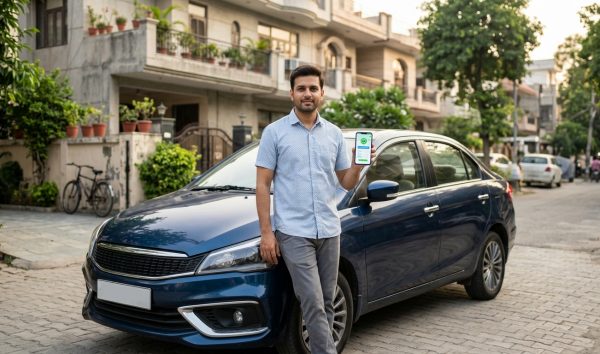
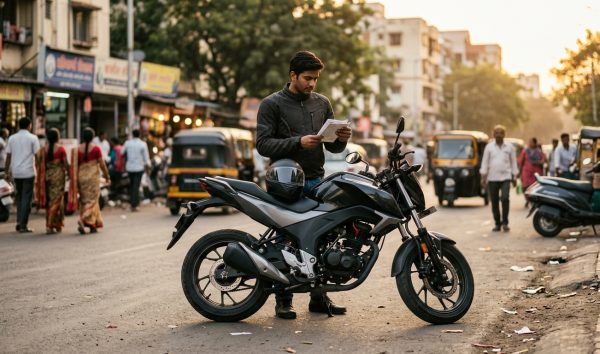
The bike insurance claim process involves notifying your insurer within 24 to 48 hours of an accident or theft, submitting damage photographs, and providing your registration certificate and driving licence. You can choose a cashless settlement at an authorised network garage or repair locally and claim reimbursement under standard Insurance Regulatory and Development Authority of India guidelines.
Before filing any claim, verify that your policy is active by using the VahanX RC search to check your bike insurance expiry date. A lapsed policy nullifies all coverage, leaving you personally liable for repairs and third-party liabilities.
Key Takeaways
- Notify your insurer within 24 to 48 hours of an accident or theft to avoid immediate rejection.
- Cashless claims require repairs at authorised network workshops, while reimbursement allows any local garage.
- Police FIR is mandatory for theft, fire, and third-party injuries, but not for minor single-bike dents.
- Standard policies mandate a compulsory deductible of ₹100 for two-wheelers up to 150cc engine capacity.
- Insurers must settle valid claims within 30 days of receiving the final surveyor report.
| Feature | Cashless Claim | Reimbursement Claim | Theft Claim |
|---|
| Workshop Choice | Insurer network garage | Any independent garage | Not applicable |
| Upfront Payment | Only deductibles and depreciation | 100% repair cost paid by owner | None |
| Settlement Window | 24 to 72 hours for approval | 7 to 15 working days post-bill | 60 to 120 days |
| FIR Requirement | Only if third party is injured | Only if third party is injured | Mandatory in all cases |
How to Claim Bike Insurance After an Accident
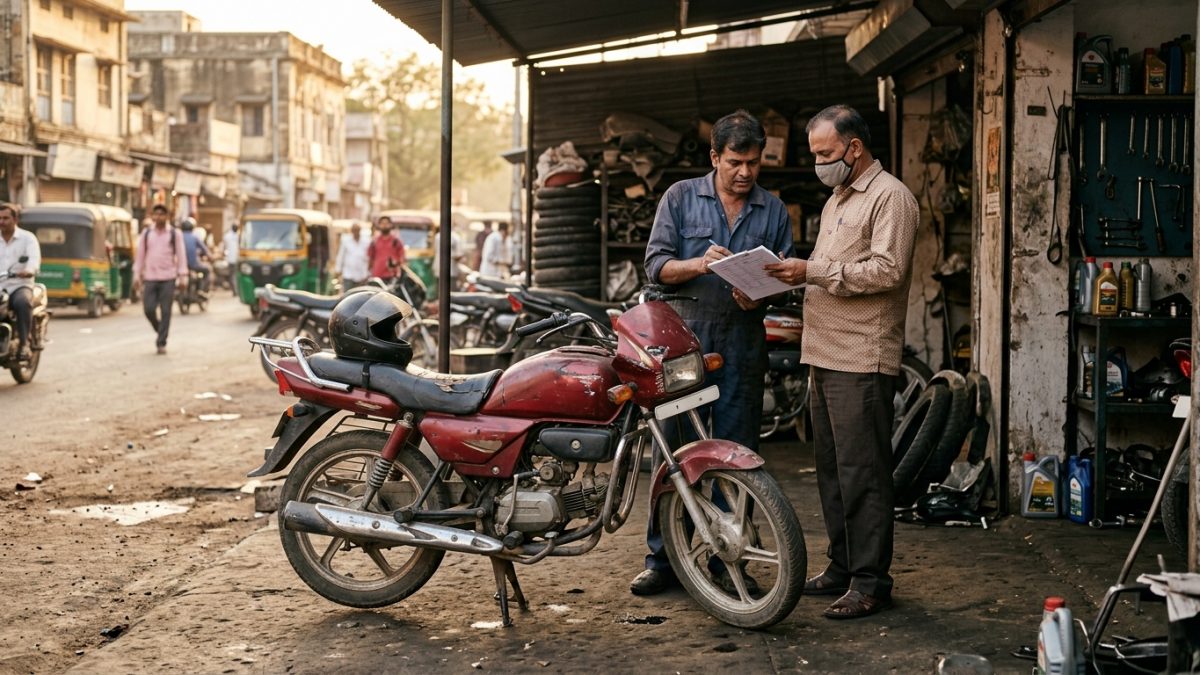
Filing a bike accident insurance claim requires quick action and proper documentation at the scene of the mishap. Following a structured procedure prevents claim disputes and speeds up settlement approvals.
Cashless Bike Insurance Claim Steps
- Prioritise safety and record evidence: Turn off the engine immediately to prevent consequential engine seizure. Capture clear photographs and short videos of the damaged components and the accident site before moving your vehicle.
- Initiate claim intimation: Contact your insurer within 24 to 48 hours through their mobile app, website portal, or customer care helpline to obtain a Claim Reference Number.
- Shift the vehicle to a network garage: Use policy roadside assistance or private towing to transport the two-wheeler to an authorised network garage.
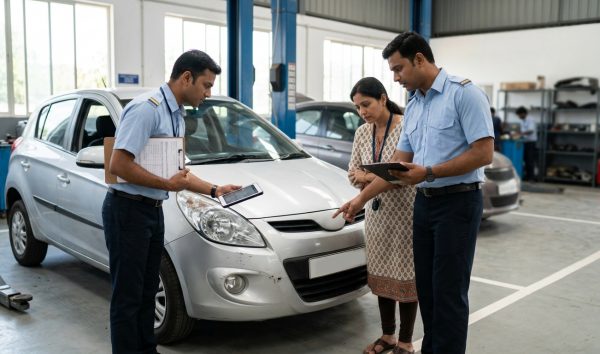
- Undergo inspection or digital survey: Insurers often offer self-inspection via smartphone video for damages below ₹20,000 to ₹50,000, or dispatch an IRDAI-licensed surveyor to the workshop.
- Await work order approval: The workshop begins repairs only after the insurer issues an official repair sanction estimate based on the survey report.
- Pay deductibles and take delivery: Settle the compulsory deductible and uncovered depreciation costs directly with the garage, sign the satisfaction voucher, and collect your bike.
Warning: Never start an engine submerged in standing water or leaking oil. Crank damage is classified as consequential loss and is rejected under standard plans.
Reimbursement Two Wheeler Insurance Claim Process
If you choose a non-network mechanic or an independent workshop, you must file a reimbursement claim. You must inform the insurer before authorising any work so a surveyor can inspect the unrestored damages.
- Notify the insurer: Register your claim online and inform customer support that you are moving the bike to an unlisted workshop.
- Wait for physical survey: Allow an appointed surveyor to inspect the vehicle and approve the estimate before the mechanic dismantles parts.
- Pay the workshop directly: Settle the entire repair invoice out of pocket once the job is completed.
- Collect official receipts: Obtain original tax invoices, cash payment receipts, and itemised replacement part bills mentioning serial numbers.
- Submit documents for payout: Upload the final bills, claim form, cancelled cheque, and bank mandate to the insurer's portal for disbursement within 7 to 15 working days.
Cashless vs Reimbursement Bike Claims: Key Differences
Understanding how cashless and reimbursement settlements operate helps you pick the right workshop after a crash. Both procedures follow IRDAI assessment guidelines, but your financial outlay differs considerably.
| Comparison Parameter | Cashless Settlement | Reimbursement Settlement |
|---|
| Garage Network | Restricted to approved network garages | Open to any local or non-network workshop |
| Initial Out-of-Pocket Cost | Minimal (deductibles + depreciation) | 100% of the entire repair and labour bill |
| Survey Coordination | Managed directly between garage and insurer | Arranged and coordinated by the vehicle owner |
| Paperwork Burden | Low; digital sign-off on satisfaction voucher | High; submission of original bills and payment receipts |
| Payout Destination | Directly to the network workshop | Bank transfer to policyholder's account |
Tip: Always opt for a cashless bike insurance claim when possible. It avoids out-of-pocket spending and removes the risk of bills being rejected after repair.
Documents Required for Bike Insurance Claim
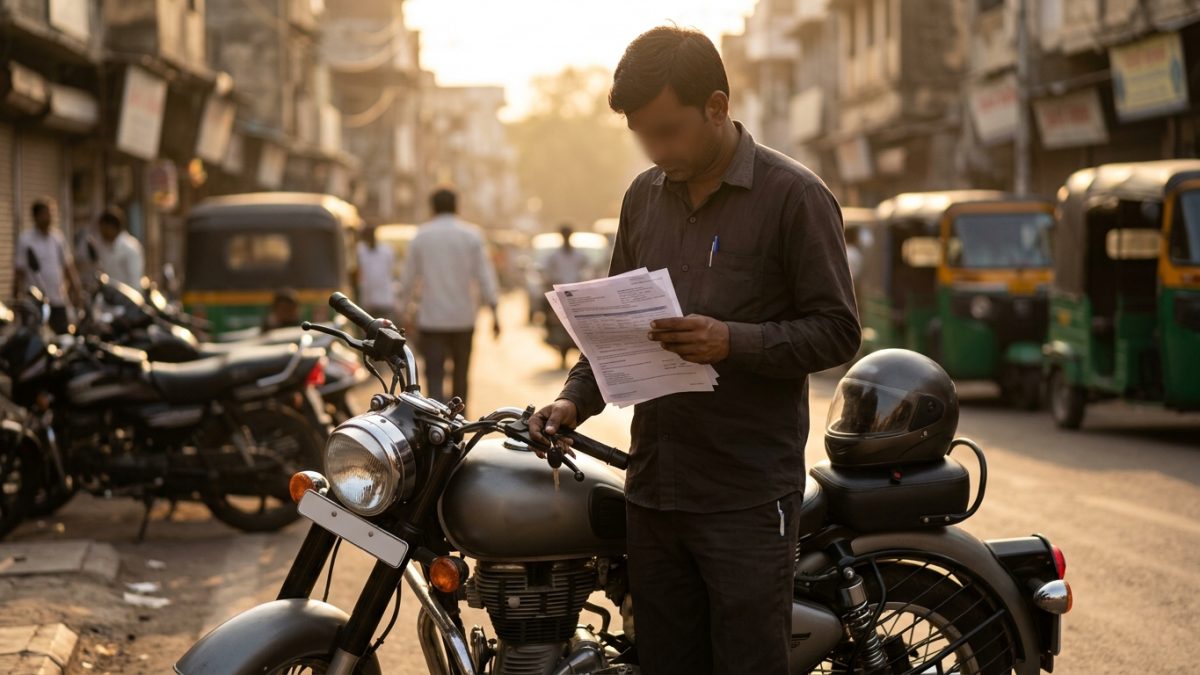
Incomplete paperwork is among the primary reasons for delay in the two wheeler insurance claim process. Having both physical and digital copies ready ensures faster processing by the surveyor desk.
Documents for Accidental Damage (Own Damage)
- Duly filled and signed insurance claim form.
- Copy of the valid vehicle Registration Certificate.
- Copy of the rider's active Driving Licence at the time of the crash (check your credentials via the VahanX DL search).
- Valid bike insurance policy schedule or cover note.
- Itemised repair estimate issued by the servicing garage.
- Original tax invoices and payment receipts (mandatory for reimbursement claims).
- Copy of police First Information Report or General Diary entry (if third-party damage or bodily injury occurred).
Documents for Bike Theft Claims
- Certified copy of the police FIR registered immediately after the incident.
- Original vehicle Registration Certificate and policy document bond.
- Both original physical ignition keys provided by the bike manufacturer.
- Judicial Untraced Report or Non-Traceable Certificate issued by police and accepted by the court.
- RTO transfer paperwork, including Form 29 and 30, along with Form 28 (NOC) and Form 35 (loan cancellation if financed).
- Signed letter of subrogation and indemnity bond executed on non-judicial stamp paper.
Is an FIR Mandatory for Claiming Bike Insurance in India?
A common misconception among two-wheeler owners is that every single insurance claim requires a police report. In India, whether an FIR is required depends entirely on the nature and severity of the incident.
| Accident Scenario | FIR Required? | Legal Requirement & Action |
|---|
| Minor self-fall / skidding | No | Digital photos and regular surveyor inspection suffice |
| Third-party injury or fatality | Yes (Mandatory) | FIR under relevant penal provisions to defend Motor Accident Claims Tribunal cases |
| Vehicle theft (complete loss) | Yes (Mandatory) | Immediate FIR needed to generate police untraced report |
| Vandalism, riots, or arson | Yes (Mandatory) | Police complaint required to prove malicious damage |
| Damage by natural disasters | No | Meteorological reports and spot surveys suffice |
Important: If a third party suffers bodily injury or their vehicle is crushed, never settle privately without a police GD or FIR. A standard third party bike insurance policy requires legal documentation to defend liability claims in court.
Bike Theft Insurance Claim Process: Step-by-Step
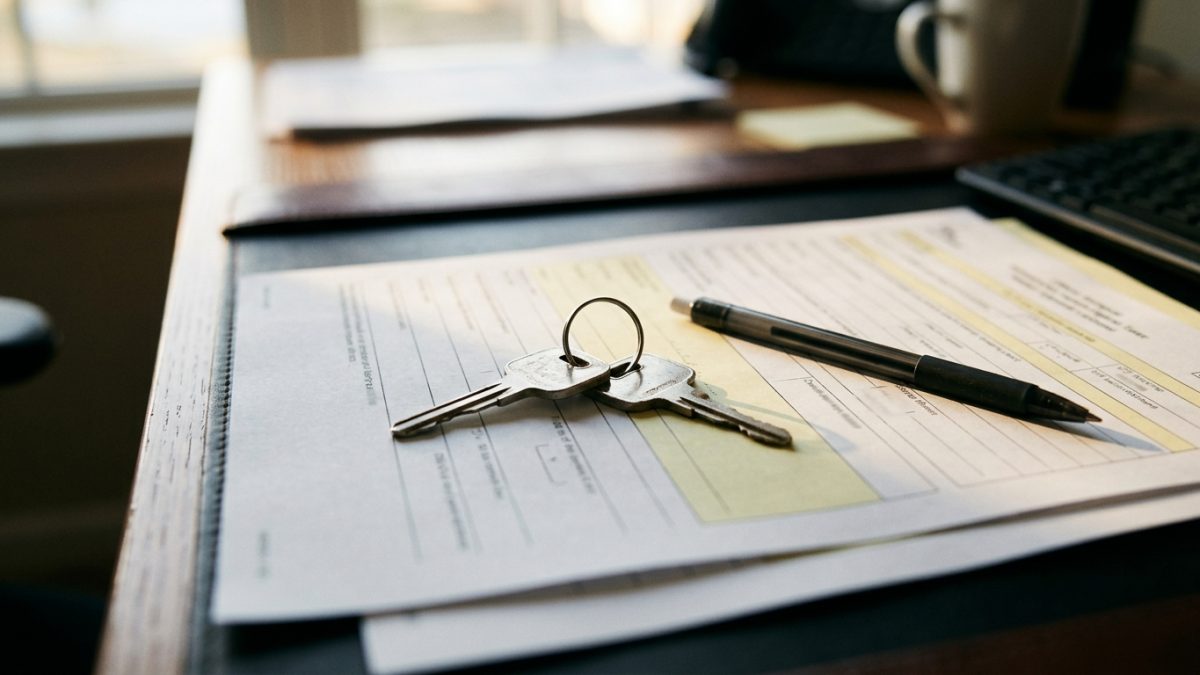
Vehicle theft is settled as a total constructive loss. Because vehicle recovery must be ruled out by law enforcement authorities, this process takes longer than accidental repair claims.
- File an FIR immediately: Visit the local police station jurisdiction where the two-wheeler was stolen within 24 hours. Many states also offer an online lost-vehicle e-FIR system on state police portals.
- Notify the insurance company: Register a bike theft insurance claim process intimation within 24 to 48 hours. Delayed reporting is a major cause of claim rejection.
- Notify the local RTO: Submit a written application to the registering RTO to flag and blacklist the vehicle on the central Parivahan database, preventing fraudulent re-registration.
- Cooperate with the loss investigator: Provide statements, parking details, and CCTV footage access to the investigator appointed by the insurance firm.
- Obtain the court-accepted Untraced Report: If police cannot locate the two-wheeler within 30 to 90 days, they submit a Non-Traceable Certificate to the judicial magistrate.
- Transfer vehicle ownership to the insurer: Sign RTO Forms 28, 29, and 30, surrender both original ignition keys, and submit the original RC book.
- Receive IDV disbursement: The insurer disburses the Insured Declared Value directly to your verified bank account, deducting only the compulsory deductible.
IRDAI Deductibles and Depreciation Slabs
A comprehensive claim does not mean the insurer pays 100% of every garage bill. Settlements are subject to statutory deductibles and part-specific depreciation schedules defined under the Indian Motor Tariff.
| Material / Component Type | IRDAI Depreciation Deduction Rate |
|---|
| Rubber, nylon, and plastic parts | 50% deduction |
| Tyres, tubes, and vehicle batteries | 50% deduction |
| Fibreglass components | 30% deduction |
| Glass elements (mirrors, headlamp glass) | 0% (Full settlement paid) |
| Metal components | Age-based: 0% (up to 6 months) scaling up to 50% (over 10 years) |
In addition to depreciation, every claim attracts a compulsory deductible. Under Indian Motor Tariff rules, this mandatory out-of-pocket fee is ₹100 for two-wheelers up to 150cc and ₹100 to ₹200 for higher-capacity engines. Policyholders who choose a voluntary deductible to lower their premiums must pay that chosen amount on top of the compulsory fee during settlement.
Top Reasons for Bike Insurance Claim Rejection
Being aware of common pitfalls helps safeguard your payouts during an accident or loss assessment. Insurers routinely reject claims that breach policy warranties or statutory traffic regulations.
- Invalid or mismatched driving licence: Riding with an expired licence, a learner's licence without a pillion holding a permanent licence, or riding without a two-wheeler endorsement will cause immediate claim denial.
- Intoxicated riding: Blood alcohol content exceeding 30 mg per 100 ml under Section 185 of the Motor Vehicles Act leads to immediate repudiation.
- Unauthorised pre-repair dismantling: Getting components repaired or replaced at a workshop before a certified surveyor assesses the initial damage voids the claim.
- Failure to provide both original keys: If you cannot produce both factory-issued keys after a theft, the insurer may reject the claim on grounds of gross negligence.
- Commercial usage on private plates: Using a white-plate personal bike for gig deliveries or commercial bike-taxi services violates registration terms.
- Lapsed insurance coverage: Any incident occurring during an insurance lapse or unrenewed period is strictly inadmissible. Check policy validity using the VahanX RC verification tool before riding.
Conclusion
Navigating the bike insurance claim process is straightforward when you notify your insurer promptly, avoid pre-repair dismantling, and maintain all primary vehicle records. Whether you choose a seamless cashless claim at a network workshop or file for reimbursement, following IRDAI protocols ensures quick settlement without deductions.
Always verify that your two-wheeler policy and driving credentials remain fully active before hitting the road. Keep digital copies of your RC, licence, and policy readily accessible to handle any unexpected road mishap with complete confidence.