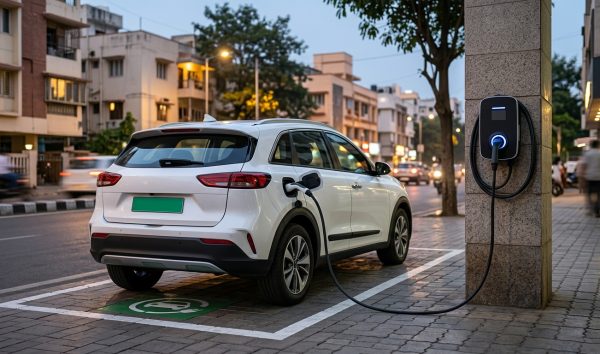
The standard electric car price in India starts at ₹6.99 Lakh (ex-showroom) for traditional battery-included hatchbacks like the Tata Tiago EV, while innovative Battery-as-a-Service (BaaS) programs drop the upfront acquisition cost of micro-EVs like the MG Comet EV down to ₹4.99 Lakh as of September 2026. Because electric cars attract a concessional 5% GST rate and zero registration fees nationwide, calculating the actual on-road expense differs drastically from petrol or diesel vehicles.
Before finalising an EV purchase or evaluating a pre-owned model, buyers should always check RC details on VahanX to verify the vehicle's manufacturing date, hypothecation status, and registered battery specifications directly from the central database.
Key Takeaways
- Ex-showroom electric car prices start at ₹6.99 Lakh (outright purchase) or ₹4.99 Lakh under BaaS leasing.
- Electric vehicles attract a flat 5% GST with zero compensation cess, saving lakhs compared to ICE cars.
- Central RC issuance and renewal fees are 100% waived across India under MoRTH notification G.S.R. 525(E).
- Road tax varies by state: Delhi and Tamil Nadu offer full waivers, while Karnataka levies 5% to 10%.
- Real-world driving range averages 65% to 75% of ARAI lab figures under Indian summer and AC conditions.
| Metric / Feature | Budget Hatchbacks | Sub-Compact SUVs | Mid-Size SUVs |
|---|
| Price Range (Ex-Showroom) | ₹4.99 L – ₹10.09 L | ₹9.79 L – ₹13.50 L | ₹12.49 L – ₹17.89 L |
| Average Battery Capacity | 17.3 kWh – 24 kWh | 25 kWh – 35 kWh | 30 kWh – 45 kWh |
| Real-World Range | 145 km – 210 km | 190 km – 275 km | 210 km – 340 km |
| Applicable GST Rate | 5% (0% Cess) | 5% (0% Cess) | 5% (0% Cess) |
| Central RC Fee | ₹0 | ₹0 | ₹0 |
Electric Car Price List 2026: Budget and Family Segments
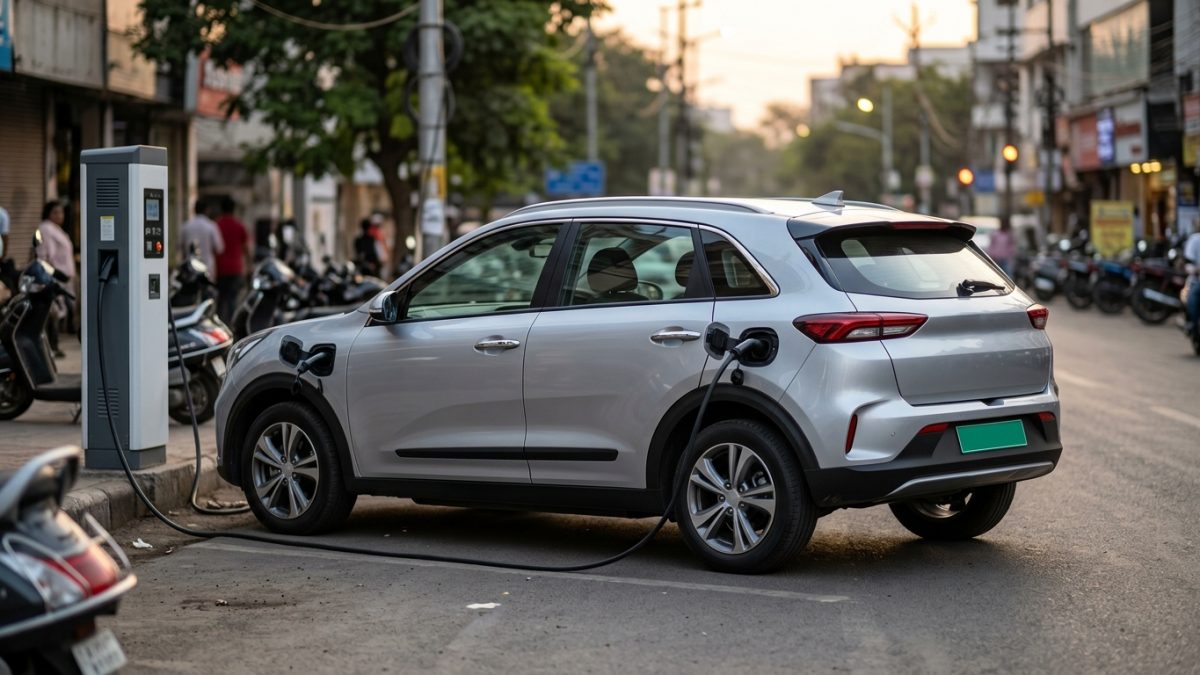
The passenger EV market in India spans multiple distinct categories, from ultra-compact city commuters to spacious family cross-overs. Whether you are looking for the cheapest electric car in India or an everyday family commuter, battery capacity and pricing structures define the overall value proposition.
Entry-level models cater primarily to daily urban runs of 30 to 60 km, where compact dimensions and quick wall-socket charging matter most. In contrast, larger electric SUVs integrate thermal-managed battery packs designed to handle occasional highway travel alongside weekday commuting.
| Model | Ex-Showroom Price | Battery Pack | Claimed ARAI Range |
|---|
| MG Comet EV | ₹7.80 L – ₹10.07 L (₹4.99 L BaaS) | 17.3 kWh | 230 km |
| Tata Tiago EV | ₹6.99 L – ₹10.09 L | 19.2 kWh / 24 kWh | 226 km / 285 km |
| Tata Punch EV | ₹9.79 L – ₹12.99 L | 25 kWh / 35–40 kWh | 260 km – 468 km |
| Citroën eC3 | ₹11.61 L – ₹13.50 L | 29.2 kWh | 320 km |
| MG Windsor EV | ₹13.50 L – ₹15.50 L (₹9.99 L BaaS) | 38 kWh | 332 km |
| Tata Nexon EV | ₹12.49 L – ₹17.89 L | 30 kWh / 45 kWh | 275 km – 489 km |
| Mahindra XUV400 / 3XO EV | ₹15.49 L – ₹17.69 L | 34.5 kWh / 39.4 kWh | 375 km – 456 km |
Best Electric Cars Under 10 Lakh in India
Buyers exploring the best electric cars under 10 lakh in india currently have three primary choices: the Tata Tiago EV, the MG Comet EV, and base variants of the Tata Punch EV. The Tata Tiago EV stands out as the most accessible conventional five-door hatchback, starting at ₹6.99 Lakh ex-showroom for the 19.2 kWh Medium Range version.
For ultra-dense city streets, the MG Comet EV provides a two-door compact footprint. While its standard ex-showroom price starts at ₹7.80 Lakh, MG's Battery-as-a-Service model drops the vehicle invoice cost to ₹4.99 Lakh, requiring buyers to pay an additional per-kilometre battery rental between ₹2.50 and ₹3.20.
Buyer Warning: While BaaS lowers the upfront showroom bill, high-mileage drivers must calculate the recurring battery rental costs, which can offset monthly fuel savings if monthly travel exceeds 1,500 km.
Family Electric SUV Price in India
The competitive sweet spot for family mobility sits between ₹10 Lakh and ₹18 Lakh, dominated by practical electric compact SUVs. The segment benchmark is the Tata Punch EV, which carries an ex-showroom tag ranging from ₹9.79 Lakh to ₹12.99 Lakh while offering a 5-star Bharat NCAP crash test rating.
If you require more boot space and rear legroom, options like the MG Windsor EV (starting at ₹13.50 Lakh outright or ₹9.99 Lakh via BaaS) and the Tata Nexon EV (₹12.49 Lakh to ₹17.89 Lakh) deliver larger battery capacities up to 45 kWh. The Mahindra XUV400 / 3XO EV series competes in the same bracket between ₹15.49 Lakh and ₹17.69 Lakh, offering strong motor outputs and high safety ratings.
How Electric Car On Road Price is Calculated
Understanding the electric car on road price requires looking beyond the ex-showroom quotation. In a conventional petrol vehicle, mandatory state road taxes, municipal levies, and higher GST inflate the final invoice by 12% to 18% above the factory gate price. In contrast, electric vehicles carry an on-road premium of just 5% to 9% in tax-exempt states.
Under the national tax structure administered via the Ministry of Heavy Industries, private 4-wheeler passenger cars do not receive direct central cash subsidies under the PM E-DRIVE scheme, which focuses on public transit and two-wheelers. Buyer savings instead stem from statutory tax relief.
| Cost Head | Internal Combustion (Petrol/Diesel) | Electric Vehicle (EV) |
|---|
| Base Factory Price | ₹10,00,000 (indicative) | ₹13,00,000 (indicative) |
| GST & Cess | 28% to 43%+ effective tax | Flat 5% GST (0% Cess) |
| Road Tax (RTO) | 8% to 15% (₹80,000 – ₹1,50,000+) | 0% in waiver states (5%–10% in select states) |
| RC Issuance Fee | ₹600 (Central CMVR Rule 81) | ₹0 (G.S.R. 525(E) exemption) |
| Mandatory Insurance | Standard IRDAI Tariff | 15% discount on Third-Party premium |
The on-road calculation formula for an electric vehicle consists of the following structure:
On-Road EV Price = Ex-Showroom (incl. 5% GST) + State Road Tax (0% to 10%) + Motor Insurance + Incidental RTO Charges (HSRP, FASTag)
Under MoRTH Notification G.S.R. 525(E), Battery Operated Vehicles (BOVs) are fully exempt from paying the central registration certificate issuance or renewal fees under Rule 81 of the Central Motor Vehicles Rules. Additionally, the Insurance Regulatory and Development Authority of India (IRDAI) mandates a 15% discount on the three-year motor Third-Party (TP) premium for electric cars, trimming overall coverage expenses.
Tata Punch EV On Road Price Breakdown
To see how these rules apply in practice, look at the tata punch ev on road price for the Smart 25 kWh variant (ex-showroom ₹9.79 Lakh) compared across two different state tax jurisdictions:
- Delhi (100% Road Tax Waiver): Ex-showroom ₹9,79,000 + Road Tax ₹0 + Registration Fee ₹0 + Comprehensive Insurance (~₹38,000) + FASTag/HSRP (~₹1,500) = Total On-Road Cost ~₹10,18,500.
- Bengaluru, Karnataka (Tiered Road Tax): Ex-showroom ₹9,79,000 + Road Tax (5% + 11% cess + ₹1,000 cess = ~₹55,335) + Insurance (~₹38,000) + Incidental Fees (~₹2,000) = Total On-Road Cost ~₹10,74,335.
The regional tax difference creates an on-road pricing gap of over ₹55,000 on the exact same electric variant.
RTO Check Tip: Before making final payment to a dealership, inspect the draft Form 20 tax calculation on the central Parivahan portal to confirm the dealer has not erroneously billed standard petrol-vehicle registration charges.
EV Road Tax Waiver States India: State-Wise Policies
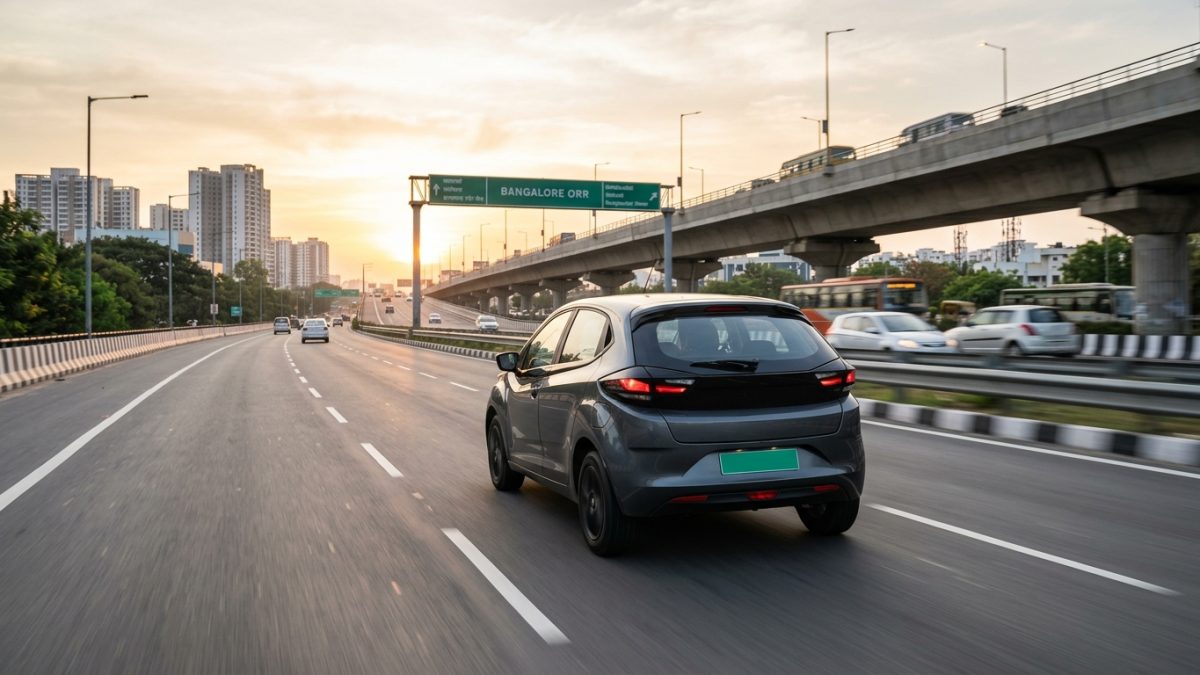
Because Motor Vehicle Lifetime Tax is governed by individual state legislatures, the ev road tax waiver states india landscape is divided into three distinct categories: states with complete exemptions, states with tiered slabs, and states with conditional manufacturing rules.
| State / UT | Road Tax Exemption Status | Current Policy Framework |
|---|
| Delhi | 100% Tax Waiver (up to ₹30 Lakh) | Delhi EV Policy 2026–2030 |
| Tamil Nadu | 100% Road Tax Exemption | Valid through 31 December 2027 |
| Maharashtra | 100% Road Tax Exemption | Maharashtra Comprehensive EV Policy |
| Karnataka | 5% to 10% Tiered Tax + Cess | KMVT Act Amendments |
| Gujarat | 50% Tax Concession | Gujarat State EV Policy |
| Uttar Pradesh | Conditional (100% for state-built) | UP EV Manufacturing Policy |
In states like Delhi, the Delhi EV Policy 2026–2030 provides a complete waiver on road tax for battery-operated passenger cars priced up to ₹30 Lakh, as confirmed on the Delhi Transport Department portal. Similarly, Tamil Nadu extended its unconditional 100% road tax waiver through December 31, 2027, across all private EV categories via the Tamil Nadu EV Portal.
Conversely, Karnataka discontinued its complete exemption. Under the amended Karnataka Motor Vehicles Taxation rules available on the Karnataka Transport Department portal, EVs are taxed under three lifetime slabs:
- Ex-showroom up to ₹10 Lakh: 5% lifetime road tax.
- Ex-showroom ₹10 Lakh to ₹25 Lakh: 8% lifetime road tax.
- Ex-showroom above ₹25 Lakh: 10% lifetime road tax.
- Infrastructure & Urban Cess: An extra 11% cess on the tax amount plus ₹1,000 urban cess.
In Uttar Pradesh, full exemptions apply primarily to vehicles manufactured or assembled within the state boundaries. If you buy an EV produced in Maharashtra or Gujarat and register it in UP, local RTO offices may charge standard vehicle road taxes unless covered by temporary court directives or specific local circulars.
Real World Range of Electric Cars in India vs ARAI Claims
A primary consideration when buying an EV is the gap between manufacturer marketing claims and the real world range of electric cars in india. Automotive testing authorities like ARAI certify vehicles using the Modified Indian Driving Cycle (MIDC). These laboratory evaluations occur at moderate urban speeds with the air conditioning turned off, gentle acceleration profiles, and flat simulated surfaces.
Under everyday Indian operating conditions—involving ambient temperatures between 35°C and 42°C, heavy multi-passenger loads, continuous climate control compressor loads, and stop-and-go metro traffic—real-world driving range consistently lands at 65% to 75% of the claimed ARAI figure.
| Vehicle Model | Battery Size | Claimed ARAI Range | Real-World City Range |
|---|
| MG Comet EV | 17.3 kWh | 230 km | 150 km – 170 km |
| Tata Tiago EV (MR) | 19.2 kWh | 226 km | 140 km – 160 km |
| Tata Tiago EV (LR) | 24.0 kWh | 285 km | 180 km – 210 km |
| Tata Punch EV (Standard) | 25.0 kWh | 260 km | 180 km – 200 km |
| Tata Punch EV (Long Range) | 35.0 kWh | 335 km – 468 km | 240 km – 280 km |
| MG Windsor EV | 38.0 kWh | 332 km | 230 km – 260 km |
| Tata Nexon EV (45) | 45.0 kWh | 489 km | 320 km – 350 km |
Highway driving at sustained speeds of 90 to 100 km/h depletes battery energy faster than city driving because electric motors lack multi-gear transmissions and must overcome high aerodynamic drag without regenerative braking assistance. Setting up a dedicated home charger helps manage these daily limits; read our guide on EV charging station at home setup cost to understand domestic power load requirements.
Efficiency Tip: Driving in single-pedal mode with regenerative braking set to maximum recovers up to 15% of kinetic energy in stop-and-go city traffic, preserving battery life in peak congestion.
Green Number Plate and Vahan Registration Process
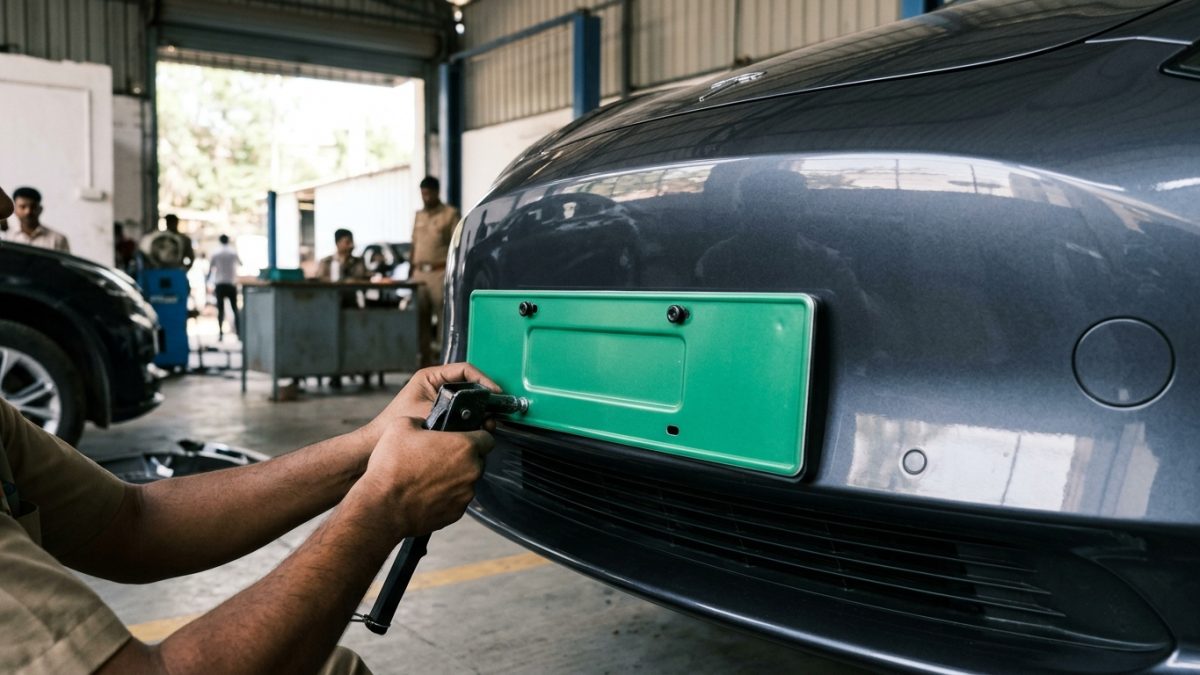
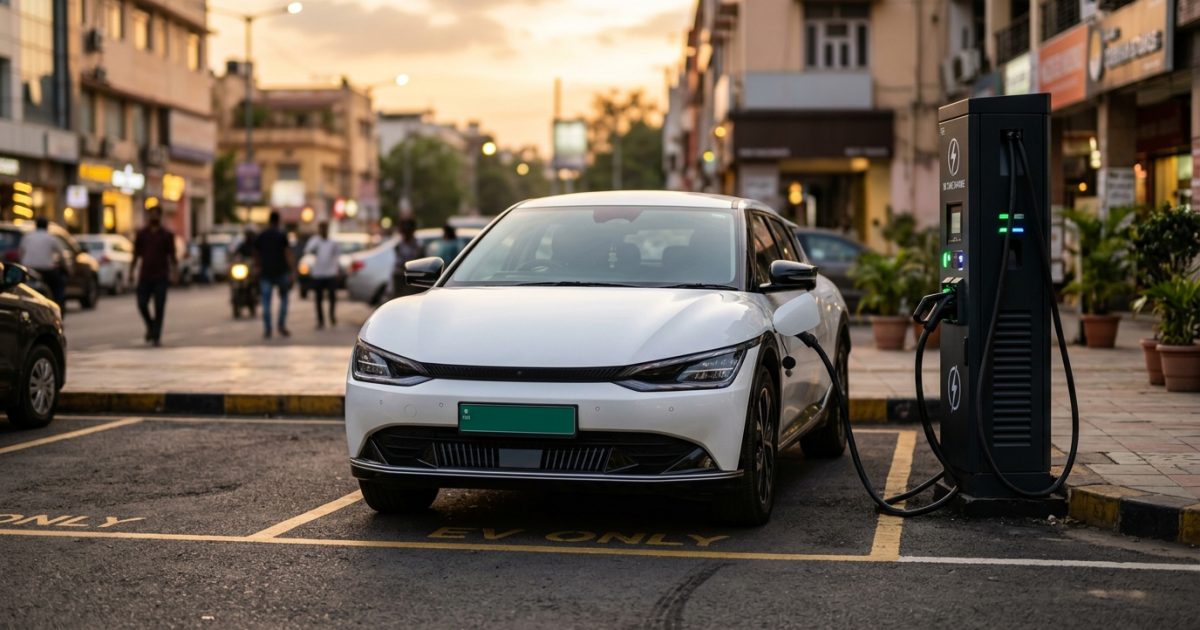
Every fully electric car registered in India must display an official High Security Registration Plate (HSRP) featuring a distinctive green background. The Ministry of Road Transport and Highways (MoRTH) mandates colour coding to help law enforcement, municipal toll booths, and automated parking systems recognise zero-emission vehicles instantly:
- Private Personal Electric Cars: Green background with white reflective lettering.
- Commercial Electric Vehicles & Taxis: Green background with yellow reflective lettering.
- Self-Drive Rental Electric Cars: Green background with black reflective lettering.
Strong hybrids and plug-in hybrids (PHEVs) that retain an internal combustion engine do not qualify for green number plates; they receive standard white or yellow plates.
Step-by-Step Vahan 4.0 Dealer Registration Workflow
New electric car registrations follow a digital dealer-point registration system connected to the centralised Parivahan Vahan 4.0 database. Follow this process from booking to final delivery:
- Invoice and Insurance Generation: The dealership generates the commercial vehicle invoice through its dealer portal and links an active IRDAI-compliant insurance policy.
- Form 20 Data Entry: The dealer logs into the Vahan 4.0 portal and inputs the buyer's details, chassis number, motor serial number, and battery kilowatt-hour capacity under Form 20.
- System Tax Calculation: The Vahan engine references the vehicle fuel type ('Battery Operated Vehicle'). It automatically waives the central Rule 81 registration fee to ₹0 and calculates the state-specific motor vehicle lifetime tax.
- Document Upload: The dealer uploads Form 21 (Sale Certificate), Form 22 (Roadworthiness Certificate), Aadhaar-based KYC address proof, and the insurance cover note to the portal.
- RTO Verification and Number Generation: The jurisdictional RTO verifies the digital application. Upon electronic approval, the system assigns a new vehicle registration number. Find your local registering station using our RTO office address and code finder.
- HSRP Embossing and Delivery: An authorized plate manufacturer laser-etches the vehicle identification PIN onto the green plate, fixes non-removable snap locks, and mounts the plates prior to customer handover.
Buyer Checklist: Hidden Costs and BaaS Pitfalls
While running an electric car is considerably cheaper than filling up a petrol tank, prospective buyers should prepare for recurring operating costs and contract clauses that affect long-term ownership.
Understanding Battery-as-a-Service (BaaS) Agreements
The Battery-as-a-Service model introduced on cars like the MG Comet and MG Windsor reduces initial showroom expenditure. However, you do not own the battery pack outright. The vehicle invoice is split between the car chassis (financed via standard auto loan) and the battery (leased via a separate financing NBFC).
Review the minimum monthly distance commitment before signing. Most BaaS contracts enforce a monthly minimum billing (typically 1,500 km). If you only drive 500 km in a month, you are still billed for the contracted baseline, which alters the running-cost balance.
Home Charging vs Public DC Fast Charging Rates
Charging your electric car overnight at home using a standard domestic AC wall box costs roughly ₹6.50 to ₹9.00 per unit (kWh), translating to an economical operating cost of ₹1.00 to ₹1.40 per kilometre. However, if your lifestyle demands regular use of commercial 50 kW or 60 kW DC fast chargers, charging networks levy commercial tariffs ranging from ₹18 to ₹24 per unit plus 18% GST. This elevates your per-kilometre operational cost to ₹3.50 to ₹4.50, narrowing the financial advantage over CNG or hybrid vehicles.
Before signing the final vehicle delivery note, perform an independent registration check using the VahanX online RC search tool to verify that your vehicle record correctly displays zero hypothecation errors, correct battery ratings, and accurate green-plate registration credentials.
Conclusion
Understanding the actual electric car price in India requires looking past basic showroom tags to evaluate state-level road tax exemptions, real-world battery efficiency, and charging infrastructure costs. With flat 5% GST and nationwide RC fee waivers, electric cars offer strong financial advantages for city commuters and family drivers alike.
Before taking delivery or investing in a pre-owned EV, always verify vehicle registration, road tax status, and battery specifications using the VahanX vehicle database to make an informed, hassle-free transition to electric mobility.