Key Takeaways
- Standard traffic penalties in India are governed by the Motor Vehicles Act, 1988, amended in 2019.
- Common offences like riding without a helmet or driving unbelted attract a statutory ₹1,000 fine.
- Severe violations like drunk driving (₹10,000) and juvenile driving (₹25,000) require mandatory court trials.
- Unpaid compoundable fines route to Virtual Courts after 60 days, risking vehicle blacklisting on Vahan.
The official traffic fine list in India establishes standardized statutory penalties under the Motor Vehicles Act for both two-wheelers and four-wheelers. Minor infractions can be settled immediately online or on the spot via e-PoS machines, while serious safety breaches require formal judicial disposal. Motorists can quickly perform a check challan status by vehicle number to verify active violations before penalties escalate.
| Violation Type | MV Act Section | Statutory Penalty | Settlement Mode |
|---|
| Riding Without Helmet | Sec 194D | ₹1,000 + 3-month DL suspension | Spot / Online |
| Driving Without Seatbelt | Sec 194B | ₹1,000 per unbelted occupant | Spot / Online |
| Over-speeding (LMV) | Sec 183(1)(i) | ₹1,000 to ₹2,000 | Spot / Virtual Court |
| Drunk Driving | Sec 185 | ₹10,000 or up to 6 months jail | Physical Court Only |
| Underage / Minor Driving | Sec 199A | ₹25,000 + 3 years jail for guardian | Physical Court Only |
Legal Background: Motor Vehicles Act and Penalty Structures
Traffic regulations and enforcement across India operate under the Motor Vehicles Act, 1988, amended by the Motor Vehicles (Amendment) Act, 2019. These revised statutory penalties took effect nationally on 1 September 2019 under MoRTH Notification S.O. 3110(E). The legislation standardizes road safety measures, mandating strict compliance across national highways and municipal roads.
Under Section 200 of the Act, state governments hold the power to designate specific offences as compoundable. This provision allows designated police officers or transport departments to determine compounding fees through state gazette notifications. Meanwhile, Section 206(4) empowers authorized officers to impound driving licences on the spot for serious breaches, referring them to the licensing authority for suspension.
Compounding an offence legally concludes criminal prosecution for that specific ticket, ensuring no lingering court record remains against the motorist.
Comprehensive Two-Wheeler and Bike Fine List India
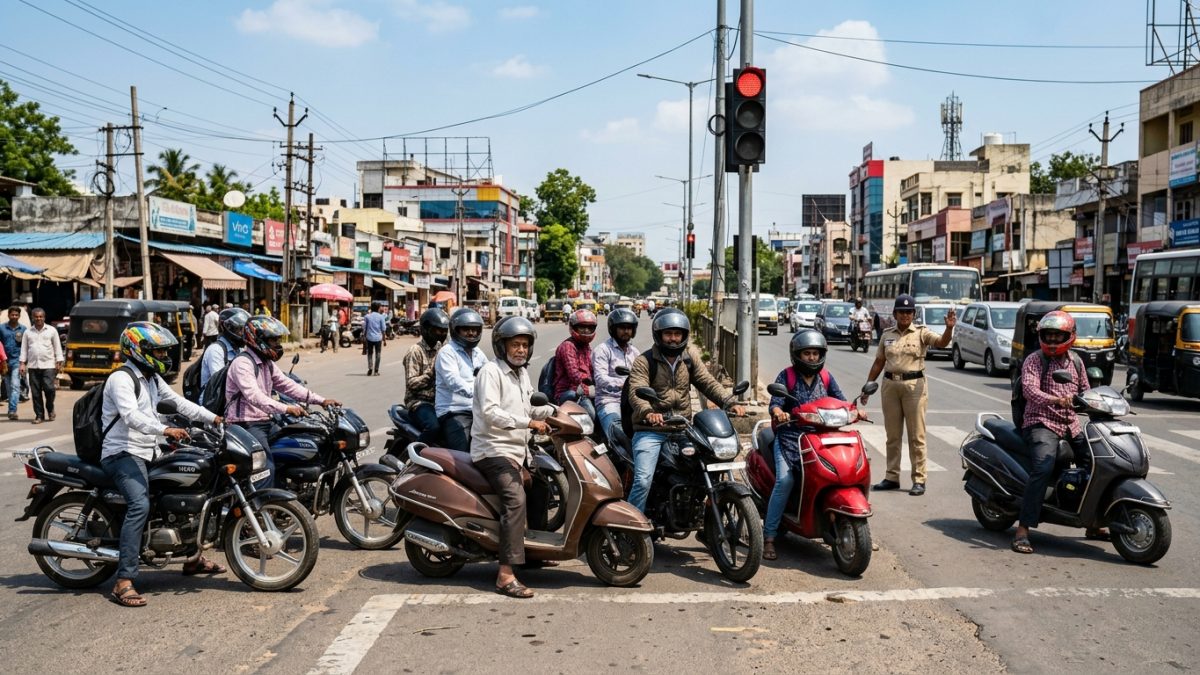
Two-wheeler riders frequently face strict automated and on-road enforcement due to vulnerable road safety statistics. Motorcyclists and scooter riders must carry compliant safety gear and proper documentation at all times to prevent steep financial penalties.
Riding without an approved helmet is penalized under Section 194D with a ₹1,000 fine and a mandatory 3-month driving licence disqualification. This rule applies equally to both the rider and the pillion passenger. Carrying more than one pillion rider constitutes triple riding under Section 194C, leading to an immediate ₹1,000 penalty. Riders can inspect their driving credential status using a check driving licence status search if a suspension has been initiated.
| Bike Violation | MV Act Section | Statutory Penalty | Compounding Type |
|---|
| Riding Without Helmet | Sec 194D | ₹1,000 | Compoundable on spot |
| Triple Riding | Sec 194C | ₹1,000 | Compoundable on spot |
| Over-speeding (Two-Wheeler) | Sec 183(1)(i) | ₹1,000 – ₹2,000 | Compoundable (1st offence) |
| Using Mobile While Riding | Sec 184(c) | ₹1,000 – ₹5,000 | State-dependent / Court |
| Riding Without Valid Insurance | Sec 196 | ₹2,000 (1st) / ₹4,000 (2nd) | Compoundable |
Car Traffic Fine List: Four-Wheeler Penalties Across India
The car traffic fine list covers critical safety equipment, speed limit enforcement, and emission standards. Four-wheeler drivers face compounded monetary fines if multiple passengers fail to adhere to basic safety requirements.
Failing to wear a seatbelt violates Section 194B and attracts a ₹1,000 penalty per non-compliant passenger. Driving an over-speeding Light Motor Vehicle carries a fine between ₹1,000 and ₹2,000 under Section 183(1)(i). A second over-speeding offence empowers enforcement officials to seize the driver's licence under Section 206(4). You can review vehicle compliance and documentation through a check RC and vehicle owner details search before undertaking inter-state road trips.
| Car Violation | MV Act Section | Statutory Penalty | Compounding Type |
|---|
| Driving Without Seatbelt | Sec 194B | ₹1,000 | Compoundable on spot |
| Over-speeding (LMV) | Sec 183(1)(i) | ₹1,000 – ₹2,000 | Compoundable (1st offence) |
| Over-speeding (Medium/Heavy) | Sec 183(1)(ii) | ₹2,000 – ₹4,000 | Compoundable (1st offence) |
| Dangerous / Rash Driving | Sec 184 | ₹1,000 – ₹5,000 | State-dependent / Court |
| Blocking Emergency Vehicles | Sec 194E | ₹10,000 | Non-compoundable / Court |
Spot Compoundable Challans vs. Court-Only Offences
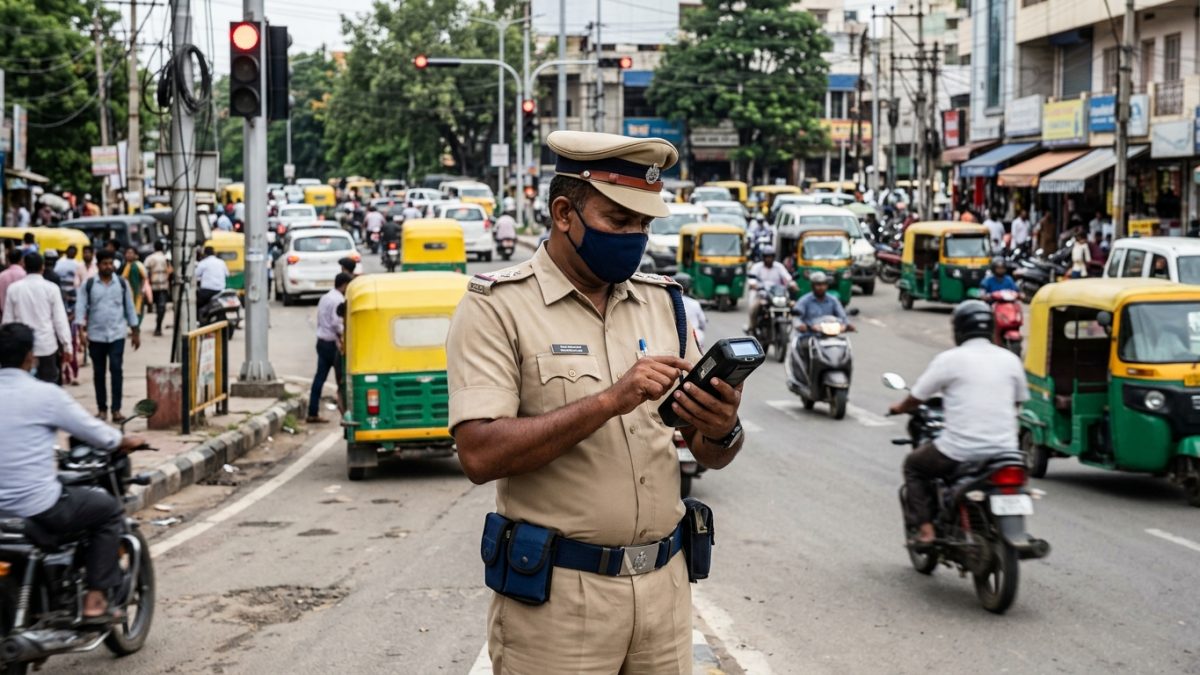
Understanding the difference between compoundable tickets and court-mandated summonses helps drivers manage notices correctly. A compoundable offence allows the driver to pay a fixed statutory composition fee directly on the spot via handheld e-PoS devices or through official state web gateways.
Non-compoundable offences cannot be settled roadside by an enforcement officer. These violations carry potential jail sentences, extensive license disqualifications, or require judicial discretion. Drivers accused of drunk driving under Section 185 face mandatory magistrate hearings, breathalyzer analysis, and fines up to ₹10,000. Underage driving under Section 199A levies a ₹25,000 penalty on the guardian, cancels vehicle registration for one year, and bars the minor from licensing until age 25.
Non-compoundable challans cannot be settled roadside; they require formal judicial disposal either through physical magistrates or the official Virtual Court network.
The Function of Virtual Courts in Modern Traffic Enforcement
Court-bound challans that do not carry mandatory prison terms on initial inspection are automatically forwarded to state Virtual Courts. This system handles summary disposal digitally without forcing motorists to attend regular courtrooms in person.
When a camera captures a red-light jump under Section 184 in automated metropolitan zones, the notice moves to the judicial portal. The vehicle owner receives an SMS containing a unique Virtual Court citation number. Litigants can log on to the judicial system, review the magistrate's proposed settlement, and settle the penalty online. Motorists wishing to contest the charge can choose to transfer the case to a regular physical court.
Ignoring Virtual Court summonses can escalate summary proceedings into bailable warrants issued directly by the jurisdictional Chief Judicial Magistrate.
State-Wise Variations in the Traffic Challan Fine List
Although the Motor Vehicles Act establishes a unified national baseline, Section 200 authorizes individual states to adjust compounding schedules. Consequently, identical violations can carry varying spot settlement fees depending on the state of registration or location of travel.
States like Gujarat introduced reduced compounding rates for initial violations, setting basic helmet and seatbelt penalties at ₹500 rather than the central ₹1,000 limit. Maharashtra maintains lower compounding tiers for select first-time infractions, though high-speed racing attracts standard maximum penalties. In Delhi, high-density traffic monitoring automatically routes red-light jumping and wrong-side driving directly to Virtual Courts under Section 184, enforcing full statutory fines.
How to Check and Pay Traffic Fines Online
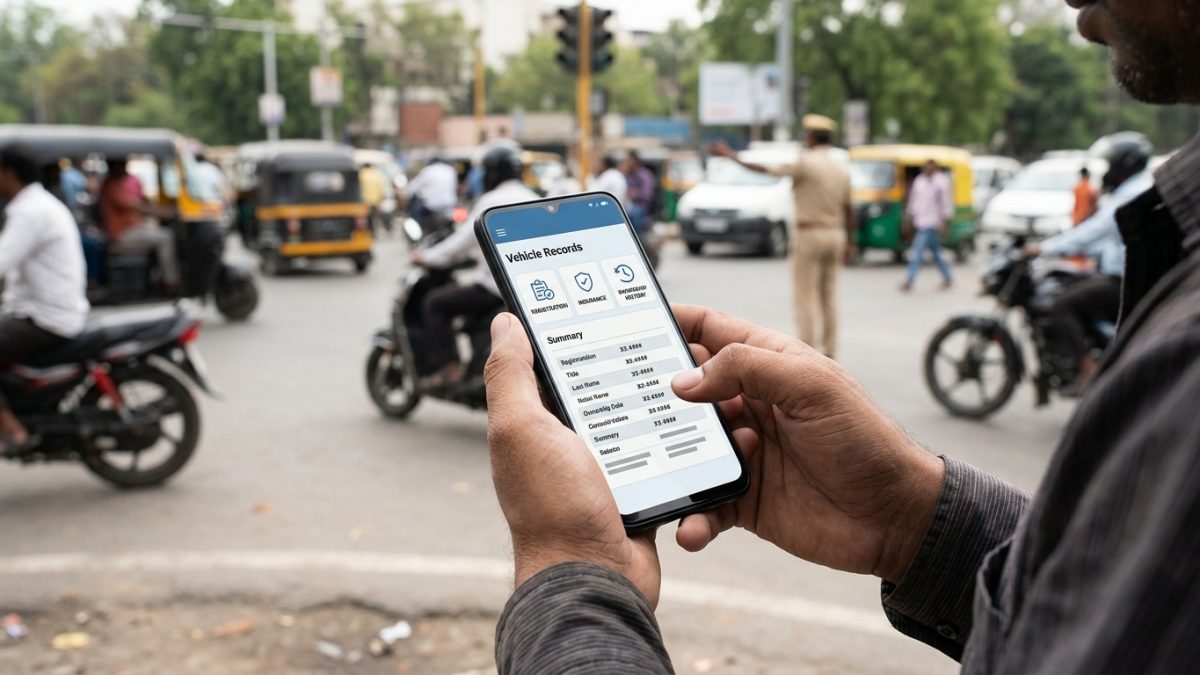
Settling traffic violations promptly prevents administrative holds on vehicle documentation. Motorists can view and resolve camera-issued or officer-issued citations across central portals.
- Access the official portal: Open the official Ministry of Road Transport and Highways portal at echallan.parivahan.gov.in on your web browser.
- Retrieve challan details: Click on Check Challan Status and enter your Challan Number, Vehicle Number with Chassis/Engine digits, or Driving Licence Number.
- Review the citation: Inspect the violation date, photographic evidence captured by ANPR cameras, applicable MV Act sections, and total payable amount.
- Complete the transaction: Click Pay Now, authenticate your identity via mobile OTP, and make the payment via debit card, credit card, net banking, or UPI.
- Save the receipt: Download the digitally generated payment receipt for official verification during transport department inspections.
Resolving Virtual Court Challans
- Visit the court website: Navigate to the Supreme Court e-Courts project portal at vcourts.gov.in.
- Locate your case: Select your state court jurisdiction and search for your record using your vehicle number or citation reference.
- Plead guilty or contest: Select Plead Guilty to accept the fine determined by the magistrate and pay online, or choose Claim Trial to fight the citation physically.
Disputing a Wrongly Issued Challan
- Open grievance system: Visit the official grievance desk at echallan.parivahan.gov.in/gsticket/.
- Submit violation ticket: Enter the disputed challan number and vehicle registration details, completing mobile OTP validation.
- Provide documentation: Choose the issue type, such as cloned number plates or incorrect camera reading, upload supporting evidence, and submit for police review.
Deadlines, Default Penalties, and Vehicle Blacklisting
Compoundable traffic challans typically offer a 60-day window for direct settlement. If a notice remains unpaid beyond this window, transport systems automatically push the case forward to the judicial magistrate or Virtual Court.
Persistent default leads to the registration mark being flagged as blacklisted on the national Vahan database. A blacklisted status freezes all standard transport administrative tasks, preventing ownership transfers, fitness renewals, and national permits. Vehicle owners can consult their local authority using find your RTO office address and code if documentation updates are blocked by judicial holds.
Conclusion
Consulting an updated traffic fine list ensures vehicle owners remain aware of statutory safety requirements and avoid unexpected financial penalties on Indian roads. Always resolve camera-generated and spot notices within statutory timelines to keep your vehicle records clear of judicial holds.
Make it a regular habit to run a quick check challan status by vehicle number to track, contest, or settle pending dues before they escalate to virtual court summonses.