Applying practical bike mileage tips can boost your motorcycle or scooter fuel economy by 10 to 20 percent. To achieve maximum mileage, maintain correct cold tyre pressure, ride smoothly between 45 and 55 km/h in top gear, clean and lubricate the drive chain every 500 km, and service air filters on schedule.
Key Takeaways
- Ride between 45 and 55 km/h in top gear to save up to 40% fuel.
- Keep cold tyre pressure at factory specifications to prevent a 5% to 10% mileage drop.
- Clean and lubricate your drive chain every 500 to 700 kilometres.
- Shut off the engine whenever traffic signal countdowns exceed 20 seconds.
- Use OEM-specified engine oil (JASO MA2 for motorcycles, JASO MB for scooters).
| Maintenance Factor | Standard Specification | Mileage Impact | Recommended Frequency |
|---|
| Cold Tyre Pressure | 25–29 PSI Front / 28–33 PSI Rear | +2 to +4 km/l | Weekly check |
| Cruising Speed | 45–55 km/h in top gear | +20% to +40% gain | Daily riding habit |
| Drive Chain Slack | 20 mm to 30 mm free play | +1 to +3 km/l | Every 500–700 km |
| Air Filter Service | Clean foam / replace paper | +3 to +6 km/l | Every 10,000–12,000 km |
Understanding Modern Two-Wheeler Fuel Consumption
With retail fuel prices staying firm across India as of October 2026, daily commuting expenses weigh heavily on two-wheeler riders. In cities like New Delhi (₹94.72 to ₹102.12/litre), Mumbai (₹103.44 to ₹111.31/litre), and Bengaluru (₹102.86 to ₹111.68/litre), an average daily commute of 35 kilometres costs between ₹2,000 and ₹2,800 monthly. Understanding daily fuel rate revisions via the petrol price today across Indian metros helps you calculate real commuting costs.
By applying verified two wheeler mileage tips, an everyday commuter riding a 110cc to 125cc bike can save 6 to 12 litres of petrol monthly. This efficiency directly returns ₹600 to ₹1,200 back into your wallet every month without buying aftermarket modifications.
The BS6 Electronic Fuel Injection Difference
Since the mandatory transition to BS6 emission standards on 1 April 2020, modern two-wheelers have replaced manual carburettors with Electronic Fuel Injection (EFI) governed by an Engine Control Unit (ECU). Riders often ask about manual bike mileage setting screws, but BS6 motorcycles do not have them.
Instead, the ECU automatically calibrates fuelling using real-time data from the Oxygen (O2) sensor, Throttle Position Sensor (TPS), Engine Oil Temperature (EOT) sensor, and Manifold Absolute Pressure (MAP) sensor. Keeping sensors clean and unhindered is critical for fuel delivery.
BS6 fuel-injected engines do not have a manual carburettor mixture screw. Never allow untrained roadside mechanics to tamper with your throttle body or sensor wiring to increase mileage.
The Impact of E20 Petrol Blending
India's nationwide rollout of E20 petrol (20 percent ethanol blend) has introduced a slight drop in volumetric fuel economy. Because ethanol has approximately 27 to 30 percent lower energy density per unit volume than neat petrol, legacy motorcycles experience a natural 2 to 6 percent drop in real-world mileage. Minimising mechanical friction and drivetrain drag is the only way to counteract this baseline fuel loss.
Essential Bike Mileage Tips for Everyday Riding
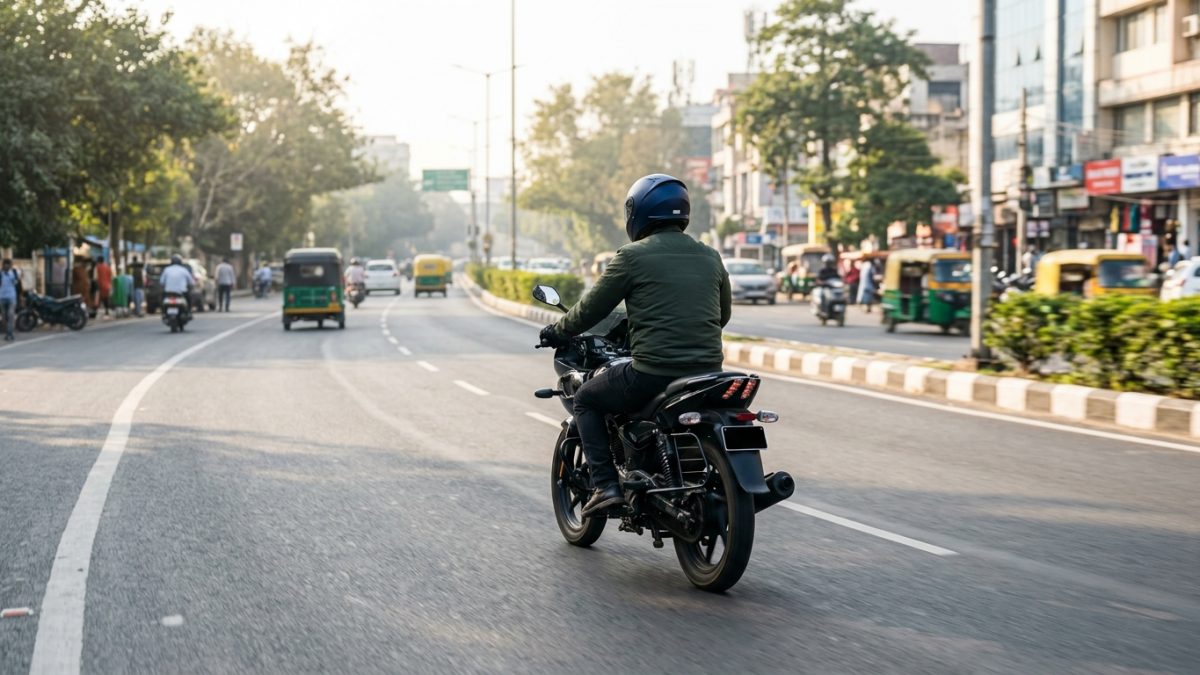
The easiest way to understand how to increase bike mileage begins with modifying daily throttle habits. The Petroleum Conservation Research Association (PCRA), operating under the Ministry of Petroleum & Natural Gas, provides tested benchmarks for two-wheeler operation.
The PCRA 45 to 55 km/h Optimal Speed Range
PCRA research demonstrates that maintaining a steady cruising speed between 45 km/h and 55 km/h in top gear delivers 20 percent to 40 percent higher fuel economy compared to riding aggressively at 70 to 80 km/h. Commuter motorcycles in the 100cc to 150cc range operate most efficiently between 3,500 and 4,500 RPM.
Aerodynamic wind resistance increases exponentially with velocity. Once a two-wheeler exceeds 65 km/h, a substantial portion of engine power is consumed solely to fight wind resistance, burning excessive fuel per kilometre travelled.
Smooth Throttle and the 20-Second Idling Rule
Sudden throttle acceleration forces the ECU or carburettor to dump surplus fuel into the cylinder head. Rolling the throttle smoothly allows the engine to pull cleanly without wasting unburnt hydrocarbons.
At traffic intersections, apply the PCRA 20-second rule. If the signal timer or railway crossing wait exceeds 20 seconds, switch off your ignition. An idling two-wheeler engine consumes 0.2 to 0.4 litres of petrol per hour while going nowhere.
Avoiding Deadweight and Fuel Evaporation
Carrying unnecessary metal accessories, heavy aftermarket crash guards, or bulky luggage racks forces the engine to burn more petrol during start-stop city riding. Always check that your rear footbrake is not partially depressed while resting your foot on the peg.
Always park your motorcycle in shaded areas whenever possible. Direct midday sun heats the metal fuel tank, causing light petrol fractions to evaporate through the tank breathers and evaporative carbon canister.
Tyre Care and Pressure: The Fastest Mileage Booster
Under-inflated tyres are the single most common cause of poor fuel efficiency on Indian roads. When tyre air pressure drops, the rubber contact patch widens, creating rolling resistance that forces the engine to work harder.
PCRA studies establish that a 20% to 25% drop below recommended tyre pressure leads to a 5% to 10% increase in fuel consumption and cuts tyre life by a quarter.
Maintaining Correct Cold Tyre Pressure
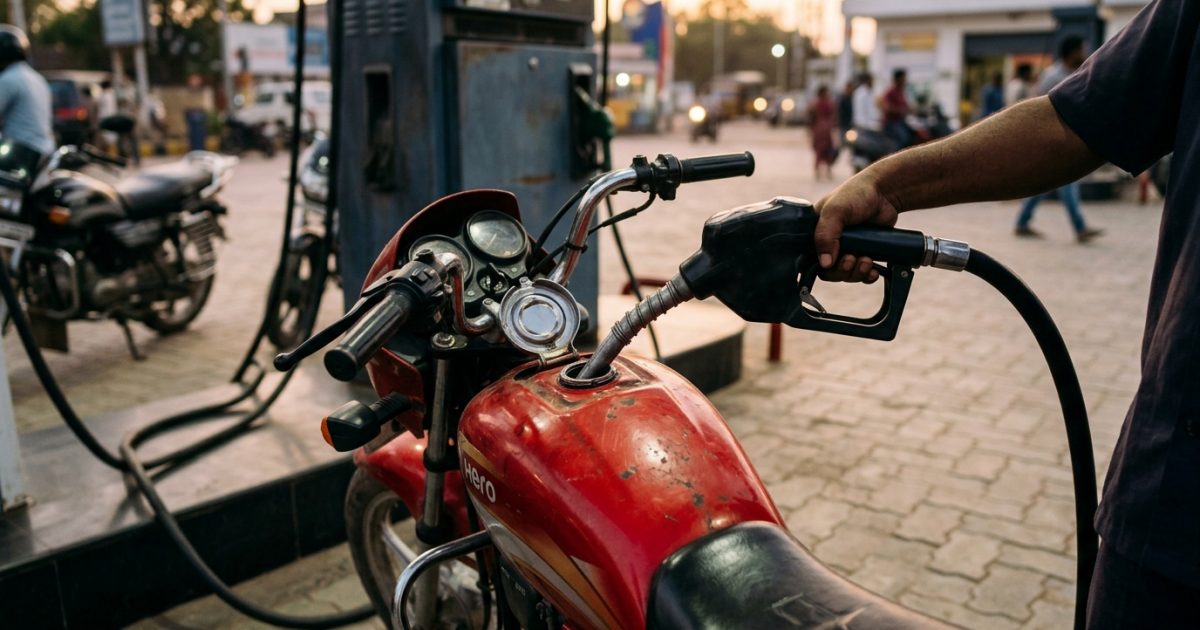
Always inspect tyre pressure when the tyres are cold, meaning before riding more than one kilometre. Riding generates internal tyre heat that expands air, producing a misleadingly high reading on pressure gauges. Inspect tyre pressures weekly at your neighbourhood filling station.
| Riding Condition | Front Tyre Pressure | Rear Tyre Pressure | Impact on Handling & Economy |
|---|
| Solo Commuting | 25 – 28 PSI | 28 – 32 PSI | Optimal contact patch and lowest rolling drag |
| With Pillion Passenger | 28 – 29 PSI | 33 – 36 PSI | Prevents sidewall flexing and sluggish acceleration |
| Under-inflated (-6 PSI) | 20 – 22 PSI | 22 – 24 PSI | Mileage drops by 4 to 6 km/l; sluggish steering |
Before planning long highway journeys, ensure your tyres have adequate tread and verify your registration status by using the tool to check RC and vehicle owner details to keep documents updated.
Mechanical Maintenance: How to Improve Bike Mileage by 10% to 20%
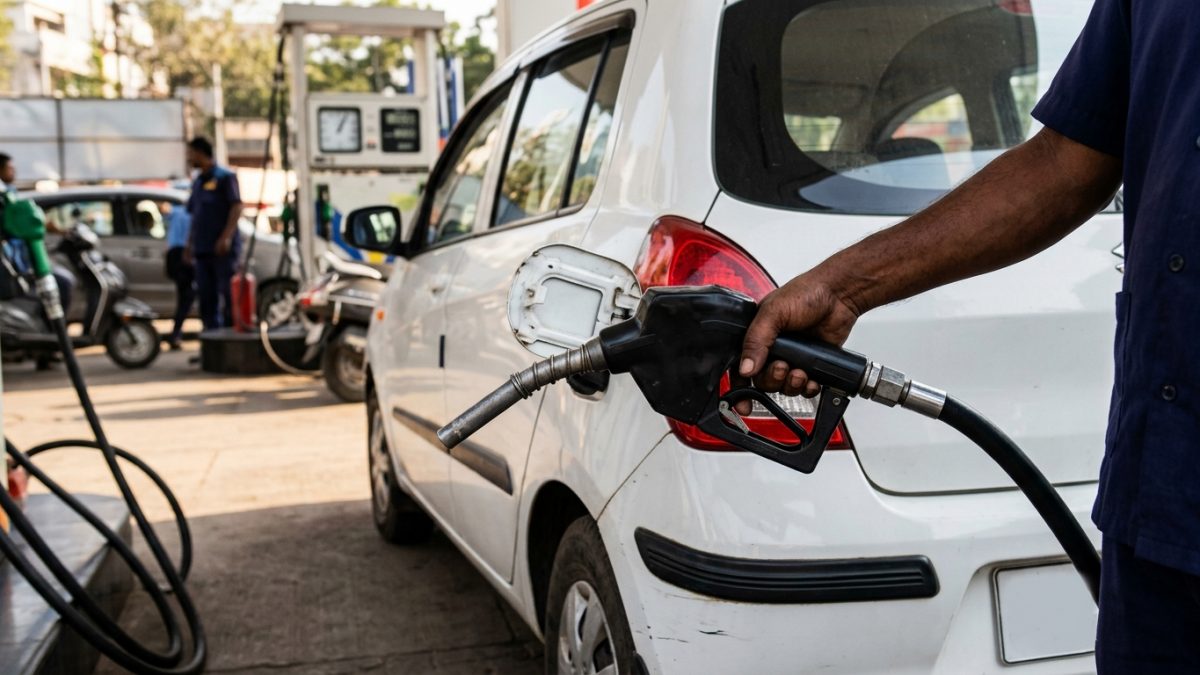
Many riders ask, "bike average kaise badhaye?" The secret lies in simple mechanical tune-ups that eliminate frictional losses across the drivetrain and combustion chamber.
Drive Chain Slack and Lubrication
A dry, rusty, or overtight chain absorbs 2 to 4 percent of your engine's total output. Keep chain slack between 20 mm and 30 mm of vertical free play, as marked on your swingarm sticker.
Clean the chain with kerosene or specialized chain cleaner every 500 to 700 kilometres. Lubricate it with heavy EP gear oil or dedicated chain spray to maintain smooth power transfer to the rear wheel.
Air Filter Cleaning and Replacement
Dusty Indian road conditions quickly clog air intake elements. When an air filter gets choked with dirt, the engine cannot draw sufficient air, leading to a fuel-rich mixture that cuts fuel efficiency by 3 to 6 km/l.
Paper filter elements found on BS6 motorcycles should be blown clean with compressed air every 3,000 kilometres and replaced every 10,000 to 12,000 kilometres. Never wash paper filters with water or petrol. Washable foam filters found on older bikes should be cleaned and lightly oiled every 4,000 kilometres.
Spark Plug Care and Electrode Gap
A fouled spark plug produces weak sparks, leading to unburnt fuel escaping into the exhaust. Inspect the spark plug every 4,000 kilometres for carbon deposits.
Use a feeler gauge to confirm the electrode gap is set between 0.7 mm and 0.9 mm according to your owner manual. Replace the spark plug every 12,000 to 15,000 kilometres to ensure clean combustion.
Eliminating Brake Drag and Adjusting Clutch Free Play
Clutch micro-slippage occurs when the clutch cable lacks slack, causing the engine to rev higher than the bike's actual road speed. Maintain 10 mm to 15 mm of free play at the clutch lever tip.
Regularly check for brake drag. Put your two-wheeler on its main centre stand and spin both wheels by hand. Each wheel should rotate freely for 3 to 5 full revolutions without rubbing against brake pads or drum shoes.
Sticky disc brake caliper pins or rusted drum brake return springs create continuous drag that silently drops your mileage by up to 8 km/l.
Engine Oil Selection: Choosing the Right Viscosity and Grade
Using the incorrect engine oil grade creates internal fluid resistance that reduces fuel economy. The engine oil must balance boundary lubrication against hydrodynamic drag inside the crankcase.
Viscosity Impact: 10W-30 vs Heavy Grades
Most modern Indian motorcycles and scooters specify 10W-30 or 10W-40 engine oil. Pouring an overly viscous oil like 20W-50 into an engine designed for 10W-30 creates internal viscous drag around the crankshaft and pistons, degrading fuel efficiency by 2 to 5 percent.
Low-friction oils that meet API SN or SP standards flow rapidly during cold morning starts, reducing initial warm-up friction and providing immediate fuel savings.
Motorcycles vs Scooters: JASO MA2 vs JASO MB
Scooter mileage tips differ from motorcycle advice due to their distinct transmission designs. Automatic scooters (such as the Honda Activa, TVS Jupiter, and Suzuki Access) use dry continuously variable transmission (CVT) belts and separate gearboxes.
These scooters require JASO MB rated engine oils, which contain special friction modifiers that maximize fuel economy. Motorcycles with wet clutches require JASO MA or MA2 oils to prevent the clutch plates from slipping. Putting JASO MA2 oil in a scooter creates unnecessary friction, while putting JASO MB oil in a motorcycle causes severe clutch slip.
How to Increase Mileage of 150cc Bike Models
Riders operating 150cc to 160cc performance commuters (such as the Bajaj Pulsar 150, TVS Apache RTR 160, or Honda Unicorn) often experience lower efficiency during stop-and-go city riding. Knowing how to increase mileage of 150cc bike engines requires specific gear shifting discipline.
Avoid revving past 5,000 RPM in lower gears. Shift up into 4th and 5th gear as soon as the motorcycle pulls cleanly above 35 to 40 km/h without engine lugging or knocking. Cruising in 3rd gear at 50 km/h uses almost twice as much fuel as cruising in 5th gear at the same speed.
Step-by-Step Two-Wheeler Mileage Setting Routine
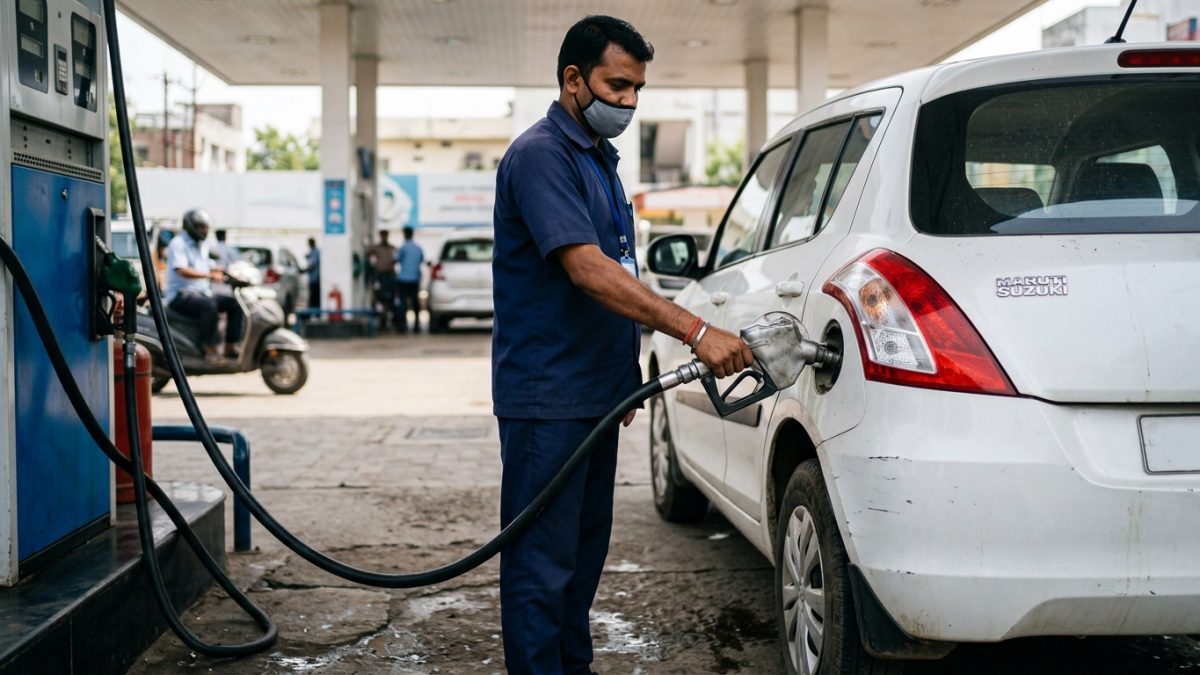
Follow this systematic routine every month to inspect and optimize your two-wheeler fuel system and running gear.
- Check cold tyre pressure: Measure pressures using an accurate gauge early in the morning before riding, adjusting to OEM specifications (typically 28 PSI front, 32 PSI rear).
- Inspect free wheel rotation: Prop the bike on its centre stand and spin both front and rear wheels by hand to confirm there is zero brake drag.
- Adjust clutch lever free play: Loosen the clutch cable adjuster at the handlebar perch until you have 10 mm to 15 mm of free movement before the clutch engages.
- Set drive chain tension: Measure the chain's vertical movement midway between sprockets and adjust chain adjusters until free play sits between 20 mm and 30 mm.
- Clean and lubricate the chain: Degrease the chain links, wipe clean with a rag, and apply high-viscosity gear lube evenly across the inner rollers.
- Inspect the air filter element: Open the airbox, tap out loose dust, blow compressed air from the inside outwards, or replace the filter if dark and saturated with soot.
- Check engine idle speed: Ensure your warm engine idles smoothly around 1,300 to 1,500 RPM without racing or stalling at traffic stops.
If you encounter frequent traffic checks or want to ensure clean compliance while keeping running costs down, remember to check challan status by vehicle number to clear pending penalties promptly.
Maintenance Cost vs Savings Payback Matrix
Basic preventative maintenance pays for itself within weeks by lowering monthly fuel bills. Here is how standard servicing costs balance against fuel savings for an Indian commuter covering 35 kilometres per day.
| Maintenance Task | Typical Cost (₹) | Service Interval | Mileage Gain | Payback Period |
|---|
| Tyre Pressure Check | ₹0 to ₹10 | Weekly | +2 to +4 km/l | Immediate |
| Chain Cleaning & Lube | ₹150 to ₹250 | Every 500–700 km | +1 to +3 km/l | 2 to 3 weeks |
| Air Filter Replacement | ₹150 to ₹350 | Every 10,000–12,000 km | +3 to +6 km/l | Under 1 month |
| Spark Plug Replacement | ₹120 to ₹280 | Every 12,000 km | +1 to +3 km/l | Within 1 month |
| Engine Oil Change | ₹350 to ₹650 | Every 3,000–5,000 km | +2 to +4 km/l | 1 to 2 months |
| Full Service & Brake Tune | ₹650 to ₹1,200 | Every 5,000 km | +5 to +10 km/l | 1.5 to 2.5 months |
Terrain, Climate, and State Variations
Riding conditions differ substantially across Indian regions, directly impacting real-world fuel economy and maintenance frequency.
Hilly States and Incline Management
Riders in mountainous regions such as Himachal Pradesh, Uttarakhand, Meghalaya, and Jammu & Kashmir naturally experience 15 to 25 percent lower fuel efficiency due to continuous low-gear climbing. To conserve petrol, avoid wide-open throttle revving on uphill hairpins, use engine braking sensibly on descents, and keep tyre pressures set 1 PSI above baseline to reduce rolling resistance.
High Summer Heat and Oil Shearing
In hot northern and central plains like Rajasthan, Madhya Pradesh, and Delhi NCR, summer temperatures frequently exceed 42°C. Extreme ambient heat accelerates engine oil thermal breakdown and shearing. Changing oil every 3,000 to 4,000 kilometres during peak summer prevents internal friction build-up and protects fuel economy.
For nationwide driving guidelines, vehicle emission limits, and fuel conservation research, consult the Ministry of Road Transport and Highways portal.
Conclusion
Implementing these practical bike mileage tips will consistently improve your motorcycle or scooter fuel efficiency by 10 to 20 percent. With simple habits like steady cruising speeds, correct tyre pressures, and clean drive chains, you can easily save hundreds of rupees on petrol every month.
Start by checking your cold tyre pressure and inspecting your drive chain today to see an immediate boost in your two-wheeler mileage.