Key Takeaways
- Check expiry instantly online using your vehicle registration number on the official Parivahan PUCC portal.
- Downloading the official Form 59 certificate requires your vehicle registration number and the last 5 digits of your chassis number.
- BS4 and BS6 vehicles receive 12 months validity, whereas pre-BS4 models require renewal every 6 months.
- Driving with an expired pollution certificate risks a penalty of up to Rs 10,000, 3 months jail, and license suspension.
- Electric vehicles are 100% exempt from PUC checks, but hybrid vehicles still require testing.
| Feature | Parivahan PUCC Portal | mParivahan Mobile App | DigiLocker App |
|---|
| Required Details | Vehicle No + Chassis No (Last 5) | Vehicle Registration Number | Vehicle No + Chassis Number |
| Document Download | Yes (Form 59 PDF Slip) | No (Status & Expiry Date Only) | Yes (Digital Issued Document) |
| Service Cost | Free on Portal | Free on App | Free on App |
| Official Source | vahan.parivahan.gov.in/puc/ | MoRTH Mobile Service | National Digital Locker |
To perform a puc certificate check, visit the official Parivahan PUCC portal at vahan.parivahan.gov.in/puc/, enter your vehicle registration number along with the last 5 digits of your chassis number, and view your validity status. You can verify your PUCC validity, download your Form 59 digital slip, and confirm emission compliance in under two minutes.
Keeping your vehicle emission records active is mandatory under Indian law. You can quickly run a RC search to verify vehicle details to check linked expiry dates or monitor pending roadworthiness status before driving across state borders.
How to Check PUC Certificate Online by Vehicle Number
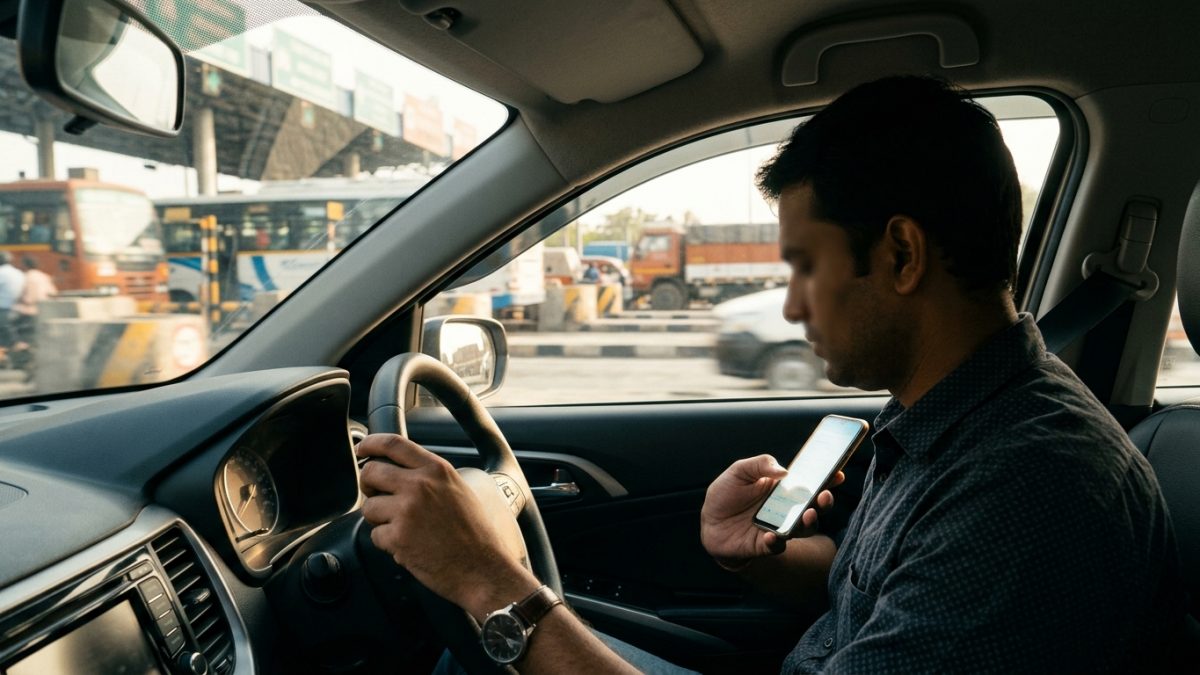
The Ministry of Road Transport and Highways (MoRTH) allows vehicle owners to check their emission status through both quick mobile searches and detailed portal downloads. Depending on whether you have your vehicle registration certificate (RC) handy, choose the method that fits your needs.
Option 1: Quick Expiry Date Check on mParivahan
If you do not have your chassis number ready and only want to confirm your validity date, you can check it using just your vehicle registration number via official government platforms.
- Open the portal or app: Navigate to the official Parivahan Sewa portal and open Informational Services, or launch the mParivahan mobile application.
- Log in securely: Enter your mobile number to complete the one-time password (OTP) verification.
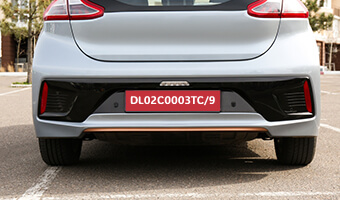
- Submit registration number: Enter your complete vehicle registration number (such as DL01AB1234) in the search field.
- Review the PUCC expiry date: The dashboard will instantly show vehicle specifications alongside the field marked PUCC Upto, indicating your expiry deadline.
Quick Tip: Checking your basic expiry date on mParivahan does not require your chassis number, making it ideal for rapid roadside spot checks.
When you need to carry or present an official emission certificate, follow this method for a complete parivahan puc certificate download:
- Visit the official PUCC portal: Go to vahan.parivahan.gov.in/puc/ on your mobile or desktop browser.
- Open certificate tab: Click on the PUC Certificate option in the main navigation menu.
- Enter registration credentials: Type your complete vehicle registration number and the last 5 characters of your chassis number.
- Verify captcha: Input the security captcha code shown on the screen and select PUC Details.
- Save official document: Review the emissions record, carbon monoxide readings, and automated QR code, then click Print to save your Form 59 document as a PDF.
Browser Warning: Do not open the Parivahan PUCC portal in multiple simultaneous tabs. The session server may lock your request and return a temporary browser error.
PUC Certificate Validity Rules: BS4, BS6, and Pre-BS4
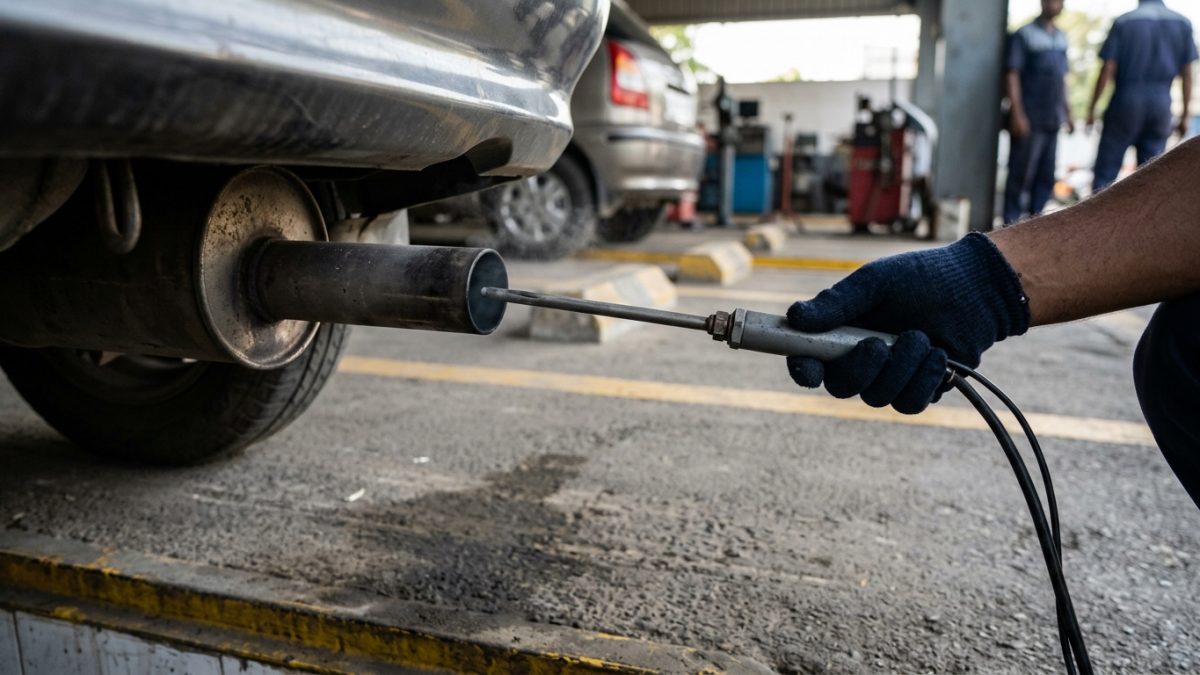
PUC certificate validity rules depend strictly on your vehicle manufacturing standard and initial registration date. Central regulations updated under Rule 115(7) of the Central Motor Vehicles Rules (CMVR), 1989 establish uniform timelines across all Indian states and Union Territories.
| Vehicle Category | Emission Norms | PUC Validity Period | Mandatory Testing Interval |
|---|
| Brand New Vehicles | All Approved Norms | 12 Months (1 Year) | Exempt for first year (Form 22) |
| Modern Private & Commercial | BS-IV and BS-VI | 12 Months (1 Year) | Every 12 months after first year |
| Older Vehicles | Pre-BS IV (BS1, BS2, BS3) | 6 Months | Every 6 months |
| Pure Electric Vehicles | Zero Tailpipe Emission | Exempt | No PUC certificate required |
Brand new vehicles bought from an authorised showroom are automatically covered under the manufacturer roadworthiness certification (Form 22) for the first 12 months from the date of registration. Once that initial year passes, BS4 and BS6 vehicles must undergo a routine tailpipe emission test once every 12 months.
Older vehicles manufactured under BS-I, BS-II, or BS-III standards must undergo testing every 6 months. High Courts, including the Kerala High Court, have clarified that state enforcement bodies cannot cut BS4 or BS6 certificates down to 6 months without central statutory amendments.
Exemption Note: 100% battery electric vehicles (EVs) do not produce tailpipe emissions and are exempt from PUC tests. Strong hybrids and plug-in hybrids running internal combustion engines must carry a valid certificate.
Penalties Under Section 190(2) of the Motor Vehicles Act
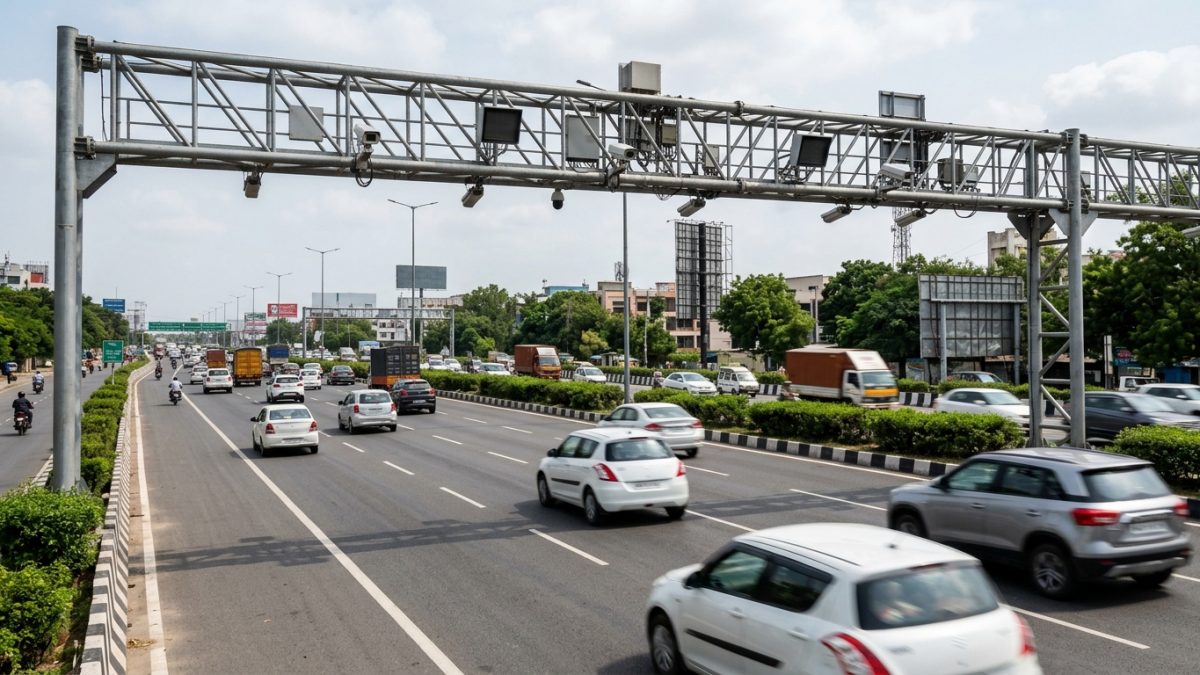
Driving on Indian roads with an expired or missing emission certificate triggers severe legal penalties under Section 190(2) of the Motor Vehicles Act, 1988 (amended under the Motor Vehicles Amendment Act, 2019).
| Offence Level | Statutory Fine | Custodial Sentence | Licence Action |
|---|
| First Offence | Up to Rs 10,000 | Up to 3 months imprisonment | 3-month driving licence disqualification |
| Subsequent Offence | Up to Rs 10,000 | Up to 6 months imprisonment | Mandatory departmental action |
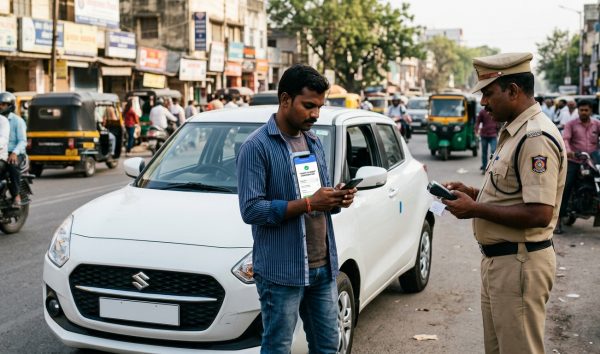
While the central statute sets the maximum penalty at Rs 10,000, compounding provisions can vary by state transport department. Some states offer spot-settlement compounding slips for first-time offenders (such as Rs 1,000 for two-wheelers in Maharashtra). However, in strict corridors like Delhi-NCR, traffic police routinely forward non-compoundable court challans for the full Rs 10,000 fine.
Beyond physical checkpoints, urban centres increasingly use Automatic Number Plate Recognition (ANPR) cameras linked with the central VAHAN database. If you want to check whether an expired certificate triggered a camera fine, check your vehicle status on the e-challan portal or read our guide on traffic fine penalties and compounding rules.
Furthermore, major metropolitan areas reactivate strict "No PUC, No Fuel" protocols during heavy pollution seasons. Under these local enforcement drives, fuel dispensing stations verify live VAHAN emission status before allowing petrol or diesel refills.
Official PUC Testing Charges Across India
Emission testing charges are prescribed by respective state transport departments. Authorised testing kiosks and fuel station testing booths must display these government rates visibly.
| Vehicle Type | Fuel Type | Delhi Transport Rate | General Pan-India Range |
|---|
| Two-Wheelers & Three-Wheelers | Petrol / CNG / LPG | Rs 80 | Rs 60 - Rs 100 |
| Four-Wheelers (Cars/SUVs) | Petrol / CNG / LPG | Rs 110 | Rs 80 - Rs 120 |
| Four-Wheelers (Cars/SUVs) | Diesel | Rs 140 | Rs 100 - Rs 150 |
These charges are standard testing fees and are non-refundable. Depending on state-specific municipal billing rules and petrol pump invoicing setups, Goods and Services Tax (GST) of 18% may be added separately to your final receipt. Always confirm local rates displayed outside the testing booth before testing begins.
Insurance Renewal and Supreme Court Mandate
Under directives issued by the Supreme Court of India in the M.C. Mehta vs. Union of India case, the Insurance Regulatory and Development Authority of India (IRDAI) has mandated that general insurers must not renew annual motor insurance policies without verifying a valid PUC certificate.
When you submit an online or offline motor policy renewal request, insurance portals connect directly to the central VAHAN registry via application programming interfaces (APIs). If your emission status shows expired or unrecorded, the insurance underwriting system will freeze policy renewal until a fresh test is uploaded.
Insurance Risk: Operating an automobile without active insurance coverage compounds your legal risk, leading to additional fines alongside Section 190(2) penalties.
Troubleshooting Parivahan PUC Issues and Errors
Vehicle owners occasionally experience errors when checking or downloading certificates online. Understanding why these errors happen helps you resolve them quickly.
1. "Record Not Found" on the Parivahan Portal
If you recently passed an emission test at an authorised kiosk but the portal returns a missing record error, examine these root causes:
- Typo in registration credentials: Check your printed receipt to verify whether the operator mistyped your vehicle number or chassis characters.
- Unsynced terminal queue: If the testing machine lost internet connectivity during the test, data remains queued locally until the operator reconnects and pushes the upload.
- Unauthorised testing booth: Stations operating outdated standalone software without central National Informatics Centre (NIC) integration cannot submit valid data to VAHAN.
2. Live Webcam Photo Rejection
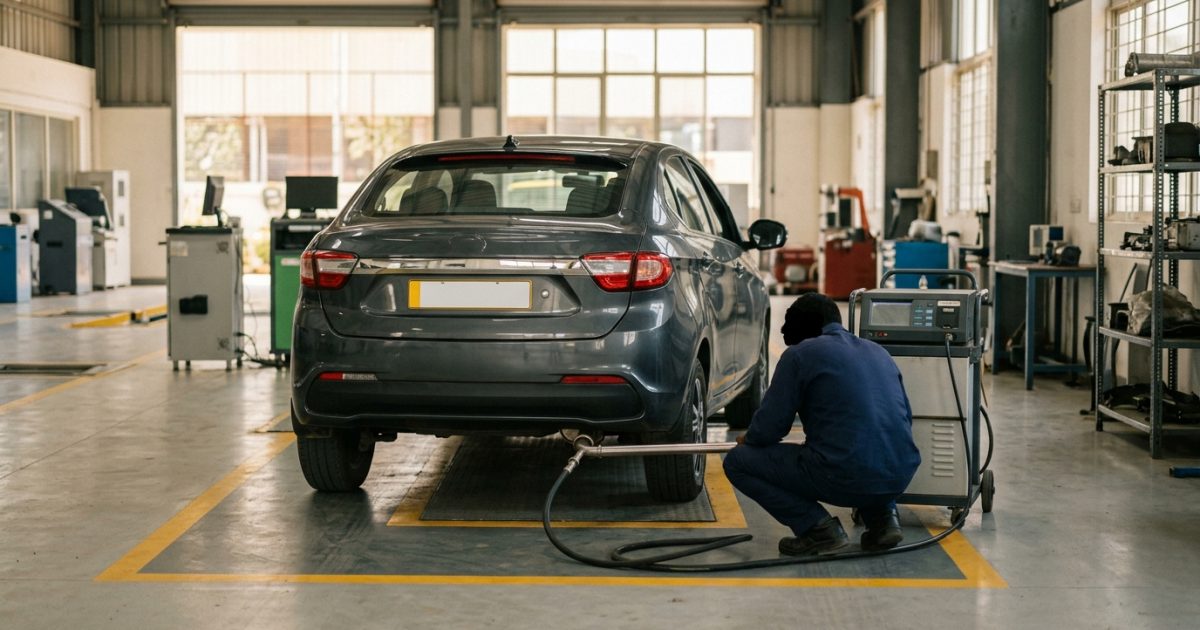
Central Motor Vehicles Rules mandate real-time webcam verification of your vehicle licence plate parked inside the testing bay. If the camera lens is blocked, uncalibrated, or fails to capture the number plate clearly, the central software automatically blocks Form 59 generation.
Steps to Resolve Missing PUC Records
- Examine physical slip: Inspect your paper document for a valid machine-generated PUCC tracking number and an automated QR code.
- Revisit the operator: Request the kiosk technician to review their terminal upload logs and re-push pending records to VAHAN.
- Submit a grievance: If the testing centre fails to resolve the issue, file an official grievance on the Parivahan Sewa portal with your receipt details and testing centre vendor code.
Conclusion
Completing a periodic puc certificate check is the easiest way to avoid severe Rs 10,000 penalties, driving licence disqualification, and insurance renewal roadblocks. Take a moment to verify your vehicle details, monitor renewal dates, and download your Form 59 document online before your next journey.
To confirm that your vehicle emission records, insurance, and roadworthiness credentials are fully up to date, run an instant RC status check on VahanX today.