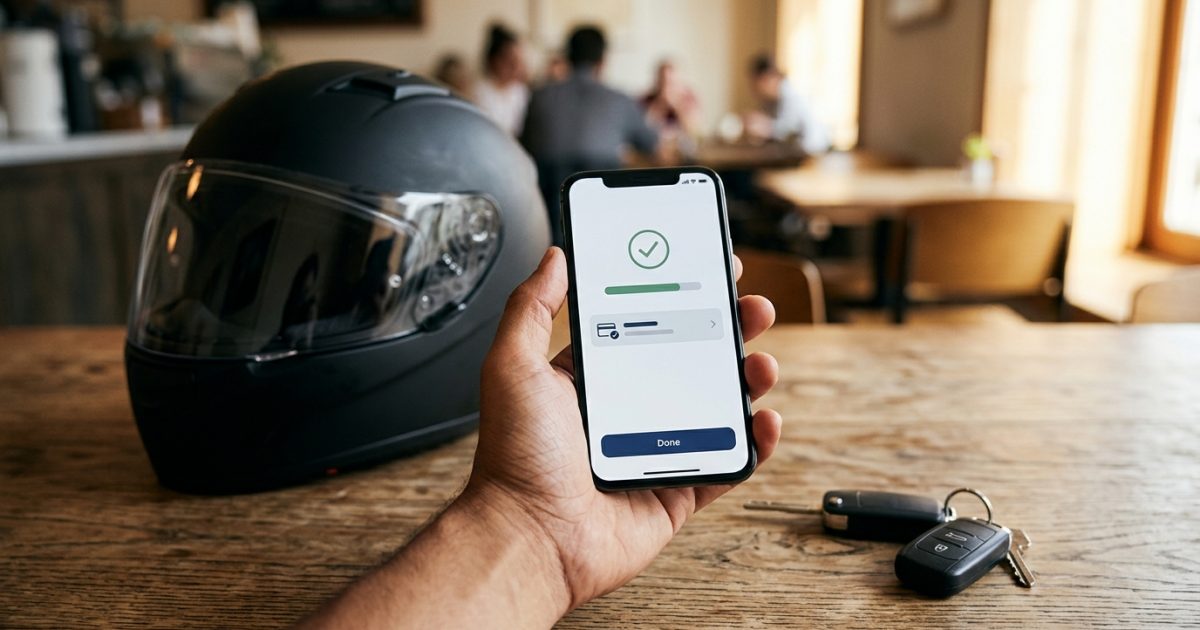
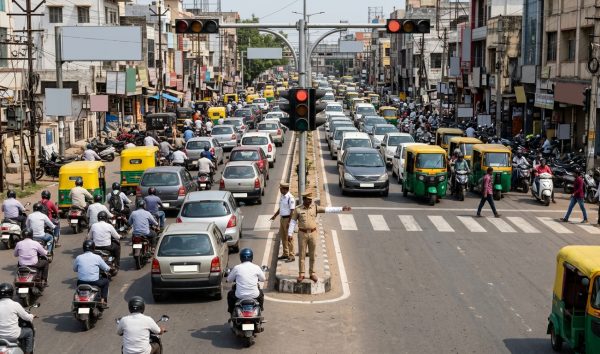
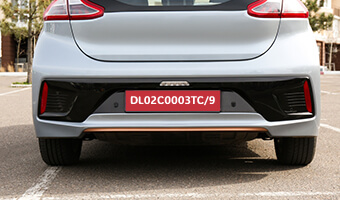
To pay traffic fine online in India, enter your vehicle or challan number on the official Parivahan eChallan portal or search for your state traffic authority inside UPI apps like Google Pay and PhonePe. Verify the pending violation details, complete payment via UPI at zero convenience charge, and immediately save the digital transaction receipt.
Before authorising any penalty payment, you can quickly check challan status by vehicle number on VahanX to verify outstanding notices, offences, and exact fine amounts across national databases.
Key Takeaways
- Settle standard compoundable challans within 60 days to prevent transfer to Virtual Courts.
- Third-party UPI apps levy zero platform convenience fees on direct bank-to-bank challan settlements.
- Parivahan covers most Indian states, while Telangana and localized police branches operate autonomous portals.
- Never install .apk files or click shortened links claiming to hold pending traffic fine evidence.
- Banking reconciliation takes 24 to 72 hours; always use transaction check tools before retrying failed payments.
| Payment Channel | Platform Fee (UPI) | Reconciliation Time | Supported Documents |
|---|
| Parivahan Portal | ₹0 | Instant to 24 Hours | Challan No, Vehicle No + Engine/Chassis, DL |
| Google Pay / PhonePe / Paytm | ₹0 | Real-time to 48 Hours | Vehicle Registration Number, Challan Number |
| Virtual Courts (vcourts.gov.in) | ₹0 | 24 to 72 Hours | Mobile Number, Challan Number, CNR Number |
| Autonomous State Portals | ₹0 | Instant to 24 Hours | Challan Number, Vehicle Number |
How to Pay Traffic Fine Online on the Central Parivahan Portal
The Ministry of Road Transport and Highways (MoRTH) operates the pan-India NextGen eChallan portal in collaboration with the National Informatics Centre (NIC). It serves as the primary system for querying and compounding digital traffic penalties across most Indian states and union territories.
When learning how to pay traffic fine online via the central portal, ensure you have your vehicle registration certificate handy to confirm required chassis or engine details.
- Navigate to the official portal: Open your browser and visit the central portal at https://echallan.parivahan.gov.in.
- Access challan services: From the homepage navigation bar, click on Check Online Services and select Check Challan Status.
- Input your search credentials: Search for your notice using your Challan Number, Driving Licence (DL) Number, or Vehicle Number. If you select Vehicle Number, enter the last 5 digits of your vehicle's Chassis Number or Engine Number for verification.
- Validate the security captcha: Type the displayed Captcha code and tap Get Detail to populate your violation history.
- Inspect offence details: Review the list of active violations, including violation dates, geotagged locations, photographic proof captured by automated ANPR cameras, and the exact penalty in rupees.
- Initiate settlement: Click the Pay Now button located in the action column adjacent to the pending challan.
- Complete mobile OTP authentication: Enter the One-Time Password sent to the mobile number registered with your vehicle in the central Vahan database.
- Select your payment aggregator: Pick a government gateway aggregator such as SBI ePay or Treasury Gateway, then select UPI as your payment method.
- Authorise the transaction: Scan the dynamic QR code or submit your UPI Virtual Payment Address (VPA) and approve the transaction request inside your UPI app.
- Save official documentation: Once redirected, proceed with your pay traffic fine online receipt download to archive the digitally signed confirmation slip.
Always double-check that your browser redirects back to the official parivahan.gov.in domain before closing the window, ensuring the gateway handshake updates your challan ledger instantly.
Pay Traffic Fine Through UPI: Google Pay, PhonePe, and Paytm
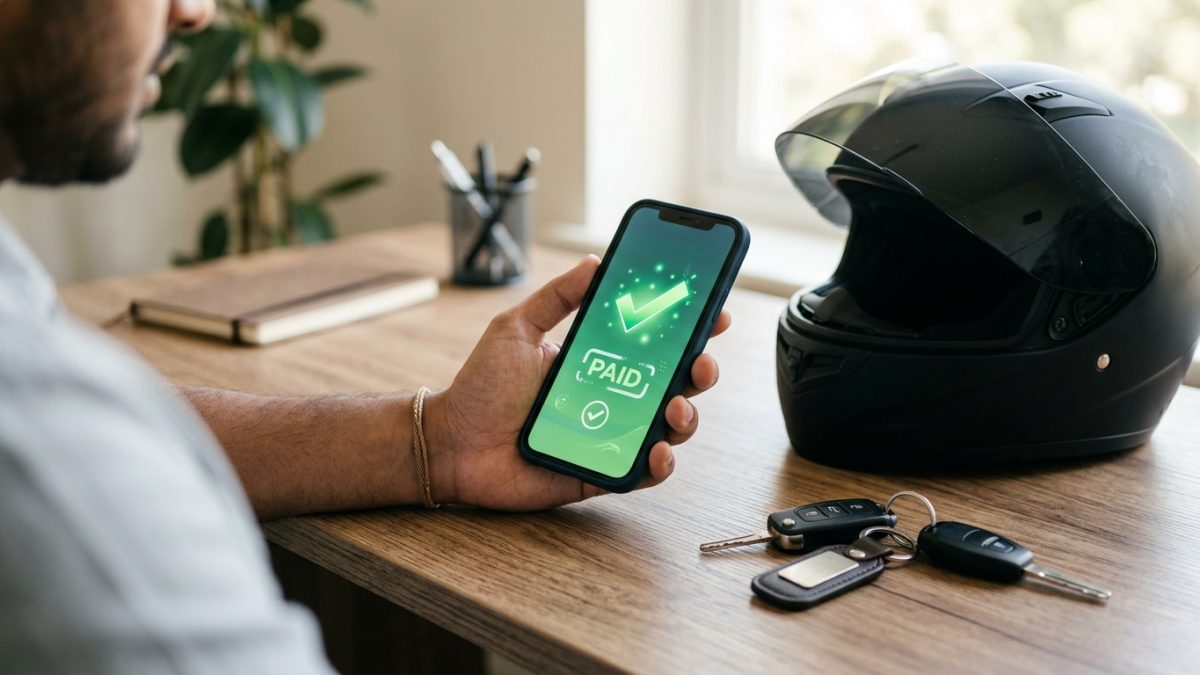
Enforcement agencies across India integrate directly with the Bharat Bill Payment System (BBPS / Bharat Connect) operated by NPCI. This interoperability allows vehicle owners to pay traffic fine through upi directly using everyday mobile payment applications without visiting government websites.
Whether you choose PhonePe, Paytm, or a google pay traffic fine payment, these third-party platforms query the central traffic enforcement database in real time using your registration number.
1. Google Pay (GPay) Settlement Steps
- Open bill payments: Launch Google Pay, scroll to the Bills & recharges section, and tap on Pay bills.
- Find challan services: Type Traffic Challan into the search bar or locate it under the transit and municipal utilities menu.
- Select issuing authority: Pick the relevant traffic agency (such as Delhi Traffic Police, Uttar Pradesh Traffic Police, Karnataka Traffic Police, or Maharashtra Traffic Police).
- Link your vehicle: Enter your vehicle registration number or unique challan reference number.
- Review the fetched bill: Inspect the registered owner details, offence description, and fine amount fetched through Bharat Connect.
- Authenticate the payment: Tap Proceed to Pay, select your linked bank account, enter your UPI PIN, and download your digital payment receipt.
2. PhonePe Challan Settlement Steps
Using phonepe pay traffic challan services is equally straightforward and connects directly to state police databases:
- Open utility bills: Open the PhonePe app and tap See All in the Recharge & Pay Bills hub.
- Select challan category: Under the Utilities or Transit section, choose the Challan icon.
- Choose state department: Select the jurisdictional police department that issued the ticket.
- Provide registration number: Enter your vehicle number (e.g., DL01AB1234) and confirm.
- Authorise fine payment: Review the outstanding dues, tap Pay Bill, select your preferred bank account, and enter your UPI PIN to complete the clearance.
3. Paytm Challan Payment Steps
- Locate challan section: Open Paytm and search for Challan using the top search bar, or navigate through Bills & Payments.
- Choose the biller: Tap your state traffic authority from the list of registered government billers.
- Fetch outstanding dues: Provide your vehicle registration number or challan number and click Proceed.
- Complete UPI payment: Choose Paytm UPI or your linked bank account to transfer the penalty amount at zero platform fee.
Paying via UPI on third-party apps carries a ₹0 convenience fee for government billers, whereas using credit cards or select commercial wallets may attract gateway charges up to 1.8% plus GST.
Settle Fines on State Police Portals vs Central Systems
While the NextGen Parivahan system handles penalties across most jurisdictions, certain states and metropolitan commissionerates manage dedicated digital enforcement platforms alongside national systems. Knowing which pay traffic fine state police portal applies to your location prevents confusion.
You can learn more about jurisdiction boundaries in our detailed comparison of traffic challan check online: state police vs Parivahan.
| State / Agency | Primary Digital Portal | Settlement Ecosystem | Special Jurisdiction Notes |
|---|
| Delhi, UP, Maharashtra, Rajasthan | echallan.parivahan.gov.in | Central NextGen Parivahan | Full integration with national Vahan and Virtual Courts |
| Telangana (Hyderabad, Cyberabad) | echallan.tspolice.gov.in | TS Police e-Challan Portal | Municipal camera notices must be cleared on state portal or TS BBPS |
| Andhra Pradesh | echallan.appolice.gov.in | AP Police Traffic Portal | Local commissionerate fines process through AP online portal |
| Karnataka (Bangalore City) | ksp.karnataka.gov.in / B-TRAC | Karnataka State Police / BBPS | Local ANPR violations sync to city portal and BBPS billers |
If you commit an offence in Hyderabad or Cyberabad, the notice originates on the Telangana Police system. While some national highway violations mirror to Parivahan, local municipal traffic fines generated within city limits must be settled directly through the Telangana portal (https://echallan.tspolice.gov.in) or localized BBPS billers.
Similarly, autonomous camera networks managed by Bangalore Traffic Police (BTP) push automated notices through city-specific portals, though records subsequently synchronize with national databases.
Settling Challans in Virtual Courts (vcourts.gov.in)
Not every traffic penalty can be settled on consumer UPI apps or the standard Parivahan website. Uncontested, compoundable challans that exceed the statutory settlement window (typically 60 to 90 days from issuance, or 45 days in jurisdictions like Delhi) transfer automatically to the judicial system.
These legal notices are handled by the Virtual Court system (https://vcourts.gov.in), administered under the Supreme Court of India's e-Courts initiative. Furthermore, serious non-compoundable offences—such as driving under the influence of alcohol or driving without a valid driving licence leading to vehicle impoundment—cannot be compounded online and require magistrate adjudication.
- Visit the Virtual Courts portal: Go to the official judiciary portal at https://vcourts.gov.in.
- Select your state and jurisdiction: Choose your designated state court (such as Delhi - Virtual Court (Traffic) or Maharashtra - Virtual Court).
- Search the judicial record: Search by Mobile Number, Challan Number, CNR Number, or Party/Vehicle Name.
- Examine proposed adjudication: View the summary of the traffic offence alongside the fine proposed by the presiding magistrate.
- Plead guilty and settle: Select the option I agree to pay proposed fine / Plead Guilty to accept the judicial penalty without physical court appearances.
- Verify via mobile OTP: Authenticate the plea using the One-Time Password sent to your verified mobile number.
- Process payment: Complete the transaction through the integrated state treasury gateway (e-GRAS or e-Treasury) using UPI, Net Banking, or a Debit Card.
- Save disposal confirmation: Print and store the digitally issued judicial disposal receipt confirming case closure.
Challans marked with the status "Sent to Court" or "Transferred to Virtual Court" are locked on Parivahan and UPI applications; they can only be paid via the Virtual Courts portal or in person before a magistrate.
Traffic Fine Payment Online Verification and Receipt Download
Completing a transaction on your phone does not always mean your record updates instantly. Performing a proper traffic fine payment online verification ensures that your vehicle record reflects clear status across national enforcement servers.
If money was deducted from your bank account but the challan continues to show an unpaid balance, our guide on traffic challan payment failed refund guide covers detailed bank dispute resolution.
| Challan Display Status | Operational Meaning | Action Required by Vehicle Owner |
|---|
| Paid / Disposed | Payment successfully reconciled with treasury | Download receipt; no further action needed |
| Pending / Initiated | Bank gateway handshake interrupted or processing | Check pending status tool; wait up to 72 hours |
| Sent to Court | Statutory 60-day compounding deadline expired | Log in to vcourts.gov.in to plead guilty and pay |
| Payment Failed | Transaction declined by bank or gateway | Retry transaction; deducted funds return within 3-7 days |
Verifying Pending Transactions and Downloading Receipts
- Access payment verification: Visit the official verification page at https://echallan.parivahan.gov.in and select Check Pending Transaction under the online services menu.
- Submit challan details: Enter your challan number or vehicle number to initiate a live query against payment gateway aggregators like SBI ePay.
- Force status refresh: The system verifies bank clearance logs and updates the status to either Success or Failed.
- Obtain your clearance slip: If marked successful, click the receipt icon to execute your pay traffic fine online receipt download. Retain a digital copy on your phone to present during roadside police inspections.
- Raise a reconciliation grievance: If the challan remains unpaid after 72 hours despite bank deductions, use the Raise Grievance tab on the Parivahan portal under the category Fees Paid But Challan Is Showing Unpaid, attaching your bank UTR number.
How to Spot Fake Challan SMS and APK Scams
Cybercriminals frequently exploit vehicle owners' anxiety over traffic notices by dispatching fraudulent payment demands via SMS and WhatsApp messages. Interacting with these phishing attempts can result in unauthorized bank withdrawals and personal device compromise.
Understanding how legitimate traffic authorities communicate helps you distinguish genuine notices from sophisticated fraud attempts.
| Feature | Legitimate Traffic Challan Alert | Fraudulent Phishing Attempt |
|---|
| Sender ID / Header | Govt transactional headers (e.g., VK-PARIVH, TD-ECHALN, DL-TRFUPD) | Standard 10-digit consumer mobile numbers or international numbers |
| Website URL | Strictly ends with .gov.in or .nic.in | Lookalike domains (.com, .online, .site) or shortened URLs |
| Attachment Type | No attachments; only encrypted text and official web links | Malicious Android Package Kits (.apk files) |
| Verification Demand | Requires chassis/engine verification on portal | Demands direct debit/credit card entry immediately |
The Dangerous Challan APK Scam
A prevalent scam involves messages instructing drivers to tap a link to view camera evidence, downloading a file labelled RTO_Challan.apk, eChallan.apk, or TrafficNotice.apk. Transport authorities and state police branches never distribute mobile application packages via messaging channels.
When installed, these malicious Trojans obtain background administrative and SMS permissions, quietly intercept two-factor authentication OTPs from your banking providers, and siphon funds from linked bank accounts. If you encounter any fraudulent payment link or APK file, report it immediately to the National Cyber Crime Reporting Portal at https://cybercrime.gov.in or dial the national cyber helpline at 1930.
Consequences of Ignoring Unpaid Traffic Challans
Postponing your traffic fine settlement leads to severe administrative and legal restrictions under the Motor Vehicles Act. Ignoring automated camera notices does not make them disappear; it compounds administrative penalties over time.
- Vahan Database Blacklisting: Uncleared notices lead to your vehicle being flagged as "Challan Pending" or blacklisted in the national Vahan registry. This flag blocks vehicle fitness renewals, state transfers, ownership transfers, and national permit issuance until all dues clear.
- Legal Summons and Non-Bailable Warrants: Failing to settle a notice within the 60-day window triggers transfer to Virtual Courts. If the judicial notice is ignored, the court issues physical summons under Section 206 of the Motor Vehicles Act, which can escalate to bailable warrants and driving licence suspension.
- Vehicle Registration Complications: You can verify if your vehicle profile has unresolved administrative restrictions by checking RC details and ownership status on VahanX.
- Insurance Settlement Delays: Persistent violations logged on shared databases can raise risk profiles during comprehensive insurance renewals and complicate third-party claim settlements.
Conclusion
Taking a few minutes to pay traffic fine online protects you against legal escalation, vehicle blacklisting, and Virtual Court summonses. Always verify your pending violations directly through official government portals or trusted BBPS-enabled UPI apps like Google Pay and PhonePe to ensure every rupee is credited securely.
Before you hit the road, conduct a quick periodic review to check challan status by vehicle number on VahanX, clear outstanding penalties promptly, and safeguard your vehicle records from administrative holds.