The Ministry of Road Transport and Highways (MoRTH) introduced significant new RTO rules to streamline transport administration across India. These updates link unpaid FASTag toll dues directly to VAHAN services like vehicle fitness and ownership transfers under the Central Motor Vehicles (Second Amendment) Rules, while formalising driving test exemptions through Accredited Driver Training Centres (ADTCs).
Before scheduling an RTO appointment or initiating a vehicle transfer, drivers must ensure their vehicle has zero pending violations. You can immediately check your vehicle e-challan status online to prevent unexpected application blocks on the central Parivahan portal.
Key Takeaways
- Unpaid FASTag toll dues now freeze vehicle fitness renewal and Form 28 NOC issuance.
- Private ADTC driving schools issue Form 5B, which waives the RTO driving skill test.
- Form 28 Part-III for inter-state transfers can now be issued electronically via Parivahan.
- Digital DL and RC on mParivahan and DigiLocker carry full legal validity under Rule 139.
- Underage driving attracts a ₹25,000 fine, 3-year jail term, and 1-year vehicle registration suspension.
| Regulatory Area | Governing Rule | Key Requirement | Statutory Portal |
|---|
| Toll Clearance | Rule 2(ze) / Rule 55 | Clear all highway toll dues before transfer or fitness | parivahan.gov.in |
| Driving Test Waiver | Rules 31B to 31J | Complete accredited training for Form 5B exemption | sarathi.parivahan.gov.in |
| Inter-State NOC | Rule 58 (Form 28) | Apply within 45 days of transfer; electronic Part-III | parivahan.gov.in/en/forms-all |
| Digital Documents | Rule 139 CMVR | Original digital pull via DigiLocker or mParivahan | DigiLocker / mParivahan |
Central Motor Vehicle Rules Amendment: The 2026 Toll Dues Mandate
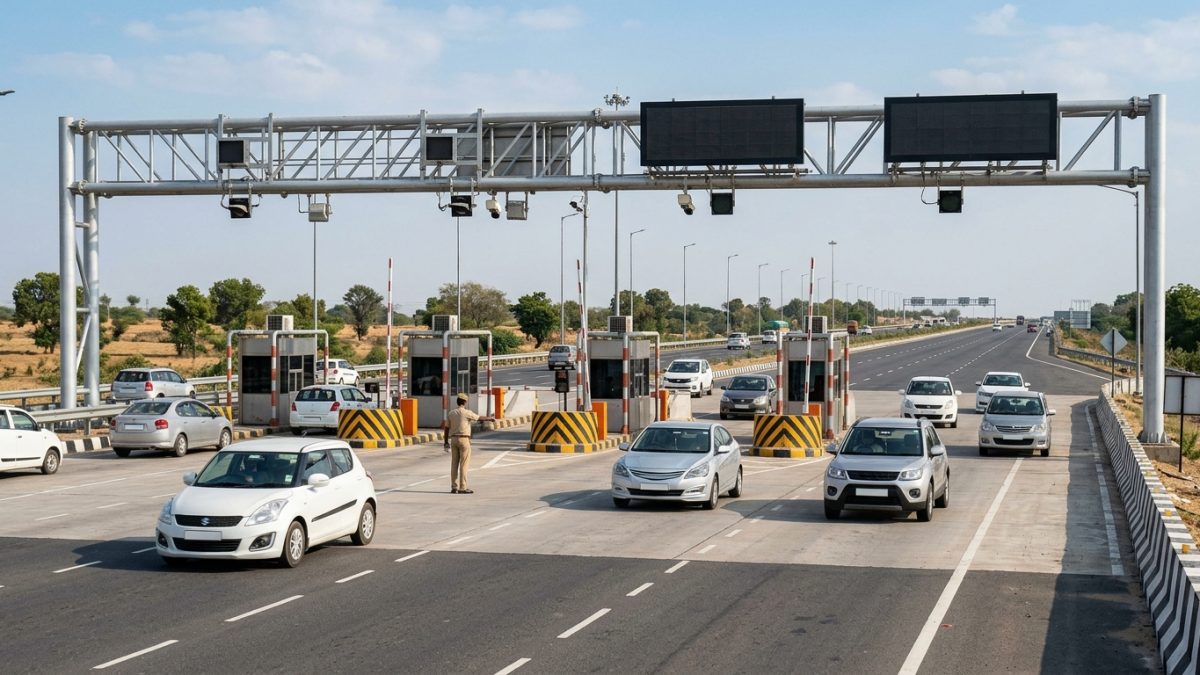
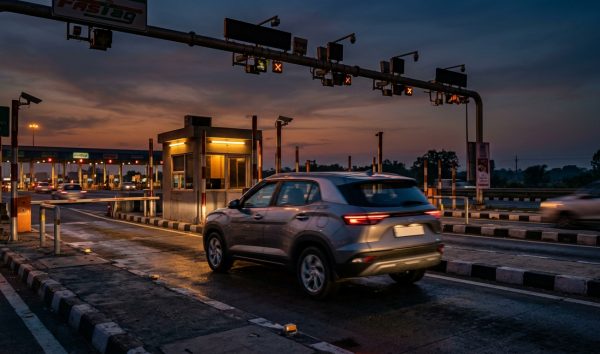
The Central Motor Vehicles (Second Amendment) Rules, 2026 came into force on 14 January 2026 after being notified via Gazette Notification G.S.R. 28(E). MoRTH publicly highlighted these updates via a PIB release on 20 January 2026 to prepare national highways for Multi-Lane Free Flow (MLFF) barrier-less tolling.
This amendment creates an enforceable legal framework to eliminate toll evasion. Under Rule 2(ze), the government inserted a formal definition for an "Unpaid User Fee". This covers any toll fee payable for using a National Highway stretch where electronic systems logged passage, but collection failed under Section 7 of the National Highways Act, 1956.
Warning: Outstanding highway toll charges logged by automated ANPR cameras or FASTag readers will automatically lock your vehicle record in the national VAHAN database.
Under these new rto rules 2026, three core services are completely blocked on VAHAN whenever unpaid toll fees remain active on an automobile:
- Rule 55(2)(v): Issuance of a No Objection Certificate (NOC) and transfer of vehicle ownership cannot proceed until all toll dues are settled.
- Rule 62: The mandatory Certificate of Fitness (FC) cannot be issued or renewed.
- Rule 90(7): Commercial operators are barred from obtaining or renewing National Permits.
RTO Vehicle Fitness Rules and Commercial Fleet Compliance
Commercial vehicle owners face direct operational impacts under the revised rto vehicle fitness rules. Because barrier-less tolling relies on automated number plate recognition (ANPR) and FASTag wallets, vehicle fitness renewals now execute an automated background sweep against the National Electronic Toll Collection (NETC) records.
If a commercial or transport vehicle carries outstanding highway toll dues, the Parivahan portal will reject the fitness inspection slot booking. The owner must clear all pending user fees through the toll operator or banking portal before the system opens the inspection calendar.
| Vehicle Category | Statutory Central Fee | Delay Penalty | Core Prerequisite |
|---|
| Three-Wheeler / LMV | ₹600 | ₹50 per day past expiry | Zero unpaid toll balance |
| Heavy Motor Vehicle (HMV) | ₹1,000 | ₹50 per day past expiry | Zero unpaid toll balance |
| National Permit Renewal | Rule 90 Schedule | Permit withheld | All highway dues settled |
A daily default fine of ₹50 accumulates continuously past the fitness expiry date under Rule 81 of the Central Motor Vehicles Rules (CMVR), 1989. Fleet owners must verify toll statements monthly to avoid compounding delay penalties on commercial fitness certificates.
RTO New Rules for Driving Licence: ADTC vs RTO Test
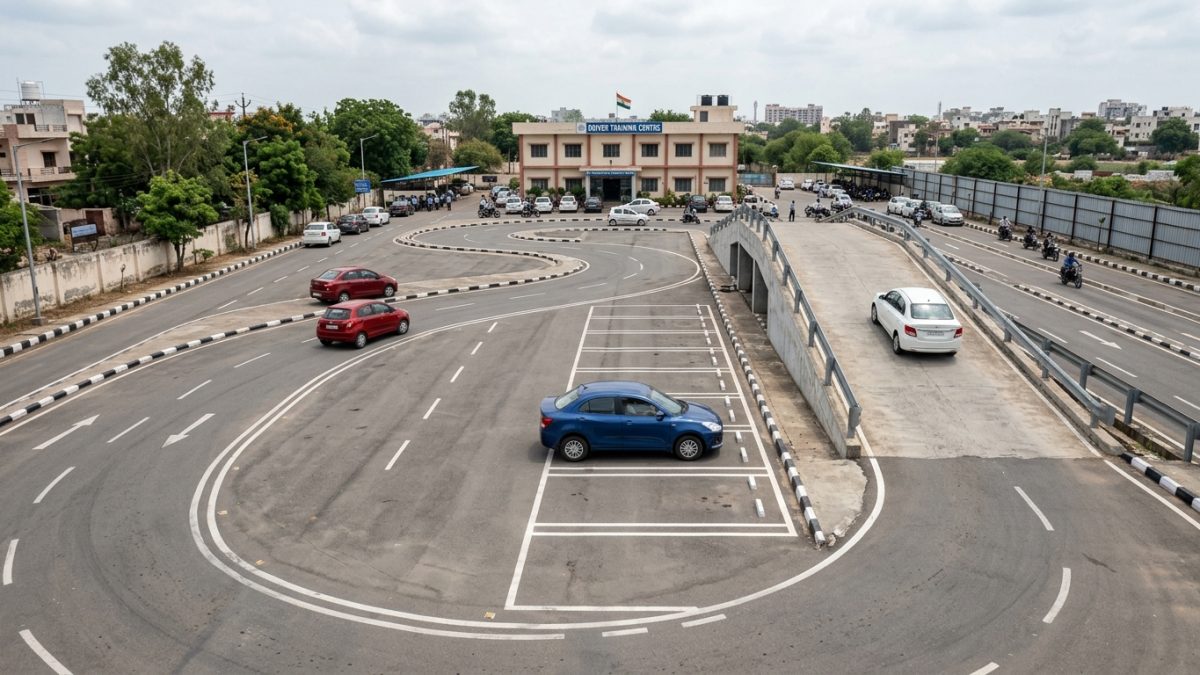
Confusion often surrounds the rto new rules for driving licence applications. Misleading viral social media posts regularly claim that practical driving tests have been abolished across all regional transport offices in India.
On 1 June 2024, MoRTH issued a formal PIB clarification refuting these claims. The physical driving skill test remains fully mandatory at government RTO tracks, with one specific legal exception established under Rules 31B to 31J of the CMVR.
Rule 24 Traditional Driving Schools vs Rule 31E ADTCs
Applicants must understand the distinction between standard neighborhood driving motor schools and government-accredited centres when considering a driving licence test at private centre rto pathways:
- Traditional Driving Schools (Rule 24): These driving schools issue Form 5 upon completion. Form 5 does not exempt the applicant from taking the practical driving test at the RTO track.
- Accredited Driver Training Centres (Rule 31E): These high-grade facilities are certified by the State Transport Authority and issue Form 5B. Under the proviso to Rule 15(2), Form 5B waives the practical driving test at the RTO.
Common Mistake: Enrolling in a regular private driving school will not bypass the RTO driving track test. Only accredited ADTC facilities issuing Form 5B provide a test waiver.
Even with an ADTC Form 5B certificate, the statutory authority to approve and issue a Driving Licence remains exclusively with the designated RTO Licensing Officer. Drivers can verify their credential updates through the driving licence check online portal once processed.
ADTC Infrastructure and Mandatory Curriculum Hours
To qualify as an accredited centre, an ADTC must operate specialized infrastructure. This includes a minimum of 2 acres of land in plain regions (1 acre in hilly areas), motion-based driving simulators, biometric attendance systems, and standardized testing tracks covering parallel parking, gradients, and reversing manoeuvres.
| Course Type | Total Hours | Practical Training | Theory Classes | Course Duration |
|---|
| Light Motor Vehicle (LMV) | 29 Hours | 21 Hours (includes night/rain) | 8 Hours | 4 Weeks |
| Heavy Motor Vehicle (HMV) | 38 Hours | 27 Hours (highway & maneuvers) | 11 Hours | 6 Weeks |
Because setting up an ADTC requires heavy capital investment, accredited centres remain limited in several states. Applicants without access to a certified ADTC must book an RTO driving slot on sarathi.parivahan.gov.in and pass the practical evaluation under the new rto rules for driving test.

The central motor vehicle rules amendment updates how vehicles are transferred between buyers and sellers. Revisions to Rule 58 modernise the No Objection Certificate (NOC) process through an upgraded Form 28 framework.
Form 28 now contains a mandatory disclosure section concerning pending toll plaza fee demands. Under the amended rule, Part-III of Form 28 can be processed, verified, and granted electronically through Parivahan, removing the requirement for physical clearance stamps in contactless jurisdictions.
Deadline: An inter-state ownership transfer must be submitted to the destination RTO within 45 days of obtaining the NOC to avoid automatic monthly penalties.
To transfer vehicle ownership smoothly under current new rto guidelines in india, follow this statutory procedure:
- Clear Outstanding Liabilities: Confirm that the vehicle has zero pending traffic fines and no unpaid user fees logged on national highway toll systems.
- Initiate Online Service: Navigate to the Parivahan portal, select vehicle services, and choose Transfer of Ownership using the vehicle registration number.
- Complete Aadhaar Authentication: Complete Aadhaar e-KYC via OTP authentication for both seller and buyer in supported faceless jurisdictions.
- Generate Statutory Forms: Download and sign Form 29 (Notice of Transfer) and Form 30 (Application for Ownership Transfer).
- Process Form 28 for Inter-State Deals: If the vehicle moves across state borders, apply for the Form 28 NOC. Check our comprehensive guide on vehicle NOC online application for step-by-step documentation.
- Submit Supporting Documents: Upload clear digital copies of the Registration Certificate (RC), valid insurance certificate, and Pollution Under Control (PUC) certificate.
- Pay the Statutory Fee: Pay the prescribed transfer charges online under Rule 81 to generate the application receipt.
Before signing transfer forms or handing over delivery, buyers can run an online check to verify vehicle owner details to confirm the chassis number, tax validity, and current hypothecation records.
CMVR Statutory Fees and Penalties Breakdown
All driver licensing and vehicle registration transactions operate under standard centralized fees prescribed in Rule 32 and Rule 81 of the CMVR. State transport departments may add minor service charges (typically ₹100 to ₹200) for smart cards or automated testing track maintenance.
| Service Description | CMVR Reference | Statutory Central Fee | Delay Penalty Terms |
|---|
| Learner's Licence (LL) | Rule 32 | ₹150 per class + ₹50 test fee | ₹50 for repeat test |
| Permanent Driving Licence Test | Rule 32 | ₹300 per class of vehicle | Payable at slot booking |
| Driving Licence Issuance | Rule 32 | ₹200 (smart card extra ₹200) | Standard non-commercial |
| Driving Licence Renewal | Rule 32 | ₹200 | After 1 year grace: ₹300 + ₹1,000/year |
| Bike Ownership Transfer | Rule 81 | ₹150 (50% of ₹300 fee) | Delayed NOC: ₹300 per month |
| Car/LMV Ownership Transfer | Rule 81 | ₹300 (50% of ₹600 fee) | Delayed NOC: ₹500 per month |
| No Objection Certificate (NOC) | Rule 81 / Form 28 | ₹100 (state charges apply) | Delayed submission penalty applies |
| Fitness Certificate (Commercial) | Rule 81 | ₹600 to ₹1,000 | ₹50 per day past expiry date |
Buyers who delay submitting an inter-state NOC past the 45-day window face recurring monthly penalties of ₹300 for two-wheelers and ₹500 for private cars until the ownership transfer is recorded.
Underage Driving Penalties Under Section 199A
Enforcement agencies apply strict penalties under Section 199A of the Motor Vehicles Act to curb juvenile driving offences. The legal liability falls heavily on the vehicle owner or minor's legal guardian rather than just the juvenile driver.
If a minor operates a motor vehicle on public roads, the statutory repercussions include:
- ₹25,000 Fine: A mandatory compounding fine levied directly on the parent, guardian, or vehicle owner.
- Imprisonment: The registered owner or parent faces a prison sentence of up to 3 years.
- Vehicle Registration Cancellation: The vehicle's Registration Certificate (RC) is suspended or cancelled for a period of 12 months (1 year).
- Licence Ban Until Age 25: The juvenile is legally disqualified from applying for a Learner's Licence or permanent Driving Licence until reaching 25 years of age.
- Juvenile Justice Proceedings: The minor faces court proceedings under the Juvenile Justice (Care and Protection of Children) Act, 2015.
- Owner Liability Under Section 180: Allowing an unauthorised individual to drive attracts an extra fine of ₹5,000 and up to 3 months imprisonment.
Digital DL and RC Legal Rules on mParivahan and DigiLocker
Motorists frequently ask whether carrying physical cards remains mandatory during roadside enforcement. Under Rule 139 of the CMVR, 1989 (amended via Notification G.S.R. 1081(E) on 2 November 2018), digital certificates possess legal equivalence to physical documents.
This framework is backed by Section 4 and Section 2(r) of the Information Technology Act, 2000, along with MoRTH Standard Operating Procedure No. RT-11036/64/2017-MVL issued on 17 December 2018.
Tip: Always pull your documents live inside the DigiLocker or mParivahan application. Traffic police officers are legally mandated to accept these digitally signed QR-code records.
Understanding which digital formats are legally accepted prevents unnecessary spot fines:
- Legally Valid: Digital Driving Licences and Registration Certificates fetched directly into the official mParivahan or DigiLocker apps. These tools generate cryptographic records verified against national SARATHI and VAHAN registers.
- Strictly Invalid: Smartphone gallery photographs, scanned PDF copies, screenshots, or files sent via WhatsApp or Telegram do not constitute legal electronic documents under Rule 139. Driving with these formats can result in citations for driving without valid documents.
- Digital Impound Protocol: If an officer must impound a licence for severe offences such as dangerous or drunken driving, physical confiscation is not required. Enforcement officers record the action on the e-Challan terminal, marking the DL or RC as "Suspended" or "Impounded" directly in the central database.
Practical Bottlenecks and State Variations
While parivahan new rules establish uniform digital standards, drivers must navigate certain operational variations across states:
State-Level Digital Adoption
States such as Delhi, Maharashtra, Karnataka, and Uttar Pradesh operate comprehensive faceless transport workflows. Ownership transfers, duplicate RC applications, and address changes execute purely through Aadhaar-based OTP verification without visiting an RTO counter. In contrast, several semi-online states require vehicle owners to print completed application forms and submit them physically alongside chassis pencil prints at the local office.
FASTag Toll Reconciliation Disputes
With toll compliance directly tied to VAHAN services under the latest amendments, hardware misreads or delayed toll-wallet settlements can temporarily flag an "unpaid user fee". MoRTH and NHAI are integrating dispute resolution mechanisms within the VAHAN portal so vehicle owners can contest incorrect ANPR captures without having transport applications permanently blocked.
Drivers can check active licences and identify your local licensing jurisdiction using our RTO office directory before booking in-person verification appointments.
Conclusion
Staying updated with the new rto rules ensures that driving licence applications, vehicle fitness renewals, and ownership transfers proceed without administrative hurdles or severe fines. Whether you are transferring a used car or enrolling in driver training, clearing pending dues and utilizing accredited platforms saves valuable time.
Before you initiate any transfer or renewal on the Parivahan portal, take a moment to check your pending challans to make sure your vehicle record remains completely clean.