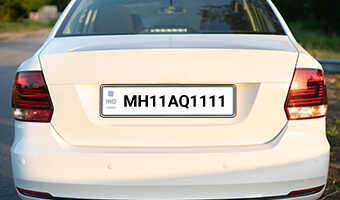
A vehicle NOC online application allows motor vehicle owners to secure a No Objection Certificate from their parent RTO through the Parivahan Sewa portal. Under Section 48 of the Motor Vehicles Act, 1988, this certificate confirms that your vehicle has no outstanding traffic fines, tax arrears, or police cases before relocating or selling it across state borders. Before starting, verify your active registration details using an online RC search to prevent mismatch errors.
Key Takeaways
- Mandatory under Section 48 when relocating a vehicle to another state for more than 12 months.
- Form 28 is submitted in triplicate, or quadruplicate if the vehicle has an active bank loan.
- Statutory fee under Rule 81 is ₹100, and the issued NOC remains valid for 6 months.
- Late submission at the destination RTO attracts a fine of ₹300 to ₹500 per month.
- Approved digital NOCs can be downloaded directly from the Vahan portal in participating states.
| Feature | Details |
|---|
| Governing Law | Motor Vehicles Act, 1988 (Sections 47, 48 & 50) |
| Statutory Application Form | Form 28 (CMVR Rule 54 & 58) |
| Application Platform | Parivahan Sewa portal (Vahan Citizen Services) |
| Standard Statutory Fee | ₹100 (plus state service charges up to ₹100) |
| NOC Validity Period | 6 months from date of issue |
| Late Submission Penalty | ₹300/month (two-wheelers), ₹500/month (cars/LMV) |
When Do You Need an RTO NOC for Your Vehicle?
An RTO No Objection Certificate (NOC) establishes that your home state transport department has no reservations against transferring your vehicle to a new jurisdiction. As of September 2026, statutory provisions clearly distinguish when an NOC is required from when it is exempt.
1. Mandatory Scenarios
- Interstate Relocation Over 12 Months: Under Section 47 of the Motor Vehicles Act, 1988, if you keep a vehicle in another state for more than 12 months, you must assign it a new registration mark. The new RTO will not register your vehicle without an NOC from the original registering authority.
- Interstate Ownership Transfer: If you sell your car or bike to a buyer living in another state or Union Territory, an NOC for vehicle transfer to another state is required under Section 50 before ownership can change hands.
- Inter-District Relocation within State: Certain states require a Clearance Certificate (CC) or Form 28 NOC when moving commercial or transport vehicles across local RTO zones.
- Delhi-NCR Scrappage & NGT Regulations: Diesel vehicles older than 10 years and petrol vehicles older than 15 years cannot run in Delhi-NCR. Owners must obtain an NOC to sell or move these vehicles to designated non-polluted districts in other states before their permits expire.
2. Situations Where an NOC is Not Required
- Short-Term Visits Below 12 Months: You can drive your vehicle in any Indian state for up to 12 months under its original number plate, provided you carry an active RC, valid motor insurance, and a PUC certificate.
- BH Series (Bharat Series) Registrations: Vehicles registered under the BH series do not need an NOC or re-registration when the owner moves between states. Road tax is paid bi-yearly via the Vahan portal.
- Local Address Updates: Moving your residence within the jurisdiction of the same RTO only requires Form 33 for an address update, not an NOC.
Warning: Always clear your pending challans before applying. An open e-challan will immediately halt your NOC application on the Vahan system.

Form 28 serves as the formal application and grant of the No Objection Certificate under Rules 54 and 58 of the Central Motor Vehicles Rules (CMVR), 1989. You must assemble these papers before starting your application:
- Form 28: Three filled and signed copies if the vehicle is owned outright; four copies if the vehicle has an active bank loan or hypothecation.
- Pencil Chassis Imprint: A physical pencil rubbing of the chassis number taken directly from the vehicle frame onto each Form 28 copy.
- Registration Certificate (RC): Certified copy or original Smart Card, depending on whether your RTO operates on a physical or faceless model.
- Valid Motor Insurance: An active insurance policy document verified against the central database.
- Pollution Under Control (PUC) Certificate: An active PUCC logged in the central Parivahan repository.
- Road Tax Clearance: Proof that lifetime or annual motor vehicle road tax is paid up to date in the home state.
- Financier NOC / Form 35: Bank NOC permitting transfer if a loan is active, or Form 35 if the loan has been closed.
- Challan Clearance: Proof that all fines are cleared. You can verify this using an online challan search on Parivahan.
- Commercial Transport Papers: Commercial vehicles must also present a valid fitness certificate, permit surrender clearance, and passenger or goods tax payment proof.
Tip: If you are planning to purchase an interstate vehicle, perform a comprehensive second-hand car check to confirm there are no hidden hypothecations or court challans on the registration.
How to Apply for Vehicle NOC Online on Parivahan Sewa

Vehicle owners can complete their vehicle noc online apply process via the official MoRTH Vahan Citizen Services platform. Follow this step-by-step walkthrough:
- Access the Portal: Open the official Ministry of Road Transport and Highways portal at parivahan.gov.in.
- Select Online Services: Hover your cursor over Online Services on the main menu and select Vehicle Related Services.
- Choose Your State and RTO: Pick your registered home State and RTO from the dropdown menu, or enter your vehicle registration number and select Proceed. If you are unsure of your home authority, check your RTO office details before proceeding.
- Select the NOC Service: From the list of citizen services, click on Application for No Objection Certificate (NOC).
- Authenticate Vehicle Details: Enter the last 5 digits of your chassis number and click Validate. The portal will generate an OTP and send it to your RC-linked mobile number. Enter the OTP to confirm your identity.
- Fill Destination Details: In the application form, select the State To (destination state) and Office To (destination RTO). Select the purpose as either Change of Address or Transfer of Ownership. Enter the new owner’s full name and address if you are selling the vehicle.
- Verify Insurance and Tax Data: The system automatically loads your vehicle insurance record. Review the validity dates and update them if an active policy does not show.
- Upload Supporting Documents: If your state provides faceless processing, upload clear, scanned, self-attested PDF copies of your RC, PUC, insurance, and signed Form 28 with the pencil chassis imprint.
- Pay the Statutory Fee: Proceed to the integrated payment gateway and pay the prescribed fee using UPI, debit card, credit card, or net banking.
- Print Documents: Download and print the payment receipt and the auto-filled Form 28 application copies for your records or physical submission.
Common Mistake: Entering the incorrect destination RTO code will prevent the receiving transport authority from fetching your record electronically, requiring a formal cancellation.
Faceless RTO Services vs Physical Submission States
While the initial application is filed online through Parivahan Sewa, the completion workflow depends on your home state. Some transport departments operate fully contactless services, while others require a counter visit.
| Processing Route | Operating States | Submission Requirements | Physical Visit |
|---|
| Faceless / Contactless | Delhi, Uttar Pradesh, Maharashtra (select RTOs) | Aadhaar OTP authentication; upload scanned Form 28 and chassis rubbing | Not required; processed digitally |
| Semi-Online | Karnataka, Punjab, Telangana, Goa, Haryana | Apply online, pay fee, then submit physical Form 28 with chassis pencil print and original RC | Required at home RTO counter or via Speed Post |
In faceless jurisdictions, transport departments verify criminal litigation, theft records, and NCRB clearance via backend digital integrations. In semi-online states, vehicle owners or authorized representatives must submit physical Form 28 copies to the RTO counter so officers can manually inspect the chassis pencil rubbing against the original database record.
RTO NOC Fees and Validity Rules
The standard fee for an NOC is established nationwide under the Central Motor Vehicles Rules, 1989. However, local administrative and postal handling surcharges vary slightly across states.
| Vehicle Category | Statutory Fee (Rule 81) | State User / Postal Charges | Late Submission Fine |
|---|
| Two-Wheelers (Motorcycles / Scooters) | ₹100 | ₹20 – ₹100 | ₹300 per month of delay |
| Light Motor Vehicles (Cars / SUVs) | ₹100 | ₹20 – ₹100 | ₹500 per month of delay |
| Commercial / Transport Vehicles | ₹100 | ₹50 – ₹150 | ₹500 per month of delay |
Under CMVR provisions, an issued vehicle NOC has a strict validity period of 6 months from the date of release. You must register the vehicle or complete the transfer of ownership at the destination RTO before this validity window expires.
If you fail to submit your NOC at the destination RTO within 6 months, the Note under Serial No. 6, Rule 81 of CMVR imposes a mandatory monthly penalty: ₹300 per month for two-wheelers and ₹500 per month for four-wheelers and commercial vehicles.
Vehicle NOC Online Download: Step-by-Step Guide

In states that have activated digital certificate downloads on Vahan, you do not need to wait in line at an RTO dispatch counter. Once your application is reviewed and approved, follow this method to save your certificate:
- Open the Vahan Portal: Go to parivahan.gov.in and select Vehicle Related Services under Online Services.
- Select Your Parent State: Pick the state and home RTO where your vehicle was initially registered.
- Go to Document Downloads: Locate the Download Document dropdown option in the top navigation bar.
- Choose NOC Print: Click on Print No Objection Certificate (NOC) / No Dues.
- Submit Identifiers: Enter your Vehicle Registration Number and the Application Number printed on your payment receipt.
- Download the PDF: Select Submit to display the digitally signed, QR-coded NOC document. Save the PDF or print three hard copies for the destination RTO.
If your local RTO does not yet issue digital QR-coded NOCs, you must collect the signed, physically stamped Form 28 copies directly from the RTO dispatch window.
What to Do After Receiving Your Vehicle NOC
Securing your NOC is only the first stage of relocating or transferring a vehicle. Once the certificate is issued, your parent RTO marks the vehicle’s status on the Vahan network as NOC Issued.
- Complete Re-Registration: Submit an application for assignment of a new registration mark using Form 27 at the destination RTO within 6 months. Include Form 20, the original NOC, your original RC, insurance, PUC, and proof of address in the new state.
- Pay State Road Tax: The destination state will charge lifetime road tax calculated on a pro-rata basis, derived from the vehicle’s age and original purchase invoice.
- Claim Road Tax Refund: Once the new state RC is issued, apply for a pro-rata road tax refund from your original RTO under that state’s Motor Vehicles Taxation Act. Submit copies of the new RC, old RC, tax receipts, and the original NOC.
Before filing for destination re-registration, check your status via RC search to confirm your home state has successfully marked the record as cleared.
How to Cancel an Unused NOC (Non-Utilization Certificate)
If your relocation plans fall through or a buyer cancels an interstate vehicle purchase, your issued NOC does not automatically lapse after 6 months. Because the vehicle remains locked as NOC Issued on Vahan, you cannot sell it locally or renew fitness certificates without formally cancelling the certificate.
- Obtain a Non-Utilization Certificate (NUC): Visit the destination RTO that was named on your original Form 28. Submit an application requesting a Non-Utilization Certificate (also called a Non-Migration Certificate), confirming the vehicle was never registered or transferred in their jurisdiction.
- Submit Papers to Parent RTO: Take the issued NUC back to your home RTO along with all original Form 28 copies, the original RC, and an owner affidavit stating the vehicle was not involved in any traffic violations, accidents, or criminal cases during the interim.
- Pay Cancellation Fee: Pay the standard administrative cancellation fee (roughly ₹100 plus local user charges) at the home RTO cash counter or online portal.
- Status Restoration: The parent RTO verifies the NUC, revokes the NOC flag, and restores your vehicle to Active status in the central Vahan registry.
Conclusion
Securing a vehicle noc online through Parivahan Sewa simplifies transferring or relocating your car across state borders without administrative complications. Complete your Form 28 application accurately, settle any outstanding dues in advance, and keep track of the 6-month validity deadline to prevent monthly penalties.
Before you begin your online submission, confirm your active hypothecation and registration details with our RC search tool so your transfer proceeds smoothly.