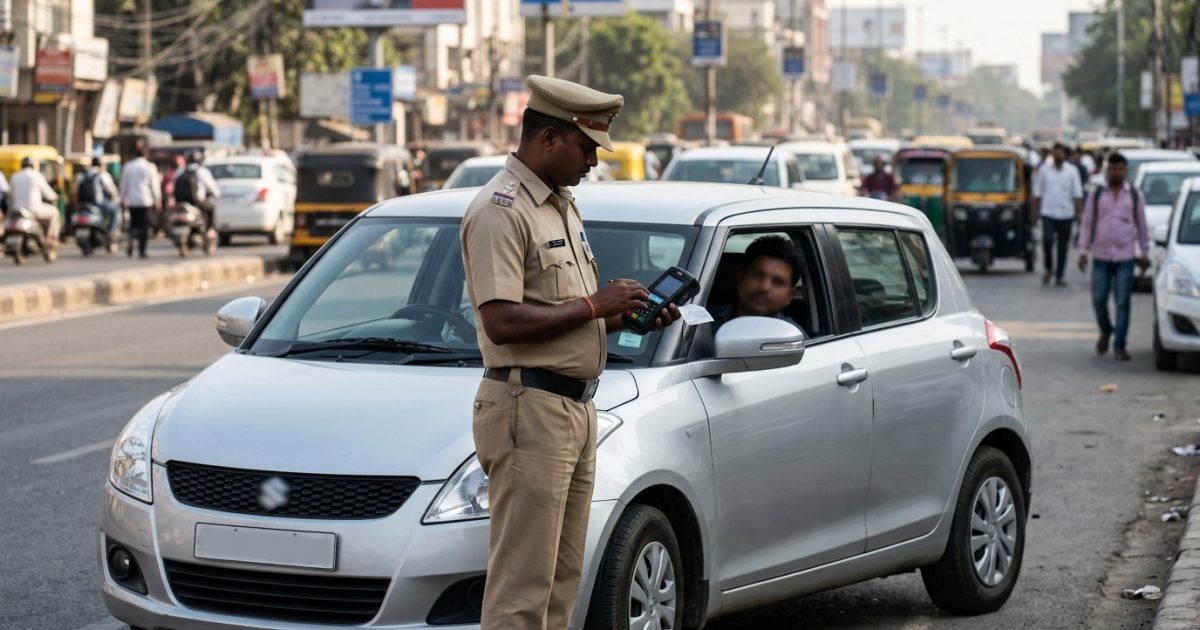
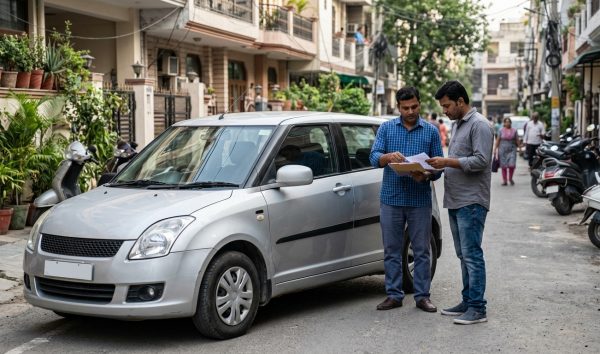
A fake challan check allows vehicle owners to distinguish fraudulent payment alerts from authentic government traffic penalties. If you receive an SMS or WhatsApp alert demanding fine payment, never click embedded links or install files. Instead, verify your vehicle registration and chassis number directly on the official Parivahan portal or check pending fines through VahanX challan search.
Key Takeaways
- Government traffic authorities never send Android APK files or direct payment links via WhatsApp.
- Authentic challan alerts originate from registered government sender headers like TD-ECHALN or VM-ECHALN, not 10-digit mobile numbers.
- Genuine verification requires pairing your vehicle number with the last five digits of your chassis or engine number.
- Report financial losses immediately to the National Cyber Crime Helpline at 1930 within the golden hour.
| Verification Parameter | Fake Challan Scam Alert | Genuine Traffic Fine Notice |
|---|
| Delivery Channel | WhatsApp messages or SMS from 10-digit personal mobile numbers | Official telecom bulk SMS headers (such as TD-ECHALN, VM-ECHALN) |
| Website URL | Lookalike domains ending in .xyz, .info, .in, or short links | Official government domain strictly ending in echallan.parivahan.gov.in |
| File Attachments | Prompts to download .apk files (e.g., RTO Challan.apk) | No executable attachments or app downloads sent via message |
| Authentication Method | Shows a direct fine amount without vehicle credentials | Requires Vehicle Number plus last 5 digits of Chassis/Engine number |
Across India, cybercriminals systematically impersonate the Ministry of Road Transport and Highways (MoRTH), State Transport Authorities, and city traffic commissionerates. As of October 2026, state cyber cells report a steep rise in deceptive notifications designed to drain bank accounts.
Warning: Traffic police departments never distribute executable APK files or third-party UPI payment links over WhatsApp to clear traffic violations.
The Anatomy of Modern e-Challan Cyber Frauds
Cybercrime syndicates operate through two dangerous delivery vectors. Both rely on urgency and fear to make vehicle owners bypass basic scrutiny.
Malicious Android APK Droppers
Fraudsters distribute malicious Android Application Package files through WhatsApp and SMS. These files often carry names like RTO Challan.apk, e-Challan Your Vahan.apk, or mParivahan.apk.
Once sideloaded on an Android phone, the malware requests high-risk accessibility, SMS, and notification permissions. It suppresses incoming banking alerts, silently intercepts one-time passwords (OTPs), and grants remote command-and-control access to the fraudster.
Advisories issued by the Kerala Police and the Telangana Cyber Security Bureau (TGCSB) emphasize that victims often discover their bank accounts drained overnight while asleep. This occurs because the background malware routes OTPs straight to criminal servers without triggering visual ringtones.
Cloned Phishing Portals
The second vector uses deceptive browser pages that visually clone the official MoRTH interface. Cyber intelligence researchers have identified dozens of typosquatted domains ending in extensions such as .xyz, .info, and .net.
These cloned portals present fake challan forms designed to capture debit card numbers, credit card expiry dates, CVVs, and net banking credentials. Major financial losses have been recorded nationwide, including ₹2 lakh in Lucknow, ₹2.49 lakh in Delhi, ₹2.85 lakh in Goa, and ₹5.42 lakh in Panchkula, all triggered by an initial bogus fine alert of ₹500 to ₹1,000.
How to Know if Challan is Real or Fake: Critical Red Flags
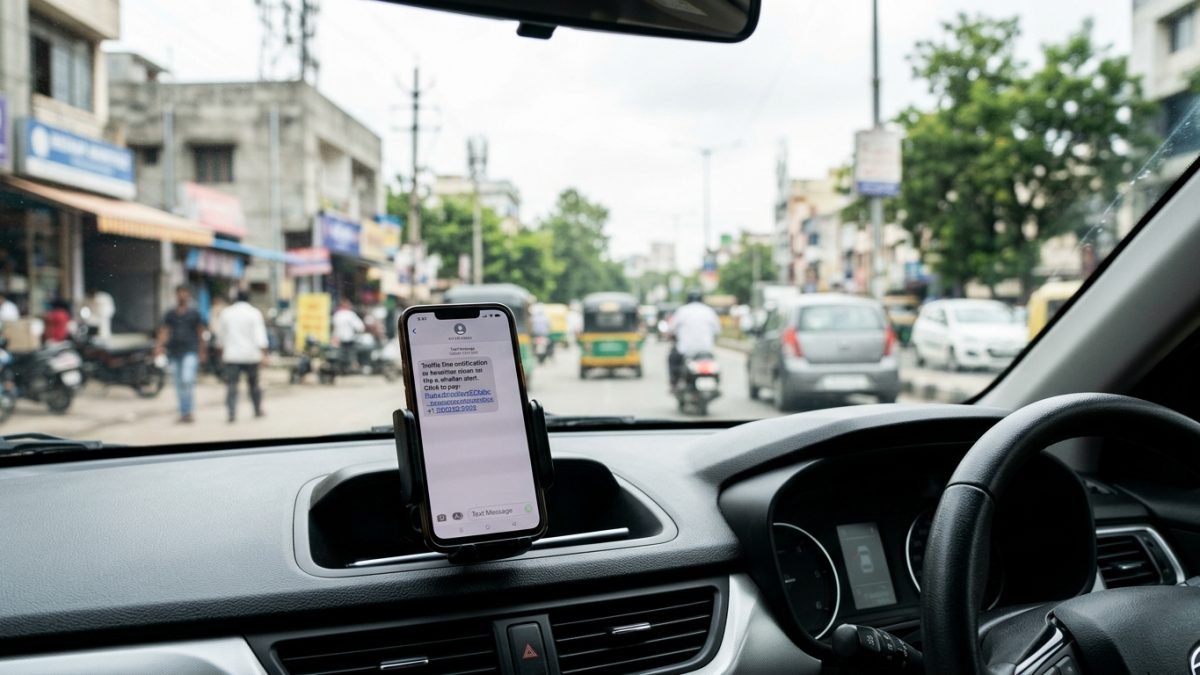
Learning how to check fake traffic challan notices protects your finances. Before opening any link, inspect the communication for these specific technical discrepancies.
| Assessment Point | Scam Red Flag | Legitimate Government Standard |
|---|
| Sender Identification | Standard 10-digit numbers (+91 9xxxxxxxxx, +91 7xxxxxxxxx) | TRAI DLT-registered headers (e.g., TD-ECHALN, AD-PARIVH) |
| Domain Name | echallan-parivahan.in, rto-challan.xyz, or bit.ly links | https://echallan.parivahan.gov.in/ |
| Violation Evidence | Generic text warning without photograph or location | High-resolution camera photo, GPS location, and section details |
| Legal Timelines | Threatens immediate vehicle seizure within 12 to 24 hours | Statutory timeline (typically 60 days before virtual court transfer) |
Sender Identification and DLT Headers
Genuine government alerts comply with Telecom Regulatory Authority of India (TRAI) Distributed Ledger Technology (DLT) regulations. They arrive with registered alphabetic headers such as TD-ECHALN, VM-ECHALN, or state-specific headers like ECHALN-TG.
If you receive a message from a standard 10-digit mobile number claiming to be the traffic police, treat it as fraudulent. Scammers often use virtual international numbers or spoofed SIM cards to send bulk alerts.
Deceptive URL Structures
Scammers rely on URL variations that mimic authentic government addresses. They register deceptive subdomains such as echallan.parivahan-gov.in or use URL shortening services like bit.ly to obscure the destination.
An authentic online portal link will always terminate with the official government domain: echallan.parivahan.gov.in. Any link directing you to a generic commercial extension is a phishing trap.
Tip: An authentic traffic fine message never demands payment within 12 hours under threat of instant arrest or licence cancellation.
Absence of Dual-Factor Vehicle Verification
Phishing portals deliberately skip validation layers. They often display a pre-filled fine of ₹500 or ₹1,000 regardless of the vehicle number entered.
The central government portal requires mandatory dual verification. You cannot view or pay a fine without entering your Challan Number or pairing your Registration Number with the last five digits of your Chassis or Engine Number.
To cross-reference your registration details, you can confirm your official vehicle records using the VahanX RC search tool before accessing payment portals.
How to Conduct a Fake Challan Check Online via Parivahan
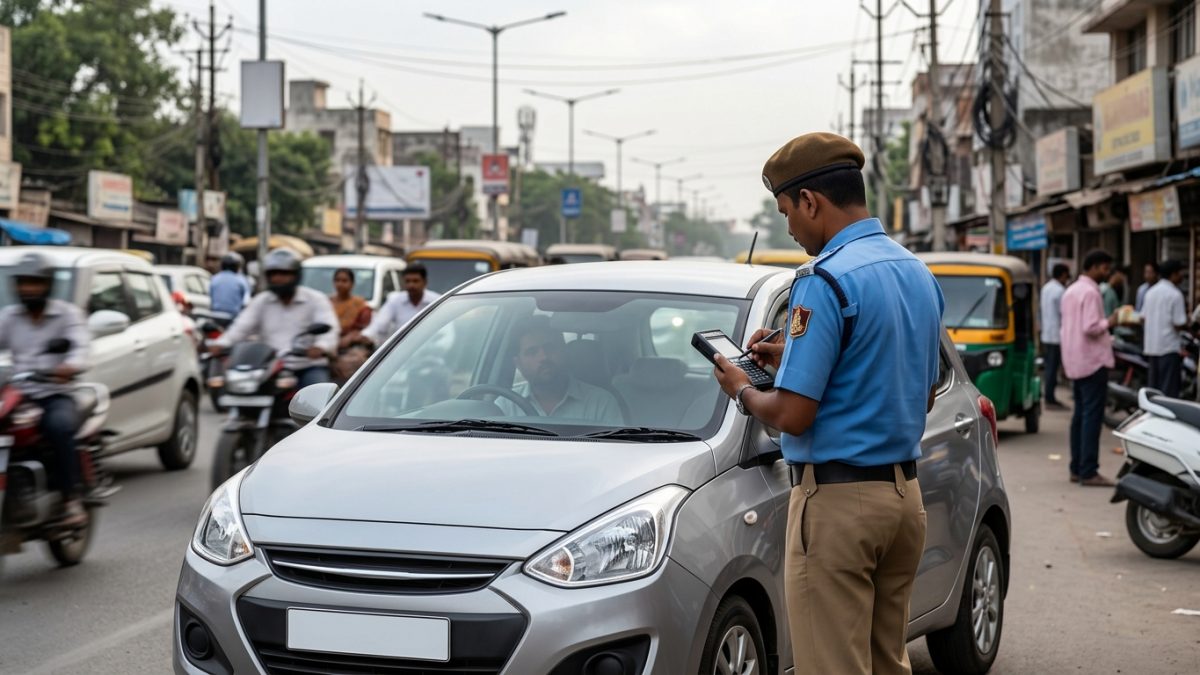
Bypassing incoming messages entirely is the safest approach to check challan authenticity online. Follow this standardized procedure to verify traffic challan by vehicle number directly on the official central repository.
- Ignore incoming message links: Close the SMS or WhatsApp alert without clicking preview cards, hyperlinks, or file attachments.
- Open your browser manually: Type the official address https://echallan.parivahan.gov.in/ directly into your browser address bar.
- Access challan status: Click on Check Online Services from the top navigation menu and select Check Challan Status.
- Enter your vehicle credentials: Select Vehicle Number and enter your registration digits. Enter the last 5 characters of your Chassis Number or Engine Number, followed by the on-screen Captcha code.
- Review recorded violation details: If a legitimate fine exists, the portal displays the offence, legal section under the Motor Vehicles Act, 1988, date, timestamp, and camera enforcement photographs.
- Complete official settlement: Click Pay Now, complete mobile OTP authentication, and pay through verified state treasury gateways or official multi-bank portals.
If the portal returns a Challan Not Found status, the message you received was an outright scam attempt. You do not owe any penalty.
Common Mistake: Entering debit card CVVs on links received via SMS without checking whether the portal domain ends in .gov.in.
State Police Portals and Municipal Cross-Referencing
While MoRTH operates the central nationwide database, certain states maintain specialized city traffic enforcement portals. Genuine fines can be cross-referenced across these platforms without exposing your credentials to fraud.
| State or Union Territory | Official Enforcement Portal | Legitimate Communication Identifier |
|---|
| All India (Central Core) | https://echallan.parivahan.gov.in/ | DLT Headers (e.g., TD-ECHALN, VM-ECHALN) |
| Telangana | https://echallan.tspolice.gov.in/ | ECHALN-TG Header |
| Delhi | https://traffic.delhipolice.gov.in/ | Delhi Police Official Communications |
| Judicial Virtual Courts | https://vcourts.gov.in/ | Official e-Courts SMS Notifications |
In states like Uttar Pradesh, Maharashtra, Rajasthan, and Odisha, traffic enforcement flows directly into the central Parivahan infrastructure. The Odisha State Transport Authority has registered formal criminal cases against phishing rings attempting to clone these systems.
In Delhi, notices are reconciled between the Delhi Traffic Police portal and the central Virtual Courts platform. If you want to review settlement procedures and statutory timelines, read our guide on online traffic challan payments.
If your violation has been escalated to judicial proceedings, drivers can check their legal status directly using their driving licence credentials via VahanX DL search.
Why Do Scammers Have My Real Vehicle Number?
Many drivers fall for an rto fake challan message alert because the message quotes their actual car or two-wheeler registration mark. This detail leads motorists to believe the alert must be genuine.
Vehicle registration numbers are publicly visible assets displayed on every vehicle in traffic, parking lots, and housing societies. Scammers compile registration numbers through public visual collection, automated scrapers, and external registry leaks.
Once a list of vehicle numbers is compiled, automated software inserts them into pre-written message templates. The presence of your correct vehicle number does not prove that a traffic fine is real.
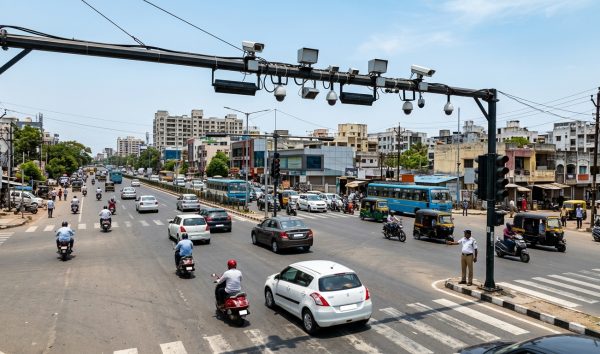
A genuine violation notice links your vehicle registration with backend chassis data and provides photographic proof captured by Automated Number Plate Recognition (ANPR) or Speed Violation Detection (SVD) cameras.
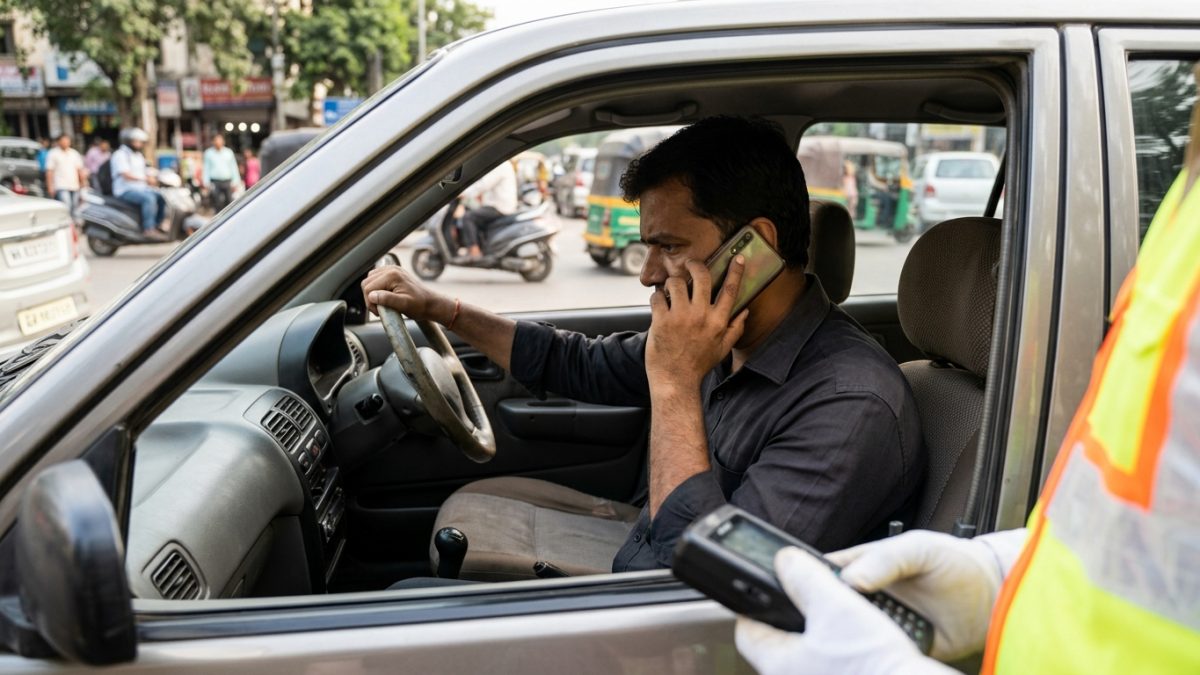
If you interacted with a fake echallan parivahan link or transferred funds, immediate containment is vital. Act swiftly to prevent escalating financial loss.
- Call 1930 immediately: Dial the National Cyber Crime Helpline at 1930. Quick reporting during the initial golden hour enables cyber authorities to initiate transaction freezing across banking switches.
- Block payment cards and UPI: Contact your bank to freeze compromised cards, block net banking access, and de-link your UPI profiles.
- Isolate infected smartphones: If you installed an APK file, immediately enable Flight Mode and disconnect from Wi-Fi to stop unauthorized data transmission.
- Perform a factory reset: Malicious APK droppers establish deep root persistence. Backup essential personal media and perform a full factory reset of your phone.
- File an incident report: Submit evidence, transaction IDs, phone numbers, and website links on the National Cyber Crime Reporting Portal.
- Report suspicious communications: Lodge the offending mobile number on the Department of Telecommunications Chakshu portal to help authorities suspend fraudulent SIM cards.
Drivers looking to settle genuine traffic citations safely can also consult our comprehensive walkthrough on how to pay traffic fines online via UPI.
Safe Practices for Every Indian Vehicle Owner
Protecting yourself from the traffic challan whatsapp scam requires defensive habits. Treat every unsolicited financial communication with caution.
Never install mobile applications sent via chat apps or third-party links. If you prefer monitoring violations on a smartphone, download only the official mParivahan app directly from Google Play Store or Apple App Store.
Perform a routine e-challan status check every month directly on Parivahan or verified automotive platforms. Regular checks ensure you catch genuine fines early while keeping you safe from cyber scams.
Conclusion
Performing a routine fake challan check ensures you never surrender sensitive banking credentials or download malware over a fabricated traffic violation. Always verify your pending fines directly through official transport channels rather than clicking links inside unverified alerts.
Before paying any traffic penalty, cross-check your vehicle details independently on VahanX challan search or the official Parivahan repository to verify that the fine and violation evidence are real.