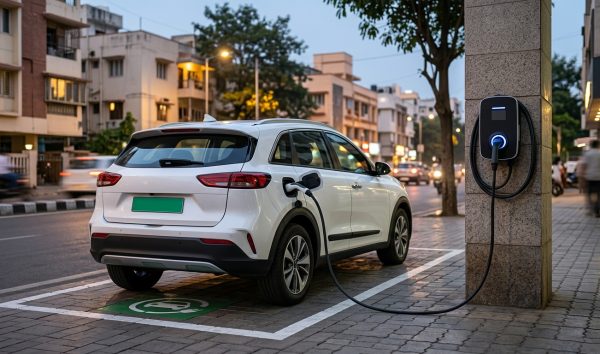
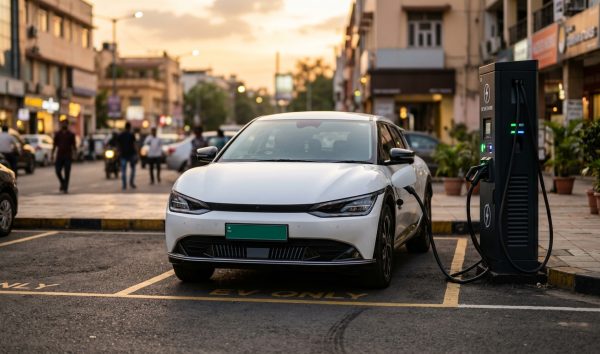
Key Takeaways
- Road tax on electric vehicles is a State Subject; exemptions vary by state jurisdiction.
- Central rules completely waive Registration Certificate (RC) issuance fees under CMVR Rule 81 nationwide.
- Karnataka introduced tiered road tax (5% to 10%) on electric passenger cars in April 2026.
- Uttar Pradesh and Madhya Pradesh ended their automatic blanket road tax exemptions for all EV cars.
- Tamil Nadu, Telangana, and Maharashtra continue to provide a 100% road tax waiver.
An ev road tax exemption waives or reduces the statutory lifetime motor vehicle tax charged when registering an electric vehicle. While the Central Government waives registration certificate fees nationwide, road tax rules depend entirely on individual state governments. Buyers can verify vehicle tax and registration history by checking RC details online before paying on-road invoices.
| Feature | Central Government Rule | State Government Rules |
|---|
| Applicable Levy | RC Issue and Renewal Fee | Lifetime Motor Vehicle / Road Tax |
| Statutory Baseline | Rule 81, CMVR 1989 | Entry 57, List II, Seventh Schedule |
| National Fee Status | ₹0 for all Battery Operated Vehicles | Varies from 0% to 10%+ depending on state |
| Verification Portal | Parivahan Vahan 4.0 Central System | Respective State Transport Departments |
Understanding EV Road Tax Exemption and Legal Framework in India
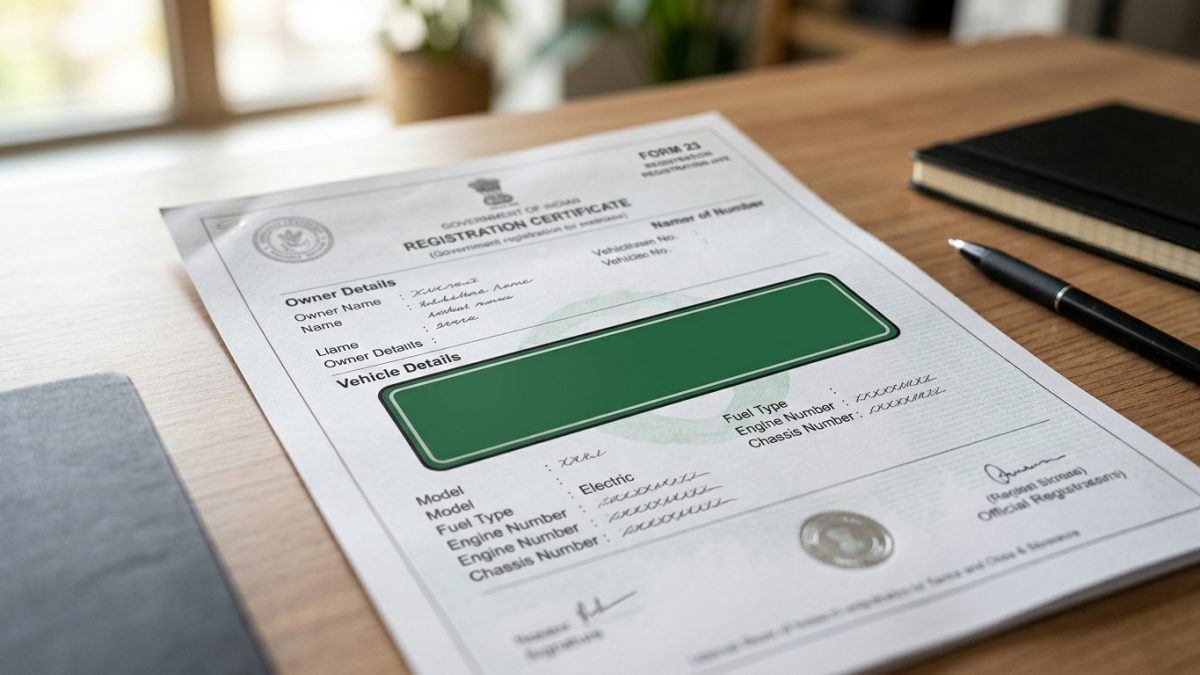
Many prospective buyers assume that purchasing an electric car or electric two-wheeler guarantees a blanket zero-tax invoice across India. Under the Constitution of India, road tax falls squarely under Entry 57, List II of the Seventh Schedule (State List). This means the Union Government cannot mandate a single, binding road tax waiver on electric vehicles in India.
The Ministry of Road Transport and Highways (MoRTH) governs vehicle standards and registration documentation rules. Individual state legislatures control the Motor Vehicles Taxation Acts that govern lifetime road tax. When evaluating an electric car price in india, on-road quotations differ by lakhs of rupees between neighbouring states purely due to tax rules.
RTO Rule: The Central Government exempts only the RC issuance fee (CMVR Rule 81); the lifetime road tax is determined independently by your registering state RTO.
EV Registration Fee Waiver vs Road Tax: The Central Rule
Confusion often arises between an ev registration fee waiver and a road tax waiver. On 2 August 2021, MoRTH issued Gazette Notification G.S.R. 525(E), formally enacting the Central Motor Vehicles (Sixteenth Amendment) Rules, 2021. This statutory change amended Rule 81 of the Central Motor Vehicles Rules (CMVR), 1989.
Under this amendment, all Battery Operated Vehicles (BOVs) are completely exempt from paying charges for the issue or renewal of Registration Certificates (RC). This also waives fees for assigning a new registration mark. You can inspect the statutory gazette record on the PIB Notification Archive.
However, the RC fee is merely a central processing charge that historically ranged between ₹300 and ₹1,500. Lifetime road tax, on the other hand, is a state-level asset levy that often totals 8% to 15% of the ex-showroom value on combustion vehicles. The Central exemption removes the RC fee everywhere, but does not wipe out state road taxes.
| Fee Type | Governing Authority | Amount for EVs | Scope |
|---|
| RC Issue Fee | MoRTH (CMVR Rule 81) | ₹0 | All India (Mandatory) |
| RC Renewal Fee | MoRTH (CMVR Rule 81) | ₹0 | All India (Mandatory) |
| Road Tax (Life Tax) | State Transport Dept | 0% to 10%+ | Varies by State Act |
| HSRP & Postal Fee | State / Vendor | ₹300 to ₹1,200 | Payable nationwide |
Recent Policy Rollbacks: Karnataka, Uttar Pradesh, and Madhya Pradesh
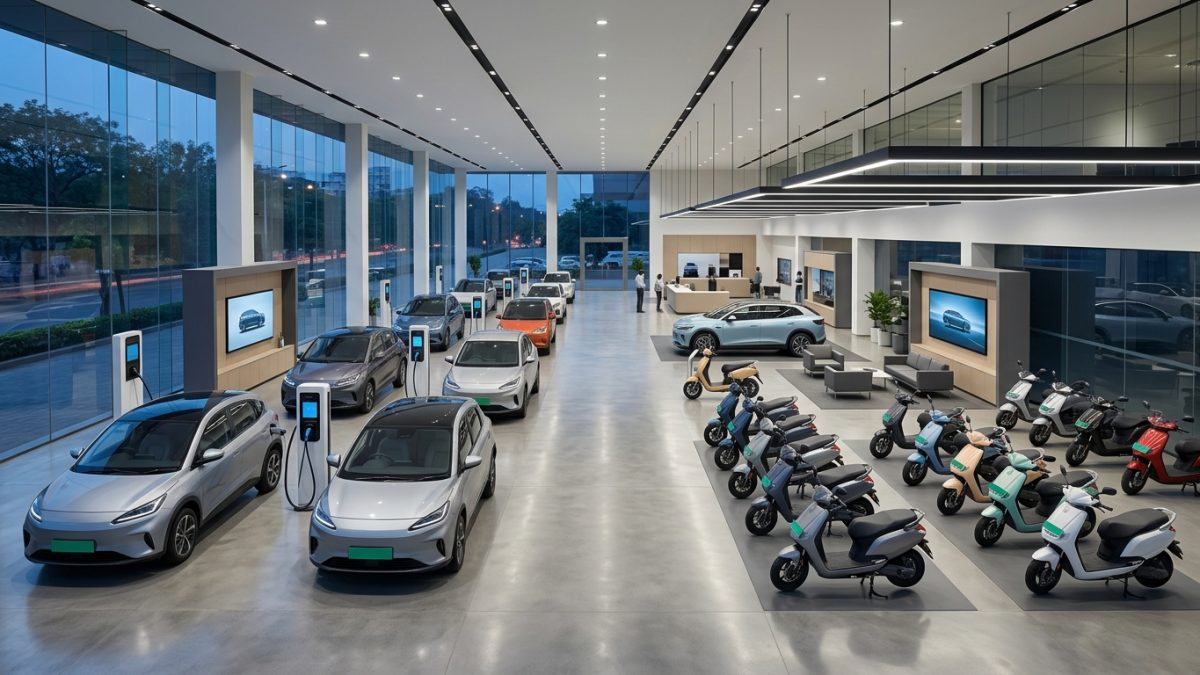
Over recent years, several state transport departments experienced major revenue contractions due to high electric vehicle adoption. As a result, blanket road tax exemptions are being replaced with targeted, tiered slabs or allowed to expire completely.
1. Karnataka EV Road Tax Rules and Revisions
Between 2016 and 2024, Karnataka provided a complete 100% road tax waiver on all electric vehicles. The first restriction arrived through the Karnataka Motor Vehicles Taxation (Amendment) Act, 2024, which levied a 10% tax on electric passenger vehicles priced above ₹25 lakh ex-showroom. This rule was tightened further through the Karnataka Motor Vehicles Taxation (Amendment) Act, 2026, effective 10 April 2026.
The Transport Department faced an estimated shortfall of roughly ₹2,100 crore against its FY 2025–26 revenue targets. Under the April 2026 amendment, zero tax was discontinued for passenger cars, establishing a new tiered system. Electric two-wheelers, however, maintain their complete tax exemption under current Karnataka Transport Department notifications.
| Vehicle Category | Ex-Showroom Price Band | Lifetime Tax Rate |
|---|
| Electric 2-Wheelers | All Price Bands | 0% (100% Exempt) |
| Electric Cars & SUVs | Up to ₹10 Lakh | 5% |
| Electric Cars & SUVs | ₹10 Lakh to ₹25 Lakh | 8% |
| Electric Cars & SUVs | Above ₹25 Lakh | 10% |
2. Uttar Pradesh Expiry and Domestic Assembly Clause
Under the Uttar Pradesh Electric Vehicle Manufacturing and Mobility Policy 2022, a blanket 100% exemption applied to road tax and registration fees for three years. That blanket window officially lapsed on 13 October 2025. Additionally, the registration waiver extended to Strong Hybrid Electric Vehicles (SHEVs) in July 2024 was discontinued.
For Years 4 and 5 of the policy (running through October 2027), the full exemption requires vehicles to be manufactured or assembled within Uttar Pradesh. As a consequence, electric vehicles assembled in other manufacturing hubs like Maharashtra, Gujarat, or Tamil Nadu face standard road tax rates of 8% to 10% in UP, unless covered by specific executive notifications via the UP EV Portal.
3. Madhya Pradesh Sunset Window
The Madhya Pradesh EV Policy 2025 (Notification No. 100, dated 27 March 2025) included a full motor vehicle tax waiver for its initial implementation phase. However, this full exemption was framed for a single year and officially expired on 26 March 2026 for private cars and electric scooters.
Because no blanket extension notification was gazetted for private consumer vehicles, RTOs across Madhya Pradesh resumed collecting standard motor vehicle tax on new registrations. Multi-year concessions remain active only for electric public transport buses, commercial freight carriers, and ambulances.
Budget Tip: If you are purchasing an EV in UP or MP, do not rely on outdated dealer price sheets showing ₹0 road tax. Request a revised RTO payment preview before finalizing vehicle finance.
State Wise EV Road Tax Slabs and Waivers Across India
Because motor vehicle tax is state-regulated, on-road prices for electric vehicles fluctuate dramatically across regional borders. The table below outlines active road tax positions across key states as of October 2026:
| State / UT | Road Tax Status | Applicable Slabs / Terms | Key Conditions |
|---|
| Tamil Nadu | 100% Exempt | 0% Road Tax | Valid through 31 December 2027 |
| Telangana | 100% Exempt | 0% Life Tax | Valid through 31 December 2026 |
| Maharashtra | 100% Exempt | 0% Motor Vehicle Tax | Full waiver under State EV Policy |
| Delhi | 100% Exempt | 0% Road Tax | Private EVs up to ₹30 lakh ex-showroom |
| Karnataka | Tiered Tax | 5% / 8% / 10% on cars; 0% on 2W | Tiered by ex-showroom slabs |
| Uttar Pradesh | Standard Rates | 8% to 10% (0% if made in UP) | Blanket window ended October 2025 |
| Madhya Pradesh | Standard Rates | Standard Life Tax | 1-year waiver ended 26 March 2026 |
| Kerala | Concessional | 5% Lifetime Tax | Concessional rate for all private EVs |
| Gujarat | Partial Rebate | 50% Tax Concession | Rebate applied on motor vehicle tax |
States such as Tamil Nadu and Telangana provide long-term policy certainty with clear notifications published through the Telangana Transport Department. Conversely, Delhi sets ex-showroom vehicle value caps to direct exemptions toward affordable commuter models. For two-wheeler buyers researching the best electric scooter, most states maintain zero tax, keeping initial ownership costs manageable.
Step-by-Step Guide: How to Avail EV Road Tax Exemption at the RTO

Vehicle buyers do not need to submit physical tax refund forms to secure an active state tax waiver. Registrations in India are handled electronically via the central Vahan 4.0 platform managed by Parivahan Sewa.
- Dealer Enters Homologation Data: The authorized automobile dealer accesses the central Vahan portal and logs the chassis and motor numbers linked to the manufacturer's homologation approval.
- Fuel Classification Mapping: The dealer selects the vehicle fuel category as "BATTERY OPERATED VEHICLE (BOV)" or "ELECTRIC" to trigger correct tax rules.
- Automated Vahan Computation: The Vahan rule engine references the state taxation master. In 100% waiver states, road tax populates as ₹0, and the Rule 81 RC fee populates as ₹0. In tiered states like Karnataka, Vahan applies the exact slab (5%, 8%, or 10%).
- Document Verification: The dealer uploads statutory registration forms, the sale certificate, roadworthiness approvals, and the customer's proof of address.
- Payment of Non-Tax Ancillary Charges: The buyer pays mandatory administrative fees, including smart card delivery, High Security Registration Plates (HSRP), and municipal safety cess.
- Approval and Plate Issuance: The regional transport officer approves the application online, assigns the registration number, and issues a green high-security registration plate.
Verification Notice: Always check your formal Vahan receipt. The line item for "Motor Vehicle Tax" must explicitly display ₹0 or the precise statutory slab percentage, rather than arbitrary dealer amounts.
Mandatory Documents Required for EV Registration
When completing electric vehicle registration, the dealer submits standard documentation under the Central Motor Vehicles Rules. Having your paperwork organized ensures smooth processing at your local registering office:
- Form 20: Standard application for motor vehicle registration.
- Form 21: Official sale certificate issued by the authorized automobile dealer.
- Form 22: Compliance and roadworthiness certificate supplied by the OEM.
- Valid Insurance Policy: Active motor vehicle insurance covering electric drive components.
- Identity and Address Proof: Aadhaar card, passport, or utility document matching the owner details.
- Commercial Purchase Invoice: Stating ex-showroom figures, motor output (kW), and battery size (kWh).
If you need to verify where your registration is processed, you can search your local RTO office details by district code before finalizing vehicle paperwork.
Hidden Charges, Portal Glitches, and Dealer Overpricing Issues
While an active electric vehicle road tax waiver states policy eliminates statutory tax, buyers often run into paperwork discrepancies or dealer markups. Knowing these common issues can prevent unexpected out-of-pocket costs.
Vahan Portal Algorithm Delays
When state governments issue new gazette notifications extending EV road tax exemptions, local transport departments sometimes experience delays updating tax tables in the central Vahan 4.0 database. While the system waits for software updates, RTO portals may demand standard fuel-vehicle tax rates, temporarily holding up vehicle deliveries.
Unregulated Handling and RTO Processing Charges
Some dealerships include vague line items on invoice quotations labelled as "RTO Handling", "Facilitation Charges", or "Logistics Charges", often ranging from ₹5,000 to ₹15,000. Under central motor rules, dealers cannot levy unauthorized registration markups when statutory fees are waived. The table below lists the real, mandatory non-tax line items payable at the RTO:
| Payment Line Item | Approximate Official Fee | Legal Status |
|---|
| Smart Card RC Dispatch Fee | ₹200 | Mandatory (State Postal / Card) |
| HSRP Charges (2-Wheeler) | ₹300 to ₹600 | Mandatory (Authorised Vendor) |
| HSRP Charges (4-Wheeler) | ₹600 to ₹1,200 | Mandatory (Authorised Vendor) |
| Road Safety / Municipal Cess | ₹100 to ₹1,000 | Varies by State Regulation |
| Dealer Documentation / Handling | ₹0 | Illegal / Unauthorised |
Interstate EV Relocation Rules
Relocating an electric vehicle between states can lead to unexpected tax assessments. If you purchase an electric vehicle in a zero-tax state like Maharashtra and later transfer registration to a state with active road tax slabs such as Karnataka, the receiving RTO levies lifetime road tax on a depreciated scale based on the original invoice. Confirming registration details via online RC verification helps avoid surprise penalties during ownership transfers.
Important Difference: A road tax waiver is deducted directly at registration. In contrast, state or central EV subsidies require a separate application via direct benefit transfer portals after vehicle delivery.
Conclusion
Securing an ev road tax exemption significantly reduces the on-road cost of an electric vehicle, but benefits depend on shifting state policies. Always review the detailed tax line items on your official Vahan receipt rather than relying solely on dealership quotations.
Before taking delivery of a new or pre-owned electric vehicle, confirm its active tax status and registration history through the VahanX RC search tool to protect yourself from surprise RTO expenses.