Key Takeaways
- Up to 70% of used car sales in India happen via unorganised markets prone to frauds.
- Digital odometer rollback artificially inflates car prices by ₹50,000 to ₹1,50,000.
- Always cross-reference RC and hypothecation records on official databases before paying.
- Never transfer advance tokens or courier fees for vehicles advertised below market price.
- Car fraud is prosecutable under Bharatiya Nyaya Sanhita, 2023 and the IT Act, 2000.
| Metric / Check | Key Parameter | Verification Source | Estimated Turnaround |
|---|
| Market Fraud Rate | 60%–70% unorganised sales | Market trade records | Immediate |
| Common Price Inflation | ₹50,000 to ₹1,50,000 | Tampered instrument cluster | Requires OBD-II check |
| Ownership Transfer Window | 14 to 30 days | RTO Form 29/30 submission | State-dependent |
| Primary Legal Statute | Section 318(4) BNS | Local Police / Cyber Cell | Immediate upon FIR |
Falling victim to used car scams in india can cost you your hard-earned savings or leave you with an impounded vehicle. With nearly 70% of pre-owned sales occurring through informal brokers and peer-to-peer portals, fraudsters frequently conceal active bank loans, manipulate digital odometers, or sell flood-damaged wrecks. You can protect your money by inspecting maintenance history, scanning control units, and cross-checking vehicle details directly on the central registry.
Before you commit to buying a second-hand vehicle, you should check RC and vehicle owner details to confirm the seller’s name and verify whether a bank holds a lien on the asset. Knowing the most prevalent schemes will help you identify red flags before any money changes hands.
The Pre-Owned Vehicle Market Landscape in India
India’s pre-owned automotive sector has expanded rapidly, yet it remains fragmented. The vast majority of vehicle transactions occur via unorganised local brokers, independent dealers, and online classifieds. This informal ecosystem offers minimal accountability when a transaction turns fraudulent.
A critical systemic vulnerability is that the central VAHAN portal tracks registration, hypothecation, and tax status, but does not log vehicle mileage or structural insurance repair histories. Unscrupulous middlemen exploit this loophole alongside the statutory 14- to 30-day transfer lag to commit second hand car scams.
Warning: As of July 1, 2024, vehicle cheating and document forgery fall under the Bharatiya Nyaya Sanhita (BNS), 2023, which replaced the Indian Penal Code.
Common Used Car Frauds in India and How They Work
Fraudsters use various techniques to deceive buyers. Understanding how these schemes work helps you identify suspicious listings and safeguard your investment against used car fraud india.
1. Digital Odometer Rollback ("Meter Firki")
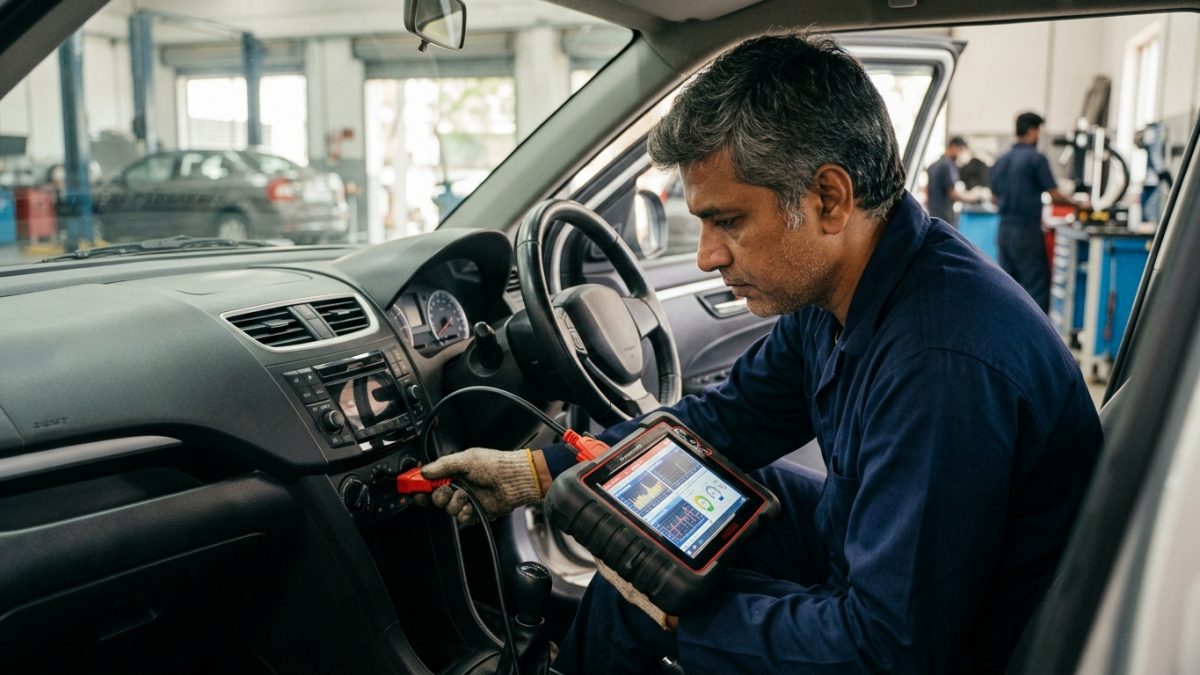
Disreputable mechanics connect handheld OBD-II programming tools to the car’s instrument cluster port and flash the EEPROM chip. This allows them to reset a vehicle from 1,30,000 km down to 45,000 km within minutes.
This manipulation inflates vehicle market value by ₹50,000 to ₹1,50,000. It also conceals major impending maintenance needs, such as worn timing chains, compromised suspensions, and failing clutches. Intentionally rolling back mileage constitutes criminal cheating under Section 318(4) of the Bharatiya Nyaya Sanhita (BNS).
2. Fake RC and Undisclosed Bank Hypothecation
In this scenario, a borrower sells a car that carries an active bank loan without obtaining an official No Objection Certificate (NOC). The fraudster provides a fake Smart Card showing "Hypothecation: Nil" alongside counterfeit Form 35 bank clearance documents.
Once the original borrower defaults on their loan payments, the financing bank dispatches recovery agents to seize the car from the new buyer. Supplying fake documents violates BNS Sections 336, 338, and 340 (forgery) alongside Section 316(2) (criminal breach of trust).
3. The Advance Token and Armed Forces Impersonation Trap
Online used car scams often involve classified listings on peer-to-peer portals advertising popular cars—such as a Maruti Swift, Hyundai Creta, or Honda City—at 40% to 60% below market value. The scammer poses as an officer in the Indian Army, CISF, or Indian Air Force who has received sudden transfer orders.
The fraudster demands an advance deposit ranging between ₹5,000 and ₹30,000, claiming it covers a refundable military gate pass or vehicle transport courier fees before inspection. Once the buyer transfers the funds, the scammer stops answering calls. This scam constitutes digital cheating under Section 66D of the Information Technology Act, 2000, and Section 318(4) of the BNS.
4. Flood-Damaged and Salvage Resales
Vehicles submerged during monsoon floods or written off as total economic losses by insurance companies are often bought from scrap auctions for ₹80,000 to ₹1,50,000. Unscrupulous workshops dry the cabins, replace floor carpets, mask warning lights, and patch rust damage.
These flood-damaged cars often suffer from intermittent wiring harness failures, non-functioning airbag supplemental restraint systems, and hidden structural corrosion along the A, B, and C pillars.
5. Double Selling and Ghost Transfers
Fraudsters take advantage of the statutory gap between handing over money and receiving final Regional Transport Office (RTO) transfer endorsement. A seller may collect full payment, supply duplicate keys, and issue an unverified delivery note.
The seller then delays signing Form 29 and Form 30 or provides mismatched signatures, using the time to sell or mortgage the same car to a third party. To better understand how ownership and legal records are authenticated, you can read our guide to check vehicle history in India.
| Scam Variant | Method Used | Primary Risk to Buyer | Applicable Penal Statute |
|---|
| Odometer Rollback | Flashing cluster EEPROM via OBD-II | Overpaying; premature mechanical failure | Section 318(4) BNS |
| Undisclosed Loan | Counterfeit Form 35 / Fake Smart Card | Asset seizure by bank recovery agents | Sections 336 & 340 BNS |
| Advance Token Trap | Fake military identity on classifieds | Direct loss of booking advance money | Section 66D IT Act |
| Salvage Resale | Cosmetic patch-up of total-loss car | Severe electrical faults; safety hazard | Section 318(4) BNS |
| Double Selling | Deliberate delays in RTO submission | Loss of vehicle ownership and funds | Section 316(2) BNS |
Actionable Verification Protocol to Avoid Used Car Fraud
Following a structured verification process before making a payment helps you avoid used car fraud and confirm that the vehicle is mechanically sound and legally clear.
- Perform real-time Parivahan RC validation: Visit the official portal at parivahan.gov.in or use the mParivahan app. Verify that the owner serial number matches the seller, confirm active hypothecation status, and check that the status is listed as "ACTIVE" rather than "Blacklisted".
- Check for outstanding traffic fines: Open the e-Challan portal at echallan.parivahan.gov.in and enter the registration number. You can also quickly check challan status by vehicle number to review pending court summons or traffic fines that could stall transfer clearance.
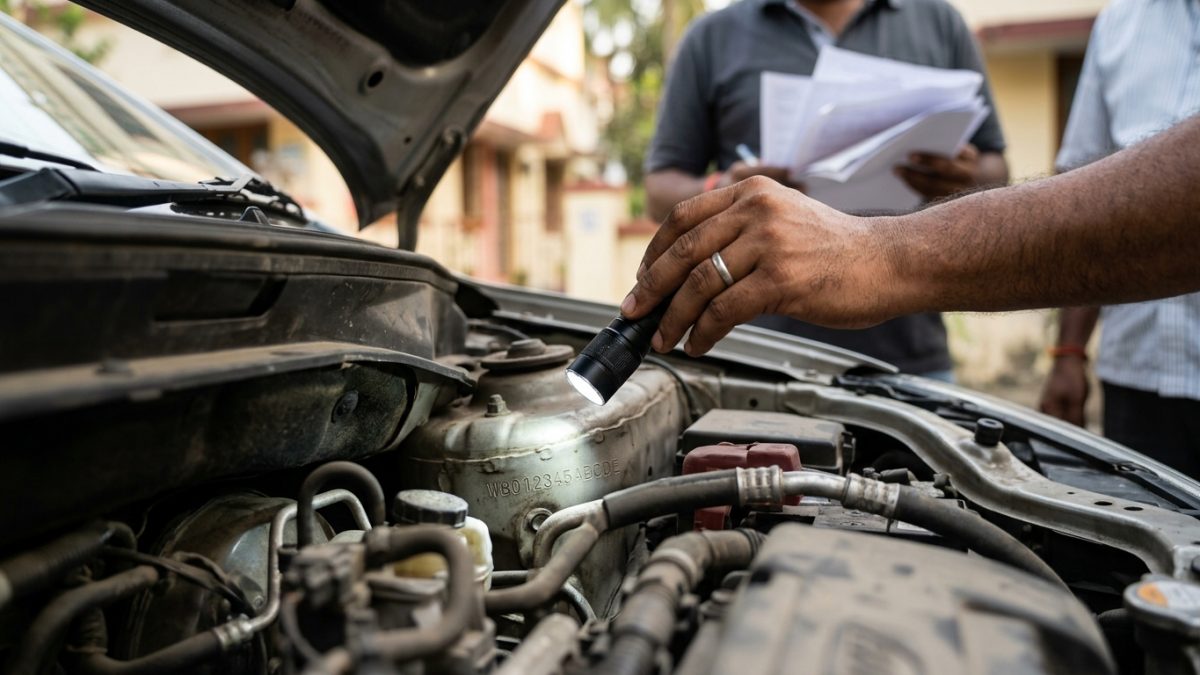
- Inspect physical chassis stamping and VIN: Compare the 17-digit Vehicle Identification Number across the engine bay firewall stamping, the B-pillar identification plate, and the vehicle registration card. Reject any car showing uneven metal stamping, grind marks, or fresh paint around the chassis plate.
- Review the digital service history: Take the vehicle or its registration details to an authorised brand workshop. Request the digital service logs to verify historical mileage entries and check if structural repairs were billed under previous insurance claims.
- Cross-examine the vehicle insurance policy: Check the existing policy via official insurer records. If an older car shows a 0% No Claim Bonus (NCB), investigate whether previous owners filed claims for structural collision repairs.
Inspection Tip: Never transfer a token payment on classified platforms before inspecting the car, its physical VIN stamping, and original documents in daylight.
How to Spot Odometer Tampering on Used Cars
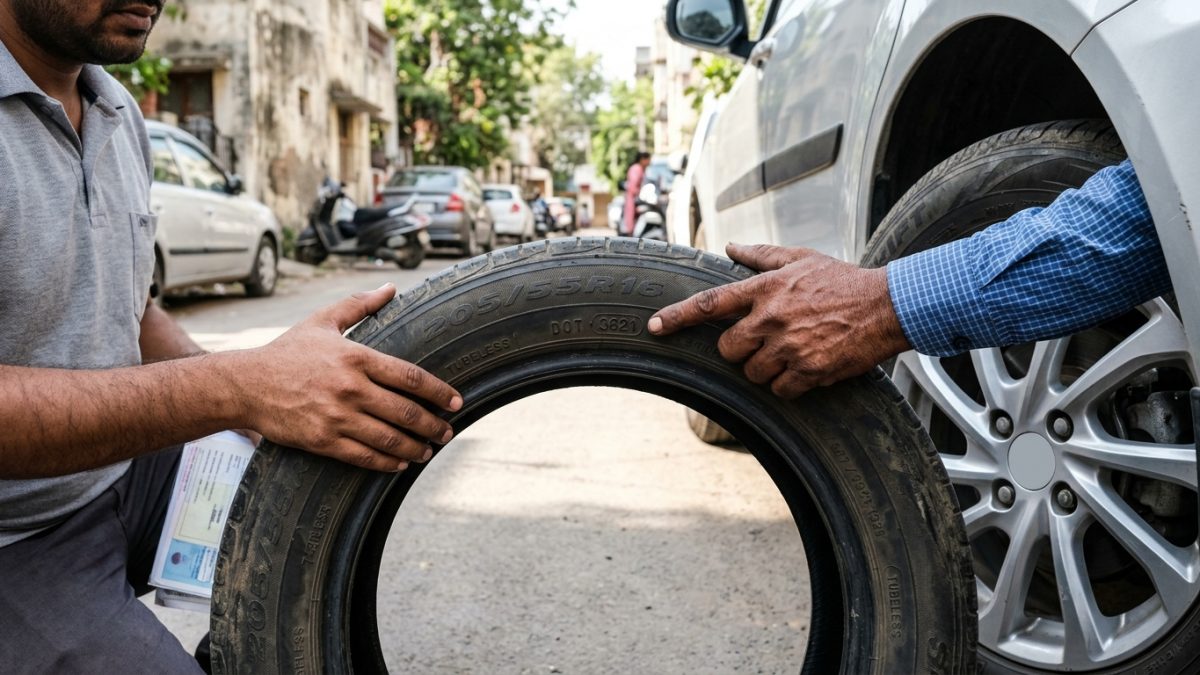
Because cluster displays can be manipulated, conducting an odometer tampering check india requires evaluating independent electronic modules and physical wear indicators.
Electronic Diagnostics vs Instrument Cluster
In modern vehicles, operating hours and mileage are recorded across multiple modules, including the Transmission Control Module (TCM), the Anti-lock Braking System (ABS) module, and the Airbag Control Unit. A technician using a diagnostic scanner can read these secondary modules to check if their recorded mileage matches the instrument cluster reading.
Physical Wear Patterns
Examine vehicle components that show wear corresponding to mileage. If a car claims to have covered only 30,000 km, its interior should not show heavy wear:
- Rubber brake and clutch pedals worn down to bare metal indicate extended usage.
- Shiny, slick leather on the steering wheel or a worn gear lever boot points to high mileage.
- A sagging driver-seat bolster or loose seat springs suggests extensive daily operation.
- Cloudy, yellowed headlight lenses paired with road-pitted front bumper paint indicate heavy highway use.
Tyre Date Codes (DOT Markings)
Tyres carry a 4-digit Department of Transportation (DOT) date code stamped on the sidewall showing the week and year of manufacture. For instance, code "2421" signifies the 24th week of 2021.
A vehicle displaying 25,000 km on its odometer should typically still ride on its factory-fitted tyres matching the vehicle's manufacturing year. If a claimed low-mileage car is fitted with new budget tyres, inspect it closely for a potential odometer rollback.
How to Verify a Physical RC Smart Card Against Forgery
Forged registration certificates remain a major challenge in peer-to-peer deals. Running a fake rc used car check helps ensure you are dealing with genuine documentation.
- Scan the embedded QR code: Authentic Smart Cards feature an embedded microchip or QR code. Scan the code using the official mParivahan app; it should retrieve matching vehicle records directly from the Ministry of Road Transport and Highways (MoRTH) database at morth.nic.in.
- Cross-check details on VAHAN: Access the central portal at vahan.parivahan.gov.in and select the vehicle information section. Match the registered owner name, registration date, engine number, and chassis sequence exactly against the physical card.
- Validate hypothecation status: If the physical card shows no bank lien, confirm that the VAHAN database also lists the vehicle as free of hypothecation. If a financier is recorded, ask the seller for an original Form 35 and a valid bank NOC, then verify these documents with the issuing bank branch.
Document Rule: If the physical registration card states "Hypothecation: Nil" but government databases indicate an active bank lien, stop the purchase immediately.
RTO Transfer Deadlines, Fees, and State-Specific Constraints
Completing legal transfer processes within statutory timelines protects buyers from ownership disputes and administrative penalties.
Under Section 50 of the Motor Vehicles Act, 1988, and Rule 55 of the Central Motor Vehicles Rules (CMVR), an ownership transfer within the same RTO jurisdiction requires submitting Form 29 and Form 30 within 14 days of vehicle sale. For transfers between different RTO jurisdictions or across states, the application must be filed within 30 days along with an RTO Form 28 No Objection Certificate (NOC).
| Transfer Type | Mandatory Forms | Submission Window | Standard Transfer Fee (LMV) |
|---|
| Intra-RTO Transfer | Form 29, Form 30 | 14 days from sale | ₹150 to ₹500 |
| Inter-RTO Transfer | Form 28, Form 29, Form 30 | 30 days from sale | ₹150 to ₹500 + postal fees |
| Inter-State Transfer | Form 28, Form 29, Form 30 | 30 days from sale | State road tax pro-rata + ₹500 |
Buyers must also keep regional vehicle restrictions in mind. For example, in Delhi-NCR, National Green Tribunal orders prohibit diesel vehicles older than 10 years and petrol cars older than 15 years from plying or renewing registration. Fraudsters frequently target out-of-state buyers with these deregistered vehicles using invalid NOC documents. If you need help finding your local authority, use our directory to find your RTO office address and code.
Legal Remedies if You Are Cheated in a Used Car Deal
If you discover that you have been defrauded after paying for a vehicle, taking prompt legal action can help recover your money or establish your ownership rights.
- Lodge a police complaint under the BNS: File a formal First Information Report (FIR) at your local police station under Bharatiya Nyaya Sanhita Section 318(4) for criminal cheating. If the seller supplied forged RC or NOC paperwork, add Sections 336, 338, and 340 for document forgery.
- Report cyber fraud immediately: If you lost money to an online imposter or advance payment scam, lodge a report on the National Cyber Crime Reporting Portal at cybercrime.gov.in or call the national cyber helpline at 1930 to initiate an immediate freeze on the recipient's bank account.
- Approach the Consumer Commission: If you bought the vehicle from an organised dealer, commercial lot, or online trade platform, file a complaint with the District Consumer Disputes Redressal Commission (DCDRC) under the Consumer Protection Act, 2019, citing unfair trade practices and deficiency in service.
- Submit an RTO ownership dispute notice: File a written objection with the registering RTO to place an administrative freeze on the vehicle’s profile, preventing unauthorised transfers while the case is investigated.
Reviewing legal and registration paperwork in advance remains the best way to secure used vehicle fraud protection. Whenever you evaluate a prospective deal, take a moment to check RC and vehicle owner details before signing purchase agreements or transferring funds.
Conclusion
Protecting yourself from used car scams in india requires systematic verification rather than relying on verbal assurances. By inspecting physical chassis numbers, running electronic OBD-II diagnostic scans, and validating registration details directly on government databases, you can avoid fraudulent sellers and make an informed purchase.
Never transfer advance booking fees prior to a physical inspection, and ensure all RTO Form 29 and Form 30 filings are completed on schedule. Take your time to thoroughly review vehicle paperwork, inspect the car with a qualified mechanic, and verify ownership credentials before finalising your transaction.