A reliable used bike buying checklist requires verifying digital RTO records, inspecting the physical chassis for crash damage, confirming engine health, and gathering mandatory transfer paperwork like Forms 29 and 30. Checking these parameters prevents you from buying a vehicle with unpaid fines, an ongoing bank loan, or hidden accidental frame damage. Before visiting a seller, you can verify vehicle history through online vehicle owner details.
Key Takeaways
- Verify digital RC status and financier hypothecation before paying an advance.
- Check the 17-digit VIN on the steering neck against the physical RC.
- Conduct a cold-start test to detect engine oil burning and valve wear.
- Collect duplicate signed copies of Form 29 and Form 30 from the seller.
- Complete RC transfer reporting within 14 days of purchase under Section 50 of the MVA.
| Verification Area | Key Inspection Item | Official Portal / Authority | Mandatory Form / Document |
|---|
| Digital Records | Ownership serial & Hypothecation | Parivahan Sewa | Original RC Smart Card |
| Traffic Enforcements | Pending challans & court cases | e-Challan Portal | e-Challan Receipt |
| Chassis & Frame | VIN stamping & steering stops | Physical Inspection | Chassis Pencil Print |
| RTO Ownership Transfer | Intimation & Transfer of Ownership | State Transport RTO | Form 29 & Form 30 |
| Loan Termination | Hypothecation Removal (HPT) | Financier / Bank | Form 35 & Bank NOC |
Digital Verification: How to Check Used Bike Online Before Buying
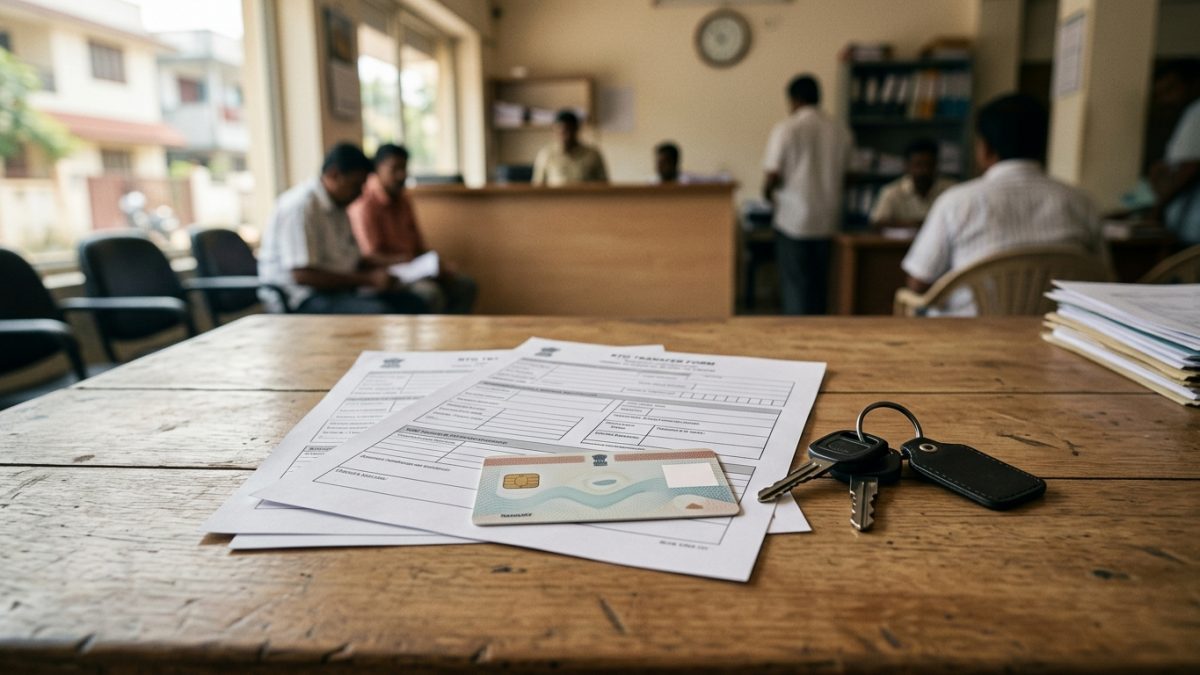
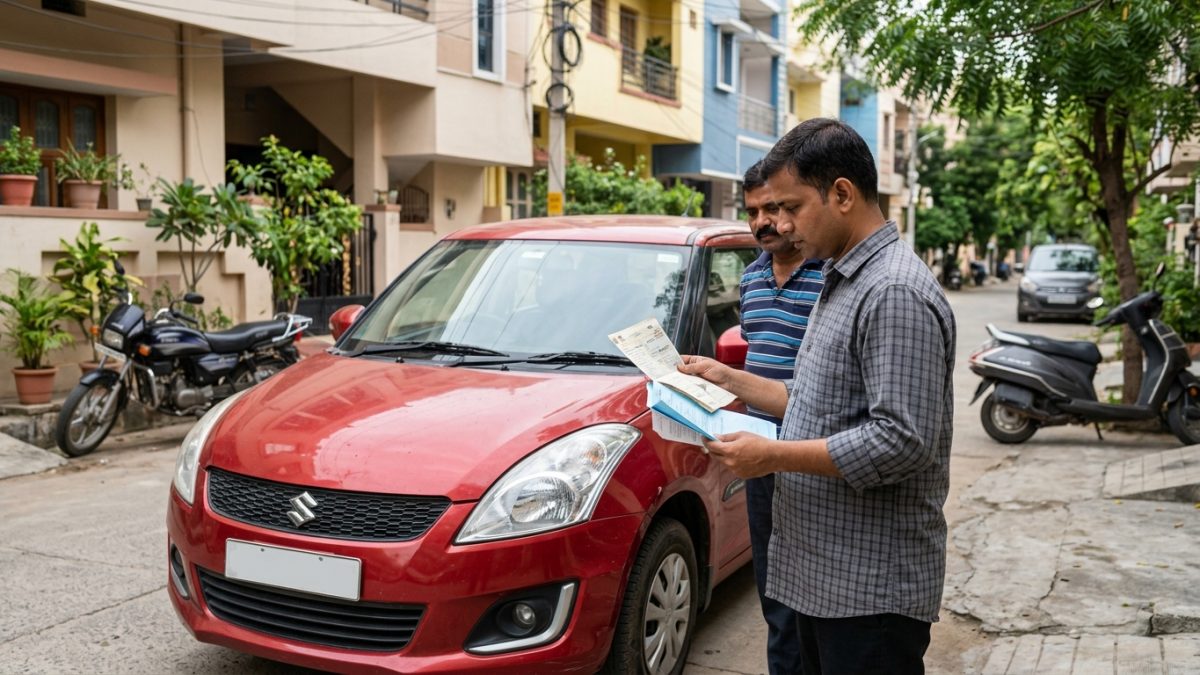
Before meeting the seller in person, conduct a comprehensive background check online. This preliminary screen reveals whether the two-wheeler is blacklisted, involved in unpaid traffic offenses, or tied to an unresolved loan.
You can execute a second hand bike check online by visiting the official Parivahan Sewa portal. This step ensures the bike details match the seller's claims before you waste time traveling for a test ride.
- Check Vehicle Details: Visit the official Parivahan portal under Informational Services and choose Know Your Vehicle Details, or open the NextGen mParivahan application.
- Verify Hypothecation: Review the Financier field. If a financial institution is listed, the current owner has an outstanding loan that must be terminated before transfer.
- Review Vehicle Status: Confirm that the registration status displays Active and is not marked as Blacklisted or flagged as stolen by law enforcement authorities.
- Check Pending Challans: Visit the e-Challan official portal or use e-challan status check by entering the vehicle registration number and engine or chassis characters.
Never purchase a two-wheeler with unresolved challans or active hypothecation. The RTO will freeze transfer applications until all legal dues and loan endorsements are cleared.
Documents Needed to Buy Second Hand Bike: Seller & Buyer Checklist
Paperwork issues cause major hurdles during second-hand two-wheeler purchases. Under the Motor Vehicles Act (MVA) 1988, both parties must execute statutory forms to formalize the handover.
Understanding the exact documents needed to buy second hand bike saves you from RTO rejections and late transfer penalties. Always obtain signed duplicate originals of all statutory documents directly from the registered owner.
| Document Name | Issuing / Signing Authority | Copies Required | Key Purpose |
|---|
| Original RC | Registering Authority (RTO) | 1 Original | Proof of official registration and vehicle specifications |
| Form 29 | Registered Seller | 2 Originals | Formally notifies the RTO about vehicle ownership transfer |
| Form 30 | Buyer and Seller | 2 Originals | Official application for transfer of ownership endorsement |
| Form 35 & Bank NOC | Financier / Bank | 2 Originals | Removes active hypothecation; NOC valid for 90 days |
| Form 28 | Registering RTO | 3 Originals | No Objection Certificate required for interstate sales |
| PUC Certificate | Authorized Emission Centre | 1 Digital Copy | Mandatory compliance with CMVR emission norms |
| Insurance Policy | General Insurance Provider | 1 Copy | Third-party or comprehensive policy document |
Buyers also need their own KYC documentation. Keep your Aadhaar Card, PAN card (or Form 60), and passport-size photographs ready to initiate the RTO process. In jurisdictions running faceless RTO services, Aadhaar authentication enables complete contactless paperwork processing.
Ensure you also sign a comprehensive Delivery Note or Sale Receipt. It must state the agreed sale consideration, transaction date, precise time of delivery, and odometer reading to protect you from prior liabilities.
Second Hand Bike Inspection Checklist: Frame, Engine, and Accident Signs
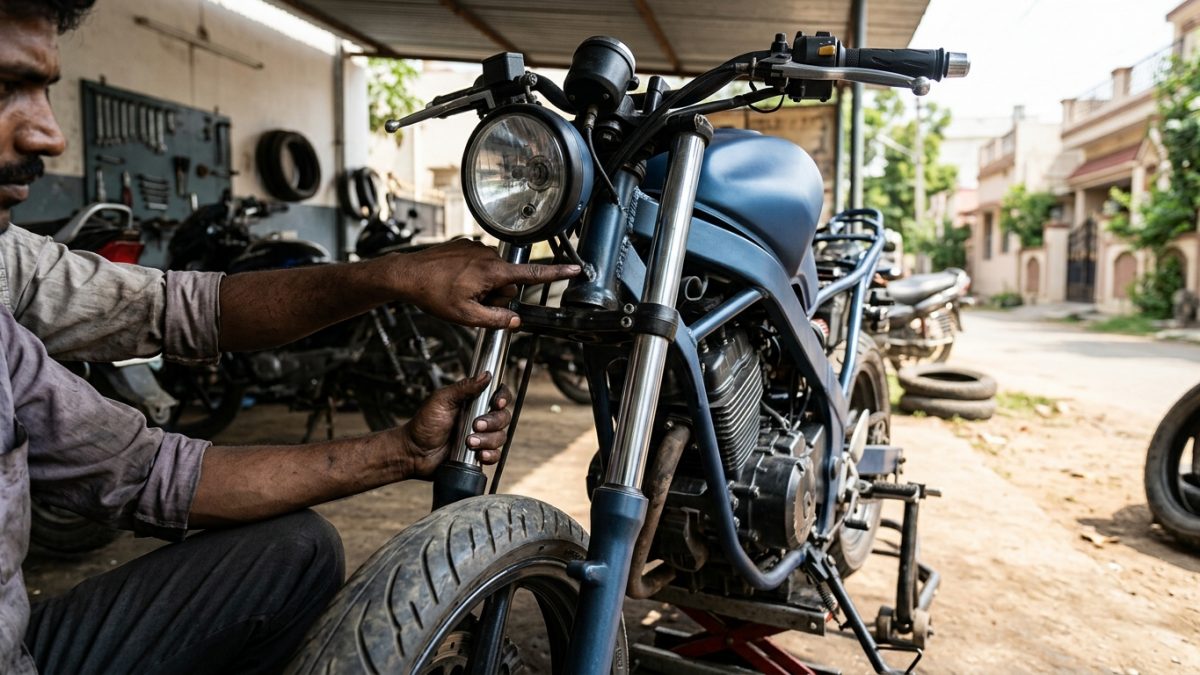
Never finalize a deal based solely on a fresh paint job. An extensive second hand bike inspection checklist must prioritize structural integrity, mechanical endurance, and safety components.
1. Frame, Chassis & Accident Detection
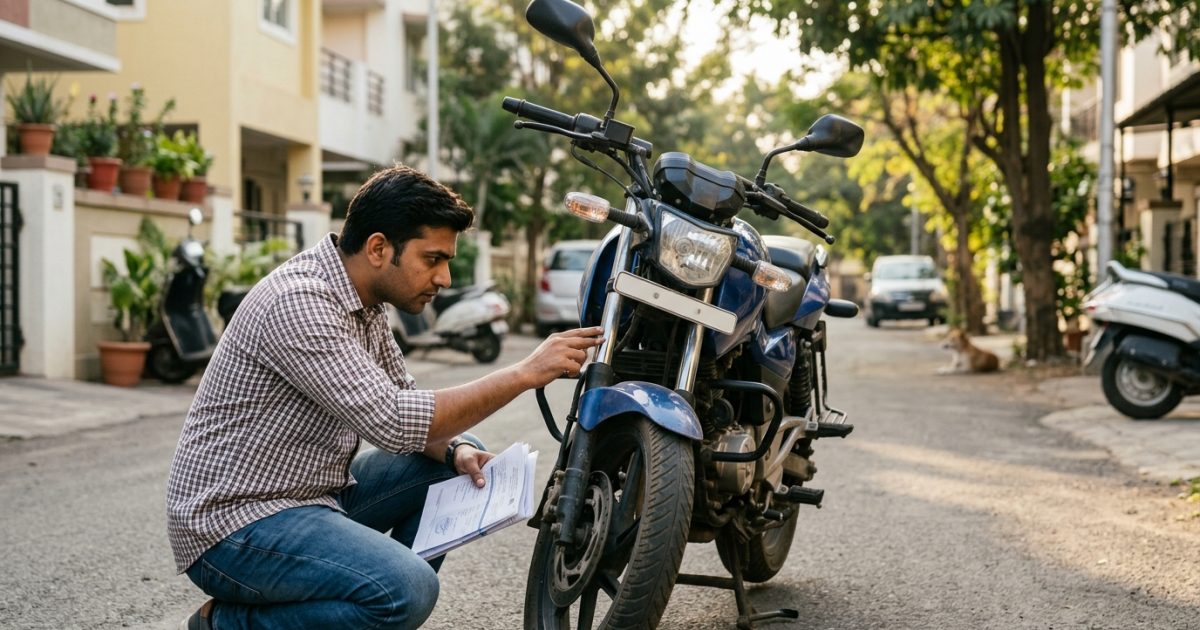
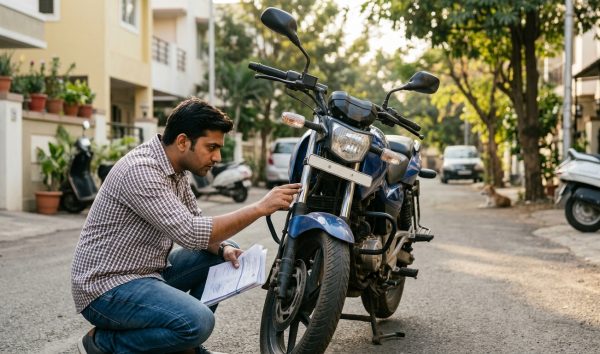
Start by locating the 17-digit Vehicle Identification Number (VIN) stamped on the steering neck tube. The die-stamped characters must appear clean, uniform, and free of grinding marks, suspicious fresh paint, or altered welding beads.
Inspect the steering stops located on the lower triple clamp of the front fork. Dented, cracked, or completely sheared metal stops prove that the motorcycle has suffered a severe crash.
Check the frame alignment by placing the bike on its center stand on flat ground. Stand 5 to 10 meters behind and verify that the front and rear tires track in a straight line without horizontal deviation.
2. Cold Start & Mechanical Assessment
Always demand a cold start test before the seller turns on the motorcycle. Touch the exhaust header pipe and cylinder head to confirm the engine is cold before turning the key.
- Blue Exhaust Smoke: Indicates engine oil burning in the combustion chamber due to worn piston rings or valve seals, demanding a full engine rebuild.
- Dense Black Smoke: Points to an overly rich fuel mixture caused by a clogged air filter, leaking injector, or improper carburetor tuning.
- Persistent White Smoke: On liquid-cooled engines, dense white, sweet-smelling smoke indicates coolant entering the cylinder head through a blown head gasket.
- Engine Oil Condition: Inspect the oil dipstick or sight glass. Milky or frothy oil reveals coolant contamination, while gritty oil signals internal metal shavings.
A pre-warmed engine masks hard starting issues, weak batteries, noisy valve clearances, and startup smoke. Always schedule your test ride when the engine has been sitting cold.
Odometer Tampering and Wear-and-Tear Verification
Odometer fraud remains common in the Indian pre-owned two-wheeler market. Unscrupulous sellers roll back digital and analog odometers to inflate market resale pricing.
To evaluate the actual vehicle condition, cross-examine the indicated distance against primary wear-and-tear consumables. This physical audit clarifies how to check used bike before buying without trusting the instrument console alone.
- Check Tire DOT Codes: Every tire sidewall contains a 4-digit manufacturing date code (for instance, 2223 indicates the 22nd week of 2023). Factory tires on 100cc to 250cc bikes typically last 25,000 to 35,000 kilometers. If a bike displays only 8,000 kilometers but wears non-factory new tires, investigate the gap.
- Examine Brake Disc Rotors: Run your finger along the front brake disc rotor. A deep circular ridge or pronounced lip along the outer edge indicates more than 30,000 kilometers of use.
- Assess Rubber Consumables: Smooth, bald footpeg rubbers and worn handlebar grips on a motorcycle claiming less than 10,000 kilometers point toward odometer tampering.
- Inspect Chain and Sprockets: Look at the rear drive sprocket teeth. Pointed, curved, or shark-fin-shaped teeth show that the sprocket is worn out, which usually occurs after 15,000 to 20,000 kilometers.
Do not assume low mileage guarantees a mint-condition bike. A multi-year-old motorcycle with under 5,000 kilometers often suffers from dried engine seals, internal tank rust, and degraded tire rubber due to extended parking.
Used Bike RC Transfer Checklist and Statutory Deadlines
Acquiring the motorcycle is only half the battle; transferring legal ownership completes the process. The used bike rc transfer checklist operates under strict deadlines defined by the Motor Vehicles Act, 1988.
According to Section 50 of the MVA and Rule 55 of the CMVR, an ownership transfer within the same state must be reported to the RTO within 14 days of physical sale. If the vehicle is registered in a different state, the buyer must file the transfer within 45 days.
- Initiate Online Transfer: Log into Parivahan Sewa, navigate to Vehicle Related Services, and pick Transfer of Ownership. Enter the last 5 digits of the chassis number to authenticate.
- Submit Hypothecation Removal: If the motorcycle was financed, select Termination of Hypothecation (HPT) concurrently and upload the scanned Bank NOC and Form 35.
- Pay Statutory RTO Fees: Settle the ownership transfer and smart card charges through the integrated payment gateway.
- Submit Dossier: In faceless RTO setups, complete Aadhaar e-KYC and upload signed Forms 29 and 30. In conventional RTOs, submit the physical documents with the original RC at the counter.
- Transfer Vehicle Insurance: Apply to the insurer within 14 days of transfer under Section 157(2) of the MVA and General Regulation 17 (GR 17). Pay the transfer fee and the No Claim Bonus (NCB) recovery differential.
RTO Transfer Fees and Financial Outlays
Ownership transfer costs for two-wheelers in India are regulated by Rule 81 of the Central Motor Vehicles Rules, 1989, combined with state-specific smart card and user levies. As of September 2026, baseline transfer fees remain standardized, though regional user charges vary.
When budgeting your pre-owned purchase, account for these transfer expenses in addition to the agreed sale price. You can review our used vehicle documents guide for parallel documentation protocols across motor vehicle categories.
| Service / Compliance Component | Statutory Rule / Provision | Central Baseline Fee | Practical Outlay (State Varied) |
|---|
| RC Ownership Transfer (Two-Wheeler) | CMVR Rule 81, Item 4(b) | ₹150 | ₹300 to ₹650 (including smart card) |
| Hypothecation Termination (HPT) | CMVR Rule 81, Item 8 | ₹100 | ₹100 to ₹200 |
| No Objection Certificate (Form 28) | CMVR Rule 58 | ₹50 | ₹50 to ₹100 |
| Insurance Policy Name Transfer | GR 17 Indian Motor Tariff | ₹50 + 18% GST | Approx. ₹59 + NCB difference |
| Late Transfer Filing Penalty | MVA Section 177 / Amendments | Variable | ₹100 to ₹300 per month of delay |
Remember that the No Claim Bonus (NCB) discount on the existing insurance belongs to the seller, not the motorcycle. As the buyer, you must pay the insurer the cash difference on the remaining Own Damage (OD) premium to validate your comprehensive coverage.
Before signing agreements, remember to cross-verify the vehicle history and confirm the seller is the legal owner by using RC details search.
Conclusion
Using a thorough used bike buying checklist protects you from unexpected mechanical repairs, illegal modifications, and lingering RTO fines. Before handing over payment, always balance physical mechanical checks with official background validation on Parivahan.
Complete your paperwork within the statutory 14-day limit, clear all bank hypothecations, and ensure your insurance policy is officially updated to ride your pre-owned motorcycle with complete peace of mind.