Key Takeaways
- Legitimate traffic challan discount schemes occur strictly via state amnesties, compounding rules, or National Lok Adalat hearings.
- Reductions typically range from 30% to 50% for minor, compoundable offences like speeding or missing helmets.
- Serious violations such as drunk driving, street racing, and minor driving cannot receive any discount.
- You can track and settle pending challans online using Parivahan, Virtual Courts, or dedicated state police portals.
- Always keep your payment receipt to avoid delays in vehicle NOC and ownership transfers.
A traffic challan discount allows vehicle owners in India to clear their outstanding traffic fines at a significantly reduced rate, often up to 50% off. You can legally obtain this concession during state-notified amnesty periods or through quarterly National Lok Adalat proceedings. Before making any payment, check your challan status by vehicle number to confirm whether your pending notices are eligible for compounding relief or court settlement.
| Feature | State Amnesty Schemes | National Lok Adalat | Virtual Courts (vcourts) |
|---|
| Discount Available | Flat 50% (varies by state) | 30% to 70% discretionary | Gazetted compounding rate |
| Processing Method | 100% Online or Citizen Kiosks | Online Token & Court Bench | Online Plea & ePay Portal |
| Eligible Offences | Compoundable fines only | Compoundable petty breaches | Minor traffic camera notices |
| Frequency | Occasional government orders | Quarterly (4 times a year) | Ongoing digital platform |
While internet rumours often promise perpetual fine reductions, Indian motor vehicle laws do not provide on-demand discounts on traffic notices. Concessions are granted exclusively through specific legal routes designed to clear judicial backlogs and encourage voluntary compliance among vehicle owners.
How Traffic Challan Discount Schemes Work in India
Traffic fine reductions operate through three distinct legal channels under the Motor Vehicles Act, 1988, and the Legal Services Authorities Act, 1987. Each mechanism addresses unpaid enforcement notices through a different administrative or judicial framework.
1. State-Notified Amnesty Schemes
State transport and home departments periodically issue executive orders establishing a temporary traffic challan waiver scheme. These windows typically remain open for 15 to 30 days to clear massive backlogs of unpaid camera-generated e-challans. During an active amnesty, state enforcement portals automatically recalculate the payable amount to reflect the discounted rate.
2. Compounding Relief Under Section 200
Under Section 200 of the Motor Vehicles Act (amended in 2019), state governments possess statutory powers to notify compounding fees for designated minor violations. States like Gujarat, Maharashtra, and Karnataka publish gazettes that set compounding penalties below the maximum limits that a regular criminal court might impose.
3. National Lok Adalat Hearings
Supervised by the National Legal Services Authority (NALSA), National Lok Adalats occur once every quarter across district courts in India. Presiding judicial officers evaluate compoundable violations and exercise discretion to reduce fines by 30% to 70%—frequently providing a 50 percent discount on traffic challan balances upon admission of guilt.
Note: Discounts are never offered for high-risk offences. Compounding relief and Lok Adalat conciliations apply strictly to compoundable infractions recognized under the Motor Vehicles Act.
National Lok Adalat Schedule for 2026
The National Legal Services Authority convenes Lok Adalats on designated Saturdays throughout the year. If you plan to settle your notices through conciliation benches, plan your appearance around the official schedule approved for 2026.
| Lok Adalat Session | Official Date (2026) | Jurisdiction | Focus Areas |
|---|
| 1st National Lok Adalat | 14 March 2026 | Pan-India District Courts | Pre-litigation & pending traffic notices |
| 2nd National Lok Adalat | 9 May 2026 | Pan-India District Courts | Compoundable petty motor offences |
| 3rd National Lok Adalat | 12 September 2026 | Pan-India District Courts | Camera e-challans & document lapses |
| 4th National Lok Adalat | 12 December 2026 | Pan-India District Courts | Year-end disposal of pending challans |
Appointments for metropolitan sessions, particularly in Delhi, open five to seven days before the scheduled date. Motorists must secure an appointment token online before visiting their designated district court complex.
Eligible Violations: Compoundable Traffic Offences List India
Not every traffic ticket qualifies for a fine reduction or waiver. The law strictly separates minor regulatory infractions from severe driving crimes.
Violations Eligible for Fine Reductions
Offences eligible for compounding under Section 200 or conciliation before a Lok Adalat bench include everyday regulatory lapses:
- Section 177 / 177A: General traffic infringements, failure to follow road markings, and disobeying mandatory signs.
- Section 194D: Riding a two-wheeler without a protective helmet (standard fine: ₹1,000).
- Section 194B: Driving a four-wheeler without fastening a safety seatbelt (standard fine: ₹1,000).
- Section 183(1) & (2): Moderate overspeeding below severe reckless thresholds (standard fine: ₹1,000 to ₹2,000 for light motor vehicles).
- Section 119/177: Disregarding traffic signals and jumping red lights.
- Section 190(2): Operating a vehicle with an expired or missing Pollution Under Control (PUC) certificate.
- Section 122/177: Improper or unauthorized parking obstructing traffic flow.
- Section 184 (Handheld devices): Using a handheld mobile phone while driving (only the handheld device portion is compoundable).
If you have pending tickets across multiple categories, you can review your complete driving history using our guide to check challan by DL number.
Strictly Excluded Violations (No Discounts Permitted)
The legal framework bars non-compoundable offences from amnesty schemes and Lok Adalat settlements. These tickets require formal adjudication in a regular court of law:
- Section 185: Drunk driving or operating a vehicle under the influence of narcotics.
- Section 184: Aggravated rash, reckless, or dangerous driving threatening public safety.
- Section 189: Participating in illegal street racing or speed trials on public thoroughfares.
- Section 199A: Motor vehicle offences committed by juveniles or minors.
- Accident Cases: Collisions resulting in grievous hurt or fatality under Section 106 of the Bharatiya Nyaya Sanhita (formerly Section 304A IPC).
- Impounded Vehicles: Notices tied to vehicles seized during active criminal investigations.
- Statutory Road Taxes: Core commercial road tax, permit fees, and fitness penalties cannot be discounted through traffic challan amnesties.
Warning: Attempting to book a Lok Adalat appointment for drunk driving or dangerous driving will result in outright rejection by the bench, and your case will proceed to a criminal trial.
How to Pay Challan Online at a Discount

Depending on whether your state has launched an administrative discount window or routed your cases to a digital bench, multiple official portals allow pending challan settlement online.
Method 1: Parivahan e-Challan Portal (State Amnesty Drives)
When an executive amnesty is active in your state, follow these steps to complete your e challan payment discount directly on the central portal:
- Open the official portal: Navigate to the Parivahan e-Challan portal in your browser.
- Retrieve your challans: Enter your Challan Number, Vehicle Number with the last five digits of the chassis or engine number, or Driving Licence number.
- Enter the security Captcha: Complete the verification text and click Get Detail to display pending notices.
- Verify discounted amounts: If an active amnesty scheme applies to your state, eligible compoundable offences will display the reduced payable balance automatically.
- Proceed to checkout: Select the checkboxes next to the violations you wish to resolve and click Pay Now.
- Complete digital payment: Choose your preferred gateway—UPI, Net Banking, or Debit Card—and authorize the transaction.
- Download official receipts: Save the digital payment confirmation slip and transaction ID for your vehicle records.
Method 2: Virtual Courts (vcourts.gov.in)
When unpaid e-challans move beyond the standard administrative period of 60 to 90 days, police systems transfer them to the Virtual Court system run by the Supreme Court of India's e-Committee:
- Access Virtual Courts: Visit the official Virtual Courts portal.
- Select your jurisdiction: Choose your state and traffic department from the dropdown list.
- Search your case: Search using your mobile number, challan number, vehicle number, or party name.
- Inspect proposed fines: Click View to examine the digital notice and the fine determined by the Virtual Court judge under gazetted compounding limits.
- Choose your plea: Select I accept the guilt and wish to pay the fine to verify your identity via mobile OTP.
- Pay the fine: You will be redirected to the secure eCourts payment portal to complete the transaction via UPI or card.
- Receive digital disposal: The Virtual Court marks the case disposed, updating the national Parivahan database automatically.
Method 3: Delhi Traffic Police Lok Adalat Token System
The Delhi Traffic Police and Delhi State Legal Services Authority use a mandatory pre-booking token system before every National Lok Adalat session:
- Access the token portal: Five to seven days prior to the Lok Adalat, visit the Delhi Traffic Police Lok Adalat portal.
- Enter vehicle credentials: Input your vehicle registration number along with the chassis and engine digits.
- Select eligible challans: Pick the pending camera notices you want to settle, observing the token quota limits.
- Select court and time: Choose your preferred district court complex (such as Tis Hazari, Patiala House, Saket, Dwarka, or Rohini) and select an available time window.
- Print the appointment slip: Download and print the generated Lok Adalat token slip.
- Attend the hearing: Visit the designated bench on the Lok Adalat Saturday with your printed token and vehicle documents.
- Complete the settlement: The magistrate reviews the tickets, sets the reduced penalty, and records the case disposal once the payment is made.
For broader payment methods across different regional departments, consult our comprehensive guide on how to pay traffic fines online across Indian states.
Tip: Lok Adalat booking tokens in metropolitan cities often run out within two hours of the link going live. Set an alert on the opening morning to ensure you secure a court slot.
State-Specific Amnesty Rules and Regional Differences
Amnesty rules differ substantially across states. Some regions prefer broad executive rebate drives, while others restrict fine reductions entirely to judicial Lok Adalat benches.
| State / UT | Primary Mechanism | Typical Discount Rate | Administrative Stance |
|---|
| Karnataka | Executive Amnesty & Lok Adalat | 50% flat discount | Multiple 50% windows notified (e.g., June–July 2026 drive) |
| Telangana | Historical Amnesty Drives | 60% to 80% (past drives) | Shifted toward automated auto-debit enforcement in 2026 |
| Delhi (NCT) | National Lok Adalat only | Discretionary (30% to 70%) | No executive waivers; relies on quarterly court tokens |
| Maharashtra | Virtual Courts & Lok Adalat | Compounded statutory rates | Integrates mahatrafficticket portal with district Lok Adalats |
| Uttar Pradesh | National Lok Adalat & Section 200 | Standard compounding scale | Regularly refers old e-challans to 75 district court benches |
Karnataka
Karnataka has led the use of executive amnesty windows linked to Lok Adalats. Under Transport Department Order No. TD 27 TDO 2023, the state launched a 50% rebate window from 21 June 2026 to 10 July 2026, ahead of the 11 July National Lok Adalat. This drive cleared over 19.13 lakh pending cases, collecting ₹55 crore. Motorists in Karnataka can settle discounted challans via the ASTraM app, the Karnataka State Police app, Bangalore One counters, or directly at the Traffic Management Centre on Infantry Road.
Telangana
Telangana previously offered some of the highest fee reductions in India, running a settlement drive in early 2024 that provided an 80% waiver for two-wheelers and a 60% waiver for four-wheelers. However, in January 2026, the state administration instructed police departments to halt mass discount schemes—particularly for hazardous violations—advocating strict auto-debit enforcement instead.
Delhi
Delhi does not announce executive percentage sales on traffic challans. Reductions are processed exclusively through quarterly National Lok Adalat benches. Notices issued up to a set cut-off date (such as 31 March 2026) can be downloaded via token slips and settled before Metropolitan Magistrates across district complexes.
Documents Required for In-Person Lok Adalat Hearings
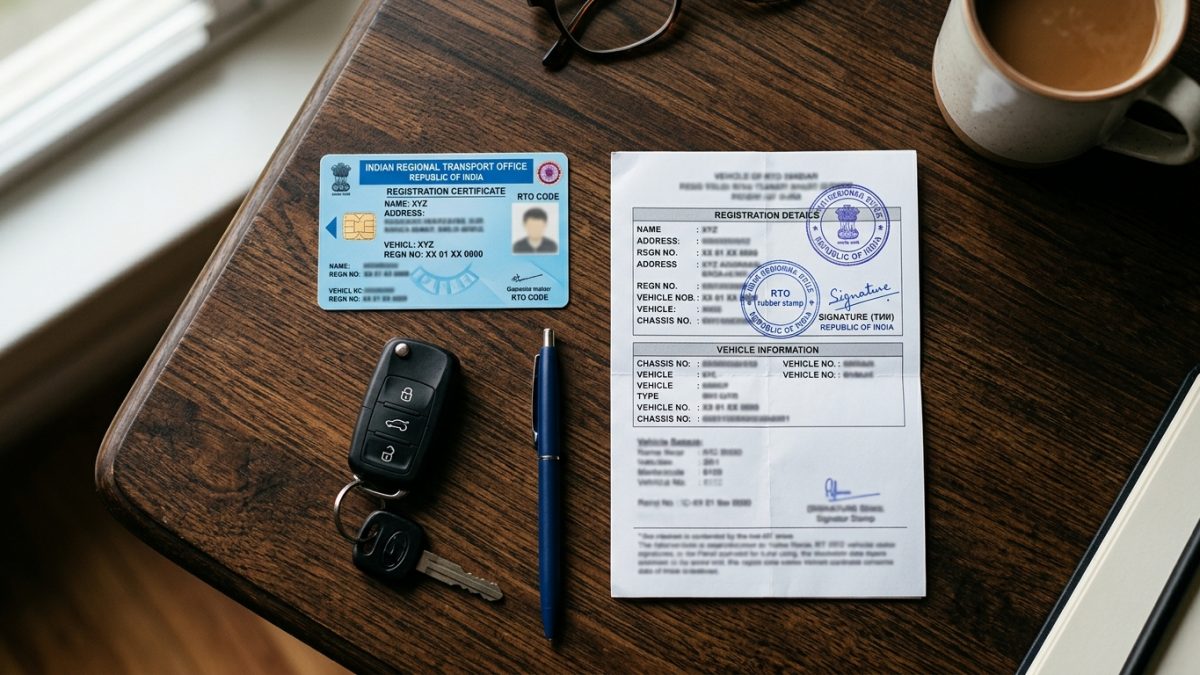
If you attend an in-person Lok Adalat session or visit an administrative traffic settlement counter, ensure you carry both original and self-attested photocopies of the following paperwork:
- Registration Certificate (RC): Proof of vehicle ownership. You can confirm your active registration status using our RC details search tool.
- Driving Licence: A valid physical or digital driving licence of the owner or representative driver.
- Printed Lok Adalat Token: The appointment slip generated from the police portal showing your slot and selected challans.
- Copies of Challan Notices: Printouts of the individual violation notices displaying the offence code, location, and date.
- Active Motor Insurance Policy: Proof of mandatory third-party insurance coverage.
- Pollution Under Control (PUC) Certificate: Producing a valid PUC certificate frequently convinces the bench to waive or drastically reduce fines related to expired emission certificates under Section 190(2).
- Government Identity Proof: Aadhaar Card, PAN Card, or Voter ID of the person appearing before the magistrate.
- Commercial Transport Documents: Valid vehicle permits and fitness certificates if you are resolving fines for commercial transport vehicles.
What Happens If You Miss a Discount Deadline?
Discount windows are strictly time-bound. Missing an amnesty deadline or failing to attend a scheduled Lok Adalat bench brings significant administrative and financial consequences:
- Fine Reverts to 100%: The pending challan returns to its full statutory value, removing any temporary concession.
- Parivahan Portal Blacklisting: Persistent non-payment leads transport authorities to flag the vehicle on the national Vahan database. A blacklisted vehicle cannot undergo ownership transfer, hypothecation termination, or commercial fitness renewals.
- PUC and Insurance Blockades: Enforcement rules increasingly restrict the issuance of annual insurance renewals and PUC certificates for vehicles carrying long-overdue traffic notices.
- Escalation to Regular Magistrate Courts: Ignored virtual challans are sent to regular Chief Judicial Magistrate (CJM) courts, which can issue formal summons requiring mandatory physical appearances.
If you miss a discount drive, your primary options are to pay the full fine online via Parivahan, settle through the Virtual Courts portal, or wait for the next scheduled National Lok Adalat session.
Notice: After settling a fine at a Lok Adalat or during an amnesty drive, database updates may take 3 to 14 business days. Retain your stamped court order or payment receipt if you need an urgent RTO clearance.
Conclusion
Securing a traffic challan discount is a practical, legal method to clear outstanding road fines without paying maximum statutory penalties. Whether you utilize a state amnesty window or schedule a session at the next National Lok Adalat, addressing compoundable notices promptly protects your driving record and prevents vehicle blacklisting.
Before planning your settlement, take a moment to check your pending challans online. Verifying your violation codes and fine amounts ensures you gather the correct documents and take full advantage of legitimate fee waivers.