Key Takeaways
- Always perform digital due diligence on Parivahan and e-challan portals before inspecting the car physically.
- Examine the engine oil filler cap for milky froth to catch costly blown head gaskets.
- Check panel bolt markings, glass year codes, and spot welds to identify hidden accidental repairs.
- Cross-reference service history logs and tire DOT codes to detect rolled-back odometers.
- Never pay a token deposit until hypothecation, blacklisting, and engine numbers are fully verified.
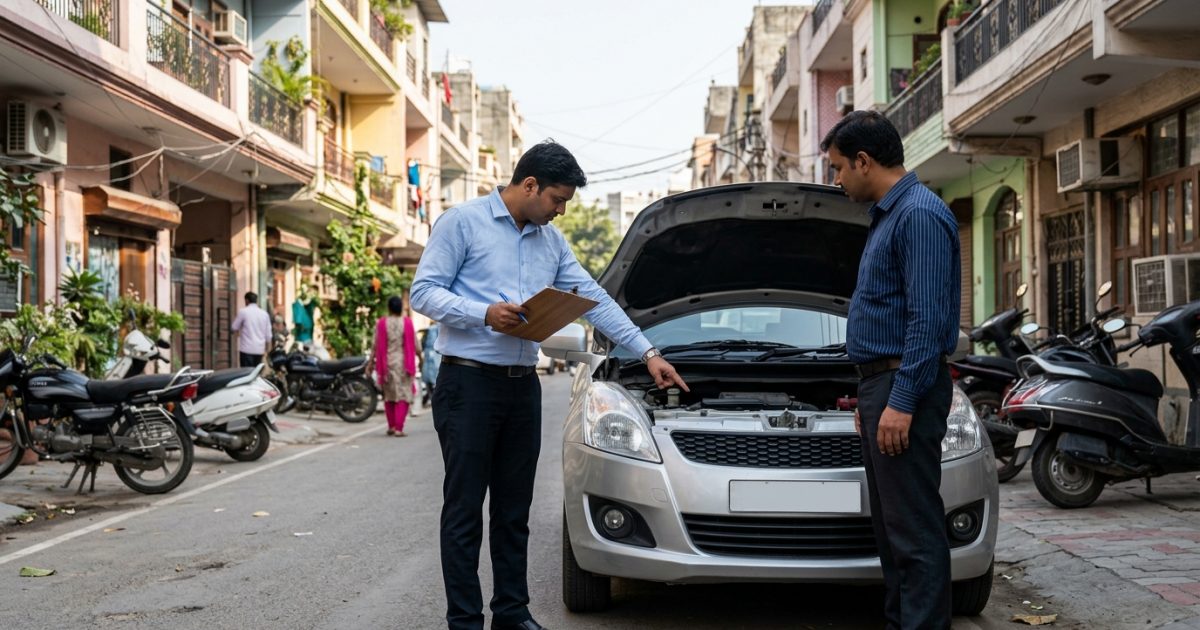
A comprehensive second hand car check requires verifying vehicle registration records, inspecting mechanical components under the hood, detecting body repainting or structural frame damage, and verifying genuine mileage. Performing these physical and digital evaluations protects you from unknowingly buying flood-submerged, accidental, or mechanically failing used vehicles before transferring any non-refundable token deposit.
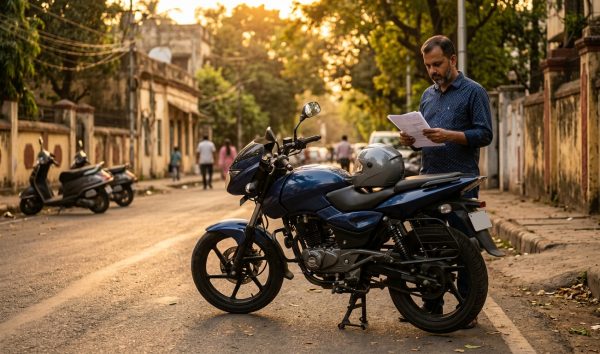
Before you travel to meet the seller or pay any advance, begin with a second hand car check online to verify vehicle owner details. Verifying the registration validity, chassis number, and active hypothecation early saves you from dealing with stolen or disputed vehicles.
| Inspection Stage | Key Focus Areas | Tools / Sources Needed | Estimated Time |
|---|
| Digital Verification | Owner name, hypothecation, challans, blacklisting | Parivahan portal, VahanX search | 10–15 mins |
| Under the Hood | Engine oil, coolant, blow-by, belts, battery | Flashlight, clean cloth | 20–30 mins |
| Exterior & Structure | Panel gaps, factory welds, glass codes, paint | Paint depth gauge, flashlight | 25–35 mins |
| Interior & Flood Signs | Seat rails, pedal wear, cabin odor, fuse box | Flashlight, OBD-II scanner | 20–25 mins |
| Road Test & PDI | Suspension, steering pull, clutch, brakes | Variable road surfaces (10–15 km) | 30–45 mins |
1. Pre-Inspection Digital Due Diligence: Online History Verification
Never inspect a car in person without completing preliminary desk research. Many pre-owned car deals collapse due to documentation issues rather than mechanical failures. Verifying data beforehand gives you immediate leverage during negotiations.
Parivahan and Registration Status Check
Verify the registration credentials against the original Registration Certificate (RC). The seller's name on the RC must match their government identification card perfectly. Through the official Parivahan Sewa Portal or VahanX RC verification, check the exact registration date, fitness expiry, engine number, and chassis number.
Look specifically at the Hypothecation status. If the vehicle is financed by a bank, ownership transfer cannot occur until the seller settles the loan and provides an original Bank No Objection Certificate (NOC) alongside Form 35. Furthermore, ensure there are no active blacklist records, court impoundment flags, or theft markers logged against the vehicle.
e-Challan and Legal Cleanliness
Unpaid traffic fines remain attached to the vehicle, not the driver. Before closing a deal, check pending traffic challans by vehicle number on the Parivahan e-Challan portal. Several states, including Maharashtra, Delhi, and Karnataka, freeze ownership transfer approvals at the RTO if pending virtual court or compoundable traffic challans exist. Ensure the seller clears these penalties before exchanging money.
Insurance Claims and No-Claim Bonus (NCB)
Review the car's current and past insurance policy documents. The No-Claim Bonus (NCB) offers a clear trail of vehicle history. If a 4-year-old car shows an NCB of 0%, the owner filed an insurance claim in the preceding policy year. If the vehicle was recently downgraded from comprehensive coverage to third-party-only insurance mid-tenure, investigate whether a major accident made comprehensive insurance uneconomical to renew. For a complete list of paperwork to review, follow our used car documents checklist.
Warning: In the National Capital Region (Delhi-NCR), diesel vehicles older than 10 years and petrol vehicles older than 15 years cannot be driven or renewed per NGT and Supreme Court orders. Check vehicle age carefully if purchasing from or for NCR.
2. Under-the-Hood Second Hand Car Mechanical Check
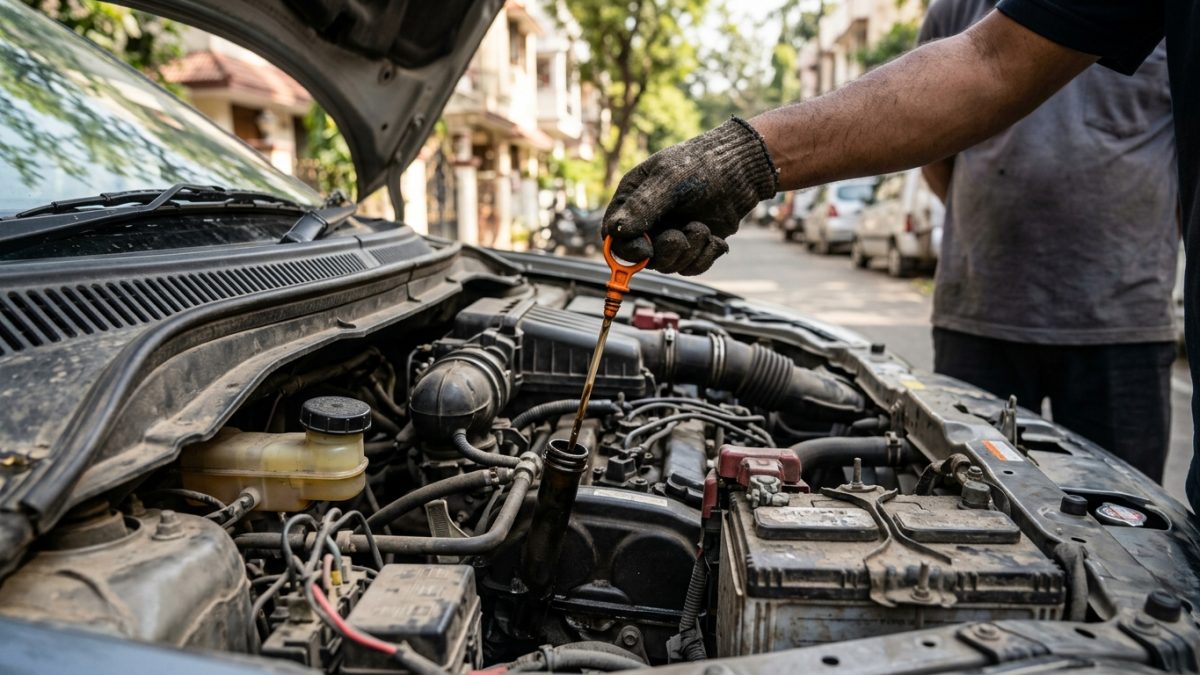
Once you are physically in front of the vehicle, insist that the engine is stone-cold before beginning your inspection. A pre-warmed engine often conceals cold-start rattling, weak batteries, alternator bearing whine, or excessive exhaust smoke.
- Inspect Oil Quality and Head Gaskets: Pull the dipstick while the engine is cold. Fresh petrol engine oil appears golden or amber, while diesel engine oil turns charcoal black quickly. If the oil feels gritty or contains metallic glitter, internal bearings are degrading. Next, unscrew the oil filler cap. If you see a milky, yellowish-white frothy emulsion (often resembling mayonnaise), coolant is mixing with the engine oil due to a blown head gasket or a cracked block.
- Run the Crankcase Blow-by Pressure Test: Start the engine and bring it to normal idling temperature. Carefully unscrew the oil filler cap and set it upside down over the opening without locking it. Mild vibration is expected. However, if exhaust fumes pulse forcefully through the neck and push the cap off, the cylinder walls or piston rings are worn out, indicating an impending engine overhaul.
- Analyze Cold-Start Exhaust Smoke: Have a friend start the engine while you observe the tailpipe. Blue smoke indicates engine oil burning past damaged valve stem seals or worn piston rings. Thick white smoke carrying a sweet chemical smell points to burning coolant from a leaking head gasket. Heavy black smoke signifies incomplete combustion, typically caused by clogged air filters, faulty injectors, or a choked EGR valve.
- Check the Cooling System: Inspect the plastic coolant expansion tank when cold. The fluid should be clean green, pink, or blue. Rust-colored brown water proves the owner ran standard tap water, corroding the water pump and radiator passages. A rainbow oil slick floating on top points directly to oil cooler failure.
- Examine Belts and Battery: Inspect the alternator and serpentine belts for transverse cracks, fraying, or dry rot. Check the battery terminal clamps for acidic corrosion and read the manufacturer's date stamp. In Indian climates, lead-acid car batteries typically require replacement every 3 to 4 years.
3. How to Spot Accidental Car Damage and Repainting
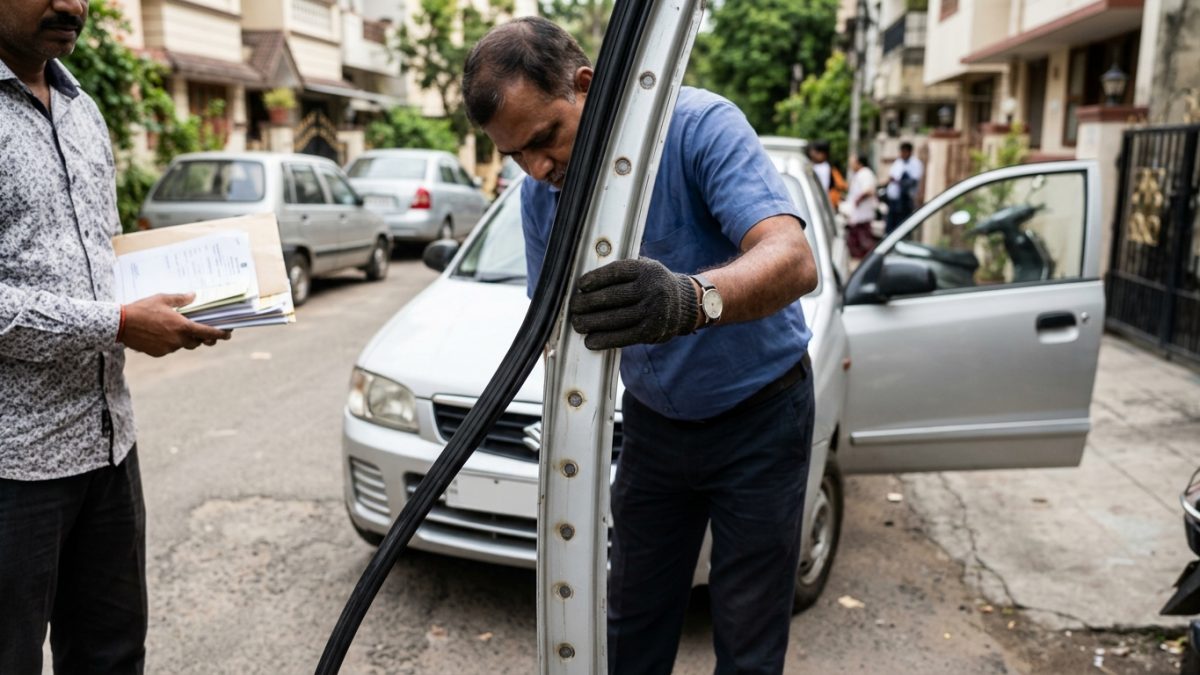
Dealerships and private sellers often disguise collision repairs with quick cosmetic touch-ups. Identifying structural damage requires checking structural weld points, mounting hardware, and paint texture.
Panel Bolt Markings and Alignment
Inspect the hex bolts securing the front fenders, bonnet hinges, tailgate hinges, and doors. Vehicle manufacturers install and align these panels before the body shell enters the paint dip. If the paint on bolt edges is chipped, scratched, or shows rounded corners from socket wrenches, those panels were removed or realigned following an accident.
Spot Welds, Aprons, and Structural Pillars
Peel back the rubber weather-strips framing the doors, A-pillars, B-pillars, and C-pillars. Factory spot welds are circular, evenly indented, and spaced precisely by robotic welders. If the metal under the rubber seal is wavy, covered in non-standard seam sealant, or displays irregular manual welds, the vehicle has undergone structural cutting or pillar reconstruction.
Examine the front engine bay aprons (shock tower domes) and the lower radiator cross-member. The metal should be completely smooth with uniform factory sealant beads. Look out for crumpled inner panels, manual hammer marks, or newly applied underbody coatings hiding frame pulling work.
| Damage Type | Factory Standard | Accident / Repair Warning Signs |
|---|
| Panel Bolts | Uniform paint coating, clean hex corners | Chipped paint, wrench marks, misaligned washers |
| Pillar Welds | Evenly spaced, circular robot spot-welds | Jagged welds, manual brazing, wavy pillar metal |
| Window Glass | Identical date codes and manufacturer brand | Mismatched year stamp, aftermarket glass replacement |
| Paint Finish | Smooth gloss, 80–130 microns thickness | Orange peel texture, overspray on seals, >250 microns |
Automotive Glass Manufacturer Date Codes
Every piece of OEM automotive glass—including the windscreen, rear windshield, quarter vents, and door windows—contains an etched certification bug. This stamp includes the supplier name (such as AIS or Saint-Gobain) and a year manufacturing code. On a clean 2021 car, the glass should show matching 2020 or 2021 date stamps. If the front windshield or passenger side glass reads 2024 or features a different glass brand, that section suffered damage and replacement.
Paint Depth and Texture Cues
View the vehicle body lines at a shallow angle under direct sunlight. Non-factory paint repairs almost always reveal an uneven texture known as "orange peel," where the clear coat does not match adjacent panels. Inspect the rubber window gaskets, headlamp surrounds, and door edge liners for paint overspray or masking tape lines. A professional paint depth gauge reads factory metal between 80 and 130 microns; readings exceeding 200 to 300 microns confirm the presence of body filler (bondo) underneath.
Tip: Run your fingertips along the wheel arch edges and lower door hems. Factory sheet metal is rolled smooth, whereas repaired or repainted edges feel rough from dried clear coat residue.
4. How to Check Meter Tampering in a Used Car
Odometer rollback remains one of the most common used vehicle scams in India. Dishonest sellers routinely pay unauthorized workshops ₹1,000 to ₹2,000 to alter digital instrument clusters. Catching this fraud requires comparing displayed figures against physical wear and electronic log files.
- Inspect Cabin Wear Patterns: Pedals, armrests, and steering wheels tell the true story of vehicle usage. Clutch and brake pedal rubber grooves rarely wear completely smooth before 75,000 to 80,000 km. If a car advertised at 32,000 km features brand-new pedal rubbers or bald steel corners, question the reading. Deeply polished steering wheel leather, a scuffed gear knob, and a compressed, sagging driver-seat outer foam bolster indicate heavy usage over 100,000 km.
- Verify Tire DOT Manufacturing Codes: Vehicle tires display a four-digit Department of Transportation (DOT) date code representing the week and year of manufacture (for example, "2421" means the 24th week of 2021). Factory tires on passenger hatchbacks and sedans last approximately 40,000 to 50,000 km. If an odometer displays 22,000 km but sits on fresh replacement tires, or features tires dated prior to the car's build date, the mileage has likely been manipulated.
- Scan Multiple Electronic Control Modules: While basic cluster programming tools change the dashboard display, vehicle mileage on modern cars is recorded independently across secondary computers. Diagnostic scanners extract odometer data recorded inside the Engine Control Unit (ECU), Transmission Control Module (TCM), and ABS/Airbag control modules. Discrepancies between the dashboard and ABS wheel-speed records expose cluster rollback instantly.
- Check Authorized Dealership Server Records: Request the vehicle's complete Vehicle Identification Number (VIN). Visit the nearest brand-authorized service center (such as Maruti True Value, Hyundai Promise, or Honda Auto Terrace). Routine service, recall campaigns, and warranty visits log exact odometer numbers onto central cloud servers. If the system shows the car visited the workshop at 68,000 km in 2024, but the digital display currently reads 41,000 km in 2026, you have definitive proof of fraud.
Legal Redress: Rolling back odometers constitutes criminal cheating under Section 318(4) of the Bharatiya Nyaya Sanhita (BNS). The NCDRC has affirmed that used car dealers cannot rely on "as-is-where-is" clauses when fraudulent meter tampering or concealed crash damage is documented.
5. Flood Damage Spotting: Warning Signs of a Submerged Vehicle
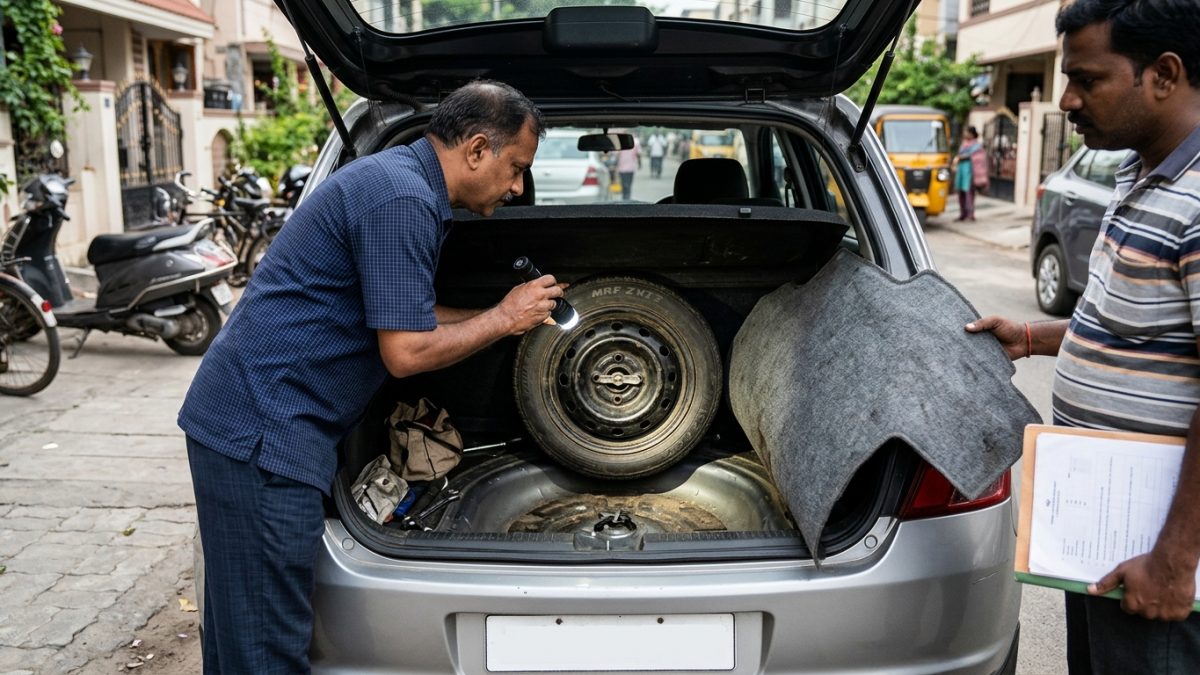
Monsoon flooding in cities like Mumbai, Chennai, Bengaluru, and Delhi frequently floods hundreds of vehicles. Water-damaged cars are cleaned, dried, and quickly sent to used car markets. While they look shiny, submerged vehicles suffer long-term electrical corrosion and electronic sensor failures.
- The Sniff Test: A heavy, cloying perfume or air freshener is frequently used to mask lingering dampness. Turn on the air conditioning blower on high heat; a musty, moldy basement smell confirms that water soaked the firewall insulation pad.
- Seat Mount Rails and Under-Dash Metal: Take a strong flashlight and inspect the bare steel seat-mounting rails, seat adjustment springs, and lower steering column shaft underneath the dashboard. These interior components are unpainted from the factory. If they show rust pitting or orange corrosion, the vehicle was submerged up to the cabin waterline.
- Seatbelt Full-Spool Extension: Pull driver and passenger seatbelts out to their maximum mechanical length. Check the fabric near the spool anchor for watermark lines, silt residue, or mildew. Check the fabric date tag at the lower anchor to confirm the belt was not swapped out.
- Spare Wheel Well and Boot Crevices: Lift the boot floor carpeting and remove the spare tire and toolkit. The spare wheel depression is the lowest point of the passenger cabin. Look into the corner seams for fine silt lines, dried muddy deposits, or lifting sound-deadening insulation sheets.
- Fuse Box and Wiring Harness Connectors: Pop open the main engine bay and cabin fuse boxes. Greenish-white powdery oxidation (verdigris) on copper terminals or silt trapped inside wire harness conduits proves water intrusion.
6. Cabin Electronics and Comprehensive Test Drive Protocol
Electronic replacements and suspension overhauls represent significant post-purchase expenses. Systematically test all onboard convenience features before taking the car on the road.
Cluster Warning Lights and Electronics
Turn the key to the "Ignition On" position (Position II) without starting the engine. Confirm that the Check Engine Light (CEL), ABS light, Airbag (SRS) indicator, and Oil Pressure icon illuminate. Once the engine starts, every single warning light should extinguish within 2 to 3 seconds. If a warning light fails to illuminate during ignition, rogue sellers may have physically disconnected or blacked out the cluster LED to hide existing sensor faults.
Operate every electrical component: lower and raise all power windows, check the rear demister grid lines, test the infotainment touchscreen at every corner, switch through all fan blower speeds, and check that the air conditioning compressor clutch engages smoothly without causing engine RPM shudder.
The 15-Kilometre Road Test Routine
Take the car on a test drive covering at least 10 to 15 kilometers, incorporating broken pavement, highway stretches, and stop-and-go traffic.
- Steering Alignment: On a level, empty road, ease your grip on the steering wheel at 40 km/h. The car should track straight without pulling to the left or right. Steering pull points to unbalanced alignment, uneven tire wear, or bent suspension control arms.
- Clutch and Gearbox Response: On manual cars, test the clutch bite point. An engagement point at the very top of pedal travel, or engine RPM increasing without a corresponding rise in vehicle speed, indicates a worn clutch disc. On automatic models (AMT, CVT, Torque Converter, or DCT), monitor for harsh shuddering when engaging Reverse, or erratic shifts between first and second gears.
- Suspension and Braking: Drive over sharp speed humps and rough patches at 20 km/h. Listen for dull thuds, metallic clunking, or squeaks, which indicate blown shock absorbers, worn stabilizer links, or cracked lower-arm rubber bushings. Perform firm braking from 60 km/h; pulsating feedback through the brake pedal or steering wheel reveals warped brake discs.
7. Used Car PDI Checklist: Professional Inspection vs DIY
While an individual buyer can identify obvious cosmetic flaws, professional Pre-Delivery Inspection (PDI) services provide specialized diagnostic equipment. Technicians use multi-system OBD-II scanners, paint depth meters, and hydraulic lifts to evaluate components you cannot reach on the ground.
| Inspection Method | Approximate Cost | Tools Used | Best Suited For |
|---|
| Self / DIY Inspection | ₹0 (Free) | Flashlight, dipstick, basic visual checks | Initial shortlisting, screening obvious lemons |
| Trusted Local Mechanic | ₹500 to ₹1,000 | Hand tools, compression tester, visual checks | Older budget hatchbacks, simple mechanicals |
| Third-Party Certified PDI | ₹1,499 to ₹2,999 | Paint depth gauge, multi-module OBD scanner, ramp lift | Luxury cars, automatics, out-of-warranty SUVs |
8. Legal Documents, Scrappage Limits, and RTO Transfer Steps
A mechanically flawless vehicle remains a liability if legal ownership cannot be transferred cleanly. Familiarize yourself with the core procedural steps and statutory timelines under the Motor Vehicles Act.
- Obtain the Necessary RTO Forms: Download official transfer forms from the Parivahan Forms Portal. Ensure the seller signs Form 29 (Notice of Transfer) and Form 30 (Application for Transfer) in duplicate. If an active loan was cleared, collect two copies of signed Form 35 along with the bank's original NOC.
- Collect Vehicle Credentials: Collect the original Registration Certificate (RC), valid Pollution Under Control (PUC) certificate, and comprehensive insurance cover note.
- Adhere to Transfer Timelines: For sales within the same RTO jurisdiction or state, submit the transfer application within 14 days of purchase. For inter-state vehicle sales, the seller must obtain an RTO No Objection Certificate (Form 28) from the originating RTO, and the buyer must apply for re-registration within 45 days. Statutory transfer fees for Light Motor Vehicles (cars) baseline at ₹150 to ₹300 under Rule 81 of the Central Motor Vehicles Rules, plus state smart-card processing fees.
Conclusion
Performing a thorough second hand car check before paying a token deposit is the only guaranteed way to avoid buying accident-repaired, flooded, or odometer-tampered vehicles. Take your time inspecting mechanical components, cross-referencing dealership logs, and reviewing physical wear against displayed mileage.
Before signing sales agreements or exchanging funds, protect yourself by conducting a fast online vehicle owner and RC check to verify hypothecation, blacklisting, and registration validity.