Key Takeaways
- Complete vehicle ownership transfer online using Aadhaar OTP e-KYC without visiting RTOs in faceless states.
- Sellers must submit Form 29 within 14 days of sale to prevent legal liabilities.
- Statutory transfer fees start at ₹150 for two-wheelers and ₹300 for cars under CMVR Rule 81.
- Pending traffic challans and active hypothecations block online transfer requests immediately.
- Track your application anytime using your Parivahan application number and download digital RC on DigiLocker.
Completing your rc transfer online through the Ministry of Road Transport and Highways (MoRTH) portal allows buyers and sellers to transfer legal ownership of a vehicle digitally. As of October 2026, using Aadhaar-based faceless authentication on the official portal eliminates the need to hire unauthorized RTO agents or visit physical RTO counters in eligible states.
Before you initiate ownership transfer or purchase a pre-owned vehicle, it is critical to verify the vehicle's background. Use VahanX to check RC and vehicle owner details, confirming current owner name, loan hypothecation status, insurance validity, and registration authenticity.
| Vehicle Type | Base Transfer Fee | Smart Card Fee | Statutory Timeline |
|---|
| Two-Wheeler (Bike/Scooter) | ₹150 | ₹200 | 14 days (Intra-state) |
| Car / LMV (Non-Transport) | ₹300 | ₹200 | 14 days (Intra-state) |
| Inter-State Transfer | ₹150 (Bike) / ₹300 (Car) | ₹200 | 45 days (Inter-state) |
| Late Delay Penalty | ₹300/month (Bike) | ₹500/month (Car) | Applicable under Rule 81 |
Legal Rules and Timelines for Vehicle Ownership Transfer Online
Vehicle ownership transfer in India is governed under Section 50 of the Motor Vehicles Act, 1988, read alongside Rules 55, 56, 57, and 81 of the Central Motor Vehicles Rules (CMVR), 1989. These statutes establish mandatory timelines for both the buyer and seller to notify their respective registering authorities.
For intra-state vehicle sales (within the same state), the registered seller must report the sale by generating Form 29 within 14 days of vehicle handover. Simultaneously, the buyer must submit the formal transfer application via Form 30 within 14 days of taking physical delivery.
For inter-state transfers, where the vehicle moves to another jurisdiction, the buyer receives a 45-day window to apply for an altered registration mark in the new state, accompanied by a clearance certificate or Form 28 No Objection Certificate (NOC) from the parent RTO.
Warning: Until the vehicle ownership transfer online is approved on Vahan, the seller remains solely liable under Indian law for traffic challans, accident claims, and criminal liabilities involving the vehicle.
Penalties for Belated Submission
Failing to file your transfer application within the statutory 14-day limit attracts late penalties under Rule 81 of the CMVR. Two-wheeler owners face a penalty of ₹300 for every month of delay or part thereof. For private cars and Light Motor Vehicles (LMV), the delay fee is ₹500 for every month of delay.
Ownership Transfers in Special Circumstances
In the event of the registered owner's demise, Rule 56 mandates that the legal heir must inform the registering authority within 30 days of death. The final application using Form 31 must be submitted within 3 months. For vehicles sold via public auction, Rule 57 requires the purchaser to apply using Form 32 within 30 days of auction handover.
Prerequisites Before Applying for Parivahan RC Transfer
Before launching your parivahan rc transfer, ensure that both buyer and seller have cleared all statutory requirements on the central database. If any database discrepancy exists, the automated Vahan system halts the application immediately.
- Clear Active e-Challans: The system automatically blocks transfer of ownership if unpaid traffic tickets exist against the vehicle number. Verify and clear fines via the official MoRTH e-Challan Portal or check your pending balance via VahanX challan search.
- Active Pollution Under Control (PUC) Certificate: An updated PUC record must reflect digitally on the national Parivahan server.
- Valid Motor Insurance: The vehicle must possess active insurance coverage. Third-party liability insurance is mandatory at the time of transfer submission.
- Loan Clearance (Hypothecation Termination): If the vehicle was financed, the seller must clear the loan and file Form 35 with a financier NOC to remove the bank lien prior to transfer.
- Aadhaar-Linked Mobile Numbers: Both buyer and seller must have their mobile numbers linked with Aadhaar to complete Aadhaar OTP e-KYC and digital e-Signing.
Tip: If you are finalizing the commercial terms of your transaction, execute a formal contract using our vehicle sale agreement guide before starting the digital transfer.
Step-by-Step RC Transfer Online Process
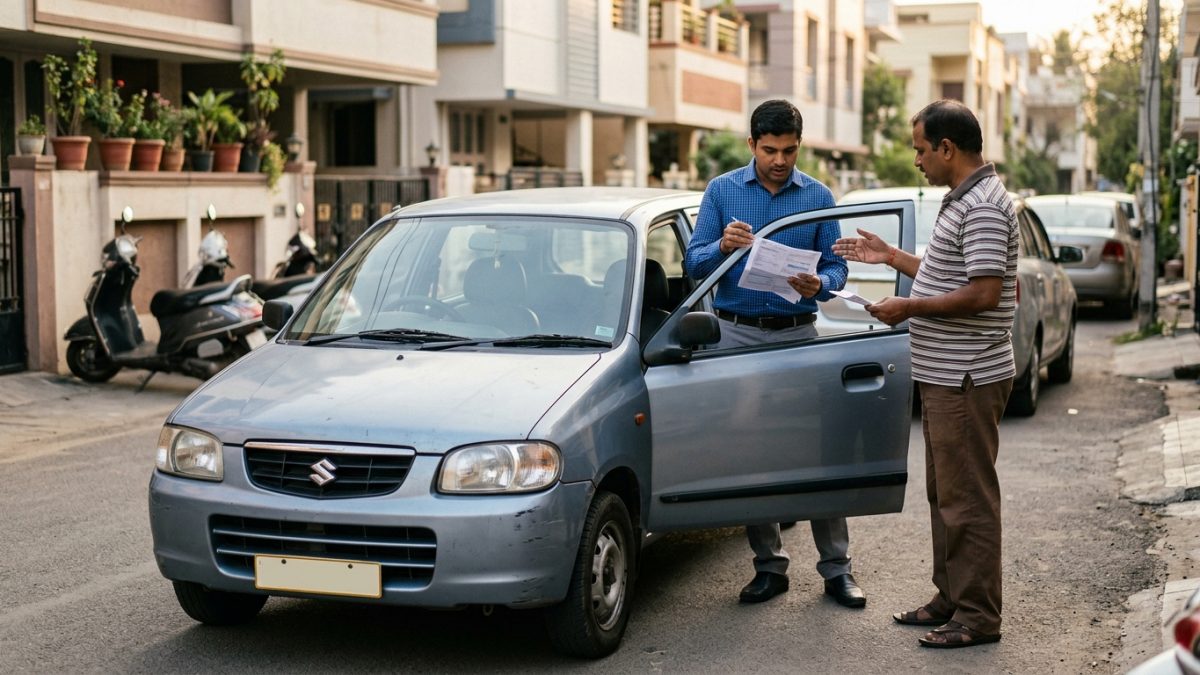
The modern rc transfer online process utilizes a dual-action faceless mechanism. The seller initiates the request by submitting Form 29, after which the buyer completes the details and signs Form 30.
- Access the citizen portal: Navigate to the official MoRTH Parivahan Citizen Portal, select Online Services, and click on Vehicle Related Services.
- Select state and RTO: Choose your registration state and jurisdictional RTO, or log in with your vehicle registration number.
- Choose Transfer of Ownership: Select the Transfer of Ownership (TO) service from the catalog of available citizen options.
- Authenticate vehicle details: Enter your complete vehicle registration number and the last five digits of the chassis number.
- Complete Aadhaar OTP verification: Select Aadhaar Authentication (Faceless Service) and submit the OTP received on your Aadhaar-registered mobile number.
- Enter buyer details: Input the buyer's legal name, father or spouse name, contact number, permanent residential address, and agreed vehicle sale price.
- Generate application number: Submit the seller details to generate a unique Vahan Application Number, which is sent via SMS to both parties.
- Log in as buyer: Go to the Parivahan portal, select your destination state, and click on Apply for Transfer of Ownership (Buyer).
- Input application details: Enter the application number generated during the seller's step along with the vehicle registration number.
- Complete Aadhaar e-KYC: Authenticate using your Aadhaar OTP. The system will automatically populate your official residential address and identity records directly from UIDAI.
- Verify vehicle records: Confirm existing insurance details, provide PAN card or Form 60 declaration, and add nominee details if prompted.
Part 3: Online Fee Payment, Uploads & Aadhaar e-Sign
- Pay RTO fees online: Pay the statutory transfer fee, smart card issuance fee, and postal charges using UPI, Net Banking, or a Debit/Credit card.
- Upload self-attested documents: Upload clear scanned copies of the original RC, active insurance certificate, valid PUC certificate, and proof of address.
- Execute digital Aadhaar e-Sign: Both buyer and seller complete the digital signature (Aadhaar e-Sign) on system-generated Forms 29 and 30, completing the paperless transfer.
Note: If an online payment fails and your bank account is debited, do not make an immediate second payment. Go to Parivahan, open the Check Failed/Pending Transaction section, and re-verify the transaction status.
Official RTO Fees for Bike and Car RC Transfer
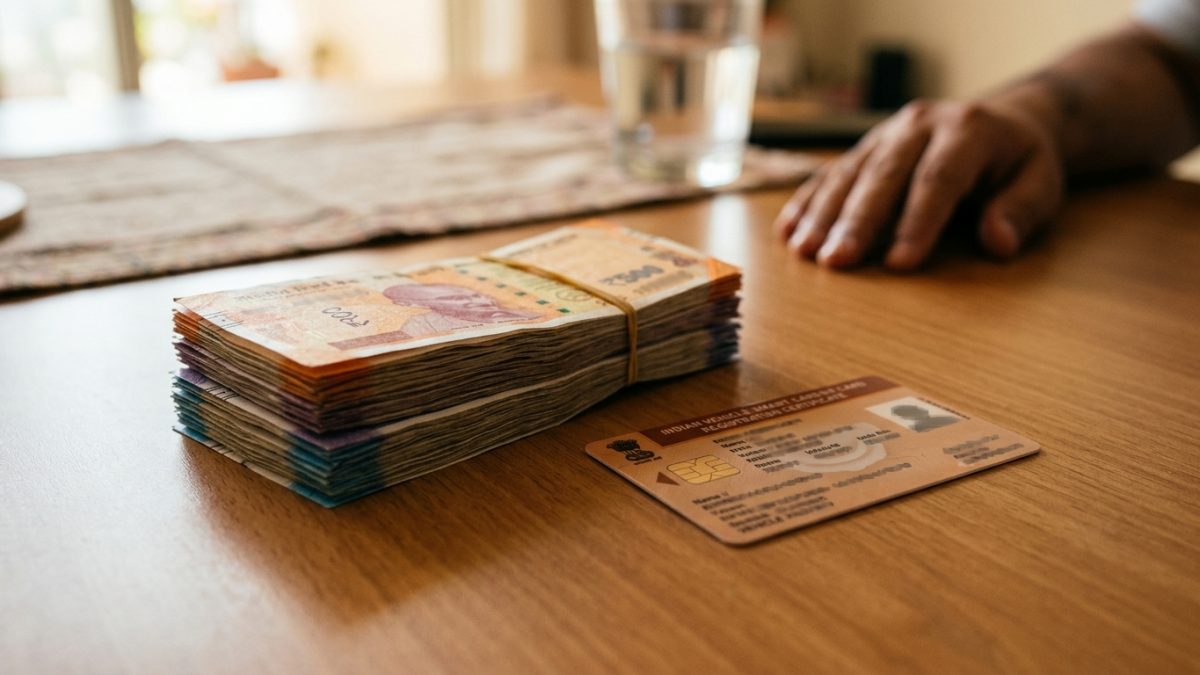
Official rc transfer fees are fixed under Rule 81 of the Central Motor Vehicles Rules, 1989. The base statutory fee for vehicle ownership transfer is set at exactly 50 percent of the original registration fee (Serial No. 4).
For bike rc transfer online, the base fee is ₹150 (half of the ₹300 registration fee). For car rc transfer online, the base fee is ₹300 (half of the ₹600 registration fee). A Smart Card RC fee of ₹200 applies to both categories where digitized cards or Form 23A are issued.
| Fee Component | Two-Wheeler (Bikes) | Cars / LMV (Private) | Commercial Vehicles |
|---|
| Base Transfer Fee (Rule 81) | ₹150 | ₹300 | Varies by gross weight |
| Smart Card RC Fee | ₹200 | ₹200 | ₹200 |
| Postal / Delivery Fee | ₹50 – ₹100 | ₹50 – ₹100 | ₹50 – ₹100 |
| Estimated Total Payable | ₹380 – ₹530 | ₹530 – ₹850 | ₹750 – ₹1,500+ |
State governments are legally authorized to levy nominal user charges, automation cesses, and India Post Speed Post delivery charges. Depending on the state where you register, the final fee on the portal usually ranges between ₹380 and ₹530 for motorcycles, and ₹530 and ₹850 for private cars.
If the vehicle carries an existing loan or the buyer is financing the purchase, hypothecation endorsement fees also apply. Form 35 termination generally costs ₹100 to ₹500, while fresh hypothecation endorsement under Form 34 costs ₹500 for two-wheelers and ₹500 to ₹1,500 for cars.
Documents Required for RC Transfer
Keep scanned digital copies ready before initiating your application to avoid portal session time-outs. Standard documents required for rc transfer include:
- Form 29: Notice of Transfer of Ownership, signed or digitally e-signed by the seller.
- Form 30: Application for Intimation and Transfer of Ownership, executed by both buyer and seller.
- Original Registration Certificate (RC): Physical card (for physical submission) or digital surrender verification.
- Valid Insurance Policy: Active third-party or comprehensive motor insurance certificate.
- Valid PUC Certificate: Certified emissions slip reflecting on the national PUC register.
- Address Proof of Buyer: Aadhaar card, Voter ID, Passport, or utility bill (bypassed if auto-fetched via Aadhaar e-KYC).
- PAN Card or Form 60: Mandatory tax identification for both buyer and seller.
- Form 28 (NOC): Required with three copies if transferring between two different states.
- Form 35 and Financier NOC: Mandatory if clearing an existing bank loan or hypothecation lien.
How to Check RC Transfer Status Online
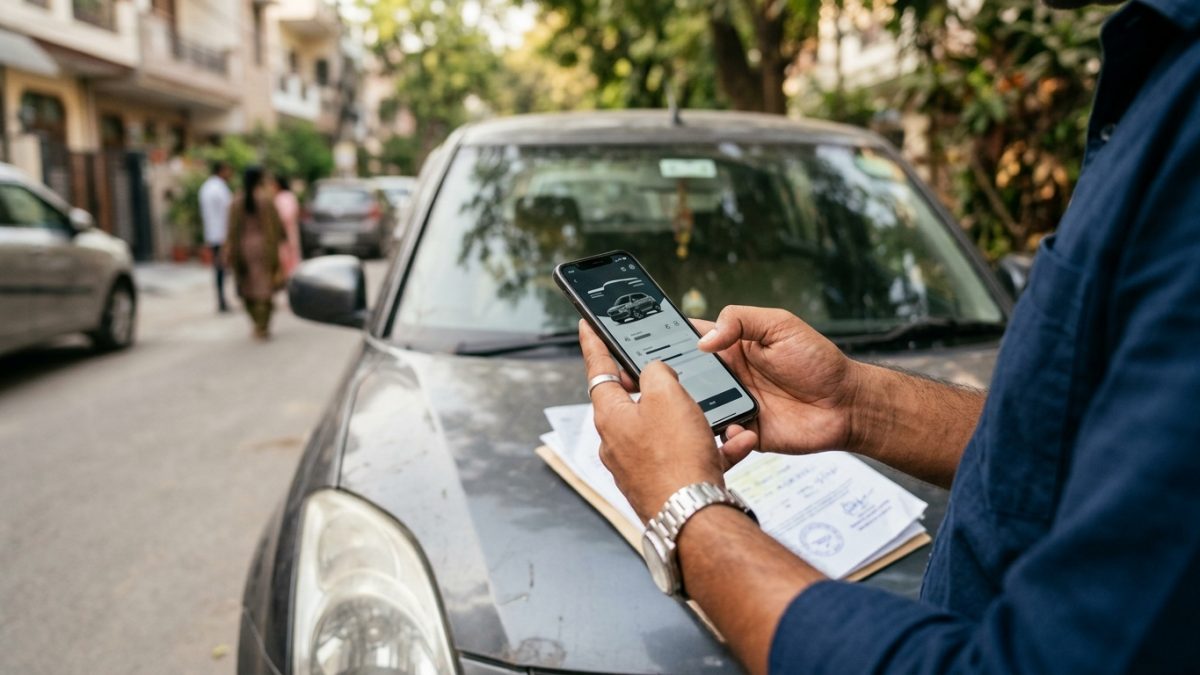
Once your application is submitted, you can track processing milestones from submission to smart card dispatch. Conducting an rc transfer status check online takes less than two minutes on the official portal.
- Visit Parivahan status tracker: Go to the official Parivahan portal, navigate to Online Services, and select Vehicle Related Services.
- Locate application status: Choose your state and click on the Status menu, then select Know Your Application Status.
- Submit application credentials: Enter your application number and the on-screen captcha code, then click Submit.
- Review progress stages: Check the active processing stage assigned to your file by the RTO.
| Processing Stage | Description | Action Required by Applicant |
|---|
| Stage 1 | Application Submitted & Fee Verified | None; payment acknowledged |
| Stage 2 | Document Verification at Dealing Hand | Wait for RTO officer clearance |
| Stage 3 | MVI / Registering Authority Approval | Review for objections or approval |
| Stage 4 | RC Printing & Smart Card Generation | Digital RC ready on DigiLocker |
| Stage 5 | Dispatched via Speed Post | Track consignment on India Post |
Once the registering authority approves the transfer, the buyer's name appears as the registered owner. You can immediately access the legal digital registration certificate using DigiLocker or the mParivahan mobile app without waiting for the postal delivery of the physical smart card.
State-Wise Variations: Faceless vs Non-Faceless RTOs
While the Parivahan portal is a centralized national platform, operational processes vary between states depending on whether the jurisdiction has implemented faceless services.
States such as Delhi, Maharashtra, Uttar Pradesh, Karnataka, Madhya Pradesh, Gujarat, and Kerala support fully faceless transfers for individual non-transport vehicles. If both parties authenticate via matching Aadhaar records and complete digital e-Signs, neither party needs to step into an RTO office. Physical document submission is waived.
Hybrid States Requiring Physical Counters
In states like Tamil Nadu, Telangana, Andhra Pradesh, West Bengal, and parts of Haryana, the online portal is used for data entry, fee submission, and form generation. However, physical dossiers containing original Forms 29 and 30, physical RC, and tax documents must be submitted to the RTO counter or sent via registered Speed Post.
If you are required to submit hard copies or resolve an objection in person, you can look up your local RTO office address and jurisdiction details before visiting the counter.
Warning: If your name, father's name, or residential PIN code on Aadhaar differs even slightly from the details on the RC, automated faceless verification will fail. In such cases, you must complete manual document verification at the RTO counter.
Common Mistakes and Solutions During Online RC Transfer
Applicants frequently encounter portal errors during digital transfers. Understanding these common technical issues helps ensure a smooth transfer.
- Active Hypothecation Error: If the vehicle was financed, the portal prevents Form 30 submission. Ensure you complete Form 35 hypothecation termination online with your bank's NOC prior to initiating ownership transfer.
- Pending Challan Notification: The system displays an error saying dues are pending. Pay all open tickets on the e-Challan portal and allow 2 to 24 hours for payment reconciliation across databases.
- Commercial Vehicle Ineligibility: Commercial and transport vehicles are excluded from faceless transfers nationwide. They require physical vehicle fitness inspection, tax clearance, and permit transfers at the RTO.
- Inter-District Moves Within the Same State: While unified states like Delhi and Maharashtra do not require Form 28 for inter-district sales, several states still demand an intra-state clearance slip before the new RTO issues the updated RC.
Before purchasing any second-hand car or bike, make sure you double-check the seller's claims. Use VahanX vehicle owner details lookup to verify that the RC is clean, unencumbered by court attachments, and registered to the exact individual presenting the sale papers.
Conclusion
Executing an rc transfer online through the Parivahan portal provides a transparent, legally sound, and fast way to transfer vehicle ownership without paying unneeded agent commissions. Ensure all traffic challans are cleared, verify that loan hypothecations are resolved, and keep your Aadhaar details updated to enjoy a completely faceless experience.
Whether you are buying or selling a pre-owned vehicle, always verify the registered owner's credentials on VahanX first, initiate the transfer promptly within 14 days, and track your application status until the new Smart Card arrives.