Key Takeaways
- Meter fraud inflates used car prices by ₹50,000 to over ₹4,00,000 across Indian markets.
- Free online verification via the Parivahan PUCC portal reveals historical odometer records.
- OEM Dealer Management System (DMS) records provide a verified timeline of genuine service visits.
- Professional OBD-II scanners can detect mismatches between dashboard meters and ABS or ECU modules.
- Rolling back vehicle mileage constitutes criminal fraud punishable under Section 318(4) of the BNS, 2023.
A comprehensive odometer tampering check requires cross-verifying digital government records, scanning electronic control modules, and inspecting physical wear points. Before committing to any purchase, always check your car's background using the VahanX RC search tool to inspect registered owner details, fitness records, and vehicle age.
| Verification Method | Typical Cost (₹) | Time Required | What It Detects |
|---|
| Parivahan PUCC Check | Free | 2 minutes | Discrepancies in historical emissions test logs |
| OEM DMS Service History | Free – ₹500 | 15–30 minutes | Unrecorded gaps in dealer service records |
| Multi-Module OBD-II Scan | ₹1,500 – ₹3,500 (in PPI) | 20 minutes | ECU, ABS, and cluster mileage mismatches |
| Physical Wear Inspection | Free (Self-check) | 15 minutes | Excessive pedal, steering, and disc wear |
Why Odometer Fraud is Rampant in India
Odometer rollback remains one of the most common pre-owned vehicle scams across India. Unscrupulous dealers and roadside garages use cheap plug-and-play programming tools to alter EEPROM memory chips inside modern digital instrument clusters within minutes.
A meter rollback of 40,000 to 60,000 km allows sellers to artificially inflate resale asking prices by ₹50,000 to ₹1,50,000 on popular hatchbacks like the Maruti Swift and Hyundai Creta. In the premium luxury segment, this price inflation easily exceeds ₹2,00,000 to ₹4,00,000.
Beyond financial loss, mileage fraud creates severe mechanical safety hazards. Buyers skip vital preventative maintenance schedules, such as timing belt or chain replacements typically mandated at 80,000 to 1,00,000 km, leading to sudden mechanical breakdowns.
Warning: A tampered odometer hides critical service milestones like transmission fluid flushes and suspension rebuilds, drastically increasing the risk of catastrophic engine failure.
How to Check Meter Tampering in Car Using Parivahan PUCC
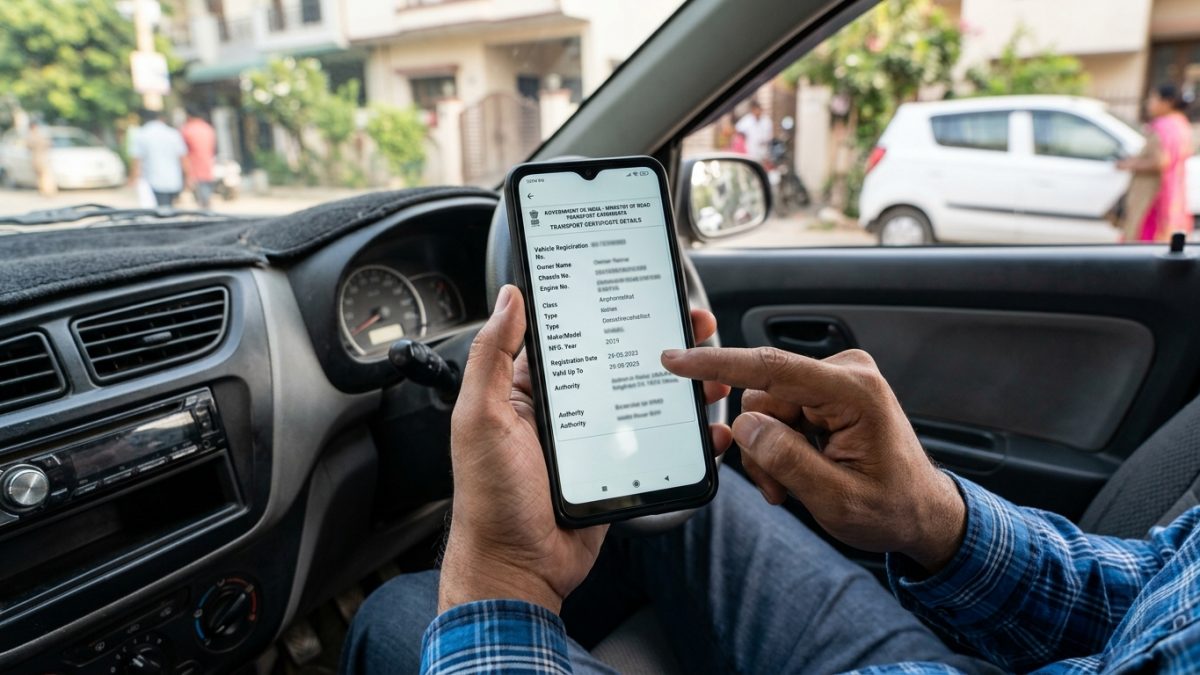
You can perform a free car meter reverse check online by taking advantage of centralized emission records. Every time a vehicle undergoes a Pollution Under Control (PUC) test at a certified Indian emissions testing booth, the operator enters the visible dashboard odometer figure directly into the Ministry of Road Transport and Highways (MoRTH) database.
- Open the official portal: Navigate to the central MoRTH PUCC database at vahan.parivahan.gov.in/puc/ on your mobile or desktop browser.
- Locate certificate details: Click on the PUC Certificate tab located on the primary navigation menu.
- Input vehicle credentials: Enter the complete vehicle registration number and the last five digits of the chassis number.
- Submit security code: Enter the captcha code shown on the screen and select PUC Details / View Certificate.
- Examine the historical log: Inspect the recorded distance printed on past test certificates. If a certificate from 12 months ago displays 85,000 km, but the car cluster currently shows 52,000 km, you have caught a clear meter rollback.
Accessing OEM Service History to Check Real Mileage of Used Car
Checking the authorized dealer network records is the most dependable way to confirm the authentic service history of an Indian car. Leading car manufacturers including Maruti Suzuki, Hyundai, Tata Motors, Mahindra, Toyota, Honda, and Volkswagen operate integrated Dealer Management Systems (DMS) that synchronize repair data across all authorized workshops nationwide.
- Note the chassis number: Locate the 17-character Vehicle Identification Number (VIN) on the registration certificate or the vehicle's engine bay identification plate.
- Visit the brand workshop: Accompany the current registered owner to an authorized brand dealership. Service advisors typically require the registered owner's presence or written consent due to customer data privacy policies.
- Request the complete history ledger: Ask the service advisor to print or review the chronological repair ledger, warranty claims, and scheduled servicing records.
- Analyze chronological intervals: Calculate running averages across service entries to ensure mileage progression matches the vehicle's age.
Common Red Flag: Watch out for multi-year record gaps where a car was serviced diligently at authorized centers up to 45,000 km in Year 3, followed by zero records until Year 7 when it is suddenly listed for sale at 55,000 km.
How to Detect Digital Odometer Tampering with an OBD Scanner
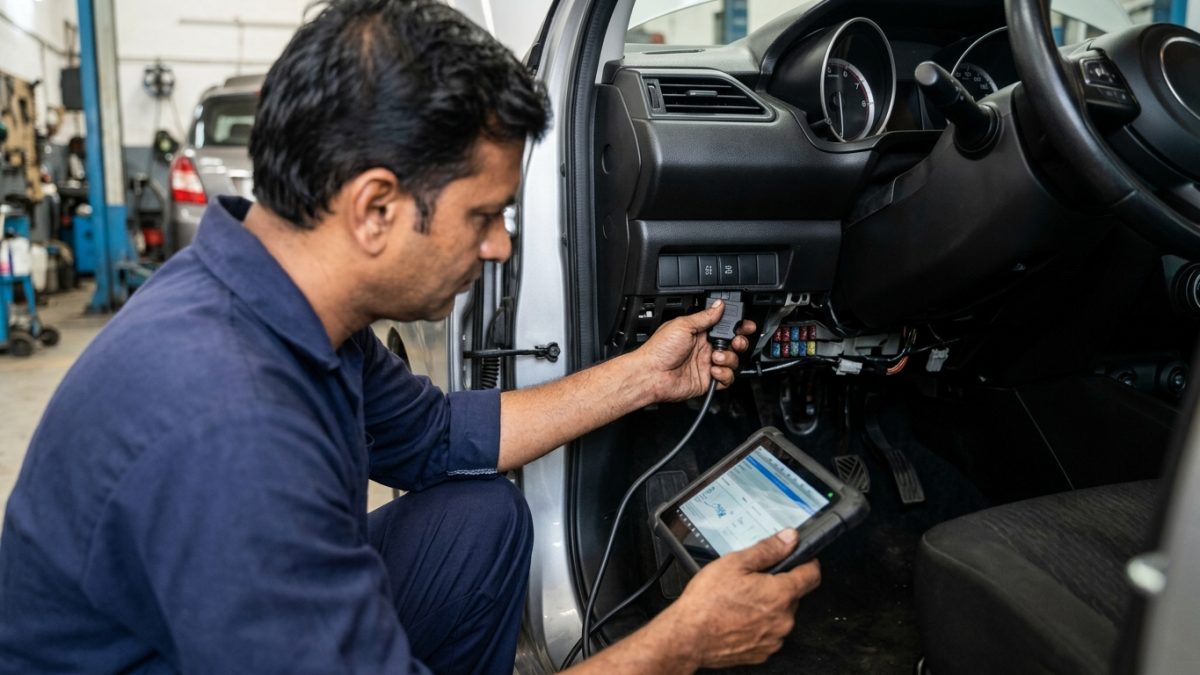
Fraudulent used-car brokers frequently perform budget cluster rewrites that only modify the numbers shown on the dashboard screen. However, modern OBD-II compliant vehicles (especially post-2018 BS4 and BS6 models) log mileage and operational runtime across multiple onboard computers.
A standard budget ELM327 OBD scanner costing ₹500 to ₹1,500 cannot detect these rollbacks because it only reads the single basic broadcast ID sent from the cluster. In contrast, professional diagnostic platforms (such as Autel, Launch, Bosch, or VCDS) interrogate separate control modules.
| Electronic Module | Data Tracked Independently | Tampering Vulnerability |
|---|
| Engine Control Unit (ECU) | Total engine running hours and fuel consumption cycles | Rarely rewritten by roadside meter fraudsters |
| Anti-lock Braking System (ABS) | Individual wheel revolution pulses and distance counters | Extremely difficult to alter without factory tools |
| Transmission Control Module (TCM) | Gear engagement mileage on automatic transmissions | Often overlooked during cheap cluster-only rollbacks |
| Airbag / SRS Control Module | Deployment telemetry and operating time stamps | Preserves original vehicle distance data pulses |
When an automotive technician connects a professional bi-directional diagnostic scan tool, they can compare live module logs side by side. If the instrument cluster reads 48,000 km while the ABS module reflects 1,10,000 km based on wheel revolution counts, digital rollback fraud is confirmed.
Physical Inspection: How to Know if Car Meter is Tampered
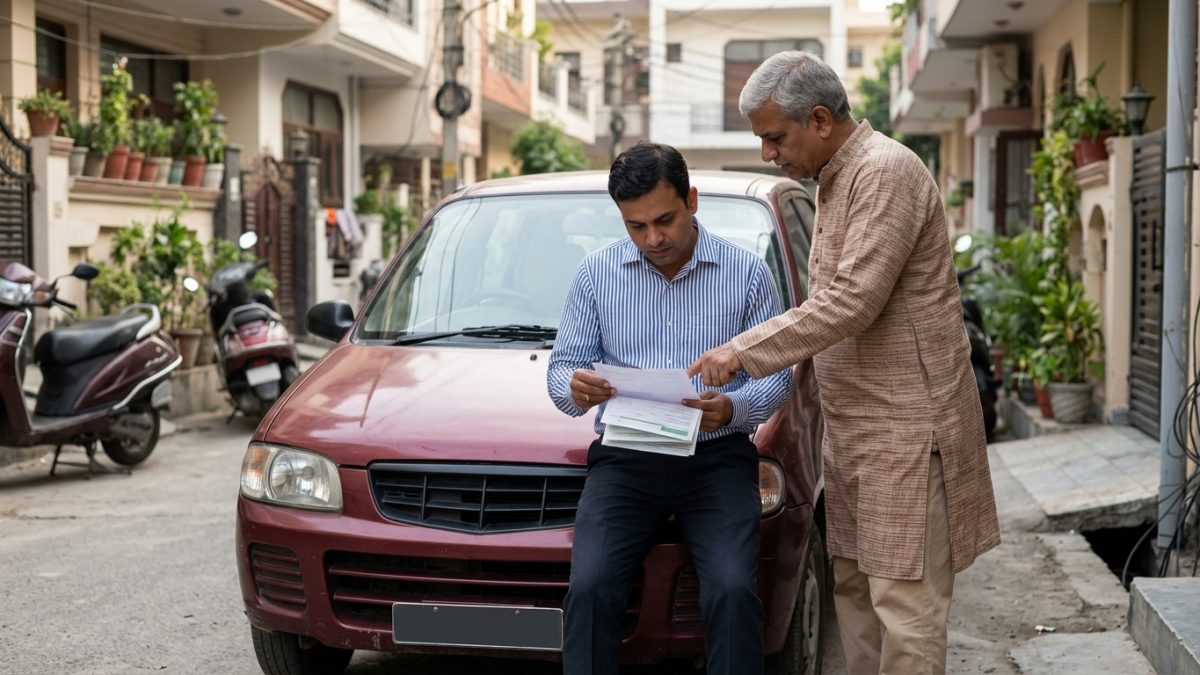
When electronic records are missing, physical component wear will reveal whether an odometer reflects reality. Match the vehicle's claimed distance against these critical touchpoints:
- ABC Pedals: Rubber covers on the accelerator, brake, and clutch pedals feature deep grooves when new. Heavily smoothed corners or suspiciously brand-new pedal rubbers on a car claiming under 30,000 km indicate deception.
- Steering Wheel and Controls: Factory steering wheels retain a matte, textured finish. A slick, shiny glaze or worn leather at the 10-and-2 hand positions suggests high usage above 80,000 km.
- Driver Seat Bolster: Examine the outer seat cushion bolster. A collapsed foam edge, torn seams, or excessive fabric sagging rarely occur in vehicles under 40,000 km.
- Brake Rotor Lips: Run your finger across the outer perimeter of the front brake discs. A prominent ridge or metal lip deeper than 1.5 mm points to extensive braking wear.
- Tyre Age vs DOT Code: Standard OEM factory tyres typically last 40,000 to 50,000 km. If a car showing 28,000 km has replacement tyres with manufacturing dates differing from the car's build year, question the seller closely.
- Cluster Cowl Screws: Inspect the plastic trim around the instrument cluster. Gouge marks, missing plastic tabs, or scratched Torx screws reveal that the speedometer unit was physically removed for bench flashing.
Inspection Tip: Always review the four-digit DOT manufacturing code stamped on tyre sidewalls (week and year) to verify whether the rubber matches the vehicle's manufacturing year.
Used Car Meter Rollback Check via Insurance Records
Insurance inspection databases offer an independent trail to run an odometer fraud check india. Whenever a previous owner makes an accidental insurance claim or renews an expired policy after a break-in period, an insurance surveyor conducts an inspection.
These surveyors upload dated photographs of the odometer cluster and engine bay into insurer repositories and the Insurance Information Bureau (IIB) database. Reviewing previous physical policy renewal dockets, surveyor inspection summaries, or garage repair estimates will often reveal mileage that contradicts the current dashboard readout.
Before finalizing any purchase agreement, ensure you draft an ironclad contract. Refer to our detailed guide on the vehicle sale agreement and stamp duty rules to protect yourself against misrepresentation.
Legal Remedies for Meter Tampering in India
While the Motor Vehicles Act, 1988 contains no isolated section naming odometer fraud, rolling back a car's meter is illegal under Indian criminal and consumer laws.
Under criminal jurisprudence, tampering with an odometer to extract a higher price constitutes fraud and cheating. Effective 1 July 2024, Section 318(4) of the Bharatiya Nyaya Sanhita (BNS), 2023 (which replaced Section 420 of the Indian Penal Code) penalizes cheating with imprisonment of up to 7 years along with financial fines.
Under civil legislation, selling a rolled-back car without disclosure is classified as an "Unfair Trade Practice" under Section 2(47) of the Consumer Protection Act, 2019. District Consumer Disputes Redressal Commissions frequently direct fraudulent dealers to issue full vehicle buybacks alongside punitive compensation between ₹25,000 and ₹1,00,000.
| Claim Amount / Dispute Value | Consumer Forum Filing Fee (as of October 2026) | Applicable Legal Forum |
|---|
| Up to ₹5,00,000 | Nil (Exempted) | District Consumer Commission |
| ₹5,00,001 to ₹10,00,000 | ₹200 | District Consumer Commission |
| ₹10,00,001 to ₹20,00,000 | ₹400 | District Consumer Commission |
| ₹20,00,001 to ₹50,00,000 | ₹1,000 | State Consumer Commission |
Always verify court challans, pending traffic penalties, and regional ownership data before paying any deposit. You can run an instant verification using our free e-challan status search and cross-reference vehicle registration credentials via the VahanX RC search page.
Conclusion
Running an odometer tampering check protects you from inflated pre-owned prices, deceptive sellers, and unbudgeted mechanical repairs. Always verify historical PUC records on Parivahan, examine authorized dealership logs, and invest in an independent diagnostic pre-purchase inspection before signing any vehicle transfer documents.