To get a duplicate RC online, log in to the official Parivahan Sewa portal, select your state RTO, and initiate the duplicate registration service. Submit an online police lost report or surrender your damaged certificate, verify your identity via Aadhaar e-KYC or mobile OTP, complete Form 26, and pay the statutory fee for doorstep delivery.
Before you begin the application, it is wise to check RC and vehicle details online. Confirming that your active motor insurance, pollution certificate (PUCC), and chassis numbers match the transport database ensures your request is processed without bureaucratic delays.
Key Takeaways
- You can apply for a duplicate RC online via the official Parivahan Sewa portal under Rule 53 of CMVR, 1989.
- A police complaint (NCR or GD entry) is mandatory for lost documents, whereas torn RCs require physical surrender without an FIR.
- Base statutory fees start at ₹150 for two-wheelers and ₹300 for cars, plus a ₹200 smart card charge.
- If your vehicle is under active finance, the bank or lending company must endorse Form 26 before submission.
- Total processing and delivery via India Post Speed Post generally takes between 15 and 30 working days.
| Service Metric | Two-Wheeler Details | Four-Wheeler (Car) Details | Governing Rule |
|---|
| Statutory Fee | ₹150 | ₹300 | CMVR 1989 Rule 81 (Entry 5) |
| Smart Card Levy | ₹200 | ₹200 | CMVR 1989 Rule 81 (Note 2) |
| Average Parivahan Total | ₹400 – ₹450 | ₹550 – ₹600 | Includes postal charges |
| Police Document | NCR / Lost Report (FIR if stolen) | NCR / Lost Report (FIR if stolen) | CMVR 1989 Rule 53(1) |
| Delivery Window | 15 to 30 days | 15 to 30 days | Speed Post delivery |
Legal Rules: When to Apply for a Duplicate RC Online
The issuance of a replacement vehicle registration card is regulated under Section 41 of the Motor Vehicles Act, 1988 and Rule 53 of the Central Motor Vehicles Rules (CMVR), 1989. Whenever an original certificate is misplaced, destroyed, or mutilated, the registered owner is legally required to notify the transport authority immediately.
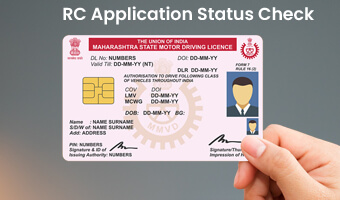
Under Rule 53(1), if your card is lost or destroyed, you must report the loss in writing to the police station holding jurisdiction over the area where the incident occurred. Conversely, if your card is merely torn, defaced, soiled, or its embedded electronic smart chip stops functioning, no police filing is necessary. However, you must surrender the physically damaged original card to the Regional Transport Office (RTO).
Legal Tip: Under Rule 139 of the CMVR, 1989 and the IT Act, 2000, digital vehicle documents stored in DigiLocker or mParivahan are legally valid on par with physical cards while you await your replacement.
Carrying an invalid or severely defaced registration certificate can lead to challans during traffic enforcement checks. Furthermore, you cannot sell a vehicle, transfer ownership, or renew hypothecation endorsements without a valid, legible registration certificate on record.
The statutory application required for this process is Form 26, titled Application for the Issue of Duplicate Certificate of Registration. It serves as an official legal statement submitted to your registering authority declaring why your original registration card is no longer available.
The number of copies you need to print and sign depends directly on your vehicle's ownership structure and registration history:
- Single Copy: For vehicles owned outright with no active loan, lease, or hypothecation recorded.
- Duplicate (2 Copies): For vehicles under an active loan agreement with a bank or non-banking financial company (NBFC). The financier must provide their official seal and signature endorsing the form.
- Triplicate (3 Copies): Required if your vehicle was initially registered at an RTO different from the one currently processing your duplicate card.
| Ownership Status | Copies of Form 26 | Financier Endorsement | Additional Form Required |
|---|
| Owned Outright (Clean Title) | 1 Copy | Not Applicable | None |
| Under Hypothecation / Loan | 2 Copies | Mandatory sign & stamp | Financier NOC / Form 35 |
| Out-of-Jurisdiction Registration | 3 Copies | Mandatory if on loan | NOC from original RTO |
Form 26 requires you to make mandatory legal declarations. You must affirm that the registration certificate has not been suspended or cancelled by any transport authority. You must also declare that the document was not impounded or confiscated by the police or enforcement branches.
Warning: Claiming an RC is lost when it has actually been impounded by enforcement officials is a serious legal offence under the Motor Vehicles Act.
Documents Required for Duplicate RC Application
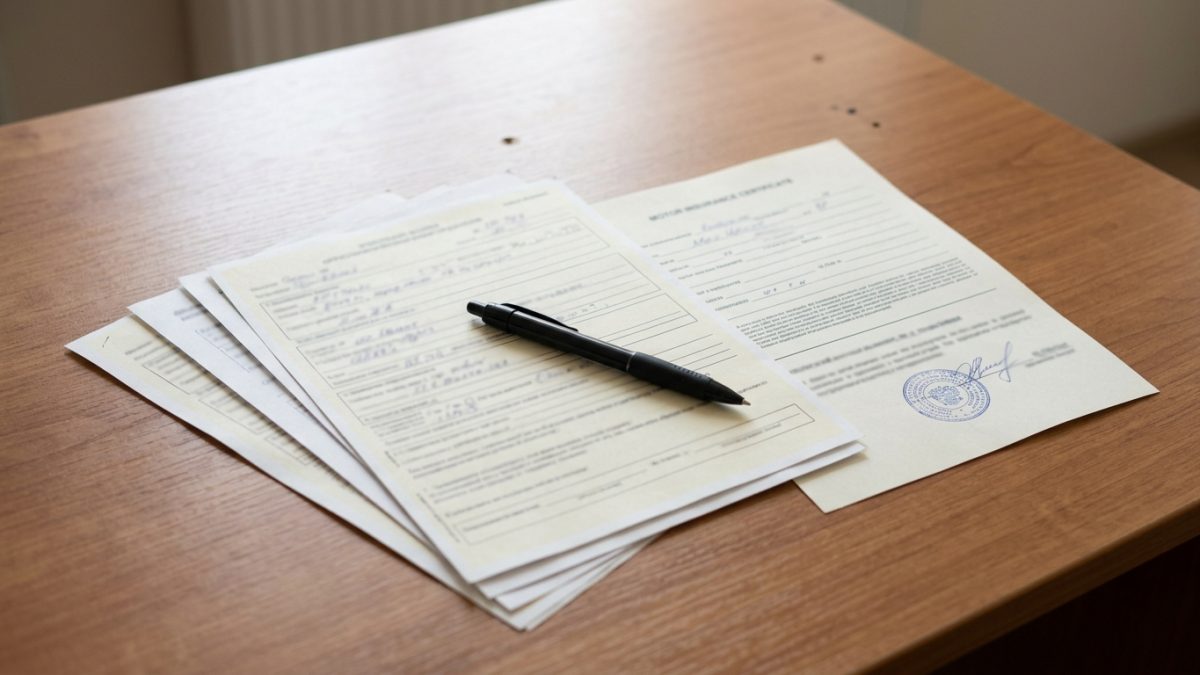
Before initiating the lost rc apply online procedure on the portal, collect clear digital scans of the required paperwork. Having the correct documents prepared prevents processing rejections during RTO clerk scrutiny.
- Signed Form 26: Downloaded directly from the Parivahan portal after entering your application details.
- Police Verification Document: An online Non-Cognizable Report (NCR), Lost Property Report (LDR), or a General Diary (GD) entry certificate for misplaced documents. A formal FIR copy is mandatory only if the RC was stolen.
- Sworn Notarised Affidavit: Executed on non-judicial stamp paper (typically ₹10 to ₹100 depending on state rules), declaring that the card is genuinely lost and not pledged, seized, or impounded.
- Original Damaged RC: Mandatory only if you are applying under the category of mutilated, torn, or defaced cards.
- Valid Motor Insurance: Active comprehensive or third-party insurance policy clearly linked on the central portal.
- Valid Pollution Under Control Certificate (PUCC): Must be active and updated on the national transport database.
- Identity and Address Proof: Aadhaar Card, Passport, or Voter ID matching the vehicle record.
- Financier NOC: A formal No Objection Certificate and Form 35 from your bank if your vehicle carries an active loan.
- VIN / Chassis Pencil Tracing: A physical pencil rubbing of the vehicle identification number taken on paper, mandatory in several non-faceless state jurisdictions.
| Document | Required for Lost RC | Required for Damaged RC | Format / Specifications |
|---|
| Form 26 | Yes | Yes | Signed PDF / Physical Print |
| Police NCR / FIR | Yes (NCR for lost, FIR for theft) | No (Exempt) | Original PDF copy |
| Notarised Affidavit | Yes | No | Non-judicial stamp paper |
| Physical Old Card | No | Yes (Mandatory surrender) | Original physical plastic/paper |
| PUCC & Insurance | Yes | Yes | Must be active on Vahan |
| Chassis Tracing | State Dependent | State Dependent | Pencil rubbing on Form 26 |
How to Apply Duplicate RC Online Parivahan: Step-by-Step
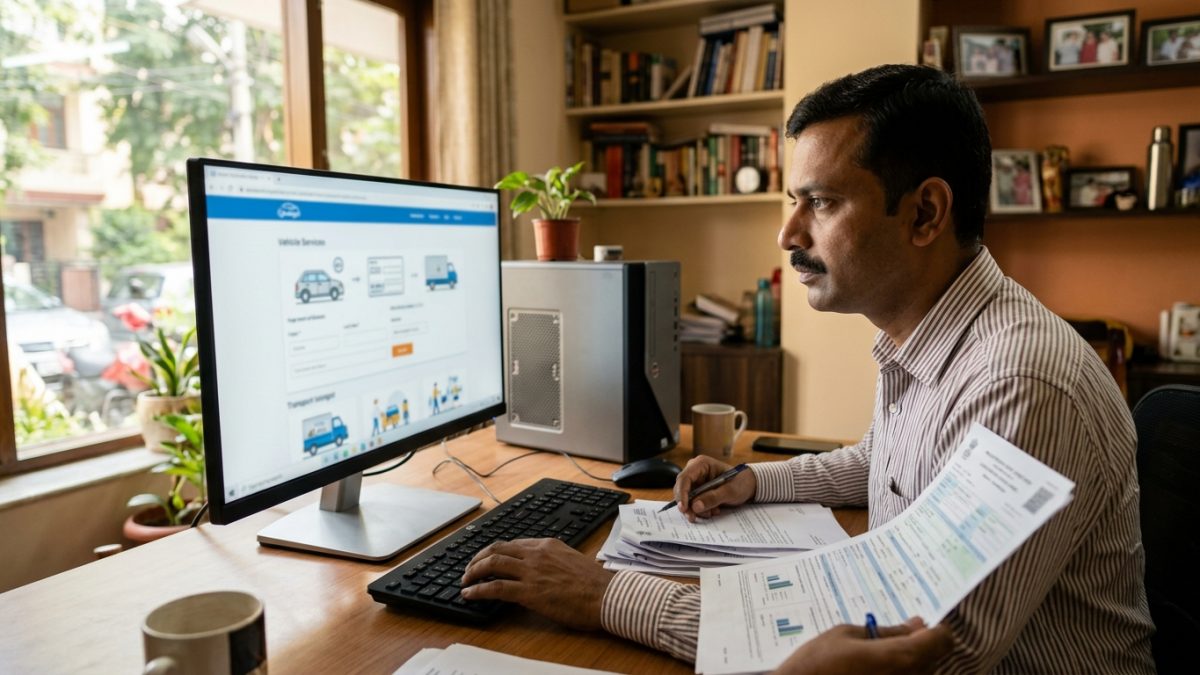
Vehicle owners across India can complete the duplicate rc online parivahan application through a standardised workflow. Follow these step-by-step instructions to register your request accurately.
- Open the Official Portal: Navigate to the Parivahan Sewa portal and hover over Online Services, then select Vehicle Related Services.
- Select Your State & RTO: Choose your resident state from the drop-down menu. Enter your vehicle registration number, accept the privacy conditions, and click Proceed.
- Choose the Service: In the citizen services dashboard, click on Apply for Duplicate RC under the primary vehicle services menu.
- Verify Vehicle Identity: Enter the last 5 digits of your vehicle's chassis number to validate ownership.
- Authenticate Identity: Complete authentication via Aadhaar e-KYC if your state supports contactless processing, or select Mobile OTP to receive a security code on your registered phone number.
- Select the Reason: Choose the appropriate issue reason: Lost, Theft, Torn, or Mutilated.
- Enter Police Report Details: If you selected Lost or Stolen, input your police NCR or FIR number, filing date, and the registering police station name.
- Review Vehicle Details: Verify your residential address and ensure active motor insurance details are displayed accurately.
- Calculate and Pay Fees: Review the automated fee breakdown on screen and pay using UPI, Net Banking, or Debit Card via the payment gateway.
- Download Receipts and Forms: Print the generated payment e-Receipt and the pre-filled statutory Form 26.
- Upload Required Documents: Scan your signed Form 26, police report, insurance policy, and notarised affidavit, then upload them in the DMS portal.
- Follow State Processing: In faceless states, your file moves directly to digital verification. In counter-mandated states, submit the physical folder at your RTO counter.
Pro Tip: Read our complete breakdown on faceless RTO services to see if your state allows full Aadhaar verification without in-person physical counter visits.
Official Duplicate RC Charges and RTO Fee Structure
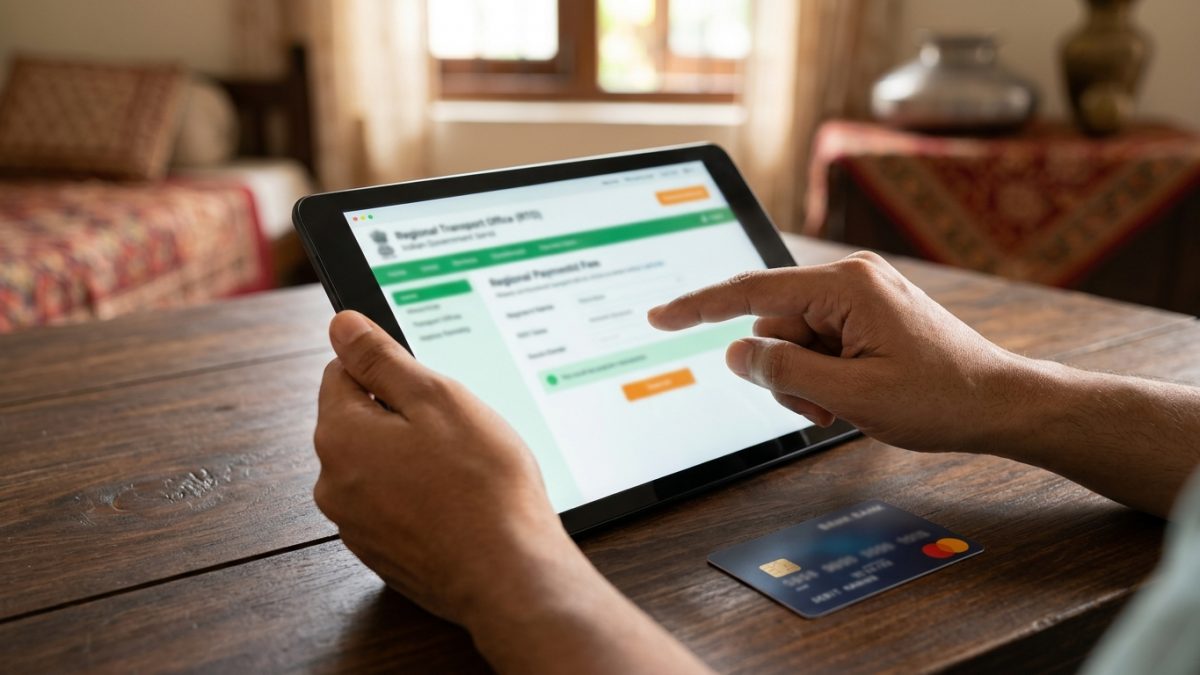
The statutory fee for a replacement registration certificate is strictly defined under Rule 81 of the Central Motor Vehicles Rules, 1989. Entry 5 establishes that the base duplicate fee is exactly 50% of the primary registration charge specified in Entry 4, alongside a statutory ₹200 fee for the smart card.
| Vehicle Category | Statutory Base Fee (Rule 81) | Smart Card Charge | Handling & Postal Charge | Approximate Total Cost |
|---|
| Two-Wheeler (Motorcycle/Scooter) | ₹150 | ₹200 | ₹50 – ₹100 | ₹400 – ₹450 |
| Light Motor Vehicle (Private Car) | ₹300 | ₹200 | ₹50 – ₹100 | ₹550 – ₹600 |
| LMV Commercial (Taxi/Cab) | ₹500 | ₹200 | ₹50 – ₹100 | ₹750 – ₹800 |
| Medium Goods / Passenger Vehicle | ₹500 | ₹200 | ₹50 – ₹100 | ₹750 – ₹800 |
| Heavy Goods / Bus | ₹750 | ₹200 | ₹50 – ₹100 | ₹1,000 – ₹1,050 |
| Imported Two-Wheeler | ₹1,250 | ₹200 | ₹50 – ₹100 | ₹1,500 – ₹1,550 |
| Imported Four-Wheeler (Car) | ₹2,500 | ₹200 | ₹50 – ₹100 | ₹2,750 – ₹2,800 |
| Invalid Carriage | ₹25 | ₹200 | ₹50 | ₹275 |
As of October 2026, additional incidental costs include ₹100 to ₹300 for non-judicial stamp paper and notary attestation fees. Online police lost-article reporting portals in states like Maharashtra, Delhi, and Uttar Pradesh provide digital lost document receipts either free of charge or for a nominal fee under ₹50.
Faceless RTO vs Counter Submission: State Differences
While Parivahan serves as the national backend for transport services, operational execution varies by state government policy. Depending on your location, your duplicate RC application follows either a fully contactless route or a hybrid counter-submission process.
Fully Faceless Jurisdictions
States such as Delhi, Maharashtra, Uttar Pradesh, Karnataka, and Gujarat allow end-to-end contactless processing for vehicle owners who verify through Aadhaar e-KYC. All uploaded PDFs undergo remote scrutiny by RTO superintendents, eliminating the need to physically visit the transport office. Once approved, the smart card is printed and dispatched directly to your registered address.
Counter-Mandated and Hybrid States
In states like Tamil Nadu, Telangana, Kerala, and Sikkim, you can complete the online application, upload documents, and settle fee payments via Parivahan. However, you must schedule an online slot or visit the RTO counter in person. You will need to submit the physical Form 26, the original affidavit, and a physical pencil rubbing of the vehicle's chassis number.
If you are required to visit your local transport office in person, you can locate the exact RTO office address and code to confirm working hours and counter details beforehand.
Duplicate RC Status Track and Delivery Timeline
After completing your submission, you can monitor processing milestones using the duplicate rc status track feature on the Vahan portal.
- Go to Status Tracking: Visit the Parivahan home page, open Vehicle Related Services, and select your state.
- Click Status Menu: Navigate to Status > Know Your Application Status.
- Enter Credentials: Input your Application Number and complete the captcha challenge.
- Review Progress: The dashboard displays real-time stages: Document Scrutiny, Approval by Registering Authority, Smart Card Printing, and Dispatch.
The overall timeline for physical card arrival generally spans 15 to 30 working days. Scrutiny takes 3 to 7 working days, card embossing requires another 3 to 7 days, and India Post Speed Post delivery takes 5 to 10 days. Once dispatched, your Parivahan dashboard updates with the Speed Post tracking number (Consignment ID).
Note on Digital RC: While you await your plastic card, complete your duplicate rc book download through the DigiLocker or mParivahan app. Digital cards carry full legal validity under Indian law.
Common Reasons for Duplicate RC Rejection
Applications for a duplicate registration certificate are occasionally rejected or put on hold by the RTO verification officer. Being aware of the primary compliance triggers helps you avoid procedural delays.
- Active Pending Traffic Challans: If your vehicle has unpaid traffic tickets or notices sent to court, the Parivahan portal will block your service request. Always check challan status by vehicle number and resolve outstanding dues before submitting Form 26.
- Missing Bank Loan NOC: Submitting an application without an endorsement from your bank when the RC reflects hypothecation will trigger an immediate rejection.
- Lapsed PUCC or Motor Insurance: If your pollution test or vehicle insurance has expired, the automated system stops the transaction before fee calculation.
- Aadhaar Demographic Mismatches: In faceless states, minor spelling differences or address discrepancies between Aadhaar records and your Vahan registration file can prevent automated approval.
- Impounded or Confiscated Records: If enforcement authorities have seized the original RC during a traffic prosecution, you cannot treat it as lost. You must clear the enforcement case to retrieve the original card.
By keeping your documents current and verifying your information on the portal, you can obtain your duplicate registration certificate smoothly without unnecessary counter visits.
Conclusion
Applying for a duplicate rc online has become a fast, systematic process through the Parivahan Sewa portal. By filing a timely police lost report, completing Form 26 accurately, and ensuring your insurance and pollution certificates are up to date, you can receive your replacement smart card directly at your registered home address.
Before you begin the application on Parivahan, make sure to check RC and vehicle details online to verify that all your technical parameters and ownership records match the transport registry perfectly.