Key Takeaways
- Ex-showroom price includes manufacturing, dealer margins, GST, and compensation cess.
- On-road price adds state road tax, mandatory insurance, RTO fees, and TCS.
- Expect to pay 10% to 25% over the sticker price.
- Dealer handling charges and mandatory accessory bundles are strictly illegal.
- Introductory prices do not guarantee price protection without written OEM confirmation.
The total car price in India differs significantly between the introductory ex-showroom figure and the final on-road cost. Buyers pay between 10% and 25% extra to cover statutory state road tax, mandatory motor insurance, registration fees, FASTag, and Tax Collected at Source (TCS) before driving legally.
| Cost Component | Charge Type | Estimated Overhead | Governing Authority |
|---|
| Ex-Showroom Price | Base Price | Invoice Base | OEM & Dealership |
| Road Tax (LTT) | Mandatory Legal | 6% to 21%+ | State Transport Dept |
| Motor Insurance | Mandatory Legal | 3% to 5% | IRDAI |
| RTO Registration Fee | Mandatory Legal | ₹800 to ₹2,950 | MoRTH (CMVR Rule 81) |
| TCS (Above ₹10 Lakh) | Direct Tax Credit | 1% of Ex-Showroom | Income Tax Dept |
| Logistics / Handling | Illegal Surcharge | ₹5,000 to ₹35,000 | Consumer Court Barred |
Ex-Showroom vs On-Road Price: Understanding the Cost Gap
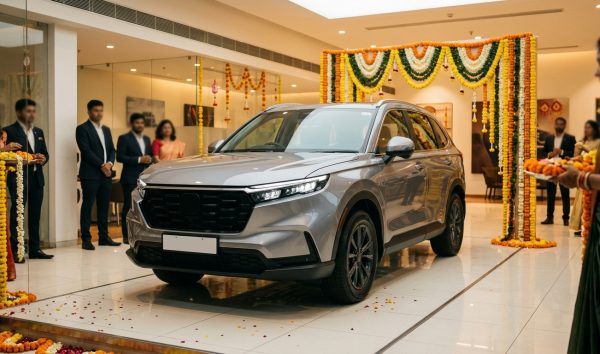
When carmakers announce a new car price in India, the figure highlighted across billboards and promotional campaigns is the ex-showroom price. This is the statutory sale price of the vehicle at the dealership floor before mandatory road registration.
The ex-showroom rate includes factory manufacturing costs, automaker profit margins, dealership commissions, Goods and Services Tax (GST), and applicable compensation cess. Passenger cars with internal combustion engines (ICE) attract 28% GST alongside a compensation cess spanning 1% to 22%.
Under Sections 39 and 146 of the Motor Vehicles Act, driving an unregistered vehicle without insurance on public roads is an offence. The on road car price in india represents the real out-of-pocket expenditure required to make the car road-legal.
Driving an unregistered vehicle directly out of a showroom violates Section 39 of the Motor Vehicles Act, 1988, making the on-road expenditure unavoidable.
The on-road cost adds State Motor Vehicle Tax, Central Motor Vehicles Rules (CMVR) registration fees, High Security Registration Plates (HSRP), IRDAI-mandated insurance, and FASTag. Optional items like extended warranty and accessory packages further inflate this figure.
How State Road Tax and RTO Registration Fees Are Calculated

State road tax, often called Life Time Tax (LTT), forms the single largest addition to any new car price in india. Because transport taxation is governed by state-specific Motor Vehicles Taxation Acts, charges vary drastically across regional borders.
States calculate road tax as a percentage of the vehicle invoice price or the ex-showroom value. Slabs are split into price brackets, typically covering vehicles below ₹10 Lakh, between ₹10 Lakh and ₹20 Lakh, and above ₹20 Lakh.
| State / UT Tier | Typical Tax Slab (Petrol) | Diesel Surcharge | Average On-Road Overhead |
|---|
| Low Tax (e.g., Delhi, HP, Chandigarh) | 7% to 10% | Nil to +2% | 10% to 13% |
| Moderate Tax (e.g., Gujarat, Rajasthan) | 8% to 12% | +2% | 12% to 16% |
| High Tax (e.g., Karnataka, Maharashtra) | 13% to 18%+ | +2% to +3% | 17% to 25%+ |
| Electric Vehicles (Exempt States) | 0% to 4% | N/A | 4% to 8% |
Fuel type significantly influences your payout. Diesel vehicles routinely attract an extra 2% surcharge over petrol models, while electric vehicles (EVs) enjoy reduced rates or complete exemptions. Vehicles registered under company names often attract 1.5 to 2 times higher road tax.
Central government statutory charges remain uniform nationwide under Rule 81 of the Central Motor Vehicles Rules, 1989. These standard levies include ₹600 for the Light Motor Vehicle (LMV) registration certificate, ₹200 for the smart card, and ₹1,500 for loan hypothecation endorsement.
Before visiting dealerships, you can identify your regional registering authority using our RTO office details tool to verify local administrative boundaries.
The Bharat Series (BH Series) offers immense financial relief to eligible car owners by replacing 15-year upfront road tax with biennial payments. Introduced under Rule 51B of the CMVR by the Ministry of Road Transport and Highways (MoRTH), it prevents double-taxation when moving interstate.
BH Series road tax is calculated uniformly across India based on the vehicle invoice price excluding GST and compensation cess. A car price under 10 lakh in india incurs an 8% tax slab, vehicles between ₹10 Lakh and ₹20 Lakh incur 10%, and cars above ₹20 Lakh pay 12%.
Diesel vehicles carry a 2% additional charge, while electric vehicles receive a 2% rebate. Instead of paying the full sum upfront, buyers pay for two years at a time using a fixed statutory formula:
BH Series 2-Year Tax = (Invoice Value × Applicable Slab % × 1.25 × 2) ÷ 15. This reduces upfront road tax by up to 80% on delivery day.
Eligibility for BH Series Registration
- Armed Forces personnel and defence civilian staff.
- Central Government and State Government employees.
- Public Sector Undertaking (PSU) and banking sector employees.
- Private sector employees whose company has offices in at least 4 states or Union Territories.
Eligible private sector employees must submit Form 60 on official company letterhead alongside their corporate identity card during dealer documentation.
How to Verify Official Road Tax and Fees Online
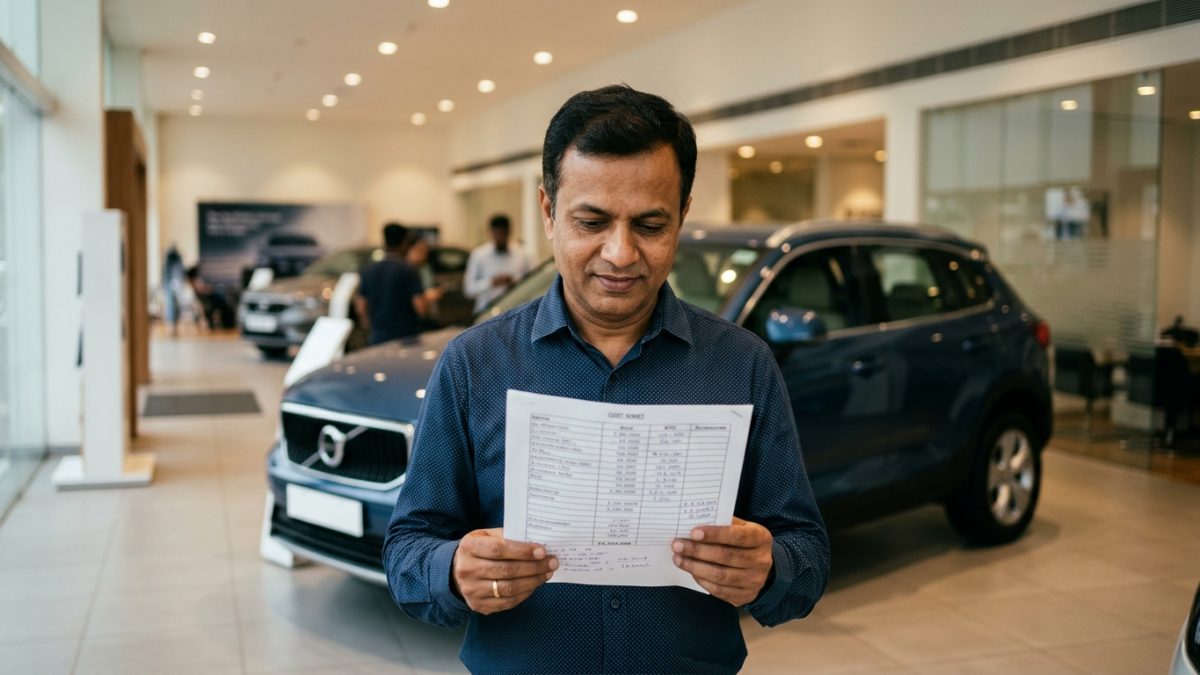
Dealerships frequently pad administrative fees during billing. You can calculate the exact statutory fees beforehand using the central government Parivahan Sewa portal.
- Access the assessment utility: Open the official Vahan online tax assessment portal in your web browser.
- Input vehicle specifications: Select your state, local registering authority, vehicle category, fuel type, seating capacity, and invoice price.
- Generate the tax report: Click compute to view the exact government road tax, infrastructure cess, and statutory registration fees.
- Cross-check dealer quotation: Compare the generated breakdown with your dealership proforma invoice to identify inflated line items.
After completing registration, buyers can verify their vehicle records and active permits using our free RC verification tool.
TCS and Motor Insurance: Managing Mandatory Expenses
Two essential components that expand the on road car price in india are Tax Collected at Source (TCS) and comprehensive motor insurance. Understanding how they work helps avoid excessive showroom quotes.
Tax Collected at Source (TCS)
Under Indian income tax provisions, every motor vehicle transaction with an ex-showroom value exceeding ₹10,00,000 attracts 1% TCS. If your car invoice sits at ₹10,50,000, the dealer collects ₹10,500 upfront.
TCS is not a sunk expenditure or permanent government fee. The dealer deposits this money under your PAN, and it reflects in your Form 26AS and Annual Information Statement (AIS) to offset your annual income tax liability.
Motor Insurance Guidelines and Savings
The law mandates a minimum 3-year Third-Party liability cover and a 1-year Own Damage cover for new private passenger cars. Dealerships routinely bundle internal insurance policies at inflated rates, claiming external insurance is prohibited.
Dealers cannot legally force you to buy showroom insurance; purchasing an IRDAI-approved policy online can save up to 40% on comprehensive premiums.
Directives from the Competition Commission of India and the IRDAI allow consumers to buy insurance from any registered general insurer. Independent policies with zero depreciation and engine protection typically cost 25% to 50% less than showroom quotes.
Case Study: Mahindra Thar Roxx On-Road Pricing
Looking at a latest car launch in india shows how introductory figures translate into actual road costs. The Mahindra Thar Roxx launched with introductory ex-showroom prices spanning ₹12.52 Lakh for the MX1 Petrol RWD to ₹23.53 Lakh for the AX7L Diesel 4WD AT.
The Thar Roxx features a 2.0L mStallion turbo-petrol producing 160 to 177 PS, and a 2.2L mHawk turbo-diesel developing 152 to 175 PS. It scored a 5-star Bharat NCAP safety rating and competes against the Force Gurkha 5-Door and Maruti Suzuki Jimny.
| Billing Component | Delhi Baseline (Petrol MX1) | Karnataka Baseline (Petrol MX1) | Dealer Inflated Quote |
|---|
| Introductory Ex-Showroom | ₹12,52,000 | ₹12,52,000 | ₹12,52,000 |
| Road Tax (LTT) | ₹1,25,200 (10%) | ₹2,12,840 (17%) | ₹1,25,200 |
| RTO Registration & Smart Card | ₹800 | ₹800 | ₹4,500 (Agent fee added) |
| MCD Parking Fee | ₹4,000 | Nil | ₹4,000 |
| TCS (1% above ₹10 Lakh) | ₹12,520 | ₹12,520 | ₹12,520 |
| Comprehensive Insurance | ₹48,000 | ₹48,000 | ₹71,000 (Dealer markup) |
| FASTag | ₹500 | ₹500 | ₹800 |
| Handling & Mandatory Accessories | ₹0 | ₹0 | ₹38,000 (Unauthorized) |
| Total Payable | ₹14,43,020 | ₹15,30,860 | ₹15,08,020 |
A buyer purchasing the base trim pays ₹1.91 Lakh extra in Delhi and over ₹2.78 Lakh extra in Karnataka over the introductory sticker price. If dealership markups go unchallenged, total costs escalate further.
Dealer Billing Traps: Handling Charges and Accessory Bundles
Dealership proforma invoices frequently hide unauthorized charges under obscure headings. Identifying these items before transferring funds saves thousands of rupees.
Handling and Logistics Charges
Showroom quotations often slip in fees titled logistics charge, handling fee, yard inspection, or incidental expenses, ranging from ₹5,000 to ₹35,000. These charges are completely illegal and unauthorized.
In the landmark ruling W.P.(C) 8408/2011 (C. Rajaram vs GNCTD), available on Indian Kanoon, the Delhi High Court barred dealers from charging handling fees. Transport departments stipulate that factory logistics and dealer commissions are already included in the vehicle ex-showroom price.
Handling and logistics charges are illegal under Consumer Protection laws; demand their complete removal from your proforma invoice.
Forced Essential Accessory Kits
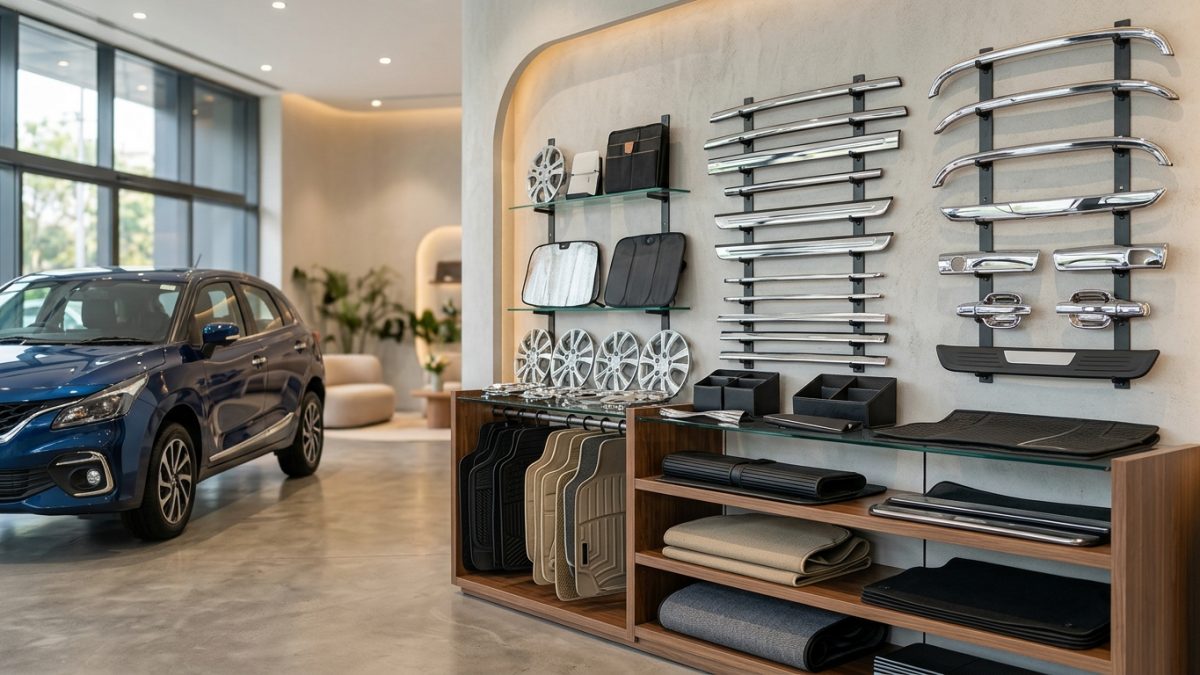
Dealership sales teams often bundle an essential accessory kit costing ₹8,000 to ₹30,000, claiming allocation depends on it. These packs contain floor mats, mud flaps, chrome garnishes, and car perfumes.
Purchasing dealer accessories is strictly optional under the Consumer Protection Act, 2019. Retailers cannot make accessory bundles a prerequisite for booking confirmation or timely car delivery.
Does Booking at an Introductory Price Protect You Against Hikes?
Automakers routinely promote an attractive introductory latest car launch price in india for early birds. However, placing a booking deposit does not automatically protect buyers against subsequent manufacturer price hikes.
Standard vehicle booking documents include a contractual clause stating: Price prevailing at the time of delivery and invoicing shall be applicable. Booking a vehicle locks in delivery queue priority, not invoice pricing, unless the OEM issues written price protection.
When carmakers offer price protection for the first 10,000 or 25,000 bookings, the safeguard is strictly quota-dependent. If production constraints push your invoicing date past the allocated window, the manufacturer transfers the price revision to your invoice.
Revisions to statutory taxes, including GST rates, compensation cess, and state road taxes, are never absorbed by automakers. If an unexpected hike occurs before invoicing, consumers retain the legal right to cancel their booking for a refund.
How to Contest Unfair Dealership Charges
If a showroom sales team refuses to strike off illegal handling charges or insists on bundled accessories, follow these systematic steps to protect your finances.
- Issue a formal written objection: Send an email to the showroom principal quoting the Delhi High Court C. Rajaram judgment and transport department circulars.
- Obtain competitive insurance quotes: Source independent quotes from IRDAI-registered portals for identical add-on covers and demand the dealer match the price or allow external policy issuance.
- Lodge a National Consumer Helpline grievance: Register a complaint via the NCH mobile app or dial 1915 to report unfair trade practices.
- Escalate to Central Public Grievance Portals: File a formal petition through CPGRAMS addressed to the Ministry of Road Transport and Highways.
Reviewing our October 2026 new car launch guide helps evaluate competitive alternatives if a dealership remains uncooperative.
Before taking final delivery, verify that your registration documents are cleanly processed and confirm that the chassis carries no unexpected violations using our vehicle challan check.
Conclusion
Calculating the true car price in India requires separating mandatory statutory taxes from unauthorized dealership markups. Always audit your proforma invoice, demand the removal of illegal logistics levies, and source competitive insurance independently.
Verify your official state road tax on the Parivahan portal before disbursing loan payments to ensure complete financial transparency on your new vehicle.