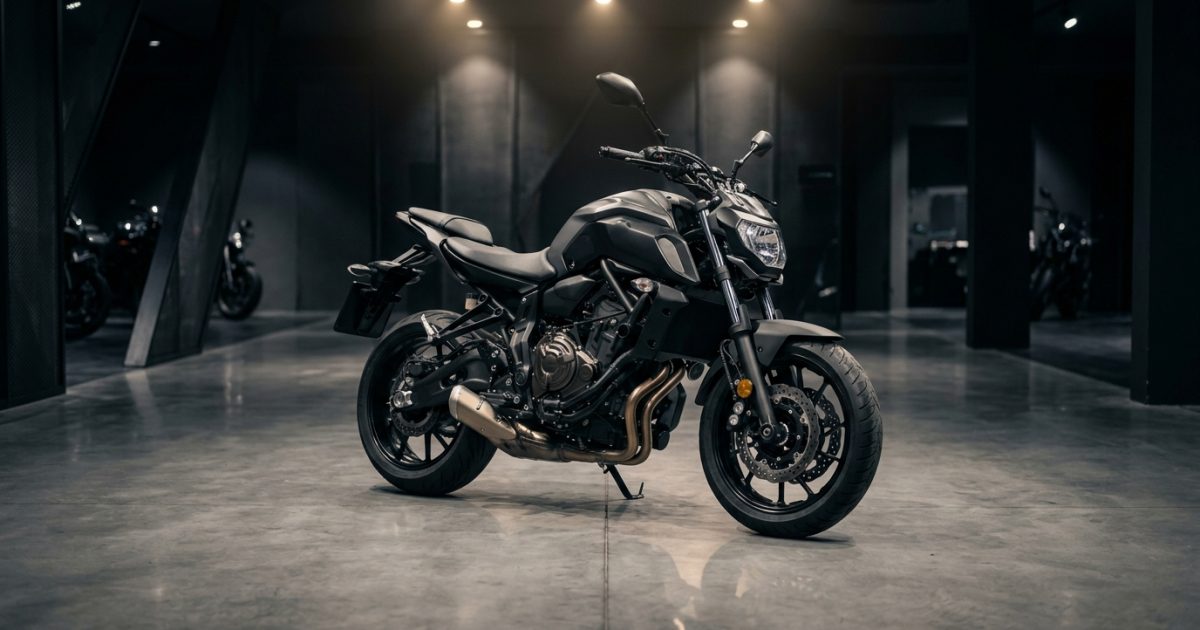
Understanding the final bike price in India requires looking beyond the advertised sticker tag. While the ex-showroom rate covers factory costs, dealer margins, and GST, the final on-road amount includes state road taxes, mandatory 5-year insurance, and statutory registration fees, typically adding 15% to 28% to your overall out-of-pocket budget.
Key Takeaways
- Ex-showroom price includes factory cost, transit to dealer, dealer margin, and GST.
- On-road price adds lifetime RTO road tax, registration fees, HSRP, and insurance.
- A 5-year third-party insurance cover is legally mandatory for all new two-wheelers.
- State road tax ranges from 4% in Delhi to over 18% in Karnataka.
- Dealer handling, logistics, and documentation charges are completely illegal under transport regulations.
| Cost Component | Paid To | Mandatory or Optional | Standard Cost Range |
|---|
| Ex-Showroom Price | Manufacturer / Dealer | Mandatory | Base vehicle sticker price |
| RTO Road Tax | State Government | Mandatory | 4% to 18% of ex-showroom |
| Statutory RTO Fees | State RTO Treasury | Mandatory | ₹850 to ₹1,500 |
| Insurance Policy | Insurance Company | Mandatory (5-Yr TP) | ₹6,500 to ₹15,000+ |
| Handling / Logistics | Dealership | Illegal / Unauthorized | ₹0 (Do not pay) |
| Accessories / RSA | Dealership | Strictly Optional | ₹1,000 to ₹5,000+ |
Ex Showroom vs On Road Price Bike: The Core Differences
When you browse a new motorcycle catalog, the figure highlighted prominently is the ex-showroom price. This figure is the retail price set by the manufacturer before any mandatory state-level statutory compliances or road permits are applied.
The ex-showroom rate is not arbitrary. It consists of the core manufacturing cost, wholesale shipping to regional stock depots, dealer retail commissions, and Goods and Services Tax (GST). For standard petrol two-wheelers up to 350cc, GST is levied at 28%. Premium bikes with engine displacements exceeding 350cc attract 28% GST plus an additional 3% compensation cess, taking the total tax to 31%. Electric two-wheelers benefit from a concessional 5% GST bracket.
In contrast, the on-road price represents the legal drive-away cost of the vehicle. You cannot ride a two-wheeler out of a showroom legally without settling state road taxes, registering the chassis on the central transport database, affixing approved license plates, and activating insurance coverage.
Tip: The ex-showroom price is identical across dealerships within a single city, but on-road prices fluctuate between buyers depending on state taxes, insurance add-ons, and loan hypothecation charges.
Calculating the true drive-away cost involves a clear mathematical equation. Every buyer should verify that their dealership quotation aligns strictly with this formula:
On-Road Price = Ex-Showroom Price + Lifetime RTO Road Tax + Registration & Smart Card Fees + HSRP Charges + Mandatory Insurance (5-Yr TP + 1-Yr OD) + Loan Hypothecation Endorsement (if applicable) - Authorized Discounts.
Any extraneous item added to this basic calculation that is not a voluntary accessory or service warrants immediate scrutiny before you sign a delivery order.
| Expense Item | Commuter Bike (₹1,00,000 Ex-Showroom) | Superbike (₹10,00,000 Ex-Showroom) |
|---|
| Ex-Showroom Base | ₹1,00,000 | ₹10,00,000 |
| Road Tax (State Average) | ₹8,000 to ₹11,000 | ₹1,20,000 to ₹1,80,000 |
| RTO Registration & HSRP | ₹1,050 | ₹1,500 |
| Bundled Insurance | ₹7,000 | ₹32,000 to ₹45,000 |
| Estimated Total On-Road Cost | ₹1,16,050 to ₹1,19,050 | ₹11,53,500 to ₹12,26,500 |
| Effective Price Increase | 16% to 19% | 15.3% to 22.6%+ |
How to Calculate On Road Price of Bike Across Indian States
To accurately calculate the bike price in India, you must evaluate the motor vehicle taxation laws of your specific state. Unlike GST, which is uniform nationwide, road tax is a state subject governed under separate state Motor Vehicles Taxation Acts.
State road tax grants you a 15-year lifetime road usage authorization. Because state governments decide these rates individually, identical motorcycle models can exhibit massive price disparities simply by crossing a state border. You can review our detailed bike on-road price calculation guide to see how regional disparities impact popular models.
Two Wheeler Road Tax Slabs in India by State
Road tax calculations usually take the form of a percentage applied to the ex-showroom invoice value. Certain states tier their slabs by engine displacement (cc), while others tier them purely by price thresholds.
| State / Union Territory | Price / Engine Slabs | Applicable Lifetime Tax Rate | Additional Surcharges |
|---|
| Delhi (NCT) | Up to ₹1,00,000
Above ₹1,00,000 | 4% flat
5% to 6% (based on cc) | EVs receive 100% road tax waiver |
| Karnataka | Up to ₹1,00,000
Above ₹1,00,000 | 10% to 12%
Up to 18% | 11% Infrastructure & Safety Cess on tax |
| Maharashtra | All standard petrol two-wheelers | 10% to 12% | 1% to 2% Road Safety Cess added |
| Tamil Nadu | Below ₹5,00,000
₹5 Lakh to ₹10 Lakh
Above ₹10,00,000 | 12%
13%
18% to 20% | Standard registration cess applies |
| Uttar Pradesh | Below ₹10,00,000
Above ₹10,00,000 | 8% flat
10% flat | Standard cess included |
| Gujarat | General two-wheeler bracket | 6% to 8% | Calculated on invoice value |
As of October 2026, buyers registering motorcycles in southern states like Karnataka pay substantially higher road taxes than buyers in northern states like Delhi. When buying an expensive model, this tax difference alone can create an on-road pricing gap of ₹10,000 to over ₹60,000.
RTO Registration Fees for Two Wheeler Under Rule 81
In addition to road tax, dealerships charge a line item for transport office registration. Dealerships often bundle this as a vague lump-sum fee of ₹3,000 to ₹5,000, leading many buyers to overpay. However, statutory government registration charges are strictly regulated under Rule 81 of the Central Motor Vehicles Rules (CMVR), 1989.
Statutory fees payable directly to the government treasury through the official Parivahan Sewa portal follow clear, standardized ceilings established by the Ministry of Road Transport and Highways:
- New Registration Fee (Two-Wheelers): ₹300 under Rule 81.
- Smart Card Registration Certificate (Form 23A): ₹200.
- Postal Dispatch Fee: ₹35 to ₹60 (typically ₹50 for Speed Post delivery of the physical RC card).
- High Security Registration Plate (HSRP): ₹300 to ₹500 for two-wheelers, supplied via authorized OEM vendors like Rosmerta, Celex, or FTA.
- Hypothecation Endorsement Fee: ₹500 (applicable only if the two-wheeler is financed through a vehicle loan).
Warning: Legitimate government registration and number plate costs total between ₹850 and ₹1,500. If your dealer charges ₹3,000 or more excluding road tax, they are padding the invoice with hidden handling margins.
You can verify your regional transport office fee structure before payment by locating your local office through our RTO office directory or consulting the CMVR Rule 81 statutory fee schedule.
Bike Insurance Cost for New Bike: The Mandatory 5-Year Rule
Insurance forms the second-largest variable cost after road tax when calculating your on-road bike price in India. Many first-time buyers are surprised when quoted ₹7,000 to ₹12,000 for motorcycle insurance, expecting an annual premium closer to ₹1,500.
The higher upfront premium stems from a landmark ruling by the Supreme Court of India in S. Rajaseekaran v. Union of India, enforced nationwide via directives from the Insurance Regulatory and Development Authority of India (IRDAI). Prior to this ruling, over half of all two-wheelers operated without valid policies after their first year. When accidents occurred, victims and their families were left without legal or financial relief. To protect road accident victims, every brand-new two-wheeler registered in India must carry a mandatory 5-year third-party (TP) insurance policy.
How Bundled Bike Insurance Policies Work
Insurance companies offer new two-wheeler policies in a bundled structure designed to balance regulatory compliance with owner asset protection:
- 5-Year Third-Party (TP) Cover: This component is strictly compulsory. It protects you against legal liabilities for bodily injury, death, or property damage caused to third parties over a 5-year window.
- 1-Year Own Damage (OD) Cover: This component covers accidental damage, theft, or fire to your own motorcycle for the first year. A full 5-year OD cover is not mandatory; you can renew the OD section annually thereafter.
- Personal Accident (PA) Cover for Owner-Driver: Provides ₹15 Lakh accidental coverage for ₹275 to ₹350 per year. If you already hold a standalone personal accident policy or an active PA cover under another registered vehicle, you are legally exempt from buying it again.
Consumer Right: You are not legally required to buy insurance from the dealership. Dealerships cannot deny vehicle delivery if you obtain a policy independently from an IRDAI-approved insurer.
Purchasing an IRDAI-compliant policy online from an aggregator often saves between ₹1,500 and ₹4,000 on the final on-road price compared to dealer in-house markups. If you are comparing mid-range purchases, review our breakdown of the latest bikes under 1.5 lakh to see how insurance premiums affect the total price across different engine capacities.
Dealer Handling Charges Bike RTO Rules and How to Spot Scams
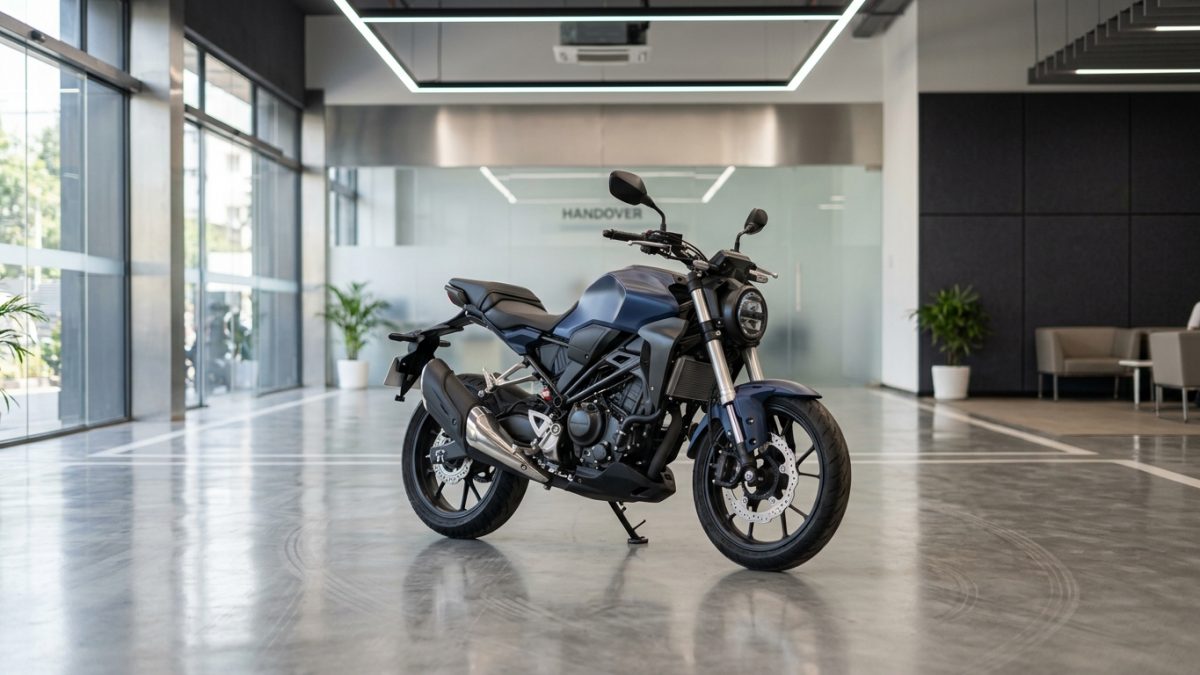
One of the most widespread unauthorized practices in the Indian automotive retail industry is the insertion of miscellaneous handling or logistics charges. When reviewing your proforma invoice, look carefully for rogue line items often labeled as logistics fees, PDI charges, depot handling, or RTO facilitation fees.
These charges typically range from ₹1,500 to ₹10,000. Dealerships justify them by claiming they cover inland freight from the stock depot, pre-delivery inspection, washing, or agent expenses at the transport office.
The Legal Position on Handling Charges
Collecting handling or logistics charges on new vehicles is entirely illegal. Transport departments and courts across India have repeatedly confirmed this legal position:
- Included in Ex-Showroom: The ex-showroom price authorized by the vehicle manufacturer already accounts for freight, warehouse storage, dealer retail margins, and pre-delivery preparation.
- High Court Rulings: The High Court of Delhi in C. Rajaram v. GNCT Delhi ruled that dealers cannot charge any money above the ex-showroom price and statutory government fees.
- Transport Circulars: Transport commissioners in Maharashtra, Delhi, Telangana, Tamil Nadu, and Kerala have issued strict circulars stating that charging handling fees is an unfair trade practice punishable by the cancellation of dealer trade certificates.
- Consumer Court Precedents: The National Consumer Disputes Redressal Commission and District Consumer Commissions consistently rule against dealers, ordering full refunds of unauthorized handling fees along with 9% to 12% interest and compensation for harassment.
How to Avoid Paying Illegal Dealer Charges
Follow these steps to protect yourself from paying unauthorized dealer fees when booking a motorcycle:
- Demand an itemized quote: Request a line-item proforma invoice separating official government taxes from dealer administrative charges.
- Cross-check statutory receipts: Inform the sales executive that you will pay road tax and registration charges exclusively against official computer-generated treasury receipts.
- Cite transport department circulars: Point out that logistics, transit insurance, and pre-delivery inspections are legally embedded into the manufacturer ex-showroom price.
- Escalate to the OEM: If the dealer refuses to remove the charge, email the customer service division of the vehicle manufacturer; vehicle brands penalize unauthorized billing that violates dealer franchise agreements.
- Use formal dispute channels: If a dealer forces payment prior to delivery, make the payment through a traceable banking method, record "paid under protest" on the delivery receipt, and file a refund claim through the National Consumer Helpline portal.
Complete Dealer-to-VAHAN Registration Process
Modern two-wheeler registration in India runs digitally via the centralized Parivahan network. Dealerships act as authorized points of registration, processing applications without requiring the vehicle to visit an RTO testing track in most standard cases.
Understanding this workflow helps you track your vehicle documentation and verify every fee deducted on your behalf:
- Sale certificate generation: The dealer generates Form 21 (Sale Certificate) and Form 22 (Roadworthiness Compliance) directly through the online manufacturer portal.
- Submission on VAHAN 4.0: The dealership enters your engine number, chassis number, Aadhaar-based buyer authentication, and insurance policy details into the Parivahan VAHAN portal to generate Form 20.
- Direct tax debit: The exact state motor vehicle road tax and Rule 81 statutory fees are paid electronically into the state government transport account.
- HSRP number allocation: The system automatically assigns a registration mark, alerting the authorized plate manufacturer to emboss the tamper-proof High Security Registration Plates.
- Plate fitment and validation: The dealer affixes the physical HSRP plates to your motorcycle, scans the laser security numbers, and uploads fitment photographs to complete the registration record.
- RC card dispatch: Once approved, your digital Registration Certificate is generated within 24 to 72 hours, while the physical smart card is mailed directly to your address via Speed Post.
Once your registration mark is generated, you can confirm your legal ownership status and check your vehicle details on our RC verification tool. After taking delivery, you should also periodically verify there are no accidental recording errors or unresolved traffic fines using our challan check portal.
Estimating Your Total Budget from New Bike Price List in India
When planning your budget using an advertised bike price in India, use percentage-based buffers rather than trusting the sticker price alone. The total overhead depends on the performance category of the two-wheeler you choose.
For standard commuter bikes and automatic scooters up to 200cc, calculate your drive-away budget by adding 15% to 22% over the ex-showroom value. This buffer accommodates standard road tax slabs, 5-year insurance, and legitimate RTO fees.
For premium middleweights and superbikes above 350cc or priced beyond ₹5 Lakh, expect overheads of 22% to 28% or more. High-value motorcycles attract higher road tax brackets in states like Karnataka and Tamil Nadu, plus higher insurance premiums based on Insured Declared Value (IDV).
To keep your on-road costs minimal, decline bundled optional add-ons like dealer merchandise, aftermarket polish packages, and accessory kits that can be bought elsewhere at competitive rates. Requesting a transparent breakdown ensures you pay only what the law requires to ride your motorcycle legally on Indian roads.
Conclusion
Calculating the true bike price in India requires looking beyond advertised ex-showroom figures to evaluate state road tax slabs, statutory Rule 81 RTO fees, and mandatory 5-year insurance policies. By securing itemized proforma invoices and rejecting illegal dealer handling charges, you can prevent thousands of rupees in unauthorized markups.
Before paying your final booking deposit, verify your state transport tax rates and verify your digital registration receipt to ensure every rupee spent matches official government records.