Key Takeaways
- The on-road bike price in India includes ex-showroom price, 15-year road tax, registration fees, HSRP, and mandatory 5-year insurance.
- Dealer handling, logistics, and documentation charges are strictly illegal under Indian law and High Court rulings.
- RTO road tax varies by state, ranging from 4% in Delhi up to 18% or more in Karnataka.
- Five-year third-party insurance is legally compulsory, while own-damage cover is required only for the first year.
- Dealers must supply a BIS-compliant helmet at delivery under CMVR Rule 138(4)(f).
The total on-road bike price in India is calculated by adding state road tax (4% to 18%), statutory registration fees under CMVR Rule 81 (₹500), HSRP charges (₹200 to ₹450), and mandatory 5-year insurance to the manufacturer's ex-showroom price. It reflects the complete, legal cost required to ride a new two-wheeler on public roads as of September 2026.
| Cost Component | Statutory Status | Typical Amount | Paid To |
|---|
| Ex-Showroom Price | Mandatory | Base + 28% to 31% GST | Manufacturer / Dealer |
| State Road Tax | Mandatory | 4% to 18% of price | State RTO / Transport Dept |
| Registration & Smart Card | Mandatory | ₹500 + postal fees | Central / State Govt |
| HSRP Plate | Mandatory | ₹200 to ₹450 + GST | Authorised Vendor |
| 5-Year Insurance (TP + OD) | Mandatory | Varies by engine cc | Insurance Company |
| Handling / Logistics | Illegal | ₹0 (Must dispute) | Unauthorised Dealer Markup |
Difference Between Ex Showroom and On Road Price of Bike
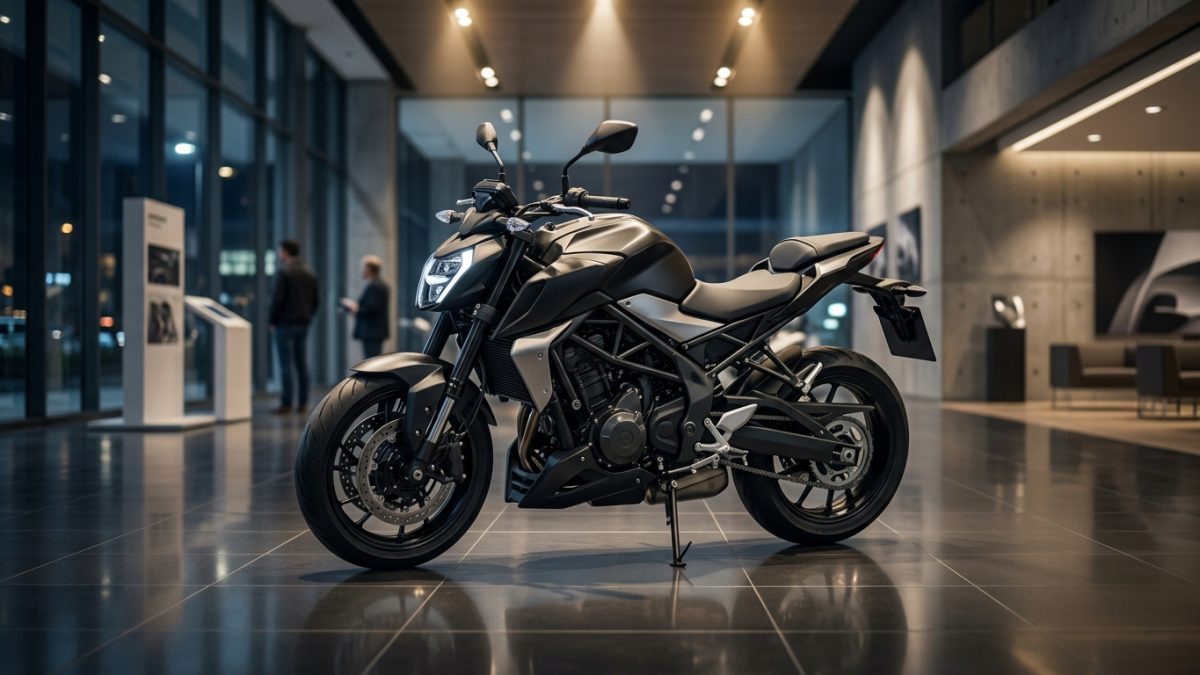
When buying a new two-wheeler or tracking a new bike launch in India, the advertised figure is almost always the ex-showroom price. This sticker amount covers the cost of manufacturing, the brand's profit margin, freight to the stockyard, dealer commissions, and Goods and Services Tax (GST).
For internal combustion engine (ICE) two-wheelers up to 350cc, GST is fixed at 28%. Motorcycles above 350cc attract an extra 3% compensation cess, taking the total statutory tax to 31%. Electric two-wheelers attract a concessional 5% GST rate.
The on-road price is the comprehensive sum required to make the motorcycle legally drivable on public roads. It adds state motor vehicle tax, central registration fees, high-security registration plates, and long-term insurance policies mandated by Indian transport regulations.
Ex-showroom price covers only the purchase of the machine, while the on-road price secures legal ownership, road usage rights, and statutory liability coverage across India.
RTO Tax on New Bike in India and Statutory Fees
Road tax is a state subject governed under individual State Motor Vehicles Taxation Acts. When you register a private two-wheeler, you prepay a one-time lifetime motor vehicle tax covering 15 years of road usage.
Because road tax is decided by regional governments, the rto tax on new bike in india changes dramatically depending on where you register your vehicle. Some states calculate the tax percentage on the ex-showroom invoice, while others assess it on the pre-GST base price.
| State / UT | Entry Slab Tax Rate | Higher Slab Tax Rate | Electric Two-Wheeler Tax |
|---|
| Delhi | 4% (Under ₹1 Lakh) | 5% to 8% | 0% (100% Tax Waiver) |
| Maharashtra | 8% of invoice | 10% to 12% | Substantially Exempted |
| Karnataka | 10% (Up to ₹50k) | 12% to 18% (+ 11% Cess) | Concessional Slabs |
| Tamil Nadu | 8% (Up to ₹1 Lakh) | 12% (Above ₹1 Lakh) | State Policy Subsidies |
| Uttar Pradesh | Flat 8% of price | Flat 8% of price | Exemptions as per Policy |
| Kerala | 6% to 8% | 15% to 21% (Luxury) | Reduced Slab System |
Apart from the percentage-based road tax, every buyer must pay fixed new bike registration charges rto mandated under Central Motor Vehicles Rules (CMVR) 1989. These charges are uniform across most states via the central Parivahan Sewa portal.
According to CMVR Rule 81, the standard statutory fees include:
- Issue of Registration Certificate (RC): ₹300 for two-wheelers under Rule 81.
- Smart Card Fee (Form 23A): ₹200 for issuing the physical card.
- Postal Speed-Post Charges: ₹50 to ₹100 depending on the state for secure home delivery.
- High Security Registration Plate (HSRP): Mandated under CMVR Rule 50, costing between ₹200 and ₹450 plus 18% GST.
You can locate your registering authority and inspect local fee notifications before purchasing by using our RTO office details tool.
5 Year Bike Insurance Cost Breakdown and Mandates

Under a Supreme Court of India ruling effective since September 2018, all brand-new two-wheelers must carry 5 years of upfront Third-Party (TP) insurance. Dealers bundle this with a 1-year Own Damage (OD) component into a single initial policy.
The Third-Party rates are set directly by the Insurance Regulatory and Development Authority of India (IRDAI). Dealers cannot alter or inflate these mandatory base rates.
| Engine Displacement (cc) | 5-Year Third-Party Base Rate | Own Damage (OD) Period | Compulsory Personal Accident |
|---|
| Under 75cc | ₹2,901 | 1 Year (Renewable) | ₹275 to ₹350 per year |
| 75cc to 150cc | ₹3,851 | 1 Year (Renewable) | ₹275 to ₹350 per year |
| 150cc to 350cc | ₹7,365 | 1 Year (Renewable) | ₹275 to ₹350 per year |
| Above 350cc | ₹15,117 | 1 Year (Renewable) | ₹275 to ₹350 per year |
| Electric (< 3 kW) | ~₹2,400 to ₹2,500 | 1 Year (Renewable) | ₹275 to ₹350 per year |
A standard 5 year bike insurance cost breakdown includes the 5-year TP base rate, 1-year OD premium based on Insured Declared Value (IDV), 18% GST, and Compulsory Personal Accident (CPA) cover. CPA provides ₹15 lakh accidental death or disability protection for the owner-driver.
You can legally waive the CPA charge of ₹275 to ₹350 per year if you already have an active standalone personal accident policy or an existing CPA policy tied to another vehicle registered in your name.
Dealers frequently mark up insurance premiums by 30% to 50%. You have the legal right to purchase your policy online from an IRDAI-registered insurer and submit the cover note for registration.
Are Dealer Handling Charges on New Bike Legal?
Many motorcycle dealerships add items labeled as "handling charges," "logistics fees," "documentation charges," or "depot charges" ranging from ₹1,000 to ₹3,500. Buyers frequently ask whether dealer handling charges on new bike legal provisions exist.
The answer is unequivocal: these charges are completely illegal. The ex-showroom price mandated by vehicle manufacturers already covers factory freight, transit insurance, and unloading expenses at the dealer's stockyard.
Pre-Delivery Inspection (PDI) is a manufacturer-mandated dealership duty, not an extra service chargeable to the customer. Multiple judicial rulings confirm this stance across India:
- Delhi High Court Ruling: In C. Rajaram vs. GNCTD (W.P.(C) 8408/2011), the court declared dealer handling charges unlawful and unauthorized.
- Transport Department Directives: State commissioners in Maharashtra, Kerala, and Tamil Nadu have repeatedly issued circulars prohibiting dealers from levying processing fees outside CMVR Rule 81.
- Trade Certificate Penalties: Demanding unauthorized facilitation fees for online Vahan registration can lead to the cancellation of the dealership's trade license.
Never pay unreceipted cash or extra documentation charges. Demand a separate, government-stamped receipt for every single rupee billed outside the ex-showroom invoice.
Bike On Road Price Calculator: How to Calculate Bike On Road Price

You do not need complex software to calculate the true cost of your vehicle. A reliable bike on road price calculator simply combines the ex-showroom price with verifiable statutory fees and legitimate insurance premiums.
Understanding how to calculate bike on road price accurately prevents showroom overcharging. Use this standard formula:
On-Road Price = Ex-Showroom Price + 15-Year State Road Tax + RTO Registration Fees (₹500 + postal) + HSRP Charges (₹200 to ₹450) + Mandatory Insurance (5-Yr TP + 1-Yr OD + CPA) + Statutory Safety Helmet
Step-by-Step Vahan 4.0 Registration Process
In almost all Indian states, physical trips to the local transport office are no longer required. Automobile dealers operate as designated registering authorities through the online Vahan 4.0 portal.
- Document Verification: Submit your Aadhaar card, PAN card or Form 60, address proof, Form 20 (registration application), and Form 21 (sale certificate provided by the dealer).
- Portal Data Entry: The dealership enters your unique engine number and chassis number (VIN) into the Parivahan database alongside manufacturer roadworthiness certificates (Form 22).
- System Tax Calculation: The central Parivahan engine automatically calculates the exact state road tax, ₹300 registration fee, and ₹200 smart card fee based on your state laws.
- Official Payment Generation: The dealer pays the calculated amount online and receives an official Parivahan payment receipt listing each statutory component.
- HSRP Embossing and Fitting: The dealer fits the laser-etched High Security Registration Plate to the motorcycle and uploads confirmation photos to the portal.
- RC Verification and Delivery: Your digital RC appears instantly in mParivahan or DigiLocker, while the physical smart card is posted to your residential address.
After taking delivery, you can verify your registration status, tax validity, and insurance expiry online through our RC details search tool.
Optional Dealership Add-Ons vs Mandatory Deliverables
Showroom sales executives often present bundled quotations where optional add-ons appear mandatory. Distinguishing between government mandates and voluntary accessories protects your budget when finalizing your purchase.
| Deliverable / Feature | Nature of Charge | Can the Buyer Decline? | Approximate Cost |
|---|
| BIS Protective Helmet | Mandatory by Law | No (Dealer must provide) | Included / Nominal |
| Extended Warranty | Optional | Yes (At buyer's discretion) | ₹800 to ₹2,500 |
| Roadside Assistance (RSA) | Optional | Yes (At buyer's discretion) | ₹500 to ₹1,500/year |
| Teflon / Ceramic Coating | Optional | Yes (Purely cosmetic) | ₹1,000 to ₹4,000 |
| Crash Guards & Seat Covers | Optional | Yes (Can buy aftermarket) | ₹1,500 to ₹5,000 |
The Mandatory Helmet Rule
Under Rule 138(4)(f) of the Central Motor Vehicles Rules, 1989, every two-wheeler manufacturer and supplying dealer must provide a protective helmet conforming to the Bureau of Indian Standards (IS 4151:2015) at delivery. Dealers cannot deny vehicle handover on grounds of helmet supply, nor can they force you to purchase premium aftermarket riding gear.
Extended Warranties and Cosmetic Packages
Standard manufacturer warranties typically cover two to three years. Extended warranty plans and roadside assistance packages are optional services. If you prefer to rely on standard OEM coverage, instruct the dealer in writing to remove these add-on costs from the final proforma invoice before payment.
Aftermarket Accessories
Accessories such as engine crash guards, tank grips, floor mats, and seat covers are discretionary enhancements. Showrooms cannot condition the sale of a motorcycle on the compulsory purchase of accessory bundles. You retain the full legal liberty to purchase authorized accessories later or source them from independent vendors.
Conclusion
Calculating the true bike price in India comes down to knowing the exact division between statutory government fees and dealership charges. By verifying your state's road tax bracket, confirming official CMVR Rule 81 registration rates, and purchasing insurance policies transparently, you can prevent showrooms from padding your invoice with thousands of rupees in unlawful handling fees.
Before signing the final sales agreement, demand a comprehensive itemized cost sheet and cross-reference every fee against the official Parivahan payment receipt to secure your vehicle smoothly and affordably.