Key Takeaways
- Delhi CNG price stands at ₹86.98 per kg following the latest price hike.
- Mumbai CNG currently retails at ₹88.00 per kg under Mahanagar Gas Limited.
- CNG running cost remains 47% cheaper than petrol despite recent 2026 revisions.
- Mandatory 3-year hydro-testing is strictly enforced with ANPR pumps denying non-compliant vehicles.
- Average factory-fitted CNG cars deliver real-world mileage between 20 and 31 km/kg.
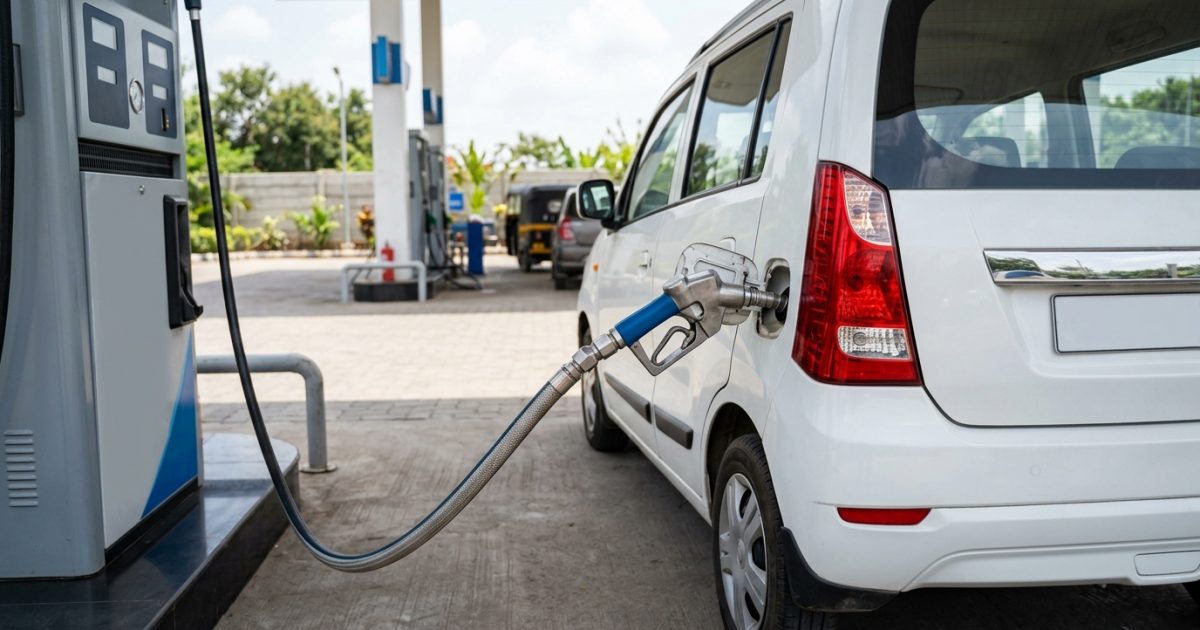
The cng price today stands at ₹86.98 per kg in Delhi and ₹88.00 per kg in Mumbai as of September 2026. Following multiple revisions by city gas distributors, retail rates have shifted across India. Running a CNG car continues to deliver substantial fuel savings of around 47% compared to petrol.
| Metric / Region | Current Details (September 2026) |
|---|
| Delhi NCT CNG Rate | ₹86.98 per kg |
| Mumbai Retail CNG Rate | ₹88.00 per kg |
| Average CNG Running Cost | ₹3.35 per km |
| Average Petrol Running Cost | ₹6.32 per km |
| Mandatory Cylinder Re-Test | Every 3 Years (Rule 35, PESO) |
CNG Price Today Delhi, Mumbai & City-Wise Rates
Retail prices for compressed natural gas fluctuate across regions due to local taxes, transport tariffs, and distributor margins. Recent revisions implemented across the country have established new price benchmarks for motorists.
In the National Capital Region, the igl cng price today reflects the revision introduced by Indraprastha Gas Limited on 29 August 2026. Rates vary across state borders between Delhi, Uttar Pradesh, and Haryana.
| City / Region | CGD Operator | Retail Price (₹/kg) |
|---|
| New Delhi (NCT) | Indraprastha Gas Ltd (IGL) | ₹86.98 |
| Noida / Greater Noida | Indraprastha Gas Ltd (IGL) | ₹95.59 |
| Ghaziabad | Indraprastha Gas Ltd (IGL) | ₹95.59 |
| Gurugram | Haryana City Gas / IGL | ₹92.01 |
| Mumbai (MMR) | Mahanagar Gas Ltd (MGL) | ₹88.00 |
| Thane / Navi Mumbai | Mahanagar Gas Ltd (MGL) | ₹85.75 – ₹88.00 |
| Pune | Maharashtra Natural Gas Ltd (MNGL) | ₹96.50 – ₹98.50 |
| Bengaluru | GAIL Gas Ltd | ₹97.00 |
| Ahmedabad | Gujarat Gas / Adani Total Gas | ₹94.02 |
| Chennai | Torrent Gas / AG&P Pratham | ₹97.00 – ₹97.50 |
| Kolkata | Bengal Gas Company | ₹93.50 |
| Hyderabad | Bhagyanagar Gas Ltd | ₹109.00 – ₹112.00 |
To verify the latest official fuel tariffs in the capital, drivers can inspect the IGL official CNG price portal. Vehicle owners planning highway trips should budget according to regional variations, as pricing shifts noticeably beyond municipal lines.
Always verify your fuel status before crossing borders. A short drive from Delhi to Noida changes your refuelling cost from ₹86.98 per kg to ₹95.59 per kg.
Delhi-NCR Price Revisions
Indraprastha Gas Limited increased prices across the National Capital Region by ₹3.89 per kg on 29 August 2026. This marked the fifth adjustment of the year. Delhi began 2026 at ₹77.09 per kg, reflecting an overall rise of nearly ₹10 per kg year-to-date.
Surrounding Haryana districts also saw updated retail rates under regional distribution networks. Rewari stands at ₹91.59 per kg, Karnal at ₹91.32 per kg, and Kaithal at ₹92.32 per kg. In western Uttar Pradesh, Meerut, Muzaffarnagar, and Shamli retail at ₹95.47 per kg.
CNG Price in Mumbai and Western India
The cng price in mumbai stands at ₹88.00 per kg following a ₹2.00 per kg adjustment by Mahanagar Gas Limited in early September 2026. Prior to this adjustment, Mumbai motorists paid ₹86.00 per kg.
Within the Mumbai Metropolitan Region, Thane and Navi Mumbai reflect rates between ₹85.75 and ₹88.00 per kg depending on local octroi and municipal boundaries. In Maharashtra, Pune maintains higher retail figures ranging between ₹96.50 and ₹98.50 per kg.
Why Did CNG Prices Increase in 2026?
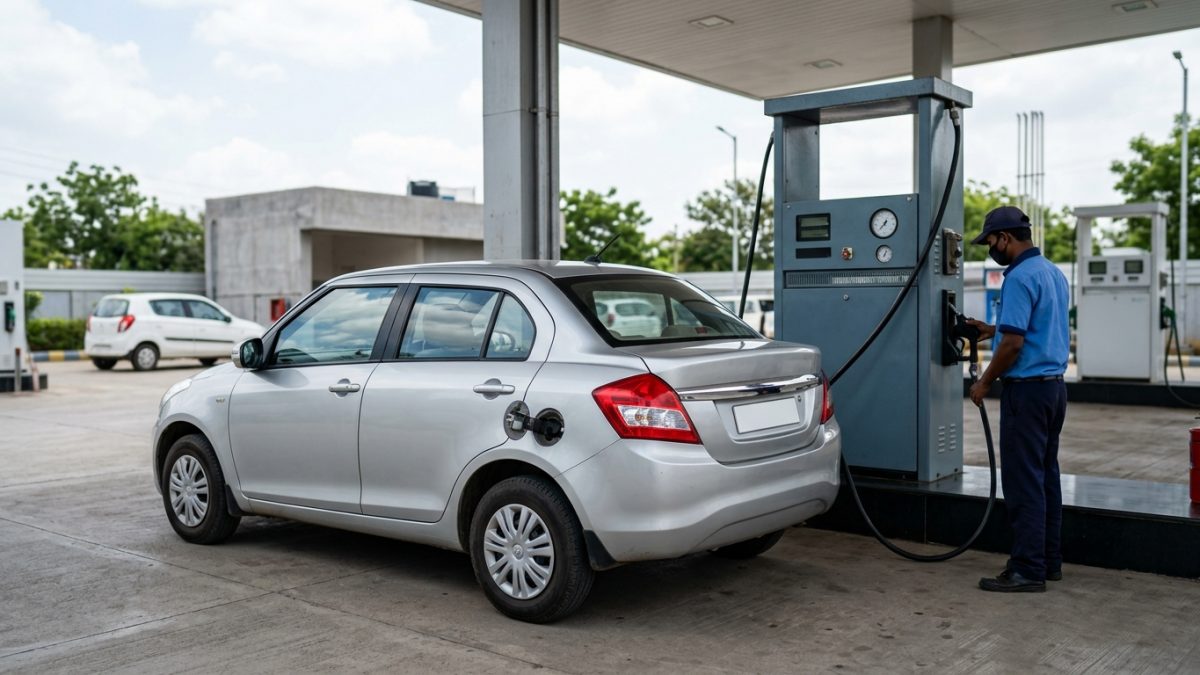
Vehicle owners across India have experienced upward pressure on fuel bills throughout the year. The recurring cng price hike 2026 stems from three distinct domestic and geopolitical factors affecting gas supply chains.
City Gas Distribution (CGD) companies have recalibrated consumer prices to protect operational viability. Official price notifications tracked by the PPAC gas price portal highlight how upstream procurement costs have shifted over recent quarters.
Diminishing Domestic APM Gas Quotas
Distributors historically relied heavily on low-cost domestic gas allocated under the Administered Price Mechanism (APM) from legacy fields. The central government reduced APM allocations to city gas entities by approximately 20%.
To bridge the shortfall, retailers must blend costlier High Pressure High Temperature (HPHT) domestic gas and imported liquefied natural gas (LNG). This structural substitution raised the average raw gas acquisition cost for city suppliers.
International Spot LNG Volatility
Geopolitical turbulence around maritime corridors in the Strait of Hormuz disrupted international shipping schedules. At the same time, European storage stockpiling intensified global competition for uncontracted spot cargoes.
These converging market conditions drove the Asian spot benchmark (Asia-JKM) from roughly $11 per MMBtu to above $23 per MMBtu. The sharp spike directly inflated import bills for Indian gas importers and distribution networks.
Foreign Exchange Fluctuations
Natural gas import contracts and LNG shipping invoices are settled exclusively in US Dollars. Depreciation of the Indian Rupee against the USD raised the landed rupee cost of every imported metric ton.
Because city gas networks must absorb imported fuel to meet urban demand, currency depreciation translated directly into higher retail dispenser figures. Further policy context is available through the Press Information Bureau MoPNG updates.
Why CNG Prices Differ Across States and Cities
Drivers reviewing a cng price list state wise often wonder why retail tariffs vary by over ₹20 per kg across states. Unlike petrol and diesel, which also bear varying duties, CNG is governed by unique logistics and state taxation structures.
Examining these cost components explains why finding the cheapest cng price in india depends largely on regional infrastructure rather than distributor policy alone.
State Value-Added Tax (VAT) Disparities
Compressed natural gas remains outside the unified Goods and Services Tax (GST) framework. Consequently, each state government retains full autonomy over the Value-Added Tax levied on compressed gas.
Delhi applies a modest VAT of approximately 5% on retail sales. In contrast, Uttar Pradesh and Haryana apply significantly steeper rates, creating an immediate price disparity between Delhi and Noida or Gurugram.
Pipeline Wheeling Tariffs and Distance
Natural gas is offloaded primarily at western coastal regasification terminals like Dahej and Hazira in Gujarat. The gas travels hundreds of kilometres through trunk pipelines before reaching inland cities.
The Petroleum and Natural Gas Regulatory Board (PNGRB) establishes pipeline transmission and wheeling tariffs based on transport distance. Inland and southern locations incur higher transit costs, contributing to retail rates above ₹109 per kg in Hyderabad.
Distribution and Operational Margins
Local operating environments also shape consumer pricing. Operating booster compression stations requires significant electricity draw, and local commercial power tariffs differ between states.
Land lease rentals for operating retail forecourts in dense urban centres further inflate distribution overheads. These regional operational costs are incorporated directly into local retail pump figures.
CNG vs Petrol Running Cost: Which Is Cheaper in 2026?
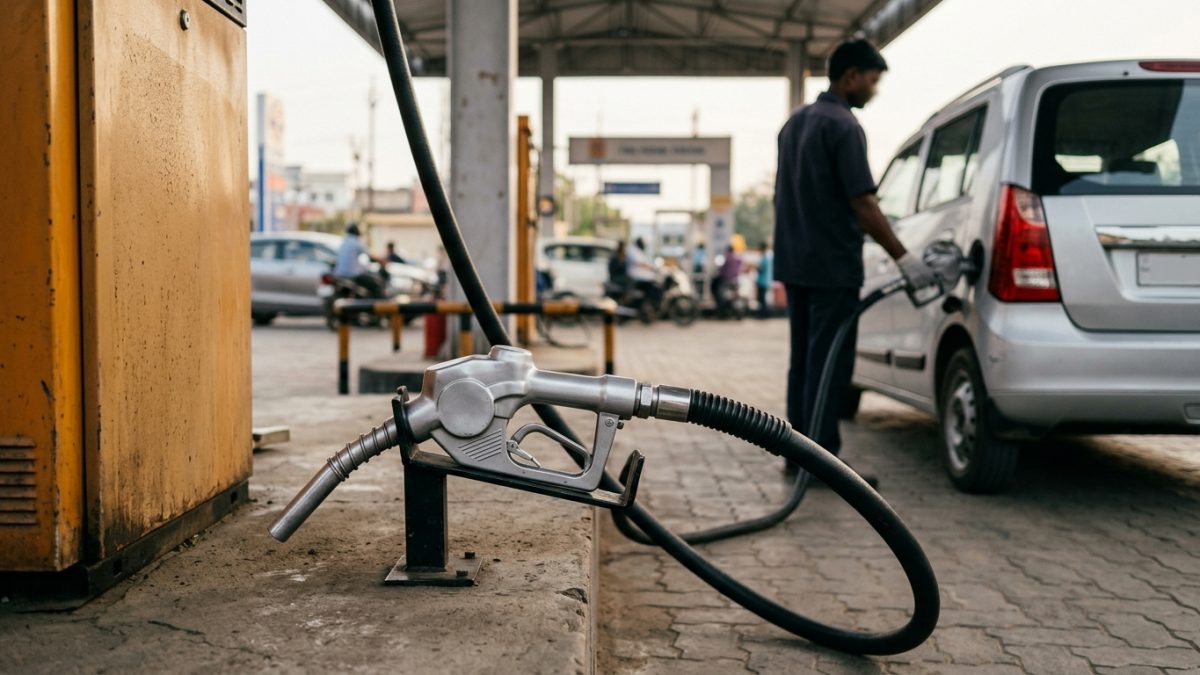
Evaluating the cng vs petrol running cost is critical for buyers weighing whether to purchase a dual-fuel vehicle. While CNG prices have reached historic highs, petrol prices have also stayed elevated across major metros.
Understanding real-world costs requires examining standard urban driving conditions using popular compact passenger cars. If you are shopping for a new vehicle, compare models via the best cars under 10 lakh guide.
| Metric | Petrol Car | Factory CNG Car | Variance / Savings |
|---|
| Fuel Price (Delhi Benchmark) | ₹94.75 / litre | ₹86.98 / kg | CNG is ₹7.77 cheaper per unit |
| City Fuel Efficiency | 15.0 km/L | 26.0 km/kg | CNG delivers ~73% more distance |
| Per-Kilometre Fuel Cost | ₹6.32 / km | ₹3.35 / km | ₹2.97 / km saved with CNG |
| Monthly Fuel Bill (1,000 km) | ₹6,320 | ₹3,350 | ₹2,970 saved per month |
| Monthly Fuel Bill (1,500 km) | ₹9,480 | ₹5,025 | ₹4,455 saved per month |
| Annual Fuel Bill (18,000 km) | ₹1,13,760 | ₹60,300 | ₹53,460 saved annually |
Even with recent price revisions, compressed gas delivers a per-kilometre fuel cost saving of roughly 47%. The significantly higher energy density and fuel economy of natural gas preserve this distinct operating advantage.
A daily commuter driving 50 km saves roughly ₹4,455 every month on fuel by choosing CNG over petrol, amounting to over ₹53,000 in annual savings.
Real-World Mileage Expectations
Official test figures often overestimate daily efficiency. However, realistic cng car mileage per kg remains impressive across small and mid-sized passenger vehicles in urban traffic conditions.
Compact hatchbacks featuring 1.0-litre to 1.2-litre engines typically return 26 to 31 km/kg in mixed driving conditions. Larger compact sedans and sub-four-metre SUVs return between 20 and 25 km/kg. Drivers seeking to improve efficiency should follow proven car mileage tips.
Break-Even Period for New Buyers
Factory-fitted CNG cars carry an ex-showroom premium of approximately ₹85,000 to ₹1,00,000 over their standard petrol counterparts. When factoring in higher road taxes and insurance, the upfront cost difference averages ₹95,000.
Motorists covering 1,500 kilometres per month recover this entire upfront premium in 21 to 22 months. For personal drivers averaging 800 to 1,000 kilometres monthly, the financial break-even arrives in 32 to 36 months.
Hidden Maintenance Costs to Consider
Dual-fuel ownership involves secondary operating factors beyond raw fuel pump bills. The added cylinder hardware adds 65 to 75 kg of deadweight over the rear axle, which accelerates rear suspension wear over time.
In addition, spark plugs and specialized air filters require replacement at tighter intervals, typically every 20,000 to 30,000 kilometres. Vehicle owners must also account for mandatory periodic cylinder testing fees.
Mandatory 3-Year Hydro-Testing Rules
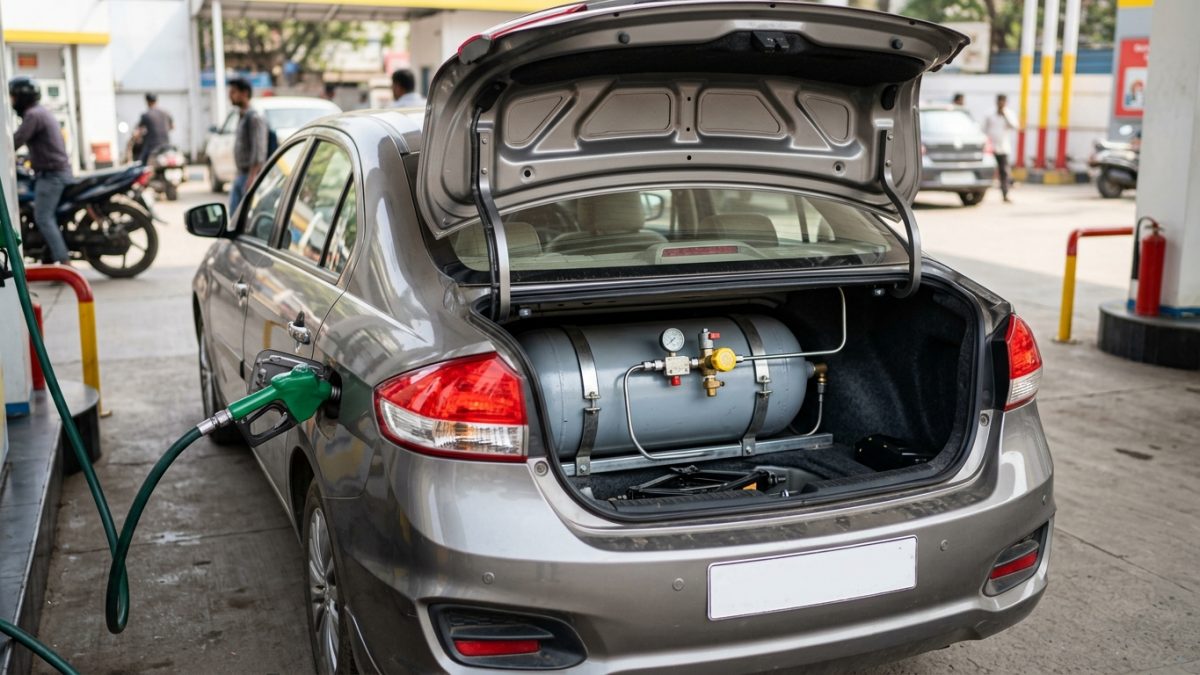
Ensuring fuel cylinder integrity is mandatory for every natural gas vehicle operating on Indian roads. Statutory directives under Rule 35, Sub-rule (1) of the Gas Cylinder Rules require testing every 3 years.
These safety standards are strictly governed by the PESO regulatory authority to prevent catastrophic pressure vessel ruptures during high-pressure filling operations.
Do not skip your testing date. Fuel pumps equipped with automated cameras will deny refuelling immediately if your hydro-testing record is expired.
Strict Automated Refuelling Bans
Following high-pressure cylinder rupture incidents at fuel stations, transport departments and gas distributors implemented zero-tolerance enforcement. Fuel attendants are barred from dispensing gas into uncertified vehicles.
Major suppliers like IGL have installed Automatic Number Plate Recognition (ANPR) cameras at forecourts. These cameras scan registration plates and query the PESO compliance database, automatically locking fuel dispensers if certification has lapsed.
The Hydro-Testing Process Step-by-Step
Vehicle owners must undergo testing at authorized facilities to maintain legal road eligibility and retain access to fuel stations across India.
- Locate a testing station: Find an authorized facility approved by PESO through official distributor portals or transport listings.
- Degas and inspect the vessel: Technicians depressurize the fuel cylinder, remove the control valve, and inspect internal and external walls for corrosion or structural defects.
- Perform hydrostatic stretch testing: The cylinder is filled with water and subjected to pressures exceeding 300 bar to measure volumetric expansion against safety standards.
- Stamp the cylinder neck: Once verified, technicians stamp the valid re-test date and test code directly onto the cylinder neck and compliance plate.
- Upload digital compliance: The certified facility enters the vehicle registration number and cylinder serial details into the national PESO database.
- Collect test documentation: Obtain the physical hydro-test certificate, which completes the process at a typical cost of ₹1,500 to ₹3,000.
Drivers buying a pre-owned vehicle should always verify certification validity. You can check your registration status using the VahanX RC search tool to review registered vehicle fuel types and fitness records.
Legal Compliance and RTO Registration for CNG Cars
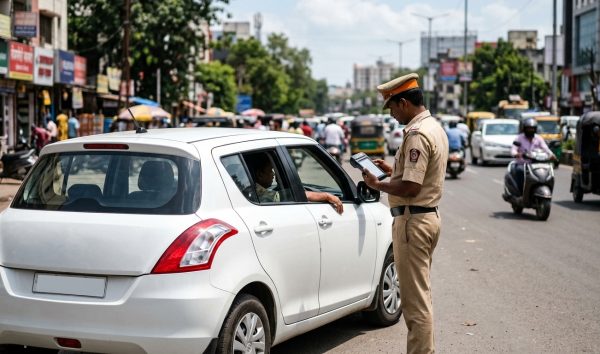
Operating a dual-fuel vehicle requires adhering to statutory documentation standards. Failure to register gas retrofits or maintain current documents risks heavy traffic penalties under the Motor Vehicles Act.
Drivers can track unpaid citations and check their vehicle records via the VahanX challan search tool to avoid court proceedings. Transport compliance rules are coordinated under the Parivahan Sewa portal.
Updating the Registration Certificate (RC)
If you fit an aftermarket conversion kit to a petrol car, the installation must be endorsed on your registration certificate. Driving an unendorsed retrofit invalidates your motor insurance policy.
The vehicle must be presented at the local transport office for physical inspection. Motorists should locate their regional authority using the VahanX RTO office locator before scheduling an endorsement appointment.
Essential Documents for Gas Vehicles
Dual-fuel motorists must carry specific documentation to demonstrate legal compliance during transport authority checkpoints and annual fitness renewals:
- Original vehicle Registration Certificate reflecting the dual-fuel endorsement.
- Valid motor insurance policy with explicit coverage for the compressed gas kit.
- Valid Pollution Under Control (PUC) certificate issued under CNG emission norms.
- Current PESO-approved cylinder hydrostatic test certificate and visible compliance plate.
- Valid driving licence, which can be verified online through the VahanX DL search service.
Conclusion
Understanding the cng price today helps vehicle owners plan monthly travel budgets and evaluate vehicle purchases with complete clarity. Despite price revisions across metropolitan regions, compressed gas continues to offer unmatched running economy compared to petrol and diesel.
Before planning your daily commutes or retrofitting an existing vehicle, keep your cylinder hydro-testing updated and verify your registration records on VahanX to ensure seamless refuelling and total road compliance.