Key Takeaways
- Ride commuter motorcycles between 40 and 55 km/h in top gear to stay within peak engine efficiency.
- Cut your engine at red lights if stopping for longer than 20 seconds to eliminate fuel wastage.
- Inspect tyre pressure weekly while cold, as a 4 to 5 PSI drop reduces mileage by up to 5%.
- Clean or replace clogged air filters and service the drive chain every 500 to 800 km.
- Adopt steady throttle inputs to counter the 3% to 6% mileage reduction seen with E20 blended petrol.
Looking for actionable bike mileage tips to cut your monthly commuting expenses? To get maximum kilometres per litre, ride smoothly between 40 and 55 km/h in top gear, maintain correct cold tyre pressure, shut the engine at halts exceeding 20 seconds, and service your air filter and chain regularly.
| Metric / Checkpoint | Commuter Motorcycle (100–150cc) | Gearless Scooter (110–125cc) | Mileage Impact |
|---|
| Economy Speed Range | 40 to 55 km/h (Top Gear) | 35 to 45 km/h (Steady Throttle) | Up to 15% improvement |
| Optimal Engine RPM | 3,000 to 4,000 RPM | CVT mid-band curve | 10% to 12% improvement |
| Tyre Pressure Check | Weekly (Cold) | Weekly (Cold) | 3% to 5% loss if underinflated |
| Drive Chain / Belt Care | Clean & lube every 500–800 km | Inspect drive belt per manual | 2% to 4% mechanical loss |
| Engine Oil Spec | JASO MA / MA2 | JASO MB | 3% to 5% friction penalty |
Understanding Fuel Pricing and the Nationwide E20 Rollout
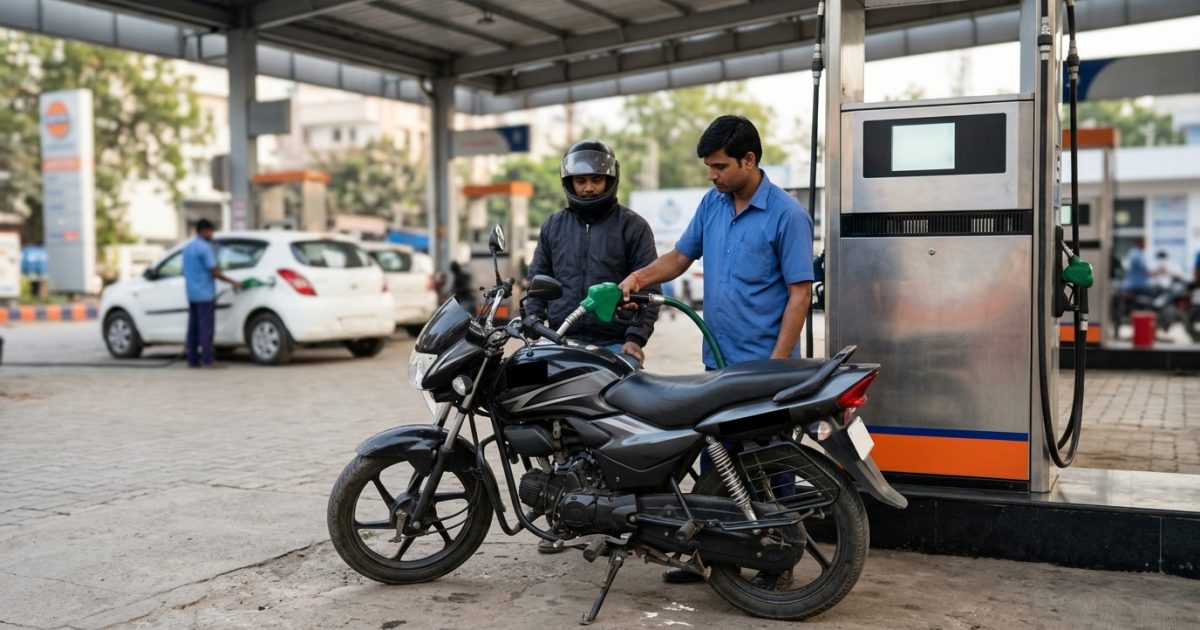
As of September 2026, retail petrol prices across major Indian cities remain elevated between ₹94 and ₹104+ per litre. Fuel rates differ daily across states based on local Value Added Tax (VAT) and cess, making fuel economy critical for daily commuters.
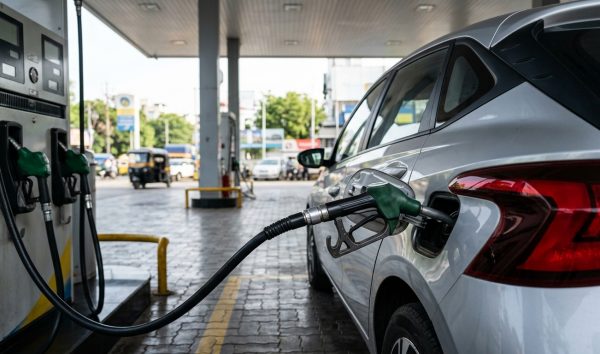
Alongside pricing pressures, the nationwide distribution of 20% ethanol-blended petrol (E20) under the Ethanol Blended Petrol Programme has altered real-world fuel performance. Government roadmaps published by NITI Aayog projected an energy differential because ethanol contains roughly 33% lower calorific energy than pure petrol.
| Vehicle Category | Blend Calibration | Official Lab Mileage Impact | Real-World City Mileage Impact |
|---|
| Older BS3 / BS4 Bikes | Originally E0 / E10 | 3% to 6% decrease | 6% to 10% decrease |
| BS6 Phase-1 Models | E10 calibrated | 3% to 4% decrease | 5% to 8% decrease |
| BS6 Phase-2 (From April 2023) | E20 material compliant | 1% to 2% decrease | 2% to 4% decrease |
Official studies from the Automotive Research Association of India and Society of Indian Automobile Manufacturers verify a 3% to 6% laboratory drop. However, daily riders frequently experience a 6% to 10% decline in dense city traffic because they open the throttle wider to compensate for reduced low-end engine torque.
Ethanol absorbs moisture and acts as a solvent, which can cause rubber fuel hose degradation and injector gumming in older carburetted engines.
Smart Riding Habits: How to Increase Bike Mileage Daily
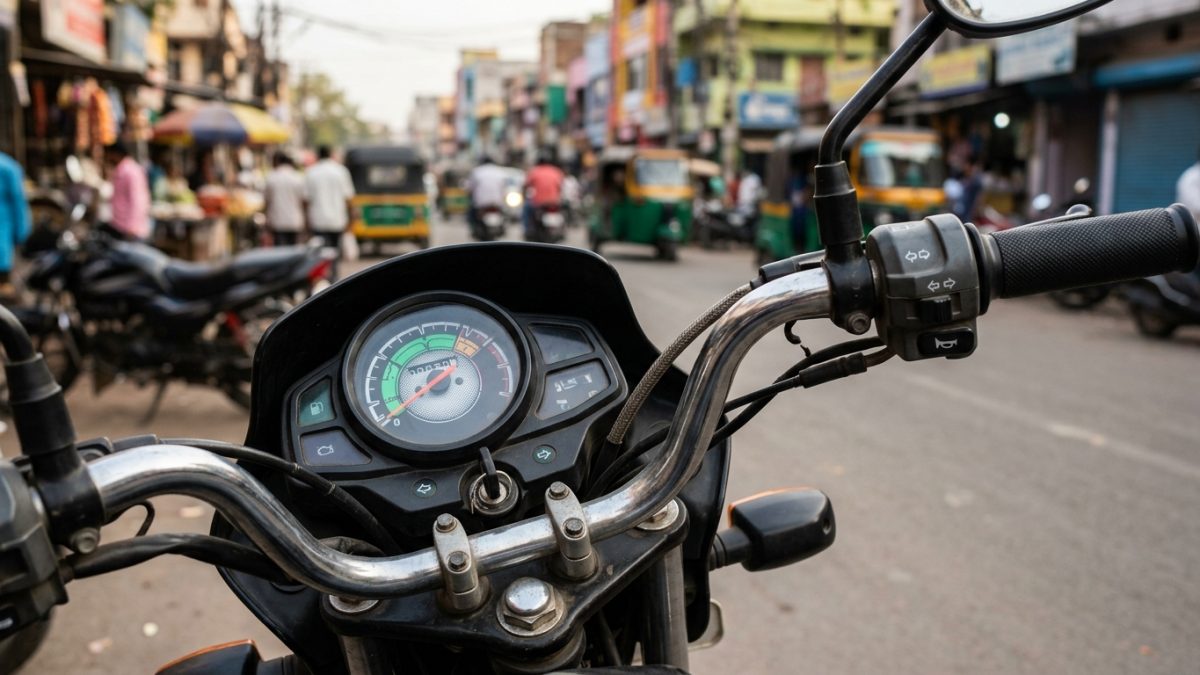
Learning how to increase bike mileage starts directly at your right wrist. Aggressive acceleration and erratic braking burn excessive fuel without significantly reducing your travel time across congested Indian roads.
1. Stick to the Economy Speed Band
The best speed for bike mileage on 100cc to 150cc commuter motorcycles is 40 to 55 km/h in top gear. Keeping your engine between 3,000 and 4,000 RPM allows the powertrain to operate at its highest thermal efficiency.
For gearless scooters, the sweet spot sits between 35 and 45 km/h. Exceeding 50 km/h on a scooter forces the Continuously Variable Transmission (CVT) into high-rev territory, causing steep fuel burn.
2. Progressive Throttle Control
Avoid twisting the throttle wide open from standing stops. Accelerate smoothly and allow momentum to build progressively so the fuel-injection system avoids running rich mixtures.
Upshift early through your gearbox without lugging the engine. Riding at high RPM in lower gears forces the engine to burn unnecessary petrol to maintain momentum.
3. The 20-Second Engine Cut Rule
Turn off your ignition whenever you stop at a traffic junction or railway gate for more than 20 seconds. An idling engine burns roughly 0.5 to 1 litre of fuel per hour without moving an inch.
If your two-wheeler features automatic start-stop technology, keep the system switched on. These systems restart the engine seamlessly the moment you pull the clutch or twist the accelerator.
Resting your fingers on the clutch lever or your foot on the rear brake creates invisible drag that degrades fuel economy within minutes.
How to Increase Motorcycle Mileage in Traffic Bottlenecks
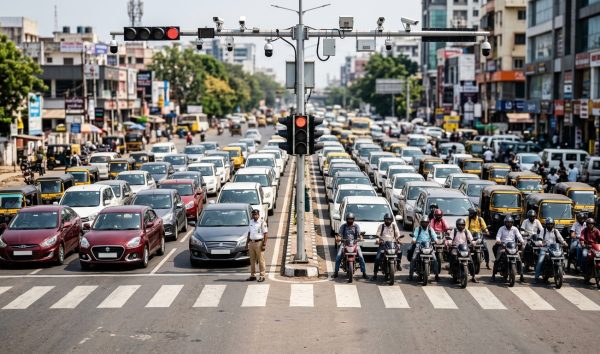
Mastering how to increase motorcycle mileage in traffic requires reading the road ahead instead of reacting to the vehicle directly in front of you. Constant stop-and-go riding is the primary culprit behind poor city fuel averages.
Follow this step-by-step traffic management routine to preserve your fuel reserves:
- Scan road flow: Watch traffic movement two to three vehicles ahead to spot decelerations early.
- Coast off the throttle: Release the throttle early and use engine braking when approaching red lights rather than accelerating until the last second.
- Avoid clutch slipping: Shift into neutral during slow crawls instead of riding half-clutch in first gear.
- Maintain momentum: Pace your speed so you keep rolling slowly rather than coming to a dead stop before green signals.
If you also drive a four-wheeler, our guide on car mileage tips provides similar driving techniques for larger engines. Keeping smooth momentum minimizes kinetic energy waste regardless of vehicle size.
Crucial Maintenance Practices for Maximum Fuel Economy
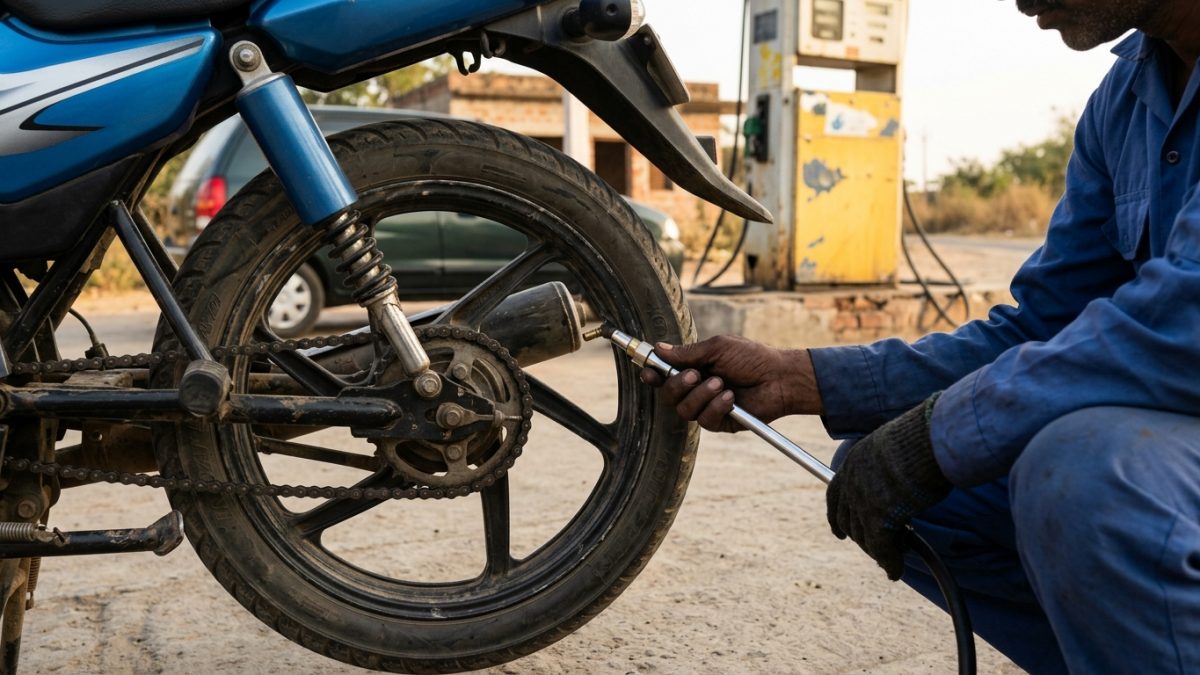
Mechanical resistance inside the drivetrain forces your engine to burn extra fuel just to maintain normal speeds. Routine servicing is essential when implementing mileage tips for bike owners.
Tyre Pressure Management
Tyre pressure is the single most neglected factor impacting two-wheeler fuel economy. Under-inflation increases the tyre footprint and road rolling resistance, forcing the engine to work harder.
- Inspect tyre pressure at least once a week using a reliable gauge while tyres are cold.
- Under-inflation by just 4 to 5 PSI drops overall mileage by 3% to 5%.
- Follow your swingarm sticker guidelines, typically 25 to 28 PSI front and 28 to 36 PSI rear with a pillion.
- Avoid over-inflating beyond specifications, as this reduces tyre grip and increases stopping distances.
Engine Oil Viscosity and Specifications
Engine oil lubricates critical moving parts and keeps operating temperatures stable. Using old or incorrect oil creates severe internal viscous drag, spiking fuel consumption.
Motorcycles require JASO MA or MA2 certified oil to ensure wet clutch plates do not slip under load. Scooters, on the other hand, require low-friction JASO MB oil specifically blended for dry-clutch automatic engines.
Always replace engine oil at the manufacturer-recommended interval to avoid carbon sludge build-up and internal friction loss.
Air Filter and Spark Plug Care
Your engine requires an optimal air-fuel ratio of 14.7:1 to complete combustion cleanly. A dusty air filter element starves the combustion chamber of oxygen, causing incomplete combustion and black exhaust soot.
Clean paper elements every 3,000 to 4,000 km, and replace them every 10,000 to 12,000 km. Inspect spark plugs every 6,000 km to ensure the electrode gap remains within the factory standard of 0.7 to 0.9 mm.
Gearless Scooter Mileage Tips: Overcoming CVT Losses
Automatic scooters inherently deliver lower fuel efficiency than geared motorcycles due to continuous belt friction in the CVT transmission. However, simple adjustments yield noticeable gains.
| Maintenance Area | Recommended Action | Optimal Interval | Fuel Benefit |
|---|
| CVT Air Filter | Clean dust and debris | Every 4,000 km | Smoother belt engagement |
| Drive Belt & Rollers | Inspect for flat spots and wear | Every 8,000 to 12,000 km | Eliminates transmission slip |
| Throttle Operation | Gradual acceleration to 40 km/h | Daily riding | Prevents fuel enrichment |
| Cold Idling | Avoid revving on cold starts | Every morning | Reduces unburnt petrol waste |
Riders looking for zero fuel dependence might consider battery alternatives; check out our coverage on upcoming electric scooters in India. For petrol scooters, consistent throttle modulation remains the best path to savings.
Diagnosing Sudden Bike Mileage Drop Reasons
If your two-wheeler experiences an unexpected efficiency collapse, aggressive riding is rarely the sole cause. A sudden decrease points to underlying mechanical problems requiring immediate inspection.
- Brake binding: Put your bike on the main stand and spin both wheels by hand; sticking disc calipers or overtightened drum brake rods create heavy rotational drag.
- Severe tyre deflation: A slow puncture dropping tyre pressure by 6 to 8 PSI can slash efficiency overnight.
- Choked fuel strainer: E20 petrol can dislodge tank rust particles, clogging the fuel pump strainer or carburettor jets.
- Worn clutch plates: If engine RPM rises rapidly when twisting the throttle but road speed lags behind, your clutch plates are slipping.
- Adulterated or degraded fuel: Water contamination in underground fuel storage tanks causes misfires and unburnt fuel waste.
Whenever buying a pre-owned commuter bike to save costs, always verify its paperwork and background on RC details online to ensure the vehicle has been maintained and has valid fitness records. Keeping your vehicle documentation in order also helps avoid penalties; check your status via e-challan status to ensure no pending traffic violations remain against your registration.
Step-by-Step Two-Wheeler Fuel Efficiency Audit
Follow this methodical inspection routine every weekend to ensure your motorcycle or scooter delivers peak mileage throughout the month.
- Check cold tyre pressure: Measure pressures using a digital tyre pressure gauge before riding your two-wheeler more than 1.5 km.
- Inspect chain tension: Measure the vertical chain slack on motorcycles; it should fall between 20mm and 30mm with adequate lubrication.
- Conduct wheel free-spin test: Rotate the front and rear wheels while the bike rests on its centre stand to confirm smooth rotation without brake squeal.
- Inspect air filter element: Open the airbox cover and tap out loose surface dust; replace immediately if oil-fouled or torn.
- Top up correct fuel: Purchase petrol from trusted, high-volume fuel stations operating directly under OMC supervision to avoid contamination.
Conclusion
Applying these practical bike mileage tips consistently will protect your wallet against high fuel prices and ethanol-related mileage dips. Small adjustments in throttle control, tyre pressure maintenance, and drivetrain care compound into major fuel savings over thousands of commuting kilometres.
Begin by checking your cold tyre pressure and cleaning your air filter this weekend to experience an immediate improvement in your daily two-wheeler fuel economy.